
Gilbert Sorrentino (1929–2006)
Author of Mulligan Stew
About the Author
Writer, critic and Stanford University professor Gilbert Sorrentino was born in Brooklyn, NY in 1929. He attended Brooklyn College until he served in the US Army Medical Corps. After his two years in the Army, he returned to Brooklyn College to finish his degree. Sorrentino founded and edited the show more literary magazine Neon. He also was an editor for Kulcher magazine and Grove Press. Sorrentino has earned two Guggenheim Fellowships, a Lannan Literary Award, and the 2005 Lannan Lifetime Achievement Award. He died on May 18, 2006. (Bowker Author Biography) show less
Works by Gilbert Sorrentino
Neon Obit 1 copy
A Dozen Oranges 1 copy
Associated Works
Epitaphs for Lorine — Contributor — 6 copies
TriQuarterly 34, Fall 1975 — Contributor — 1 copy
Ironwood 28 Dickinson/Spicer: A Special Issue — Contributor — 1 copy
Truck 21, A 50th Birthday Celebration For Jonathan Williams — Contributor — 1 copy
Tagged
Common Knowledge
- Birthdate
- 1929-04-27
- Date of death
- 2006-05-18
- Gender
- male
- Education
- Brooklyn College
- Occupations
- novelist
poet
editor
publisher - Organizations
- United States Army Medical Corps
- Awards and honors
- Lannan Literary Award (Fiction, 1992)
Lannan Literary Award (Lifetime Achievement, 2005)
American Academy of Arts and Letters Academy Award (Literature, 1985)
John Dos Passos Prize (1981) - Relationships
- Sorrentino, Christopher (son)
Selby Jr., Hubert (friend) - Nationality
- USA
- Birthplace
- Brooklyn, New York, USA
- Places of residence
- New York, New York, USA
- Place of death
- Brooklyn, New York, USA
- Associated Place (for map)
- Brooklyn, New York, New York, USA
Members
Reviews
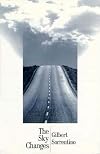
I've only read one road-trip book before. Quirky, girl-gets-over-old-love, meets-new-love, feel-good but-not-too-good, lots of asides about those bits of the US y'all laugh at. Not my cup of tea, though it sold lots of copies and it won't surprise me if the movie version pops up on your (sic) netflix menu.
I didn't realise, when I opened this that it was a road-trip novel. For a start, it takes some pages to figure out what's going on. And I found the poetry of it stopped any flow. It has an show more Under Milkwood beguiling sense that it should be read aloud. I would read a couple of pages and then go back and read it aloud in my head. Maybe half way through the book I stopped doing that, and I'm not sure if that was just taking for granted what earlier distracted me, or if the style of writing somewhat changes. I should note that I read the 1986 edition, a revision of the 1966 edition, itself the author's first novel.
Feel good (but not too good), girly lit this is not. I'm not surprised to see that he takes on the mantle and the cause of William Carlos Williams: the similarities are obvious. For more on Sorrentino's work and his relationship with WCW, see Ken Bolton's article in Jacket Magazine.
It you read Sorrentino's wiki page, you are immediately hit by 'post-modernist' and 'meta-fiction' and that makes you go to goodreads with a sneaking feeling....yes, the only one of your friends to have reviewed this is MJ. Fortunately I only did this after finishing the book. Post-modern? Meta-fiction? Absolutely not - and perhaps that's why MJ excoriated it after his first reading. It's just a straightforward tale of the breakdown of social relations at a time we now remember fondly for the social devastation wreaked. I wonder if you needed to be closer in generation to that period in order to feel the heat of this book? Sorrentino muses on the nature of memory. I love this:
This book is incredibly dense, it's short but has so much in it. His inept relationship with his kids, the false nature of friendship. The pissing away of life - through alcohol in particular - that was integral to the scene he is part of. The changing geography and social fabric of the America they pass through as they head from NY to Mexico. The North South divide. Lying and denial as the basis of relationships. It's quite misleading to talk of this as a book about divorce. It is about relationships of all sorts and their fraught, dishonest bases.
rest here: https://alittleteaalittlechat.wordpress.com/2018/12/16/the-sky-changes-by-gilber... show less
I didn't realise, when I opened this that it was a road-trip novel. For a start, it takes some pages to figure out what's going on. And I found the poetry of it stopped any flow. It has an show more Under Milkwood beguiling sense that it should be read aloud. I would read a couple of pages and then go back and read it aloud in my head. Maybe half way through the book I stopped doing that, and I'm not sure if that was just taking for granted what earlier distracted me, or if the style of writing somewhat changes. I should note that I read the 1986 edition, a revision of the 1966 edition, itself the author's first novel.
Feel good (but not too good), girly lit this is not. I'm not surprised to see that he takes on the mantle and the cause of William Carlos Williams: the similarities are obvious. For more on Sorrentino's work and his relationship with WCW, see Ken Bolton's article in Jacket Magazine.
It you read Sorrentino's wiki page, you are immediately hit by 'post-modernist' and 'meta-fiction' and that makes you go to goodreads with a sneaking feeling....yes, the only one of your friends to have reviewed this is MJ. Fortunately I only did this after finishing the book. Post-modern? Meta-fiction? Absolutely not - and perhaps that's why MJ excoriated it after his first reading. It's just a straightforward tale of the breakdown of social relations at a time we now remember fondly for the social devastation wreaked. I wonder if you needed to be closer in generation to that period in order to feel the heat of this book? Sorrentino muses on the nature of memory. I love this:
If they hadn't built that fucking house we would have stayed, he thought, we would have stayed and everything would have been OK. What he meant by OK was that everything would have remained in its long-ago attained state of rot, but it would have been submerged rot. He needed, however, the monumentally trite fable of the good old days to avoid their drab truth, in his heart he suspected, even, that the time would come when he would speak, and perhaps even think, of this trip as fun, as adventure, this very moment would become part of the good old days.
This book is incredibly dense, it's short but has so much in it. His inept relationship with his kids, the false nature of friendship. The pissing away of life - through alcohol in particular - that was integral to the scene he is part of. The changing geography and social fabric of the America they pass through as they head from NY to Mexico. The North South divide. Lying and denial as the basis of relationships. It's quite misleading to talk of this as a book about divorce. It is about relationships of all sorts and their fraught, dishonest bases.
rest here: https://alittleteaalittlechat.wordpress.com/2018/12/16/the-sky-changes-by-gilber... show less

Orange you glad there was a writer named Gilbert Sorrentino, and that he left us so many innovative novels and books of poetry too?
Sorry about that cheesy orange opening, but since every poem of the seventy-eight collected here in 1978 for the Texas Press Poetry Series and published as The Orangery, purposely (and cleverly) contains a variation or adjective on "orange" -- coronas, coronets, carillons, crèmes, burnt-orange, blossoms, bustiers, roses, glare, gold, fruit, flavor, flowers, show more tangelos, juice, ice, orangeades, sponges, sunsets, suns, light, love, stars, moon, Florida, slacks, conflagration, flames, gifts, gaudiness, wallpaper, glitter, groves, orchards, Orange Julius, disingenuousness, drinks, trees, glamour, togas, poppies, poseurs, hair, sombreros, guava, lava, Java, jelly, underbellies, duck's feet, sherbet, wax, marmalade, and perhaps a few others I've neglected to itemize -- understand that my apology is truly insincere!
Gilbert Sorrentino obviously had a hankering for orange. Had he gone mildly orange mad when he wrote The Orangery? Orange sad maybe? Obsessed, temporarily, with some orange fad, circa 1978, like the then en vogue burnt-orange of hip interior design?
"Poetry must not be poured into molds / the man said, fighting an old battle / filled with wild alarums. / No one eats oranges / in anyone's poems," Sorrentino observed in "Variations 1," making clear his intent of writing something different. Poems whose points pivoted oddly, though not awkwardly, around orange.
Note that Gilbert Sorrentino, the author who ingeniously, metafictively, began his most famous book with its very (well, confabulated) rejection slips, all seventeen of them, for Mulligan Stew, wrote this book of poems, The Orangery, styled after sonnets (if not fourteen lines to a poem, then twenty-eight lines, or forty-two, sometimes fifty-six or seventy, but always multiples of fourteen) on "Orange," even though "nothing rhymes with orange" as he related (dismayed) in "Broadway! Broadway!" -- is a truly remarkable feat for such an innovative poet, at least in this enthusiast's estimation, of orange-ineering! show less
Sorry about that cheesy orange opening, but since every poem of the seventy-eight collected here in 1978 for the Texas Press Poetry Series and published as The Orangery, purposely (and cleverly) contains a variation or adjective on "orange" -- coronas, coronets, carillons, crèmes, burnt-orange, blossoms, bustiers, roses, glare, gold, fruit, flavor, flowers, show more tangelos, juice, ice, orangeades, sponges, sunsets, suns, light, love, stars, moon, Florida, slacks, conflagration, flames, gifts, gaudiness, wallpaper, glitter, groves, orchards, Orange Julius, disingenuousness, drinks, trees, glamour, togas, poppies, poseurs, hair, sombreros, guava, lava, Java, jelly, underbellies, duck's feet, sherbet, wax, marmalade, and perhaps a few others I've neglected to itemize -- understand that my apology is truly insincere!
Gilbert Sorrentino obviously had a hankering for orange. Had he gone mildly orange mad when he wrote The Orangery? Orange sad maybe? Obsessed, temporarily, with some orange fad, circa 1978, like the then en vogue burnt-orange of hip interior design?
"Poetry must not be poured into molds / the man said, fighting an old battle / filled with wild alarums. / No one eats oranges / in anyone's poems," Sorrentino observed in "Variations 1," making clear his intent of writing something different. Poems whose points pivoted oddly, though not awkwardly, around orange.
Note that Gilbert Sorrentino, the author who ingeniously, metafictively, began his most famous book with its very (well, confabulated) rejection slips, all seventeen of them, for Mulligan Stew, wrote this book of poems, The Orangery, styled after sonnets (if not fourteen lines to a poem, then twenty-eight lines, or forty-two, sometimes fifty-six or seventy, but always multiples of fourteen) on "Orange," even though "nothing rhymes with orange" as he related (dismayed) in "Broadway! Broadway!" -- is a truly remarkable feat for such an innovative poet, at least in this enthusiast's estimation, of orange-ineering! show less
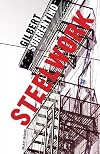
Whether it was appropriate or not, I finished Steelwork at a rural Indiana high school's production of Grease this afternoon. The projection on the page mirrored the reflections on the elaborate stage, where wireless microphones and state of the art acoustics can't compensate for a dearth of talent. Grease looks ofr a good 50s, gender, race and class areedited out. Steelwork looks for the feral urges of a Brooklyn nieghborhood between 1939 and 1950.
Sorrentino's novel is Winesburg, Ohio show more refracted through the editing of Godard. The characters represent the perils of tribal living and the deprivations of the Depression and wartime. All seek release or acknowledgment. I wasn't entirely affected. show less
Sorrentino's novel is Winesburg, Ohio show more refracted through the editing of Godard. The characters represent the perils of tribal living and the deprivations of the Depression and wartime. All seek release or acknowledgment. I wasn't entirely affected. show less
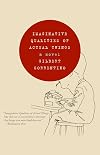
A novel without a plot, starring characters which aren't fully formed. So why does it work?
Sorrentino is using this flimsiest of frameworks to attack the false, the exploitative, and the undeserving of the Art World. He names no names, which adds a sort of timelessness to the mockery: if you don't know specifically who Sorrentino is referring to, you certainly know of somebody like them.
The approach wears a bit thin at times, but Sorrentino's wearily-amused tone keeps the book palatable. The show more only real downside is that it's too meta to recommend to some readers who might otherwise appreciate its humor. show less
Sorrentino is using this flimsiest of frameworks to attack the false, the exploitative, and the undeserving of the Art World. He names no names, which adds a sort of timelessness to the mockery: if you don't know specifically who Sorrentino is referring to, you certainly know of somebody like them.
The approach wears a bit thin at times, but Sorrentino's wearily-amused tone keeps the book palatable. The show more only real downside is that it's too meta to recommend to some readers who might otherwise appreciate its humor. show less
Lists
Awards


You May Also Like


Associated Authors
Statistics
- Works
- 34
- Also by
- 15
- Members
- 2,134
- Popularity
- #12,058
- Rating
- 3.7
- Reviews
- 40
- ISBNs
- 96
- Languages
- 4
- Favorited
- 14
