
David Markson (1927–2010)
Author of Wittgenstein's Mistress
About the Author
David Markson was born in Albany, New York on December 20, 1927. He received an undergraduate degree from Union College and a master's degree from Columbia University. Besides being a writer, he also worked as a journalist, book editor, and periodically as a college professor at Columbia show more University, Long Island University, and The New School. His works include Epitaph for a Tramp; Epitaph for a Dead Beat; This Is Not a Novel; Springer's Progress; Wittgenstein's Mistress; and The Last Novel. His novel, The Ballad of Dingus Magee, was made into a film starring Frank Sinatra entitled Dirty Dingus Magee. He was found dead on June 4, 2010 at the age of 82. (Bowker Author Biography) show less
Series
Works by David Markson
Epitaph for a Tramp and Epitaph for a Dead Beat: The Harry Fannin Detective Novels (2007) 130 copies, 4 reviews
Women and vodka 1 copy
Quel dritto di Fannin 1 copy
Associated Works
Tagged
Common Knowledge
- Canonical name
- Markson, David
- Legal name
- Markson, David Merrill
- Other names
- Merrill, Mark (pseudonym)
- Birthdate
- 1927-12-20
- Date of death
- 2010-06-04
- Gender
- male
- Education
- Union College (BA)
Columbia University (MA) - Occupations
- author
- Awards and honors
- American Academy of Arts and Letters Academy Award (Literature, 2007)
- Nationality
- USA
- Birthplace
- Albany, New York, USA
- Place of death
- New York, New York, USA
- Associated Place (for map)
- New York, USA
Members
Discussions
Pulp mystery novel, published in early 2000s, set in 1950s Greenwich Village in Name that Book (November 2015)
Reviews

Half of this book isn't written down. It's in the reader's head. It is different for each reader. If nothing else, it is certainly more than the sum of its parts. This is not surprising considering its 'parts' are scarcely more than random facts.
The premise is simple: an author is reorganizing a stack of index cards, each of which bears a factoid. He has them pretty much in the order he likes, and this is what you, the reader, are presented with.
But it is what goes on in your head while show more reading these 'cards' that makes the book. Weirdly, it is every bit as addictive as it is plotless. By some mystery of literary mastery, it all makes perfect and coherent sense in the end. The truth you are left with is long-lasting, and would shake even the stoniest of hearts.
It is a credit to the author-- the book's true author-- that he has accomplished so much with little more than what seems to be an experiment in the employment of excessive non-sequitors. However, I suppose that in order to be a master of prose as Markson is hailed, one would have to be a master in its deconstruction as well. show less
The premise is simple: an author is reorganizing a stack of index cards, each of which bears a factoid. He has them pretty much in the order he likes, and this is what you, the reader, are presented with.
But it is what goes on in your head while show more reading these 'cards' that makes the book. Weirdly, it is every bit as addictive as it is plotless. By some mystery of literary mastery, it all makes perfect and coherent sense in the end. The truth you are left with is long-lasting, and would shake even the stoniest of hearts.
It is a credit to the author-- the book's true author-- that he has accomplished so much with little more than what seems to be an experiment in the employment of excessive non-sequitors. However, I suppose that in order to be a master of prose as Markson is hailed, one would have to be a master in its deconstruction as well. show less
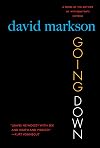
Markson dedicates this novel, about a Bohemian gringo throuple unhinging in darkest Mexico, to Malcolm Lowry — but it reads like Lowry lobotomized, or maybe Lowry lampooned by someone overfamiliar with the baroque excesses of literary Modernism. I hated too many things to list, but I’ll try anyway:
– Spanish dialogue rendered in English, but marked as Spanish by leaving a random word (hombre, or borracho or just sí) untranslated. Or, even more infuriating, weird in-sentence show more self-translations like “perhaps nearby in the night came the xopilotes, the vultures” (this is supposed to be a Mexican person speaking). For most of the book the Mexican characters — either unknowable Indians or shady mestizos — are cardboard cutouts, but when we do get a glimpse of their inner lives they turn out, amazingly, to be even more clichéd within than without.
– Masses of tenuous literary-artistic allusions that are oh-so-unoriginal. Joyce, Eliot, Shakespeare, Van Gogh, Goya, give it a goddamn rest. Nobody in real life thinks or talks this way.
– Dialogue that reads like interior monologue — every utterance ending in an inconclusive em dash — and interior monologue distinguishable only because it’s in italics.
– Flashbacks that are only there so Markson can tick the “non-linear narrative” box on his highbrow novel bingo card, and a burglary scene that’s somehow both excruciating and superfluous.
– A handful of three-way sex scenes that, despite getting Kurt Vonnegut hot under the collar (based on his thigh-rubbing blurb), made me fairly certain that Markson wrote them with a dog-eared copy of “The Joy of Sex” at his elbow.
– A main character whose name is Steve Chance. Another character whose name is Talltrees.
– Dictionary-bothering vocab deployed more clunkily than a copy of the OED falling down the stairs: “The doctor’s voice fell, enclitic. For the moment, staring at him, Talltrees felt a curious sense of displacement himself, as if time were someway abeyant.”
I guess the redeeming features of this book were someway abeyant from me. I just found it, to use another of Markson’s pet adjectives, stercoraceous. Wittgenstein’s mistress is great though. show less
– Spanish dialogue rendered in English, but marked as Spanish by leaving a random word (hombre, or borracho or just sí) untranslated. Or, even more infuriating, weird in-sentence show more self-translations like “perhaps nearby in the night came the xopilotes, the vultures” (this is supposed to be a Mexican person speaking). For most of the book the Mexican characters — either unknowable Indians or shady mestizos — are cardboard cutouts, but when we do get a glimpse of their inner lives they turn out, amazingly, to be even more clichéd within than without.
– Masses of tenuous literary-artistic allusions that are oh-so-unoriginal. Joyce, Eliot, Shakespeare, Van Gogh, Goya, give it a goddamn rest. Nobody in real life thinks or talks this way.
– Dialogue that reads like interior monologue — every utterance ending in an inconclusive em dash — and interior monologue distinguishable only because it’s in italics.
– Flashbacks that are only there so Markson can tick the “non-linear narrative” box on his highbrow novel bingo card, and a burglary scene that’s somehow both excruciating and superfluous.
– A handful of three-way sex scenes that, despite getting Kurt Vonnegut hot under the collar (based on his thigh-rubbing blurb), made me fairly certain that Markson wrote them with a dog-eared copy of “The Joy of Sex” at his elbow.
– A main character whose name is Steve Chance. Another character whose name is Talltrees.
– Dictionary-bothering vocab deployed more clunkily than a copy of the OED falling down the stairs: “The doctor’s voice fell, enclitic. For the moment, staring at him, Talltrees felt a curious sense of displacement himself, as if time were someway abeyant.”
I guess the redeeming features of this book were someway abeyant from me. I just found it, to use another of Markson’s pet adjectives, stercoraceous. Wittgenstein’s mistress is great though. show less
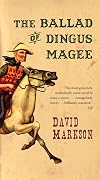
David Markson was recently (2007) named as one of the 60 best authors you’ve never read by New York magazine. Up until yesterday I counted myself as one of the unread, but no more. I did not read one of his postmodern works like The Last Novel or Vanishing Point, but rather one of his earliest works, the anti-Western The Ballad of Dingus Magee.
The back matter on the recently reissued paperback asserts Markson wrote Dingus Magee in a ‘much more traditional narrative style’ than his show more postmodern works. That claim makes me wonder if the publisher actually read the book!
Whatever. The Ballad of Dingus Magee is a hoot from beginning to end as it relates the feud between the desperado Dingus Billy Magee and Sheriff C.L. Hoke Birdsill. The book starts in the middle and then runs in hilarious circles to and fro, but basically Magee seeks feminine companionship (and fortune) whilst Hoke Birdrippings seeks fame (and fortune). Sheriff Birdbottom repeatedly captures Dingus only to fall victim to some folly before Hoke can collect the reward money. Dingus and Hoke conspire to inflate Dingus’s desperado repute so that the reward grows even when Dingus is down in Old Mex.
The hapless Turkey Doolan finds himself in the middle of the feud on more than one occasion and wants nothing more than to bask in the shade of Dingus Magee’s glory. Markson holds the whole Old West in some disregard. Witness his description of the (allegedly!) phony heroics of the Earps, Hickok, and Pat Garret to name a few (pages 109-110) , and of George Armstrong Custer as: “nothing but a mule-sniffing, boastful, yeller-haired fool that dint have the sense to wait on the rest of his troops and got massacred for it…”
What Markson’s Old West lacks in heroism it makes up in overflowing randiness. As the independently operating entrepreneur Anna Hot Water might have said, there’s a bim-bam here and a bim-bam there, everywhere a bim-bam. Even the equine Miss Agnes Pfeiffer manages to engage in intimate contact with Dingus, Hoke, and Turkey after convincing each of them that her chills can only be cured by brotherly cuddling.
Nacherly, Dingus runs afoul of the town’s business woman, ‘Big Blouse’ Belle Nops who enraged describes him as, “The lamb-ramming, rump-rooting, scut-befouling, fist-wiving, gopher-mounting, finger-thrusting, maidenhead-barging, bird’s-nest-ransacking, shift-beshitting, two-at-a-time-tupping lecherous little pox.”
Markson riotously debunks the heroic image of the Old West in ways reminiscent of Little Big Man and has great fun with the dialect along the way. Highest recommendation for anyone with an interest in the Old West mythology or in need of a few laughs. show less
The back matter on the recently reissued paperback asserts Markson wrote Dingus Magee in a ‘much more traditional narrative style’ than his show more postmodern works. That claim makes me wonder if the publisher actually read the book!
Whatever. The Ballad of Dingus Magee is a hoot from beginning to end as it relates the feud between the desperado Dingus Billy Magee and Sheriff C.L. Hoke Birdsill. The book starts in the middle and then runs in hilarious circles to and fro, but basically Magee seeks feminine companionship (and fortune) whilst Hoke Birdrippings seeks fame (and fortune). Sheriff Birdbottom repeatedly captures Dingus only to fall victim to some folly before Hoke can collect the reward money. Dingus and Hoke conspire to inflate Dingus’s desperado repute so that the reward grows even when Dingus is down in Old Mex.
The hapless Turkey Doolan finds himself in the middle of the feud on more than one occasion and wants nothing more than to bask in the shade of Dingus Magee’s glory. Markson holds the whole Old West in some disregard. Witness his description of the (allegedly!) phony heroics of the Earps, Hickok, and Pat Garret to name a few (pages 109-110) , and of George Armstrong Custer as: “nothing but a mule-sniffing, boastful, yeller-haired fool that dint have the sense to wait on the rest of his troops and got massacred for it…”
What Markson’s Old West lacks in heroism it makes up in overflowing randiness. As the independently operating entrepreneur Anna Hot Water might have said, there’s a bim-bam here and a bim-bam there, everywhere a bim-bam. Even the equine Miss Agnes Pfeiffer manages to engage in intimate contact with Dingus, Hoke, and Turkey after convincing each of them that her chills can only be cured by brotherly cuddling.
Nacherly, Dingus runs afoul of the town’s business woman, ‘Big Blouse’ Belle Nops who enraged describes him as, “The lamb-ramming, rump-rooting, scut-befouling, fist-wiving, gopher-mounting, finger-thrusting, maidenhead-barging, bird’s-nest-ransacking, shift-beshitting, two-at-a-time-tupping lecherous little pox.”
Markson riotously debunks the heroic image of the Old West in ways reminiscent of Little Big Man and has great fun with the dialect along the way. Highest recommendation for anyone with an interest in the Old West mythology or in need of a few laughs. show less

In 1951, David Markson, of eventual Wittgenstein's Mistress fame, wrote his 30,000 word master's thesis on Under the Volcano. Nothing substantive at that time, only four years removed from Under the Volcano's publication, had been written on it, except for, well, Markson's thesis. Lowry liked what Markson wrote about his novel. And the two became fast friends the final years of Lowry's life, and Malcolm, when he was sober enough, which unfortunately wasn't very often, mentored David show more Markson's then burgeoning literary/academic career.
In 1978, Markson went back to his old thesis, saw what was lacking therein, saw how much more he still had to say about the Volcano, and turned his master's thesis into a book of insightful criticism upon it.
Sven Birkerts writes a perceptive and incisive introduction to Malcolm Lowry's Volcano that gets to the real meat and bones of the Volcano's doomed protagonist, the Consul's -- Geoffrey Firmin's -- existential predicament, cutting through Firmin's cracked, alcoholic mask. Birkerts cites a question in an excerpt from a letter the Consul has composed, that not only sums up the Consul's philosophy, but undoubtedly Malcolm Lowry's philosophy too:
"Is there any ultimate reality, external, conscious and ever-present etc. etc. that can be realized by any such means that may be acceptable to all creeds and religions and suitable to all climes and countries?"
Birkert then responds to the Consul (to Lowry), with the following:
"It is the great question. What lies behind the phantasmic shimmer of the here and now? Are there larger meanings to be found? Can a mind haunted by intimations of connection survive the endless abrasion of living without that connection?"
I guess the answer depends on how whomever responds to the question defines "survive". I'd say that "haunted mind," quoted above, can survive, but "survive" by definition doesn't necessitate "living well". And that's the psychological, inter-relational crux of Under the Volcano: its poignant portrayal of a sad and squandered and profoundly disconnected life not lived well.
How do we, who've read the book, answer it's core cosmic question, "Can a mind haunted by intimations of connection survive the endless abrasion of living without that connection?" Can we live well alone? Can we live well when we're surrounded by so many people and yet so much loneliness and unhappiness and addiction retains its vice grip upon our lives? When we're, quoting the astute Neil Peart's (of Rush) lyrics, "Alone and yet together like two passing ships?" Can we?
I have read the book entire, Under the Volcano, and yet cannot answer the universal question it raises with much conviction either way; which is part of the reason I'd like to return to it again with David Markson as my guide leading me through, searching its pages for the answers, assuming they exist, socked away as they are in the labyrinthine mythology and allusions underpinning it. I'd also like to return to a closer reading of the Volcano because I know I missed a ton of those deeper meanings and layers, the story's symbolic and elusive substrata of coded data that Lowry so painstakingly applied to his classic narrative like the nuanced brush strokes of an impressionist's painting. Markson deconstructs each brush stroke he can locate within Under the Volcano, as he encyclopedically expounds his talents of linguistic, literary archaeology (or would literary volcanology be a better term?) exploring the Volcano's vast and mysterious -- and metaphysical -- chambers.
Markson claimed that next to Ulysses, Under the Volcano was the most myth- and symbol-laden novel of the twentieth century. So it's not just a book about a doomed self-destructive drunk, I think is the obvious message communicated by Markson's laborious analysis, though super-cynical or superficial readers, I suppose, could "read" the Volcano that way.
But, again, despite what it's many naysayers may say, Under the Volcano is patently not just a book about a drunk. It's not because the Consul, in Lowry's hands, has an uncanny knack for offering a tweaked -- yet prescient -- perspective of Day of the Dead events, even though he's constantly intoxicated, hammered on practically every page. The Consul eyewitnesses, watching the world through his cryptic, alcoholic lenses, an hallucinatory collage of culture and politics and faith and memory/sense perceptions swarming all around him, invisible to his cantina acquaintances (mostly the bartenders) and understandably exasperated ex-wife, that elevates him to sage-like status even despite his despicable failures of character. This strange and complexly flawed mystic man, Geoffrey Firmin, damaged yes beyond belief, beyond redemption, but still a man somehow, brimming over with eerie spiritual enlightenment his last day alive in Mexico; and David Markson shows us exactly how it's about that -- his transcendence -- and not just about some worthless drunk in a bar south of the border committing slow suicide literally 24/7.
What Stuart Gilbert first did for Ulysses, David Markson did for Under the Volcano. And neither accomplishments are small feats in the history of literary criticism. show less
In 1978, Markson went back to his old thesis, saw what was lacking therein, saw how much more he still had to say about the Volcano, and turned his master's thesis into a book of insightful criticism upon it.
Sven Birkerts writes a perceptive and incisive introduction to Malcolm Lowry's Volcano that gets to the real meat and bones of the Volcano's doomed protagonist, the Consul's -- Geoffrey Firmin's -- existential predicament, cutting through Firmin's cracked, alcoholic mask. Birkerts cites a question in an excerpt from a letter the Consul has composed, that not only sums up the Consul's philosophy, but undoubtedly Malcolm Lowry's philosophy too:
"Is there any ultimate reality, external, conscious and ever-present etc. etc. that can be realized by any such means that may be acceptable to all creeds and religions and suitable to all climes and countries?"
Birkert then responds to the Consul (to Lowry), with the following:
"It is the great question. What lies behind the phantasmic shimmer of the here and now? Are there larger meanings to be found? Can a mind haunted by intimations of connection survive the endless abrasion of living without that connection?"
I guess the answer depends on how whomever responds to the question defines "survive". I'd say that "haunted mind," quoted above, can survive, but "survive" by definition doesn't necessitate "living well". And that's the psychological, inter-relational crux of Under the Volcano: its poignant portrayal of a sad and squandered and profoundly disconnected life not lived well.
How do we, who've read the book, answer it's core cosmic question, "Can a mind haunted by intimations of connection survive the endless abrasion of living without that connection?" Can we live well alone? Can we live well when we're surrounded by so many people and yet so much loneliness and unhappiness and addiction retains its vice grip upon our lives? When we're, quoting the astute Neil Peart's (of Rush) lyrics, "Alone and yet together like two passing ships?" Can we?
I have read the book entire, Under the Volcano, and yet cannot answer the universal question it raises with much conviction either way; which is part of the reason I'd like to return to it again with David Markson as my guide leading me through, searching its pages for the answers, assuming they exist, socked away as they are in the labyrinthine mythology and allusions underpinning it. I'd also like to return to a closer reading of the Volcano because I know I missed a ton of those deeper meanings and layers, the story's symbolic and elusive substrata of coded data that Lowry so painstakingly applied to his classic narrative like the nuanced brush strokes of an impressionist's painting. Markson deconstructs each brush stroke he can locate within Under the Volcano, as he encyclopedically expounds his talents of linguistic, literary archaeology (or would literary volcanology be a better term?) exploring the Volcano's vast and mysterious -- and metaphysical -- chambers.
Markson claimed that next to Ulysses, Under the Volcano was the most myth- and symbol-laden novel of the twentieth century. So it's not just a book about a doomed self-destructive drunk, I think is the obvious message communicated by Markson's laborious analysis, though super-cynical or superficial readers, I suppose, could "read" the Volcano that way.
But, again, despite what it's many naysayers may say, Under the Volcano is patently not just a book about a drunk. It's not because the Consul, in Lowry's hands, has an uncanny knack for offering a tweaked -- yet prescient -- perspective of Day of the Dead events, even though he's constantly intoxicated, hammered on practically every page. The Consul eyewitnesses, watching the world through his cryptic, alcoholic lenses, an hallucinatory collage of culture and politics and faith and memory/sense perceptions swarming all around him, invisible to his cantina acquaintances (mostly the bartenders) and understandably exasperated ex-wife, that elevates him to sage-like status even despite his despicable failures of character. This strange and complexly flawed mystic man, Geoffrey Firmin, damaged yes beyond belief, beyond redemption, but still a man somehow, brimming over with eerie spiritual enlightenment his last day alive in Mexico; and David Markson shows us exactly how it's about that -- his transcendence -- and not just about some worthless drunk in a bar south of the border committing slow suicide literally 24/7.
What Stuart Gilbert first did for Ulysses, David Markson did for Under the Volcano. And neither accomplishments are small feats in the history of literary criticism. show less
Lists
Awards


You May Also Like


Associated Authors
Statistics
- Works
- 20
- Also by
- 1
- Members
- 4,298
- Popularity
- #5,843
- Rating
- 3.9
- Reviews
- 112
- ISBNs
- 54
- Languages
- 7
- Favorited
- 25