
Harry Mathews (1930–2017)
Author of Oulipo Compendium
About the Author
Harry Mathews was born in New York City on February 14, 1930. He attended Princeton University in 1947, but left in his sophomore year to join the United States Navy. Once his military service was completed, he received a B.A. in music from Harvard University in 1952. He was the only American to show more become a member of Oulipo, an experimental group of French writers and mathematicians who believe constrained writing techniques are the key to invention. He was an author and editor of the Paris Review literary magazine. His novels included The Conversions, My Life in CIA, and The Solitary Twin. He died on January 25, 2017 at the age of 86. (Bowker Author Biography) show less
Image credit: Photo by srett on flickr.com
Series
Works by Harry Mathews
The Human Country: New and Collected Stories (American Literature (Dalkey Archive)) (2002) 104 copies, 2 reviews
Oulipo Laboratory: Texts from the Bibliotheque Oulipienne (Anti-Classics of Dada.) (1995) — Translator — 96 copies, 1 review
The Case of the Persevering Maltese: Collected Essays (American Literature (Dalkey Archive)) (2003) 83 copies
The planisphere 4 copies
Best & Company : Works 2 copies
The review of contemporary fiction 2 copies
Week One — Author — 1 copy
Locus Solus V 1 copy
Conversations 1 copy
Mr. Nobody At All 1 copy
Ländliche Küche in Zentralfrankreich – Gefüllter Lammschulterrollbraten ohne Knochen (farce double) 1 copy
Le Savoir des Rois (B.O.5) 1 copy
Niki de Saint Phalle 1 copy
À l'oeil (B.O. 70) 1 copy
Un chronogramme pour 1997 1 copy
Associated Works
Lost Classics: Writers on Books Loved and Lost, Overlooked, Under-read, Unavailable, Stolen, Extinct, or Otherwise Out of Commission (2000) — Contributor — 319 copies, 6 reviews
Locus Solus I — Contributor — 5 copies
Antaeus No. 29, Spring 1978 — Contributor — 2 copies
Tagged
Common Knowledge
- Birthdate
- 1930-02-14
- Date of death
- 2017-01-25
- Gender
- male
- Education
- Princeton University
Harvard University (BA|Music|1952) - Organizations
- Oulipo
United States Navy - Awards and honors
- American Academy of Arts and Letters Academy Award (Literature, 1991)
- Relationships
- De Saint-Phalle, Niki (wife, divorced)
Chaix, Marie (wife) - Nationality
- USA
- Birthplace
- New York, New York, USA
- Places of residence
- New York, New York, USA
- Place of death
- Key West, Florida, USA
- Associated Place (for map)
- New York, USA
Members
Reviews

Mathews’ faux-roman-á-clef spy-caper conjuration feels just right at this moment when everyone seems to be running a con, the discourse is tetchy and hollow, and retreat to the shadows feels like an affirmation of resolve.
This is Harry’s last novel. (He died in 2017 at the age of 86). He is at the height of his craft. Good fiction is art/ifice. Harry is pretending. Art provides a kind of paradise, says Harry. The milieu sounds real―Parisian street names, his artist friends. Events in show more the news circa 1973 jangle like an incantation: Le Pen, Baader-Meinhof, Pinochet. Is it dangerous? The stops along your itinerary are arranged in alphabetical order. Harry writes for fun. He says you can never trust a novelist. His mock infiltration is blocked when he is outed as an Oulipian. When Harry’s tryst with the seamstress is almost discovered, he hides in a rolled-up carpet and is accidentally delivered to a dinner party at the home of a notorious fascist thug where he is fingered as a patsy but escapes with the help of a nymphomaniacal dwarf twin who seduces him on the altar of Les Six Saints Jean, but at the last minute the sexton appears, his ultrawhite skin cultivated as a kind of inverse totemic shrine to an unconsummated affair with a dark black boy on Corsica. Perhaps things begin to unravel. Harry is at the height of his craft. He goes on the lam. Nabokov said that a writer’s greatest creation is his readers, and in the end Harry is saved by his. Goodbye, Harry. show less
This is Harry’s last novel. (He died in 2017 at the age of 86). He is at the height of his craft. Good fiction is art/ifice. Harry is pretending. Art provides a kind of paradise, says Harry. The milieu sounds real―Parisian street names, his artist friends. Events in show more the news circa 1973 jangle like an incantation: Le Pen, Baader-Meinhof, Pinochet. Is it dangerous? The stops along your itinerary are arranged in alphabetical order. Harry writes for fun. He says you can never trust a novelist. His mock infiltration is blocked when he is outed as an Oulipian. When Harry’s tryst with the seamstress is almost discovered, he hides in a rolled-up carpet and is accidentally delivered to a dinner party at the home of a notorious fascist thug where he is fingered as a patsy but escapes with the help of a nymphomaniacal dwarf twin who seduces him on the altar of Les Six Saints Jean, but at the last minute the sexton appears, his ultrawhite skin cultivated as a kind of inverse totemic shrine to an unconsummated affair with a dark black boy on Corsica. Perhaps things begin to unravel. Harry is at the height of his craft. He goes on the lam. Nabokov said that a writer’s greatest creation is his readers, and in the end Harry is saved by his. Goodbye, Harry. show less
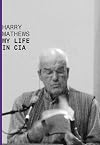
Yup, this was fun. A (most likely fictionalized) memoir; living in Paris in the late 60s and early 70s, the time of student revolts, espionage and terrorism from extremists on both sides, Mathews often found himself - especially as the only American member of Oulipo, frequently hanging out with left-leaning intellectuals convinced of their own importance - suspected of being a CIA informant. So eventually, rather than denying it, he decides to play along; not by admitting it, but by denying show more it in a very obvious way, setting up what looks like a cover, making contacts with various odd freelance spooks trying to buy and sell anything that looks like a secret, making sure to be seen delivering and collecting odd packages in a conspicuously inconspicuous manner... Which is all fun and games until the big boys (or at least, people who think they're big boys, which in this cloak-and-dagger business can be the same thing) start taking him seriously too. There's more than a little of Foucault's Pendulum in this, though not on as grand a scale, and perhaps not as overtly oulipian as I'd been hoping for. But definitely recommended. (And Georges Perec fans should note that Perec, or maybe that should be "Perec", is a fairly major character in the book too.) show less

If a writer’s associations tell us anything, consider that Harry Mathews, along with Kenneth Koch, founded the literary journal Locus Solus, named after the book by Raymond Roussel. Mathews was the first American member of Oulipo (Ouvroir de littérature potentielle), which at different times also included Raymond Queneau, Georges Perec, and Italo Calvino.
Written in the form of journal entries over a two-week period by a man recovering from some kind of psychological episode, The show more Journalist is an inside-out rendering of the writing life and a meditation on the web of linkages—both inanimate and intimate—that makes a life.
The recording of daily existence by the narrator/journalist requires ever more precise categories (matters involving people and matters involving things, matters that are outside me, the ideas and feelings of other people, dreams and thoughts about the future) and attention to ‘subcontinuities.’ He contemplates writing in different colors.
Dear journalist, stay boggled.
Descriptions get more and more elaborate, more absurdly detailed (a gray-green suit nurtured to floppiness, a large patchwork-chrome brooch apparently recovered from a plane wreck). He notices that his disgust with those around him grows milder when he writes down his thoughts as they occur. He begins to include entries for “things not done,” bits of dreams (standing on a pile of desert rubble, he hears himself say out loud, “I know it’s not spelled with a p, you fucking bedant”).
He is ashamed of old feelings, obsessed with the signs and warnings from his body: when leg straightened, clicks; right hand: ligaments of 3rd and 4th fingers strained (last week, but how? Pulling at something that wouldn’t give, but what?); right cheek: superficial numbness (when did I first “not notice” this?). He has 27 categories of “body omens” and looks forward to more,
…the relief of hopelessness preferred to boiling uncertainty.
He knows he is no writer; he’s not after profundity, but 'extensiveness.' He is saving each day to live again. The journal gives exceptional alertness of mind and sensibility. What is important is to record everything, including the act of recording. My life has not been wasted. Whatever I lose, I have this.
Mathews gives the impression of being fully in command of his prose. Pathos and black humor and shades of human thought reveal the nature of the world. Not a sentence is out of place. What seems to be at stake is the meaning of the narrator’s actions and therefore of his existence, and so it is his reasons, not states of mind, that confront each other—not feelings and passions but their logic (ref. Nicola Chiaromonte's Worm of Consciousness).
What you don’t know about the sloughs and bird’s nest inside you takes priority over being speechless when you face a mushroom.
In the last few pages the narration shifts to the third person, and the journal ends allegorically.
Bravo, Harry. show less
Written in the form of journal entries over a two-week period by a man recovering from some kind of psychological episode, The show more Journalist is an inside-out rendering of the writing life and a meditation on the web of linkages—both inanimate and intimate—that makes a life.
The recording of daily existence by the narrator/journalist requires ever more precise categories (matters involving people and matters involving things, matters that are outside me, the ideas and feelings of other people, dreams and thoughts about the future) and attention to ‘subcontinuities.’ He contemplates writing in different colors.
Dear journalist, stay boggled.
Descriptions get more and more elaborate, more absurdly detailed (a gray-green suit nurtured to floppiness, a large patchwork-chrome brooch apparently recovered from a plane wreck). He notices that his disgust with those around him grows milder when he writes down his thoughts as they occur. He begins to include entries for “things not done,” bits of dreams (standing on a pile of desert rubble, he hears himself say out loud, “I know it’s not spelled with a p, you fucking bedant”).
He is ashamed of old feelings, obsessed with the signs and warnings from his body: when leg straightened, clicks; right hand: ligaments of 3rd and 4th fingers strained (last week, but how? Pulling at something that wouldn’t give, but what?); right cheek: superficial numbness (when did I first “not notice” this?). He has 27 categories of “body omens” and looks forward to more,
…the relief of hopelessness preferred to boiling uncertainty.
He knows he is no writer; he’s not after profundity, but 'extensiveness.' He is saving each day to live again. The journal gives exceptional alertness of mind and sensibility. What is important is to record everything, including the act of recording. My life has not been wasted. Whatever I lose, I have this.
Mathews gives the impression of being fully in command of his prose. Pathos and black humor and shades of human thought reveal the nature of the world. Not a sentence is out of place. What seems to be at stake is the meaning of the narrator’s actions and therefore of his existence, and so it is his reasons, not states of mind, that confront each other—not feelings and passions but their logic (ref. Nicola Chiaromonte's Worm of Consciousness).
What you don’t know about the sloughs and bird’s nest inside you takes priority over being speechless when you face a mushroom.
In the last few pages the narration shifts to the third person, and the journal ends allegorically.
Bravo, Harry. show less
The Human Country: Human Country: New and Collected Stories (American Literature (Dalkey Archive)) by Harry Mathews
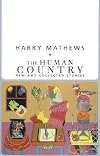
I keep reading everything I can find by Mathews b/c I'm very interested in OuLiPo & Mathews is the only OuLiPo writer whose 1st language is English. The writing's interesting to me.. but it's never QUITE done it for me.. UNTIL NOW! I generally prefer massive novels to short stories, I like the development, the complexity, but in Mathews' case, I find him to be such a 'master' of short story form that I can't help but luv it!
This bk's divided into 3 sections: "First Stories", "The American show more Experience: Stories to be Read Aloud", & "Calibrations of Latitude". Just from a writerly perspective, there's so much variety here, so many ways of creating a reading experience. From the incredible overkill of absurd detail in "Country Cooking from Central France: Roast Boned Stuffed Shoulder of Lamb (Farce Double)" to the evocativeness of "Journeys to Six Lands" to the more 'classically' OuliPoian formalist "Clocking the World on Cue: The Chronogram for 2001" Mathews' ideas are always very thought-out & realized w/ fantastic & subtle skill. show less
This bk's divided into 3 sections: "First Stories", "The American show more Experience: Stories to be Read Aloud", & "Calibrations of Latitude". Just from a writerly perspective, there's so much variety here, so many ways of creating a reading experience. From the incredible overkill of absurd detail in "Country Cooking from Central France: Roast Boned Stuffed Shoulder of Lamb (Farce Double)" to the evocativeness of "Journeys to Six Lands" to the more 'classically' OuliPoian formalist "Clocking the World on Cue: The Chronogram for 2001" Mathews' ideas are always very thought-out & realized w/ fantastic & subtle skill. show less
Lists
Awards


You May Also Like


Associated Authors
Statistics
- Works
- 58
- Also by
- 16
- Members
- 2,564
- Popularity
- #10,015
- Rating
- 3.7
- Reviews
- 44
- ISBNs
- 98
- Languages
- 9
- Favorited
- 17