
Italo Calvino (1923–1985)
Author of If on a Winter's Night a Traveler
About the Author
Italo Calvino 1923-1984 Novelist and short story writer Italo Calvino was born in Cuba on October 15, 1923, and grew up in Italy, graduating from the University of Turin in 1947. He is remembered for his distinctive style of fables. Much of his first work was political, including Il Sentiero dei show more Nidi di Ragno (The Path of the Nest Spiders, 1947), considered one of the main novels of neorealism. In the 1950s, Calvino began to explore fantasy and myth as extensions of realism. Il Visconte Dimezzato (The Cloven Knight, 1952), concerns a knight split in two in combat who continues to live on as two separates, one good and one bad, deprived of the link which made them a moral whole. In Il Barone Rampante (Baron in the Trees, 1957), a boy takes to the trees to avoid eating snail soup and lives an entire, fulfilled life without ever coming back down. Calvino was awarded an honorary degree from Mount Holyoke College in 1984 and died in 1985, following a cerebral hemorrhage. At the time of his death, he was the most translated contemporary Italian writer and a contender for the Nobel Prize for Literature. (Bowker Author Biography) show less
Image credit: Italo Calvino chez lui à Rome en décembre 1984, Italie
Series
Works by Italo Calvino
Orlando furioso di Ludovico Ariosto raccontato da Italo Calvino : con una scelta del poema (1995) 294 copies, 8 reviews
Oulipo Laboratory: Texts from the Bibliotheque Oulipienne (Anti-Classics of Dada.) (1995) 96 copies, 1 review
If on a Winter's Night a Traveler / Invisible Cities / The Baron in the Trees (1957) 85 copies, 1 review
A Sign In Space 6 copies
Vittorini 5 copies
Fábulas e Contos - Volume I 4 copies
The Spiral 4 copies
All At One Point 3 copies
Sizilianische Märchen aus der Sammlung von Italo Calvino / Fiabe siciliane dalla raccolta di Italo Calvino [italienisch-deutsch] (1997) 3 copies
Prefazioni a Shakespeare 3 copies
Romanzi e racconti 3 copies
At Daybreak 2 copies
Without Colors 2 copies
Games Without End 2 copies
Fábulas e Contos - Volume III 2 copies
EL BARÓN RAMPANTE 2 copies
Fábulas e Contos - Volume II 2 copies
PËRSE TË LEXOHEN KLASIKËT 2 copies
Sen "Alo" Demeden Önce 2 copies
Bando del premio Italo Calvino 2 copies
The Aquatic Uncle 2 copies
A King Listens [short story] 2 copies
I Meridiani - Romanzi e Racconti 2 copies
La giornata d'uno scultore 2 copies
By passing the water - Calvino literature and social criticism Collection (2000) ISBN: 4022574666 [Japanese Import] (2000) 2 copies
Six Memos for the Next Millennium (Charles Eliot Norton Lectures) by I Calvino (1988-07-01) 2 copies
The Dinosaurs 2 copies
How Much Shall We Bet? 2 copies
The Light-years 2 copies
Fiabe italiane, vol. 2 2 copies
Fiabe italiane, vol. 1 2 copies
The Form Of Space 2 copies
Modern Italian short stories 1 copy
A VIDA DIFÍCIL 1 copy
Fiabe italiane. Volume terzo 1 copy
Nasi przodkowie 1 copy
Racconti fantastici dell' Ottocento, a cura di Italo Calvino, vol. I, II. Il fantastico visionario - il fantastico quotidiano. (1989) 1 copy
A MEMÓRIA DO MUNDO 1 copy
COSMICÓMICAS 1 copy
um general na biblioteca 1 copy
Il teatro dei ventagli 1 copy
Italia — Contributor — 1 copy
Erzählungen 3. 1 copy
Adam, Suatu Senja 1 copy
Smog 1 copy
A Plunge into Real Estate 1 copy
De osynliga st©Þderna 1 copy
魔法の庭・空を見上げる部族 他十四篇 1 copy
MBI PËRRALLËN 1 copy
Vore forfdre 1 copy
TË PARËT TANË 1 copy
LAS DOS MITADES DEL VIZCONDE 1 copy
POR QUÉ LEER LOS CLÁSICOS 1 copy
L'Uccel Belverde 1 copy
O barão trepador 1 copy
EL CABALLERO INEXISTENTE 1 copy
EL VIZCONDE DEMEDIADO 1 copy
I nostri antenati - Il cavaliere inesistente / Il visconte dimezzato / Il barone rampante 1 copy, 1 review
Sob o Sol Jaguar 1 copy
Ik barone rampante 1 copy
Il gigante orripilante 1 copy
Aizenberg: Dibujos 1 copy
Romanzi e racconti; 3 volumi — Author — 1 copy
Altri romanzi 1 copy
Il libro, i libri 1 copy
Lettere, 1924-1944 1 copy
Liguria 1 copy
Novedades Enero Julio 1991 1 copy
Il mare dell'oggettività 1 copy
Burvju Gredzens 1 copy
IL PAESE NON PUÒ ATTENDERE 1 copy
Amore e ginnastica 1 copy
Ejderha ile Kelebekler 1 copy
Quem Sou? - eBook 1 copy
Prisão Perpétua - eBook 1 copy
Markovaldo 1 copy
Le memorie di Casanova 1 copy
Paese infido (in I racconti) 1 copy
L'aria buona (in I racconti) 1 copy
La panchina (in I racconti) 1 copy
Anabasi Senofonte introduzione di Italo Calvino — Introduction — 1 copy
Luna e Gnac (in I racconti) 1 copy
Associated Works
The Story and Its Writer: An Introduction to Short Fiction (1976) — Contributor — 1,216 copies, 3 reviews
Spells of Enchantment: The Wondrous Fairy Tales of Western Culture (1991) — Contributor — 605 copies, 5 reviews
Secret Ingredients: The New Yorker Book of Food and Drink (2007) — Contributor — 596 copies, 10 reviews
In the Stacks: Short Stories about Libraries and Librarians (2002) — Contributor — 547 copies, 13 reviews
The Art of the Tale: An International Anthology of Short Stories (1986) — Contributor — 381 copies, 3 reviews
The Sophisticated Cat: A Gathering of Stories, Poems, and Miscellaneous Writings About Cats (1992) — Contributor — 112 copies, 1 review
Partisan Diary: A Woman's Life in the Italian Resistance (1956) — Note, some editions — 53 copies, 1 review
Italien erzählt : elf Erzählungen — Author — 6 copies
Halt auf freiem Felde : Eisenbahnabenteuer von Agatha Christie bis Tucholsky (1975) — Author — 2 copies
Literatura Socialismo y Poder. 2 copies
Crónicas de Italia — Contributor — 2 copies
Kinder sind auch Menschen : Heiteres gezeichnet und geschrieben für alle, die Kinder lieben — Contributor — 1 copy
新潮 1990年 09月号 現代SFの冒険 — Contributor — 1 copy
Tagged
Common Knowledge
- Canonical name
- Calvino, Italo
- Legal name
- Calvino Mameli, Italo Giovanni
- Other names
- Cavilla, Tonio
- Birthdate
- 1923-10-15
- Date of death
- 1985-09-19
- Gender
- male
- Education
- University of Turin (Lic. 1947)
- Occupations
- journalist
short story writer
novelist
essayist - Organizations
- Oulipo
Italian Resistance (WWII) - Awards and honors
- Légion d'Honneur (Commandeur, 1981)
American Academy of Arts and Letters (Honorary Member, 1975)
Prix Mondello (1984)
World Fantasy Award (Life Achievement, 1982)
Austrian State Prize for European Literature (1976)
Premio Feltrinelli (1973) (show all 16)
Prix Médicis étranger (1974)
Asti Prize (1970)
Ditmar Award (1970)
International Charles Veillon Prize (1963)
Salento Prize (1960)
Bagutta Prize (1959)
Viareggio Prize (1957)
Saint-Vincent Prize (1952)
Riccione Prize (1947)
l'Unità Prize (1946) - Relationships
- Calvino, Mario (father)
Calvino, Eva Mameli (mother)
Singer, Chichita (wife) - Cause of death
- cerebral hemorrhage
- Nationality
- Italy
- Birthplace
- Santiago de Las Vegas, Cuba
- Places of residence
- San Remo, Italy
Santiago de Las Vegas, Cuba (birth)
Turin, Italy
Paris, Île-de-France, France
Siena, Italy (death) - Place of death
- Siena, Italy
- Burial location
- Cemetery of Castiglione Della Pescaia, Pescaia, Italy
- Map Location
- Italy
Members
Discussions
📚APR 2026 Cosmicomics #6 GAMES WITHOUT END in GoodThings I've Read (May 7)
📚APR 2026 Cosmicomics #9 THE DINOSAURS in GoodThings I've Read (April 28)
📚APR 2026 Cosmicomics #8 HOW MUCH SHALL WE BET? in GoodThings I've Read (April 27)
📚APR 2026 Cosmicomics #7 THE AQUATIC UNCLE in GoodThings I've Read (April 26)
📚APR 2026 Cosmicomics #2 AT DAYBREAK in GoodThings I've Read (April 21)
📚APR 2026 Cosmicomics #5 WITHOUT COLORS in GoodThings I've Read (April 16)
📚APR 2026 Cosmicomics #4 ALL AT ONE POINT in GoodThings I've Read (April 13)
📚APR 2026 Cosmicomics #3 A SIGN IN SPACE in GoodThings I've Read (April 8)
📚APR 2026 Cosmicomics #1 THE DISTANCE OF THE MOON in GoodThings I've Read (April 6)
📚APR 2026 Cosmicomics INTRODUCTION in GoodThings I've Read (March 29)
📚APR 2026 Cosmicomics FINAL THOUGHTS in GoodThings I've Read (March 29)
Oops. Another duplicate. in GoodThings I've Read (March 29)
Oops. Duplicate in GoodThings I've Read (March 29)
📚APR 2026 Cosmicomics #10 THE FORM OF SPACE in GoodThings I've Read (March 29)
📚APR 2026 Cosmicomics #11 THE LIGHT-YEARS in GoodThings I've Read (March 29)
📚APR 2026 Cosmicomics #12 THE SPIRAL in GoodThings I've Read (March 29)
LE: Invisible Cities in Folio Society Devotees (February 17)
Book about you reading the Book in Name that Book (June 2013)
Reviews
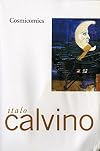
Now that's good Calvino. Funny, detailed, multi-layered, beautifully written and ever so clever without losing track of the story it tells.
On one level, this is a story about a... let's call him a man, because he's definitely male even if he isn't really human, an eternal being named Qfwfq. It's his life, from childhood to maturity. Only his life takes place over the entire age of the universe, from Big Bang to the 1960s on Earth. Each story builds on some scientific factoid, and then show more creates a very human-although-not-human story from it with Qfwfq as the narrator. Sometimes he's a dinosaur, sometimes he's a bodiless cosmic being watching as the universe creates itself... or if HE creates it?
Because on another level, this is a story about what IS. And HOW it is. How we create the world by seeing it, experiencing it, how others create images of us and how others' images of us help us create ourselves. How telling stories can bring things into being. We all create our own universe, we all evolve, and the universe itself keeps on expanding and expanding in all of the directions it can whiz. show less
On one level, this is a story about a... let's call him a man, because he's definitely male even if he isn't really human, an eternal being named Qfwfq. It's his life, from childhood to maturity. Only his life takes place over the entire age of the universe, from Big Bang to the 1960s on Earth. Each story builds on some scientific factoid, and then show more creates a very human-although-not-human story from it with Qfwfq as the narrator. Sometimes he's a dinosaur, sometimes he's a bodiless cosmic being watching as the universe creates itself... or if HE creates it?
Because on another level, this is a story about what IS. And HOW it is. How we create the world by seeing it, experiencing it, how others create images of us and how others' images of us help us create ourselves. How telling stories can bring things into being. We all create our own universe, we all evolve, and the universe itself keeps on expanding and expanding in all of the directions it can whiz. show less
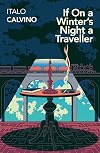
You are reading a book which opens with the line, “You are about to begin reading Italo Calvino’s new novel, If on a winter’s night a traveller,” and you think, sigh, metafiction. But this is Italo Calvino, and so you take the advice Calvino offers: “Relax. Concentrate. Dispel every other thought”– Hang on, every other? How will you know which ones to dispel and which ones to keep? And yet, it is perhaps sound advice as you read about a reader who reads a book only for his show more reading to be cut short, and when he goes looking for a complete copy of the novel he was reading he discovers he had been reading an entirely different book altogether… And at the book shop he meets a young woman who is also interested in this literary mystery he has uncovered, and together they discover yet a third novel mixed in with the previous two. But then he meets the young woman’s sister and becomes involved in her schemes… and at some point both young women end up in one of the narratives you are reading about him reading… And yet despite this literary shell game, where the narrative peas seem to proliferate out of sight under the cups, the whole is intensely readable and not in the slightest bit confusing. In parts it reminded me of Nabokov’s Pale Fire, although without the prissiness. It certainly convinced me I should read more Calvino – If on a winter’s night a traveller may be one long literary trick, but it’s gloriously done. Bravo. show less
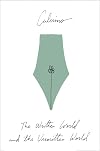
The Written World and the Unwritten World, by Italo Calvino and translated by Ann Goldstein, is a wonderful collection of what they are collectively calling essays. Some are more like notes and commentary, but it doesn't matter, this is a fascinating glimpse into Calvino's thinking.
There are very few readers who will have read all of the works he mentions. I know for some readers that will be a negative, but for those who can read criticism and commentary and grasp the point the writer is show more making without necessarily having read what he is referring to, this will be a delight. Make no mistake, the more works you've read the better you can get his points, especially in essays dedicated to a work. But another aspect to these essays isn't about the specific works but about understanding how a mind such as Calvino's reads and assesses literature.
Many of the pieces in the first section will mention quite a few works but not really be about any of them. He will be talking about a genre, a way of understanding literature, even how to approach writing and translations. He makes his points and usually tosses out an example or two. Even if you don't know those works, the explanation of an idea that precedes the mention of a work is where the takeaway is, not in simply knowing that work. In other words, don't let being unfamiliar with some of the works he cites keep you from enjoying the stroll through how a very intelligent writer and reader approaches literature.
The essay from which this volume gets its name is very good and, I think, one that most readers will appreciate, as well as any writers. Like any collection some of these pieces won't click for you. Unless you're studying Calvino and want to dissect his every word, there is no problem with disengaging from a few of the essays. I found a lot of the ones from the late 50s and very early 60s particularly interesting because that was right after his disenchantment with the Soviet Union and Stalin and his very public resignation from the Communist Party in Italy. Looking at how he touches on workers and wars, political and cultural ideas, is fodder for an amateur interpreter such as myself. Did he mean this? Was he referring to that? I am eager now to go back and reread all of his work. Alas, it isn't as easy as it once would have been, I lost all of my books way back in Katrina and have not even come close to replacing all 5000 or so books. But I can check a few out, find a few second hand, and fill it out with new copies.
Highly recommended for those with an interest in either Calvino himself or with ways of understanding and appreciating literature in general. You don't have to agree with his views to get a lot out of this book, the methodology holds true regardless.
Reviewed from a copy made available by the publisher via NetGalley. show less
There are very few readers who will have read all of the works he mentions. I know for some readers that will be a negative, but for those who can read criticism and commentary and grasp the point the writer is show more making without necessarily having read what he is referring to, this will be a delight. Make no mistake, the more works you've read the better you can get his points, especially in essays dedicated to a work. But another aspect to these essays isn't about the specific works but about understanding how a mind such as Calvino's reads and assesses literature.
Many of the pieces in the first section will mention quite a few works but not really be about any of them. He will be talking about a genre, a way of understanding literature, even how to approach writing and translations. He makes his points and usually tosses out an example or two. Even if you don't know those works, the explanation of an idea that precedes the mention of a work is where the takeaway is, not in simply knowing that work. In other words, don't let being unfamiliar with some of the works he cites keep you from enjoying the stroll through how a very intelligent writer and reader approaches literature.
The essay from which this volume gets its name is very good and, I think, one that most readers will appreciate, as well as any writers. Like any collection some of these pieces won't click for you. Unless you're studying Calvino and want to dissect his every word, there is no problem with disengaging from a few of the essays. I found a lot of the ones from the late 50s and very early 60s particularly interesting because that was right after his disenchantment with the Soviet Union and Stalin and his very public resignation from the Communist Party in Italy. Looking at how he touches on workers and wars, political and cultural ideas, is fodder for an amateur interpreter such as myself. Did he mean this? Was he referring to that? I am eager now to go back and reread all of his work. Alas, it isn't as easy as it once would have been, I lost all of my books way back in Katrina and have not even come close to replacing all 5000 or so books. But I can check a few out, find a few second hand, and fill it out with new copies.
Highly recommended for those with an interest in either Calvino himself or with ways of understanding and appreciating literature in general. You don't have to agree with his views to get a lot out of this book, the methodology holds true regardless.
Reviewed from a copy made available by the publisher via NetGalley. show less
Qwfwq personifies nebular matter, or tiny amoebas, or mathematical concepts to reveal certain emotional truths. In the first story some characters are caught halfway in between the gravitational pulls of the earth and the moon and must literally chose between two worlds. In another a mollusk possesses as rich a sensory and poetic internal life as anyone else because he can intuit the world around him through the contents of the ocean secretions he consumes.
I felt like Qwfwq was less a show more trillion-year-old shapeshifter and more an old man full of tall tales. So when you brought up a fact in your science textbook like time and space itself is curved, he'll respond with "not just curved but notched and pocketed, one time me and a beautiful woman were free-falling through empty space and we landed in one of those pockets and let me tell you things got steamy in there!"
Which brings me to the best joke about Cosmicomics: how horny old Qwfwq is. He's been around for trillions of years and witnessed godlike perspectives but a good majority of these stories are about his attempts to win over another proto-amphibiod, or chunk of stellar dust, or she-mollusk who is both inexplicably female and the most beautiful thing in the galaxy. show less
I felt like Qwfwq was less a show more trillion-year-old shapeshifter and more an old man full of tall tales. So when you brought up a fact in your science textbook like time and space itself is curved, he'll respond with "not just curved but notched and pocketed, one time me and a beautiful woman were free-falling through empty space and we landed in one of those pockets and let me tell you things got steamy in there!"
Which brings me to the best joke about Cosmicomics: how horny old Qwfwq is. He's been around for trillions of years and witnessed godlike perspectives but a good majority of these stories are about his attempts to win over another proto-amphibiod, or chunk of stellar dust, or she-mollusk who is both inexplicably female and the most beautiful thing in the galaxy. show less
Lists
Italian Literature (27)
Art of Reading (1)
Overdue Podcast (1)
Metafiction (1)
Желаемое (1)
Read in 2016 (1)
First Novels (1)
Reading Globally (1)
Cult Classics (1)
Backlisted (1)
Magical Realism (1)
Cooper (1)
Five star books (1)
Mooie titels (1)
Take Four Books (1)
Read These Too (1)
A Novel Cure (1)
Tall tales (1)
Elegant Prose (1)
1940s (1)
Page Turners (1)
Magic Realism (7)
Unread books (2)
Reading LIst (2)
Reiny (2)
Favourite Books (7)
My TBR (4)
Read in 2009 (3)
Short and Sweet (3)
Greatest Books (1)
Best First Lines (1)
To read (1)
. (2)
1950s (2)
1970s (2)
. (1)
Awards


You May Also Like


Associated Authors
Statistics
- Works
- 395
- Also by
- 79
- Members
- 70,218
- Popularity
- #186
- Rating
- 3.9
- Reviews
- 1,124
- ISBNs
- 1,729
- Languages
- 38
- Favorited
- 480


