
Dino Buzzati (1906–1972)
Author of The Tartar Steppe
About the Author
Born in Belluno in the region of Veneto, in northern Italy, Dino Buzzati received his law degree from the University of Milan, but never practiced law. Beginning in 1928, he worked as an editor and journalist for the Milanese daily newspaper Il Corriere della Sera. His first work of fiction, show more Barnabo delle montagne (Barnaby of the Mountains) (1933), established Buzzati as an inventive writer who evoked the mysteries of ordinary life. Buzzati never linked himself to any literary movement or style, preferring to seek the fantastic and the extraordinary in his often commonplace characters and locales. A talented short story writer, Buzzati published most of his short fiction in Sessanta Racconti (1958), which was partially translated into English as Catastrophe. Here, Buzzati increasingly employs urban settings where machines, instead of quasi-mythical monstrous beings, populate a supernatural world. Buzzati died in 1972. (Bowker Author Biography) show less
Image credit: Dino Buzzati in Rome, 19th July 1958
Series
Works by Dino Buzzati
Die Maschine des Aldo Christofari und andere phantastische Erzählungen. ( Phantastische Bibliothek, 157). (1996) 9 copies
The Bears' Famous Invasion of Sicily (Alma Junior Classics): Reader's Companion by Lemony Snicket (Alma Classics) (2017) 5 copies
Sieben Erzählungen 4 copies
Parole e colori 2 copies
La Vénus d'Ille et autres nouvelles fantastiques: avec un groupement thématique « Objets inanimés, avez-vous donc une âme ? » (2021) — Author — 2 copies
Le Veston Ensorcelé Et Autres Nouvelles Inquiétantes. Gautier, Poe, Maupassant, Buzzati, Matheson, Bordage (Oeuvres & Thèmes (138): Le Veston ensorcele et autres nouvelles… (2018) 2 copies, 1 review
El arma secreta 2 copies
Hieronymus Bosch 2 copies
Il giornale segreto 2 copies
Due poemetti 2 copies
Per grazia ricevuta 2 copies
Schlachtschiff Tod 2 copies
Gruaja me flatra 2 copies
Le poesie 1 copy
Sieben Erzählungen 1 copy
Incubi 1 copy
Crimini e misteri 1 copy
Il grande ritratto 1 copy
Historias del amanecer 1 copy
Veći od života 1 copy
Fin dramatique d'un musicien célèbre: Le manteau: Petite promenade: Les fenêtres: La fin du bourgeois (1992) 1 copy
The End of the World 1 copy
Zvláštnosti lásky 1 copy
Bàrnabo d'es mountanhes 1 copy
NETËT E VËSHTIRA 1 copy
RËNIA E SHENJTORIT 1 copy
O Homem da Montanha 1 copy
Aldous Huxley - Il sorriso della Gioconda | August W. Derleth - La signora Lannisfree | - Lettera noiosa — Author — 1 copy
صحراء التتار 1 copy
1: La fine del borghese 1 copy
Buzzati Dino 1 copy
The Colomber [short story] 1 copy
Esmeralda : collages 1 copy
Gerundio 1 copy
L'altare (in Il colombre) 1 copy
L'uomo che andrà in America 1 copy
L'ascensore (in Il colombre) 1 copy
Week-end (in Il colombre) 1 copy
Poème bulles 1 copy
L'ubiquo (in Il colombre) 1 copy
L'umiltà (in Il colombre) 1 copy
L'uovo (in Il colombre) 1 copy
Schiavo (in Il colombre) 1 copy
Teddy boys (in Il colombre) 1 copy
Il conto (in Il colombre) 1 copy
I sorpassi (in Il colombre) 1 copy
E se? (in Il colombre) 1 copy
Dolce notte (in Il colombre) 1 copy
Ferrovia soprelevata. Racconto musicale in sei episodi. II edizione. Premessa di Piero Chiara. (1960) 1 copy
Jago (in Il colombre) 1 copy
Il vento (in Il colombre) 1 copy
Il giardino (in Il colombre) 1 copy
Racconti e romanzi 1 copy
Cuentos de Dino Buzzati 1 copy
Il mago (in Il colombre) 1 copy
Il logorio (in Il colombre) 1 copy
Associated Works
The World of the Short Story: A 20th Century Collection (1986) — Contributor — 513 copies, 4 reviews
The Art of the Tale: An International Anthology of Short Stories (1986) — Contributor — 381 copies, 3 reviews
Italy: A Traveler's Literary Companion (Traveler's Literary Companions) (2003) — Contributor — 49 copies
Italien erzählt : elf Erzählungen — Author — 6 copies
Le desert des Tartares, Dino Buzzati;: Analyse critique (Profil d'une euvre, 40) (1973) — Contributor — 3 copies
Crónicas de Italia — Contributor — 2 copies
Der Zauberspiegel. Phantastische Erzählungen der Weltliteratur — Contributor — 2 copies
構造と美文 山尾悠子偏愛アンソロジー — Contributor — 1 copy
Antaeus No. 34, Summer 1979 — Contributor — 1 copy
S-Fマガジン 1966年04月号 (通巻80号) — Contributor; Illustrator — 1 copy
Tagged
Common Knowledge
- Canonical name
- Buzzati, Dino
- Legal name
- Buzzati-Traverso, Dino
- Birthdate
- 1906-10-14
- Date of death
- 1972-01-28
- Gender
- male
- Education
- University of Milan
- Occupations
- journalist
novelist
short story writer
poet
painter - Organizations
- Corriere della Sera
- Awards and honors
- Mario Massai Prize (1970)
All'Amalia Prize (1970)
Paese Sera Prize (1969)
Premio Strega (1958)
Premio Napoli (1954)
Gargano Prize (1951) - Relationships
- Buzzati-Traverso, Adriano (brother)
- Short biography
- Dino Buzzati Traverso nasce nel 1906 vicino Belluno, da una famiglia dell'agiata borghesia: il padre insegna Diritto internazionale all'Università di Pavia, la madre, veneziana, è sorella dello scrittore Dino Mantovani, assai noto nell'ultimo Ottocento. La villa bellunese è il fulcro della sua infanzia e l'origine dell'universo fanta-reale dello scrittore, con la sua suggestiva biblioteca, il granaio misteriosamente abitato dallo spirito di un antico fattore.
Frequenta il liceo classico Parini di Milano e si laurea in Giurisprudenza con una tesi su La natura giuridica del Concordato.
Compie il servizio militare come ufficiale di complemento e, nel 1928, entra, come cronista, al «Corriere della Sera», giornale che non abbandonerà fino alla fine dei suoi giorni. Nel 1933 pubblica il suo primo romanzo Bàrnabo delle montagne, racconto lungo che racchiude quelli che saranno i temi cari alla sua poetica. Due anni dopo viene dato alla stampa Il segreto del Bosco Vecchio favola vagamente allegorica che passa quasi inosservata, dato il difficile momento politico europeo. Nel 1939, il giornale lo manda in Etiopia, come inviato speciale: un anno più tardi, Buzzati pubblica quello che viene considerato il suo capolavoro narrativo: Il deserto dei Tartari. Quello stesso anno si imbarca come corrispondente di guerra.
Nel 1942 pubblica I sette messaggeri, una raccolta di novelle che comprende Sette piani, angosciante viaggio all'interno della decadenza fisica e della morte, presagio di quella che sarà la sua stessa fine. È la volta, nel 1945, della favola per bambini La famosa invasione degli orsi in Sicilia e de Il libro delle pipe dopo i quali, per ben quindici anni, Dino Buzzati scriverà solo racconti, opere letterarie, libretti teatrali, divagazioni diaristiche (per citarne alcuni: Paura alla Scala, Il crollo della Baliverna, con cui vincerà il premio Napoli, ex aequo con Cardarelli; Ferrovia sopraelevata, racconto musicale in sei episodi; In quel preciso momento).
Nel 1958 vince il Premio Strega con il libro Sessanta racconti. Nel 1960 pubblica Il grande ritratto, esperimento di romanzo fantascientifico, non molto riuscito dal punto di vista letterario, ma importante dal punto di vista tematico, poiché segna l'inizio dell'esplorazione di un nuovo tema: quello della femminilità, fino a quel momento avulso dalle opere dello scrittore o, quantomeno, marginale. Sembra il preludio del romanzo che Buzzati pubblicherà tre anni dopo, nel 1963: Un amore. Forse vagamente autobiografico, certamente diverso dalle altre opere, oggetto di critiche severe e da parte dei suoi detrattori e da qualche suo lettore: come Antonio Dorigo, il protagonista della vicenda, che incontra l'amore a cinquant'anni, Dino Buzzati prenderà moglie in età alquanto avanzata, a sessant'anni.
Nel 1965 esce Il capitano Pic e altre poesie, prima esperienza poetica di Buzzati.
A fianco dell'attività giornalistica e letteraria del grande scrittore, ebbe un certo rilievo quella pittorica: autore di bozzetti e di dipinti vari, Buzzati partecipa a numerose mostre, dichiarando di considerare la pittura non come un hobby ma come il proprio mestiere. In un discorso autoironico, pubblicato nel catalogo della galleria d'arte Cavalletto, nel 1968, afferma che «Dipingere e scrivere per me sono in fondo la stessa cosa. Che dipinga o scriva, io perseguo il medesimo scopo, che è quello di raccontare delle storie». Con Poema a fumetti vincerà il premio Paese Sera, nel 1970. Nel 1971 raccoglie in un volume alcuni fra i suoi elzeviri, intitolandolo Le notti difficili. Mentre già lo assedia la terribile malattia che lo porterà alla morte il 28 Gennaio del 1972. - Cause of death
- cancer
- Nationality
- Italy
- Birthplace
- San Pellegrino, Italy
- Places of residence
- San Pellegrino, Italy (birthplace)
- Place of death
- Milan, Italy
- Map Location
- Italy
Members
Discussions
Group Read, August 2016: The Tartar Steppe in 1001 Books to read before you die (August 2016)
Reviews
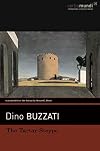
This book deals with the futility of a life wasted away in waiting for a glory that is illusive and forever out of reach. Ofttimes in life, the wait for a certain epoch in time - realization of which might give purpose to a seemingly meaningless existence - becomes the purpose of life in itself. The eternal waiting steals from us the awareness of beauty in the mundane. We have unknowingly locked ourselves in the fortress of our minds as we wait in vain for an imaginary enemy to arrive that show more would legitimize our deliberations and efforts in abstaining ourselves from the outer world. However the occasional melancholic bursts of realization dawns on us, making us question the waiting, pangs of remorse that we have missed out on so much in life that the world had to offer.
It is often too late in life that we realize that we have lived a life in self-imposed exile. show less
“At night in the barrack rooms the beams where the packs hang, the rifle-racks, the very doors, even the fine heavy walnut furniture in the colonel’s room, all the timber in the Fort, including the oldest bits, creaked in the darkness. Sometimes there were sharp cracks like pistol shots. It seemed as if something were actually flying apart. A man would wake in his bunk and strain his ears. But he could hear nothing except other creakings whispering in the night.
This is the time when an obstinate lament from life reawakens in the old beams. Many, many years ago in happier times there had been a surge of heat and youthful strength and clusters of buds sprang from the boughs. Then the tree had been cut down. And now it is spring and in each of its dismembered parts there still awakens a pulse of life, an infinitely weaker pulse. Once there were leaves and flowers; now only a dim memory, enough to make a cracking noise and then it is over until the next year.”
It is often too late in life that we realize that we have lived a life in self-imposed exile. show less

Amo demais o filme do Zurlini que se baseou nesse livro, talvez por tê-lo visto primeiro e Zurlini ser o mais absoluto mestre de sua arte eu não consiga com que Buzzatti o equipare em termos de linguagem.
Dito isso, ainda acho o livro imenso, com uma veia sisifica contendo o absurdismo de Camus, o que é a vida senão esse eterno esperar por algo que não vem, essa falta que não se preenche, essa espera absurda e desigual.
Dito isso, ainda acho o livro imenso, com uma veia sisifica contendo o absurdismo de Camus, o que é a vida senão esse eterno esperar por algo que não vem, essa falta que não se preenche, essa espera absurda e desigual.

When the magically curious Poema a fumetti (A poem in comic strips) was published in 1969, the Italian master of the fantastic and metaphysical fiction, writer and painter Dino Buzzati was sixty-three years old. It is an unexpected but incontestable entry for the first ever "graphic novel", if we accept the terminology imposed by North American publishing.
At the time of publication, the format confounded critics, who by and large knew no better than to obtusely condemn Buzzati's show more "experiment". It didn't seem serious enough to them. It was demeaning to literature to enclose it into sequential images, bubbles and squares such as were usually seen around Donald Duck and Diabolik. And, it struck some as sort of obscene. In short, the critical reception was uncomprehending and cold, but the book sold very well.
The visual, literary, political and autobiographical references of this relatively short and incredibly rich work would take a tome to expound, beginning with Buzzati's life, and what follows are the broadest of strokes. Buzzati's imagination wedded pictures to words from the earliest age, so the question of origin of the idea for a literary story told in pictures is moot. His final decision and choice of the topic, however, had crystallised more than ten years before publication, in the aftermath of a shattering and revelatory love affair, thanks to which Buzzati, by his own testimony, had discovered love for the first time, "at the threshold of old age". The woman in question had been much younger than Buzzati, as was his wife, whom he met and married some years later. The erotic longing, despair and infinite regret that infuse Poema a fumetti are clearly autobiographical.
The plot is taken from the myth of Orpheus and Eurydice, here called Orfi and Eura, and translated to the 1960s Milan. Pop singer Orfi sees one night his beloved Eura disappear into the grounds of a mysterious house, which turns out to be the gateway to Hades. Desperate, he follows and looks for her among the dead (who "live" their death not that differently from how the living live life), beguiles the spirits with his music and song of what they have lost, and almost snatches Eura away… except that she refuses to follow him, telling him it's useless, that another great law reigns in Death, and that they would meet again some day. This is the major departure from the myth, making Eura a positive, independent agent, different from the wholly passive and passively lost Eurydice.
(The reason for this departure, I think, is that Buzzati HAD to abide by the truth of the experience he was conveying. The girl ditched him. Love abandoned him. I can't help wondering what Buzzati's output would have looked like had he known Eros for as long as he had known Thanatos. Oh, he certainly knew, as he wrote to a friend, what it meant to "go to bed with a woman", but it is interesting that his protagonists' main relationships are always with their own and others' death. The joy of living in Buzzati is concentrated in his magnificent appreciation of nature and animals, most poignantly, that of mountains.)
A little on the visual style of the book. Buzzati collected images all his life. He drew and painted in different styles. For Poema a fumetti he adopted a collagistic and "sampling" approach. Some images were drawn from life, including models, such as the young friend who posed for Orfi (Buzzati's wife posed for Eura, a detail which was discreetly overlooked at publication), but others were references to famous illustrations or illustrators, reworkings of photographs, homages to other artists, and concoctions in various styles of the day, influenced by Pop Art and the commercial fumetti. Buzzati's references (according to Lorenzo Vigano) include the image of a hanged man from a medical atlas, architectural plans of buildings in Milano, Salvador Dali's Lobster telephone, photographs of Irving Klaw (famous for his Bettie Page and striptease photos), Caspar David Friedrich, the German Romantic painter, Arthur Rackham, famous illustrator of fairy tales, Otto Greiner, a Symbolist painter, F. W. Murnau, the director of Nosferatu, Wilhelm Busch, German humorist and cartoonist, the creator of Max und Moritz, Hans Bellmer, of the famous quartered Doll, Fellini etc. etc. etc.
This mix creates a strangely dreamlike, surrealist atmosphere, as these diverse visual signals tug at memory and elicit streams of associations. Reading the Poema a fumetti is like lucid dreaming, with eyes open. show less
At the time of publication, the format confounded critics, who by and large knew no better than to obtusely condemn Buzzati's show more "experiment". It didn't seem serious enough to them. It was demeaning to literature to enclose it into sequential images, bubbles and squares such as were usually seen around Donald Duck and Diabolik. And, it struck some as sort of obscene. In short, the critical reception was uncomprehending and cold, but the book sold very well.
The visual, literary, political and autobiographical references of this relatively short and incredibly rich work would take a tome to expound, beginning with Buzzati's life, and what follows are the broadest of strokes. Buzzati's imagination wedded pictures to words from the earliest age, so the question of origin of the idea for a literary story told in pictures is moot. His final decision and choice of the topic, however, had crystallised more than ten years before publication, in the aftermath of a shattering and revelatory love affair, thanks to which Buzzati, by his own testimony, had discovered love for the first time, "at the threshold of old age". The woman in question had been much younger than Buzzati, as was his wife, whom he met and married some years later. The erotic longing, despair and infinite regret that infuse Poema a fumetti are clearly autobiographical.
The plot is taken from the myth of Orpheus and Eurydice, here called Orfi and Eura, and translated to the 1960s Milan. Pop singer Orfi sees one night his beloved Eura disappear into the grounds of a mysterious house, which turns out to be the gateway to Hades. Desperate, he follows and looks for her among the dead (who "live" their death not that differently from how the living live life), beguiles the spirits with his music and song of what they have lost, and almost snatches Eura away… except that she refuses to follow him, telling him it's useless, that another great law reigns in Death, and that they would meet again some day. This is the major departure from the myth, making Eura a positive, independent agent, different from the wholly passive and passively lost Eurydice.
(The reason for this departure, I think, is that Buzzati HAD to abide by the truth of the experience he was conveying. The girl ditched him. Love abandoned him. I can't help wondering what Buzzati's output would have looked like had he known Eros for as long as he had known Thanatos. Oh, he certainly knew, as he wrote to a friend, what it meant to "go to bed with a woman", but it is interesting that his protagonists' main relationships are always with their own and others' death. The joy of living in Buzzati is concentrated in his magnificent appreciation of nature and animals, most poignantly, that of mountains.)
A little on the visual style of the book. Buzzati collected images all his life. He drew and painted in different styles. For Poema a fumetti he adopted a collagistic and "sampling" approach. Some images were drawn from life, including models, such as the young friend who posed for Orfi (Buzzati's wife posed for Eura, a detail which was discreetly overlooked at publication), but others were references to famous illustrations or illustrators, reworkings of photographs, homages to other artists, and concoctions in various styles of the day, influenced by Pop Art and the commercial fumetti. Buzzati's references (according to Lorenzo Vigano) include the image of a hanged man from a medical atlas, architectural plans of buildings in Milano, Salvador Dali's Lobster telephone, photographs of Irving Klaw (famous for his Bettie Page and striptease photos), Caspar David Friedrich, the German Romantic painter, Arthur Rackham, famous illustrator of fairy tales, Otto Greiner, a Symbolist painter, F. W. Murnau, the director of Nosferatu, Wilhelm Busch, German humorist and cartoonist, the creator of Max und Moritz, Hans Bellmer, of the famous quartered Doll, Fellini etc. etc. etc.
This mix creates a strangely dreamlike, surrealist atmosphere, as these diverse visual signals tug at memory and elicit streams of associations. Reading the Poema a fumetti is like lucid dreaming, with eyes open. show less
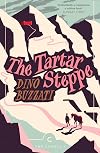
Well, I'll say it straight out with no apologies or shame. This book made me cry. It is not a heroic tale in the ordinary sense of the word. It would be more apt to say it is the story of everyman. An ordinary man trying to find meaning in his life. A man of decency and dreams. I know the book hit me hard due to the point I'm at in my life and my quiet struggles. Others might find the story and the man who is the focus of the story boring and irrelevant. I understand that but stand firmly show more with the man and his ultimate dignity. A story well told, a simple life shared with beauty, and a book I am not likely to forget. show less
Lists
1940s (1)
My TBR (1)
Existentialism (1)
Short and Sweet (1)
Fiction For Men (1)
E's Reader (1)
Reading Globally (1)
Five star books (1)
THE WAR ROOM (1)
Hidden Classics (1)
. (1)
Awards


You May Also Like


Associated Authors
Statistics
- Works
- 244
- Also by
- 30
- Members
- 8,189
- Popularity
- #2,955
- Rating
- 4.0
- Reviews
- 198
- ISBNs
- 538
- Languages
- 29
- Favorited
- 34

