
Elsa Morante (1912–1985)
Author of History
About the Author
Prolific and highly successful, Elsa Morante distinguished herself as a novelist, short story writer, and poet. The Marxist critic Gyorgy Lukacs hailed Morante's early House of the Liars (1948) as "the greatest modern Italian novel," but it was Arthur's Island (1957) that brought her international show more fame and an independent income. Her great financial triumph was, however, History (1974), which was the first Italian novel to be marketed with high-pressure promotional advertising, making use of publisher, mass media, and political party resources to push sales up to 600,000 copies in less than six months. Morante married Alberto Moravia in 1941, and they separated in 1962. (Bowker Author Biography) show less
Image credit: Elsa Morante in her apartment, Rome, 1961
Works by Elsa Morante
Via dell'Angelo e altri racconti 16 copies
Scritti d'arte. Dieci maestri della pittura raccontati da dieci grandi della letteratura (2000) 4 copies
"Piccolo Manifesto" e altri scritti 2 copies
הרדיד האנדלוסי : נובלה וסיפרוים 2 copies
L' Isola di Arturo 2 copies
Arats'eli =Aracoeli = ארצ'לי 1 copy
Povijest 1 copy
Elsa Morante. L'Ile d'Arturo : El'Isola di Arturoe, mémoires d'un adolescent. Traduit de l'italien par Michel Arnaud (1963) 1 copy
Petit Manifeste des communistes (sans classe ni parti): suivi d'Une lettre aux Brigades rouges (2018) 1 copy
Arturon saari 1 copy
[da Addio] 1 copy
אלה תולדות 1 copy
Arturův ostrov 1 copy
Le châle andalou 1 copy
Il Gioco Segreto 1 copy
Tarih Devam Ediyor 1 copy
Morante Elsa 1 copy
Fra Angelico 1 copy
Il mondo salvato dai ragazzi 1 copy
L'isola di Arturo : romanzo 1 copy
Varka i čarolija 1 copy
Associated Works
The Smiles of Rome: A Literary Companion for Readers and Travelers (2005) — Contributor — 66 copies, 2 reviews
Tagged
Common Knowledge
- Legal name
- Morante, Elsa
- Birthdate
- 1912-08-18
- Date of death
- 1985-11-25
- Gender
- female
- Occupations
- poet
novelist
short story writer
reporter
diarist - Awards and honors
- Premio Brancati (1968)
- Relationships
- Moravia, Alberto (husband)
Morante, Laura (niece) - Nationality
- Italy
- Birthplace
- Rome, Italy
- Place of death
- Rome, Italy
- Burial location
- cremated
- Associated Place (for map)
- Rome, Italy
Members
Reviews
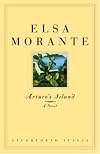
A Haunting Coming-of-Age Story: This Bildungsroman follows Arturo, the main character, as he transitions from his happy and lonely upbringing into the difficult realities of puberty. The story, which is set in the Bay of Naples on the remote island of Procida, depicts the confusion and tumultuous feelings of youth, especially as Arturo's utopian world is upended.
Arturo's vivid imagination, which is stoked by his reading of chivalric romances and his heroic fantasies about his frequently show more absent father Wilhelm, shapes his early years. The central theme of the book is Arturo's slow and cruel disenchantment as he learns the unpleasant realities of his father and the intricacies of interpersonal relationships, especially after his young stepmother Nunziata moves in.
The book is more of a psychological analysis of a lonely, unloved child, despite its seemingly straightforward plot. In-depth examination of Arturo's inner life by Morante reveals his fears, his desire for affection and acceptance, and his battle to balance his idealized dreams with the harsh realities of life.
Arturo's Island is written in a unique, frequently "operatic" style. Despite the fact that some critics consider Morante's writing to be "baroque" or "overwritten," I found it to be lyrical, intuitive, and incredibly insightful. The epic feelings of the teenage narrator are frequently perfectly matched with the book's style.
Several authors have translated the book into English, including Isabel Quigly and Ann Goldstein, who is best known for translating Elena Ferrante's writings. The merits of the various translations have been debated among literary critics; some have praised Goldstein's version for capturing the novel's original beauty and power, while others have criticized it for being "overly literal." show less
Arturo's vivid imagination, which is stoked by his reading of chivalric romances and his heroic fantasies about his frequently show more absent father Wilhelm, shapes his early years. The central theme of the book is Arturo's slow and cruel disenchantment as he learns the unpleasant realities of his father and the intricacies of interpersonal relationships, especially after his young stepmother Nunziata moves in.
The book is more of a psychological analysis of a lonely, unloved child, despite its seemingly straightforward plot. In-depth examination of Arturo's inner life by Morante reveals his fears, his desire for affection and acceptance, and his battle to balance his idealized dreams with the harsh realities of life.
Arturo's Island is written in a unique, frequently "operatic" style. Despite the fact that some critics consider Morante's writing to be "baroque" or "overwritten," I found it to be lyrical, intuitive, and incredibly insightful. The epic feelings of the teenage narrator are frequently perfectly matched with the book's style.
Several authors have translated the book into English, including Isabel Quigly and Ann Goldstein, who is best known for translating Elena Ferrante's writings. The merits of the various translations have been debated among literary critics; some have praised Goldstein's version for capturing the novel's original beauty and power, while others have criticized it for being "overly literal." show less

Un capolavoro, basta questa parola per definire questo libro, per me, di una bellezza sconvolgente. Uno sguardo spietato e al tempo stesso struggente, straziante ma anche dolcissimo, sul periodo dell’ultima guerra e che fa da sfondo al racconto delle vicende di Ida, Nino, Useppe, Davide e di tantissimi altri personaggi che li accompagnano in quegli anni difficili e durissimi.
Letto la prima volta alla sua uscita nel 1974 è un libro da leggere e rileggere, assolutamente.
Letto la prima volta alla sua uscita nel 1974 è un libro da leggere e rileggere, assolutamente.
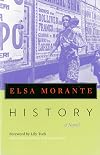
This should be called Social History: A Novel with a Heart. It should be called A Novel With a Heart that Wriggles to Live and Struggle and Snarl and Nip like a Pup at the Bitch's Teat, Squirms with a Perfect Limerence that Will be Written in Heartbrimming Prose by Signora Morante So that It Will Never Be Forgotten, Tosses Its Curls and Pastes a Sneer on Its Pomegranate Lips and Puffs Out the Chest of Its Slight but Sturdy Frame and Says It's a Joke a Joke All a Joke, Shakes Itself Apart show more with a Fear that Means Crumbling Bones, Infected Blood, Grands Mals, a Fire Consuming All and All the Kids and Animals Run from the Fire, and Shivers and Resolves into a Joy that Can't be Beat, that a Little Boy Named Useppe Brought into the World with him by a Miraculous Transubstantiation Just by Being Born, that All the Kids and Animals Fly Away to America or Heaven, that We'll Always Be Together. That sounds like a book that would leave the reader abject and trembling a time or two, but come ever back in the spirit of that always-togethermanship and lead you home.
But this book is also subtitled: And that trembling, that shivering, that shaking, tossing, squirming, wriggling, all the way back into the safety of the womb, that's just your sickness, your epilepsy, your failure to thrive, no grands mals, grand narratives, capital letters here, except one, because the Fear is back, consuming all the kids and animals, and we'll never be together, because everyone's dead. I can't remember ever feeling so wrung out and wasted by a book with so much human spirit and happiness-against-the-odds in it. The fact that the Italian Left condemned this book on grounds of ideological purity is so repulsive and, as capital-H history, the gross kind, currently in 2011 slouches toward the future with a wave of "we (always together) are the 99%" protests that purport to be about a kinder and fairer society, it's worth saying a little prayer that we all err, when we err, on the side of love. And that somehow this time love doesn't leave us victims of the 1% that start wars and co-opt ideas into ideologies and hoard all the safety and love they can for themselves. When they cause the mass society to exist in a perpetual state of threat and insecurity, they are damaging and destroying humans. Late capitalism is a war of the few on the many--trite and true--and opposing economic equality is a war crime. show less
But this book is also subtitled: And that trembling, that shivering, that shaking, tossing, squirming, wriggling, all the way back into the safety of the womb, that's just your sickness, your epilepsy, your failure to thrive, no grands mals, grand narratives, capital letters here, except one, because the Fear is back, consuming all the kids and animals, and we'll never be together, because everyone's dead. I can't remember ever feeling so wrung out and wasted by a book with so much human spirit and happiness-against-the-odds in it. The fact that the Italian Left condemned this book on grounds of ideological purity is so repulsive and, as capital-H history, the gross kind, currently in 2011 slouches toward the future with a wave of "we (always together) are the 99%" protests that purport to be about a kinder and fairer society, it's worth saying a little prayer that we all err, when we err, on the side of love. And that somehow this time love doesn't leave us victims of the 1% that start wars and co-opt ideas into ideologies and hoard all the safety and love they can for themselves. When they cause the mass society to exist in a perpetual state of threat and insecurity, they are damaging and destroying humans. Late capitalism is a war of the few on the many--trite and true--and opposing economic equality is a war crime. show less
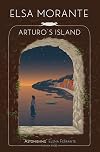
5. Arturo's Island by Elsa Morante
Translation: from Italian by Ann Goldstein (2019)
OPD: 1957
format: 370-page paperback
acquired: April 2023 read: Jan 14-28 time reading: 14:12, 2.3 mpp
rating: 4
genre/style: novel theme: TBR
locations: Procida, an island in the Bay of Naples. I think ~1912.
about the author: Italian novelist, poet, translator, and children's books author was born in and lived most of her lived in Rome, 1912-1985.
I'm a little disappointed in myself as a reader. This is a show more beautiful book, but I never settled down into it. I was constantly impatient.
Arturo grows up on Procida, an island in the Bay of Naples, alone. His teenage mother died in childbirth, and his German-born father only visits briefly, leaving him alone for months at time. As a baby and younger child he was cared for by a young man, Silvestro. But Silvestro has left to join the army, and Arturo, now 14, lives only with his dog in an old large house, fed by a man he never really sees. Uneducated, except by Silvestro and the old books in the house, which he devours, and the example of his absent father, his real education comes as he roams the island and its beaches freely, accompanied by his dog, sometimes taking his rowboat. His own Virgilian Eden.
The untethered Arturo, bound only by his island, has a rough transition into puberty as his father marries a 16-yr-old uneducated Neapolitan girl, and leaves her in the house with Arturo. Even as Arturo hates the ugly common girl his father refuses to love, he comes to admire her willful insistence of her own view of the world, and her religious devotion to many different Mary's. He finds love in a swirl of conflicting emotions around sex, disappointment in his impossible ideals, and his longing to be loved as a mother loves.
Maybe this could called forlorn in paradise. It takes a while before Arturo casts himself out of his Eden, and into WWII. (note: I had to look up which war this was. I closed the book thinking it was WWI.)
This book has a feel similar to Elena Ferrante's Neapolitan Quartet. The translator is the same (this is a 2019 translation). And Ferrante is quoted on the front and back cover. Both books work partially on atmospheric and interpersonal unspoken emotional swings.
His paradise:
Some evenings, after dinner, drawn by the cool outside air, I stretched out on the doorstep, or on the ground in the yard. The night, which, down below an hour before had seemed to be so fierce, here, a step from the lighted French door, became familiar again. Now if I looked at the sky, it was a great ocean, scattered with countless islands, and, sharpening my gaze, I saw among the stars, those whose names I knew: Arturo, first of all of others, and then the Bears, Mars, the Pleiades, Castor and Pollux, Cassiopeia… I had always regretted that in modern times there was no longer on earth some forbidden limit, like the Pillars of Hercules for the ancients, because I would’ve liked to be the first to go beyond it, challenging the ban with my audacity; in the same way, now, looking at the starry sky, I envied the future pioneers who would be able to reach the stars.
2024
https://www.librarything.com/topic/356616#8390688 show less
Translation: from Italian by Ann Goldstein (2019)
OPD: 1957
format: 370-page paperback
acquired: April 2023 read: Jan 14-28 time reading: 14:12, 2.3 mpp
rating: 4
genre/style: novel theme: TBR
locations: Procida, an island in the Bay of Naples. I think ~1912.
about the author: Italian novelist, poet, translator, and children's books author was born in and lived most of her lived in Rome, 1912-1985.
I'm a little disappointed in myself as a reader. This is a show more beautiful book, but I never settled down into it. I was constantly impatient.
Arturo grows up on Procida, an island in the Bay of Naples, alone. His teenage mother died in childbirth, and his German-born father only visits briefly, leaving him alone for months at time. As a baby and younger child he was cared for by a young man, Silvestro. But Silvestro has left to join the army, and Arturo, now 14, lives only with his dog in an old large house, fed by a man he never really sees. Uneducated, except by Silvestro and the old books in the house, which he devours, and the example of his absent father, his real education comes as he roams the island and its beaches freely, accompanied by his dog, sometimes taking his rowboat. His own Virgilian Eden.
The untethered Arturo, bound only by his island, has a rough transition into puberty as his father marries a 16-yr-old uneducated Neapolitan girl, and leaves her in the house with Arturo. Even as Arturo hates the ugly common girl his father refuses to love, he comes to admire her willful insistence of her own view of the world, and her religious devotion to many different Mary's. He finds love in a swirl of conflicting emotions around sex, disappointment in his impossible ideals, and his longing to be loved as a mother loves.
Maybe this could called forlorn in paradise. It takes a while before Arturo casts himself out of his Eden, and into WWII. (note: I had to look up which war this was. I closed the book thinking it was WWI.)
This book has a feel similar to Elena Ferrante's Neapolitan Quartet. The translator is the same (this is a 2019 translation). And Ferrante is quoted on the front and back cover. Both books work partially on atmospheric and interpersonal unspoken emotional swings.
His paradise:
Some evenings, after dinner, drawn by the cool outside air, I stretched out on the doorstep, or on the ground in the yard. The night, which, down below an hour before had seemed to be so fierce, here, a step from the lighted French door, became familiar again. Now if I looked at the sky, it was a great ocean, scattered with countless islands, and, sharpening my gaze, I saw among the stars, those whose names I knew: Arturo, first of all of others, and then the Bears, Mars, the Pleiades, Castor and Pollux, Cassiopeia… I had always regretted that in modern times there was no longer on earth some forbidden limit, like the Pillars of Hercules for the ancients, because I would’ve liked to be the first to go beyond it, challenging the ban with my audacity; in the same way, now, looking at the starry sky, I envied the future pioneers who would be able to reach the stars.
2024
https://www.librarything.com/topic/356616#8390688 show less
Lists
1940s (1)
. (1)
Favourite Books (1)
THE WAR ROOM (1)
1970s (1)
Female Author (4)
Schwob Nederland (2)
Best War Stories (1)
Summer Books (1)
Five star books (1)
1950s (1)
War Literature (1)
Awards


You May Also Like


Associated Authors
Statistics
- Works
- 64
- Also by
- 7
- Members
- 3,842
- Popularity
- #6,596
- Rating
- 4.0
- Reviews
- 86
- ISBNs
- 278
- Languages
- 19
- Favorited
- 15


