
Elena Ferrante
Author of My Brilliant Friend
About the Author
Elena Ferrante was born in Naples, Italy. Her work includes Those Who Leave and Those Who Stay, The Story of the Lost Child, The Story of a New Name, The Lost Daughter, Fragments, and My Brilliant Friend. She is the author of My Brilliant Friend which made The New York Times Bestsellers List and show more The New Zealand Best Seller List 2015. She was included on Time magazine's annual list of the 100 most influential people in the world. (Bowker Author Biography) show less
Disambiguation Notice:
(fre) ATTENTION AUX COMBINAISONS POUR CET AUTEUR DANS CHAQUE LANGUE ET ENTRE LES TRADUCTIONS.
APRES UN GROS TRAVAIL DÛ DE GRANDES CONFUSIONS, UNE PARTIE DES SEPARATIONS CORRECTION COMBINAISON EST FAITE AU 3 JUILLET 2022 POUR LA SERIE L'AMIE PRODIGIEUSE..
A Noter que les EAN, ISBN, Code ASIN, Les titres des volumes ne correspondent pas toujours
Series
Works by Elena Ferrante
Ferrante Costco CA Prepack 2 copies
صديقتي المذهلة 2 copies
PRITENA MEA GEANIALA (VOL1) 1 copy
حكاية الاسم الجديد 1 copy
أيام الهجران 1 copy
Associated Works
After the War: A Collection of Short Fiction by Postwar Italian Women (2004) — Contributor — 10 copies
Tagged
Common Knowledge
- Birthdate
- 1943
- Gender
- female
- Occupations
- author
- Short biography
- Elena Ferrante is the pseudonym of the otherwise anonymous author.
https://www.newyorker.com/culture/cult... - Nationality
- Italy
- Birthplace
- Naples, Italy
- Map Location
- Italy
Members
Discussions
September 2021: Elena Ferrante in Monthly Author Reads (October 2021)
Reviews
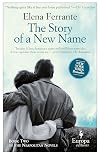
Well, I'm delighted to report that I found the "second book" to be as good as the first, if not better. The reason for the speech marks is that I don't believe this to be a second book at all. In the normal sense, a second book would mean maybe picking up a decade or so on, or perhaps would play with time and propel the reader back to an earlier point in time. Ferrante, however, picks up without drawing breath from the exact same scene that book 1 left on.
I therefore suspect we are being show more had, and that this is not a quartet of four novel but rather one big, ginormous, gargantuan mega novel that makes Vikram Seth's A Suitable Boy look like a short story (this second book alone was 470 pages long).
That being said, hurrah for big, ginormous, gargantuan mega novels when they're as good as this! I was once again immersed in the characters and the tense setting of the backstreets of Naples, and the pages flew by.
Yet again the cover irked me, and my husband commented one morning without irony that it was a book that my Aunty Betty would probably enjoy. Aunty Betty is a spirited, much loved aunt of mine who reads, in my opinion, very poor quality romance novels that should never see the light of day. I told him he was mistaken and that this was 'literature' and not the type of book that Aunty Betty would ever read despite the cover, so he asked me to describe it to him. After I'd finished, he concluded "so it's a romance novel then".
I have to say it got me thinking. I said sneeringly in my review of Book 1 that the cover made it look like I was reading Barbara Taylor Bradford novel, but is that really so far from the truth? Fantastic as this Neapolitan quartet is, is the truth perhaps that this is just chick lit at its best but we're too snobbish to think of it as that so we're convincing ourselves it's literary fiction?
The jury is out in my head. However, I care less - whatever Ferrante is writing, I love it, and I can't wait to pick up the thread in Book 3.
4.5 stars - now where did I put that Danielle Steele book.... show less
I therefore suspect we are being show more had, and that this is not a quartet of four novel but rather one big, ginormous, gargantuan mega novel that makes Vikram Seth's A Suitable Boy look like a short story (this second book alone was 470 pages long).
That being said, hurrah for big, ginormous, gargantuan mega novels when they're as good as this! I was once again immersed in the characters and the tense setting of the backstreets of Naples, and the pages flew by.
Yet again the cover irked me, and my husband commented one morning without irony that it was a book that my Aunty Betty would probably enjoy. Aunty Betty is a spirited, much loved aunt of mine who reads, in my opinion, very poor quality romance novels that should never see the light of day. I told him he was mistaken and that this was 'literature' and not the type of book that Aunty Betty would ever read despite the cover, so he asked me to describe it to him. After I'd finished, he concluded "so it's a romance novel then".
I have to say it got me thinking. I said sneeringly in my review of Book 1 that the cover made it look like I was reading Barbara Taylor Bradford novel, but is that really so far from the truth? Fantastic as this Neapolitan quartet is, is the truth perhaps that this is just chick lit at its best but we're too snobbish to think of it as that so we're convincing ourselves it's literary fiction?
The jury is out in my head. However, I care less - whatever Ferrante is writing, I love it, and I can't wait to pick up the thread in Book 3.
4.5 stars - now where did I put that Danielle Steele book.... show less
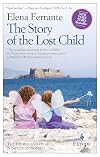
Once again, Elena Ferrante brings the intimate friendship of her principle characters, Elena and Lila, to life, though much of what occurs in this final novel in her Neapolitan series is harmful to their friendship. Elena rushes into her relationship with Nino Sarratore, all the the while trying to suppress her suspicion of Lila’s disapproval. Indeed, much of what Elena does and thinks and even writes in her growing career as a novelist and intellectual is shaped and conditioned either by show more Lila’s explicit critique or by Elena’s imagined version of what Lila might say. And so Elena acts both for and against her childhood friend, desperate to attain some form of autonomy even whilst she foregoes it in her anxiety. Elena has moved back to Naples, though not the old neighbourhood, with her two daughters. And it is motherhood that comes to dominate the themes here as first Elena and then Lila herself become pregnant. Their shared condition is emblematic of just how entwined their lives have been throughout whether they were conscious of it or not.
Eventually Elena moves with her now three daughters into the flat above Lila’s in the old neighbourhood. Here the ties with the past are strong. But so too are the ties with elements from the earlier three novels. Ferrante weaves the stories together so tightly that everything in the current novel feels as though it might have been there in the very first one, just hidden around a corner. The lives of Elena and Lila, their lovers and children, and their friends from the old neighbourhood breathe with fire. And once that fire catches you, it is nearly impossible to put the book down.
Ferrante’s Elena narrates the whole of this volume but she is not spared. Even when she is most critical of her friend, the reader sees through her fears to the self-doubt at its root. While not an unreliable narrator, we come to see her view as slanted, as given to jealousy and pettiness as any other, and so she becomes, unsympathetically, even more believable. It is a remarkable balancing act. By the end, I found myself reading ever more slowly, fearing with each page the inevitably loss of this brilliant friendship. Fortunately, I can start again almost immediately, which is surely one of the great blessings of novels as fine as these. Highly recommended. show less
Eventually Elena moves with her now three daughters into the flat above Lila’s in the old neighbourhood. Here the ties with the past are strong. But so too are the ties with elements from the earlier three novels. Ferrante weaves the stories together so tightly that everything in the current novel feels as though it might have been there in the very first one, just hidden around a corner. The lives of Elena and Lila, their lovers and children, and their friends from the old neighbourhood breathe with fire. And once that fire catches you, it is nearly impossible to put the book down.
Ferrante’s Elena narrates the whole of this volume but she is not spared. Even when she is most critical of her friend, the reader sees through her fears to the self-doubt at its root. While not an unreliable narrator, we come to see her view as slanted, as given to jealousy and pettiness as any other, and so she becomes, unsympathetically, even more believable. It is a remarkable balancing act. By the end, I found myself reading ever more slowly, fearing with each page the inevitably loss of this brilliant friendship. Fortunately, I can start again almost immediately, which is surely one of the great blessings of novels as fine as these. Highly recommended. show less
I don't understand the mediocre reviews. This novel, and the preceding one, are brilliant. In this second volume the emotions and situations become more complex. The oceans of feelings and thoughts are rendered in language so precisely that the reader understands subtleties and contradictions in the characters' interactions. We can understand how the narrator can love, fear, and resent Lila all at once. We can understand why Lila carelessly disregards Lenu's feelings about Nino, and why Lenu show more would want to gloat even knowing how low Lila has been brought in life. Unlike the opinion of another reviewer, I don't think Ferrante is trying to normalize the domestic violence that is rampant in Naples at this time - I think she's portraying AND critiquing those norms. She ruthlessly exposes hypocrisy, pretension, and violence disguised as benevolence, even in the characters we most identify with, which is probably why some readers find them unlikeable. I think they are lovably, complexly human and I want to spend a lot more time in Ferrante's mind than her few books afford. show less
The final volume of the Neapolitan Novels has just the balance of clarity and ambiguity that it deserves. All of the plotlines are "closed", but the central mystery of Lila's place in Elena's life is open forever, as it should be. Her children have given her a mixture of pride and frustration. Her past lovers brought both disappointment and fulfillment. Even the city of Naples, which she's been constantly running from but never entirely leaving, remains as alienating as it is inescapable. show more She ends the final book with Lila having vanished from her life, trying to write the story of her relationship with her best friend, knowing that it will never truly capture the most essential aspects of that friendship but unable to desist. You knew exactly how the story would end from the very beginning of the first volume, but you had to see how Ferrante would get there, and that ability to compel the reader's attention over the subsequent thousands of pages is the mark of a truly great writer. I can nitpick individual parts of the series but overall it's exactly as great as everyone says it is.
This fourth book in particular is many things, but as I was reading I felt that it was primarily about what happens when you're finally dealing with the full effects of your life choices. Your major life decisions are never yours alone, since all of them - marriage, adultery, divorce, having children, choosing a career, etc - affect the people close to you, but life is not just a morality play that ends in a big trial with a guilty/not guilty verdict. Decisions that seem perfectly sound at the time - leaving an unhappy relationship, or leaving a city you're miserable in, or deciding to pursue a demanding career that involves sacrifices - can have all sorts of unintended side effects. But even making the "wrong choice", for example getting involved with a faithless rake like Nino, doesn't necessarily mean that life punishes you; often it just means you have more choices to make. There are many clichés like "life is lived forwards but can only be understood backwards" or "history is just one damn thing after another", but they are perfectly true, and the most skilled novelists are able to show how the ceaseless onslaught of events in our lives obey their own logic, only in hindsight showing the true narrative.
One example of how Ferrante shows how time reveals unexpected consequences is when Elena is accused of being "unreliable" by Pietro's mother Adele, who went from being "on her side" to the opposite after Elena admitted she didn't love Pietro and was going to leave him for Nino:
"I trusted a son to you and you didn't treat him honestly. If you wanted someone else, why did you marry him?"
"I didn't know I wanted someone else."
"You're lying."
I hesitated, I admitted: "I'm lying, yes, but why do you force me to give you a linear explanation; linear explanations are almost always lies. You also spoke badly of Pietro, in fact you supported me against him. Were you lying?"
"No. I was really on your side, but within a pact that you should have respected."
"What pact?"
"Remaining with your husband and children. You were an Airota, your daughters were Airotas. I didn't want you to feel unsatisfied and unhappy, I tried to help you be a good mother and a good wife. But if the pact is broken everything changes. From me and from my husband you'll have nothing anymore, in fact I'll take away everything I've given you."
Adele's reaction to Elena's abandonment of her son is harsh, but it's hard to call it unfair, and Elena should have known that her decision would involve unpleasant realities like that one. Elena never had the kind of instant spark with Pietro that she did with Nino, which, depending on your attitude towards marriage, either means she could have "tried harder" in the marriage, or that she should have refused to marry Pietro in the first place. But she chose a different option. Was Elena wrong to leave Pietro for Nino, and are the difficulties she will now have with her soon-to-be-former in-laws an appropriate punishment for that sin? As Elena says, "linear explanations are almost always lies": it's not like Elena deliberately set out to ruin her own life, or her husband's, or her children's, or her mother-in-law's, it's just that, well, life happens, and sometimes you set out on one path and then figure out later on that it's not what you really want. The exact extent to which you should follow your heart in the moment as opposed to sticking it out through tough times is forever unknowable, and when you start trying to factor in all the reactions of all the people you care about, the more you try to make a "reasonable" decision the more unreasonable the weight you place on yourself is.
That being said, rare is the reader who doesn't think Elena's an idiot for picking Nino. Of course he's going to cheat on her, of course he won't leave his wife for her, of course he'll get his wife pregnant again, and of course all of his grand political speechifying is ultimately bullshit. Should Elena have known this? As a reader, you want to scream: yes, you idiot! But honestly, nobody ever achieves the same clarity towards their own relationships that they do toward someone else's, so all you can do is feel for Elena as she tries to deal with the fallout of her own actions. You also feel for Lila and her perspective: imagine that one of your friends, in fact your best friend, is doing something stupid, in fact the very same stupid thing, that you once did, and in fact with the very same stupid person that you did the stupid thing with, and for much less of a good reason (Pietro over the course of this volume reveals himself to be not such a bad guy, and Elena probably could have worked things out with him if she'd tried). What does being Elena's friend mean in this case? Especially when the last thing Elena wants to hear from her is honesty, such as when she reveals that Nino never left his wife:
"I cut Lila out of everything that followed. I was hurt, not because she had revealed that for more than two years Nino had been telling me lies about the state of his marriage but because she had succeeded in proving to me what in fact she had said from the start: that my choice was mistaken, that I was stupid."
I think everyone, if they're honest with themselves, has a mortal fear of looking stupid, and has allowed that fear to drive them to make questionable decisions, often to even stupider effect. And as expected, Elena feels the weight of disappointment from everyone around her: Lila, her mother, her sister. About the only person whose sympathy and support she has is Franco, her boyfriend prior to Pietro, but she loses him tragically to his own depression. Her own harshest critic is herself, however. One of the most poignant scenes in the book comes when Elena, who's been trying to balance her accelerating career with her newly chaotic home life, experiences a moment of humiliation in front of her daughters:
"The next day I returned to Genoa and said point-blank to Dede and Elsa, in the presence of my in-laws:
'Girls, I have a lot of work at the moment. In a few days I have to leave again and then again and again. Do you want to come with me or stay with your grandparents?'
Even today as I write that question I'm ashamed.
First Dede and then, right afterward, Elsa answered:
'With Grandma and Grandpa. But come back whenever you can and bring us presents.'"
That your own children take such a casual and mercenary attitude towards your presence must be the worst thing a parent can hear, especially if it's deserved. This volume focuses heavily on motherhood and daughterhood, and so that moment is just one of many with a bitter edge, as Elena experiences all the usual anxieties of not wanting her kids to do the same things she did - like cursing or running with a "rough crowd" - even if she did all that and still ended up "okay". The death of Elena's mother, who had consistently hectored and worried over her, is a big deal, and likewise she endlessly fusses over her own daughters, especially Imma, who she had with Nino, comparing her to Lila's daughter Tina, who was also a Nino production. There are strong implications that, had Tina remained in the story, her relationship to Imma might have recapitulated Lila's relationship to Elena, but perhaps that's oversimplifying things. Imma herself raises strong questions in Elena, not just because of her nature, but also what her existence says about Nino:
"In those first hours of our daughter’s life I observed him in every gesture, in the expressions of disappointment and those of approval. I felt happy and yet disoriented. Was it him? Was he the man I had always loved? Or a stranger I was forcing to assume a clear and definite character?"
And that not only bears on questions of to what extent you can measure yourself by your children, but how you measure your relationships overall. Even though Nino ends up being worthless, was the relationship "worth it" because of the child? Elena was looking for something in Nino that she was missing in herself; was her inevitable disappointment truly inevitable? If she had gotten with Nino earlier, could they have had a different life together? Given the way she reconciled with Pietro, was it a mistake to marry him, a mistake to divorce him, both, or neither? More broadly, is there a silver lining to every failed relationship, some gift of understanding or experience they pass along in spite of themselves?
And that goes doubly, triply, infinitely more for the most important relationship of Elena's life, the one she had with Lila. It's very interesting that the reader never actually gets to see any of Lila's writing that Elena considered so meaningful to her, particularly the childhood story "The Blue Fairy", which she credited with inspiring her entire writing career. Perhaps that's Ferrante's way of saying that the actual writing itself wasn't so important, only its effect on Elena; perhaps it's also a way of putting the same kind of distance between the reader and the characters as the distance that emerges between Elena and Lila, since we don't see Elena's writing about Lila that caused the break between them either. Whatever the literary point is, you see that Lila's sense of "dissolving boundaries" becomes literal and she vanishes entirely, having left not even a photograph of herself behind. As Elena writes, "Unlike stories, real life, when it has passed, inclines toward obscurity, not clarity. I thought: now that Lila has let herself be seen so plainly, I must resign myself to not seeing her anymore."
Kudos to Ann Goldstein for the translation, but Ferrante's style would be wonderful in any language, and her focus on the seemingly small lives of her characters is so skillfully done on they seem far larger. A line from the last book that will stick with me is "In the fairy tales one does as one wants, and in reality one does what one can." Like all the best insights, it's as simple to state as it is difficult to understand, because only by experiencing life through all its twists and turns can even the plainest truth become truly known. This was a fantastic end to a fantastic series show less
This fourth book in particular is many things, but as I was reading I felt that it was primarily about what happens when you're finally dealing with the full effects of your life choices. Your major life decisions are never yours alone, since all of them - marriage, adultery, divorce, having children, choosing a career, etc - affect the people close to you, but life is not just a morality play that ends in a big trial with a guilty/not guilty verdict. Decisions that seem perfectly sound at the time - leaving an unhappy relationship, or leaving a city you're miserable in, or deciding to pursue a demanding career that involves sacrifices - can have all sorts of unintended side effects. But even making the "wrong choice", for example getting involved with a faithless rake like Nino, doesn't necessarily mean that life punishes you; often it just means you have more choices to make. There are many clichés like "life is lived forwards but can only be understood backwards" or "history is just one damn thing after another", but they are perfectly true, and the most skilled novelists are able to show how the ceaseless onslaught of events in our lives obey their own logic, only in hindsight showing the true narrative.
One example of how Ferrante shows how time reveals unexpected consequences is when Elena is accused of being "unreliable" by Pietro's mother Adele, who went from being "on her side" to the opposite after Elena admitted she didn't love Pietro and was going to leave him for Nino:
"I trusted a son to you and you didn't treat him honestly. If you wanted someone else, why did you marry him?"
"I didn't know I wanted someone else."
"You're lying."
I hesitated, I admitted: "I'm lying, yes, but why do you force me to give you a linear explanation; linear explanations are almost always lies. You also spoke badly of Pietro, in fact you supported me against him. Were you lying?"
"No. I was really on your side, but within a pact that you should have respected."
"What pact?"
"Remaining with your husband and children. You were an Airota, your daughters were Airotas. I didn't want you to feel unsatisfied and unhappy, I tried to help you be a good mother and a good wife. But if the pact is broken everything changes. From me and from my husband you'll have nothing anymore, in fact I'll take away everything I've given you."
Adele's reaction to Elena's abandonment of her son is harsh, but it's hard to call it unfair, and Elena should have known that her decision would involve unpleasant realities like that one. Elena never had the kind of instant spark with Pietro that she did with Nino, which, depending on your attitude towards marriage, either means she could have "tried harder" in the marriage, or that she should have refused to marry Pietro in the first place. But she chose a different option. Was Elena wrong to leave Pietro for Nino, and are the difficulties she will now have with her soon-to-be-former in-laws an appropriate punishment for that sin? As Elena says, "linear explanations are almost always lies": it's not like Elena deliberately set out to ruin her own life, or her husband's, or her children's, or her mother-in-law's, it's just that, well, life happens, and sometimes you set out on one path and then figure out later on that it's not what you really want. The exact extent to which you should follow your heart in the moment as opposed to sticking it out through tough times is forever unknowable, and when you start trying to factor in all the reactions of all the people you care about, the more you try to make a "reasonable" decision the more unreasonable the weight you place on yourself is.
That being said, rare is the reader who doesn't think Elena's an idiot for picking Nino. Of course he's going to cheat on her, of course he won't leave his wife for her, of course he'll get his wife pregnant again, and of course all of his grand political speechifying is ultimately bullshit. Should Elena have known this? As a reader, you want to scream: yes, you idiot! But honestly, nobody ever achieves the same clarity towards their own relationships that they do toward someone else's, so all you can do is feel for Elena as she tries to deal with the fallout of her own actions. You also feel for Lila and her perspective: imagine that one of your friends, in fact your best friend, is doing something stupid, in fact the very same stupid thing, that you once did, and in fact with the very same stupid person that you did the stupid thing with, and for much less of a good reason (Pietro over the course of this volume reveals himself to be not such a bad guy, and Elena probably could have worked things out with him if she'd tried). What does being Elena's friend mean in this case? Especially when the last thing Elena wants to hear from her is honesty, such as when she reveals that Nino never left his wife:
"I cut Lila out of everything that followed. I was hurt, not because she had revealed that for more than two years Nino had been telling me lies about the state of his marriage but because she had succeeded in proving to me what in fact she had said from the start: that my choice was mistaken, that I was stupid."
I think everyone, if they're honest with themselves, has a mortal fear of looking stupid, and has allowed that fear to drive them to make questionable decisions, often to even stupider effect. And as expected, Elena feels the weight of disappointment from everyone around her: Lila, her mother, her sister. About the only person whose sympathy and support she has is Franco, her boyfriend prior to Pietro, but she loses him tragically to his own depression. Her own harshest critic is herself, however. One of the most poignant scenes in the book comes when Elena, who's been trying to balance her accelerating career with her newly chaotic home life, experiences a moment of humiliation in front of her daughters:
"The next day I returned to Genoa and said point-blank to Dede and Elsa, in the presence of my in-laws:
'Girls, I have a lot of work at the moment. In a few days I have to leave again and then again and again. Do you want to come with me or stay with your grandparents?'
Even today as I write that question I'm ashamed.
First Dede and then, right afterward, Elsa answered:
'With Grandma and Grandpa. But come back whenever you can and bring us presents.'"
That your own children take such a casual and mercenary attitude towards your presence must be the worst thing a parent can hear, especially if it's deserved. This volume focuses heavily on motherhood and daughterhood, and so that moment is just one of many with a bitter edge, as Elena experiences all the usual anxieties of not wanting her kids to do the same things she did - like cursing or running with a "rough crowd" - even if she did all that and still ended up "okay". The death of Elena's mother, who had consistently hectored and worried over her, is a big deal, and likewise she endlessly fusses over her own daughters, especially Imma, who she had with Nino, comparing her to Lila's daughter Tina, who was also a Nino production. There are strong implications that, had Tina remained in the story, her relationship to Imma might have recapitulated Lila's relationship to Elena, but perhaps that's oversimplifying things. Imma herself raises strong questions in Elena, not just because of her nature, but also what her existence says about Nino:
"In those first hours of our daughter’s life I observed him in every gesture, in the expressions of disappointment and those of approval. I felt happy and yet disoriented. Was it him? Was he the man I had always loved? Or a stranger I was forcing to assume a clear and definite character?"
And that not only bears on questions of to what extent you can measure yourself by your children, but how you measure your relationships overall. Even though Nino ends up being worthless, was the relationship "worth it" because of the child? Elena was looking for something in Nino that she was missing in herself; was her inevitable disappointment truly inevitable? If she had gotten with Nino earlier, could they have had a different life together? Given the way she reconciled with Pietro, was it a mistake to marry him, a mistake to divorce him, both, or neither? More broadly, is there a silver lining to every failed relationship, some gift of understanding or experience they pass along in spite of themselves?
And that goes doubly, triply, infinitely more for the most important relationship of Elena's life, the one she had with Lila. It's very interesting that the reader never actually gets to see any of Lila's writing that Elena considered so meaningful to her, particularly the childhood story "The Blue Fairy", which she credited with inspiring her entire writing career. Perhaps that's Ferrante's way of saying that the actual writing itself wasn't so important, only its effect on Elena; perhaps it's also a way of putting the same kind of distance between the reader and the characters as the distance that emerges between Elena and Lila, since we don't see Elena's writing about Lila that caused the break between them either. Whatever the literary point is, you see that Lila's sense of "dissolving boundaries" becomes literal and she vanishes entirely, having left not even a photograph of herself behind. As Elena writes, "Unlike stories, real life, when it has passed, inclines toward obscurity, not clarity. I thought: now that Lila has let herself be seen so plainly, I must resign myself to not seeing her anymore."
Kudos to Ann Goldstein for the translation, but Ferrante's style would be wonderful in any language, and her focus on the seemingly small lives of her characters is so skillfully done on they seem far larger. A line from the last book that will stick with me is "In the fairy tales one does as one wants, and in reality one does what one can." Like all the best insights, it's as simple to state as it is difficult to understand, because only by experiencing life through all its twists and turns can even the plainest truth become truly known. This was a fantastic end to a fantastic series show less
Lists
Favourite Books (1)
2022 (1)
Overdue Podcast (1)
Coming of Age (1)
My TBR (1)
. (1)
2016 UpROOTed (1)
2024 (1)
2021 (1)
el (1)
Finished in 2020 (4)
To borrow next (2)
Female Author (4)
Five star books (2)
Movies/Shows (1)
NTS Book Channel (1)
2023 (1)
Awards


You May Also Like


Associated Authors
Statistics
- Works
- 46
- Also by
- 3
- Members
- 28,101
- Popularity
- #719
- Rating
- 4.1
- Reviews
- 1,062
- ISBNs
- 833
- Languages
- 33
- Favorited
- 43