
Rachel Cusk
Author of Outline
About the Author
Rachel Cusk was born on Feb 8, 1967 in Canada. She spent much of her childhood in Los Angeles and finished her education at St Mary's Convent, Cambridge. her education at St Mary's Convent, Cambridge. In 2003, Rachel Cusk was nominated by Granta magazine as one of 20 'Best of Young British show more Novelists'. That year she published The Lucky Ones (2003), her fourth novel, which was shortlisted for the Whitbread Novel Award. Since then she has published four more novels; her latest is Outline (2014). She has also written several non-fiction books. A Life's Work: On Becoming a Mother (2001) is a personal exploration of motherhood. The Last Supper: A Summer in Italy (2009) is a memoir about time in southern Italy. In 2015 she made the Baileys Women's Prize for Fiction shortlist with her title Outline. (Bowker Author Biography) show less
Image credit: Courtesy of ReadingGroupGuides
Series
Works by Rachel Cusk
Associated Works
Tagged
Common Knowledge
- Birthdate
- 1967-02-08
- Gender
- female
- Education
- University of Oxford (New College)
St Mary's Convent, Cambridge, England, UK - Occupations
- author
- Awards and honors
- Granta Best of Young British Novelists (2003)
- Relationships
- Clarke, Adrian (ex-husband)
- Nationality
- Canada
- Birthplace
- Saskatoon, Saskatchewan, Canada
- Places of residence
- Los Angeles, California, USA
London, England, UK
Bury St. Edmunds, Suffolk, England, UK
Norfolk, England, UK
Paris, France
Members
Discussions
2021 Booker Prize Longlist: Second Place by Rachel Cusk in Booker Prize (January 2025)
Reviews
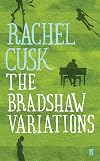
The Bradshaw Variations is about an extended family. The main characters are all just about in their 40s, and slightly puzzled as to where they ended up where they have. They all relate to each other in well-established ways; each of them, at times, resents the way that others assume that they are unchanging, and yet they continue to see each others' lives in particular lights, "as a harmonic key governs a melody".
One of the book's epigraphs quotes Sartre as telling us that Bach "taught us show more how to find originality within an established discipline; actually - how to live", and that's really what the book is about - the way that we all construct and are constrained by the myths of our own lives. We would all say that we want to live freely, and yet is it ever possible for us to escape from ourselves? And indeed, what would it really mean to live freely? Cusk builds up a sense of the fragility of the world we construct, without which we would just be human beings hurtling through space - no wonder we cling to the certainties of our lives.
Cusk has a sharp eye for the trappings of a life - the clothes, the houses, and what they say about us and our tribe. She also writes beautifully - I was often torn between letting the prose take me rushing on and stopping to explore a complex thought which was quickly expressed.
It's probably not for everyone - it is quite cerebral and emotionally detached, and not very much actually happens. But I enjoyed it enormously.
Recommended for: anyone who wants a thought-provoking book about human relationships, and who doesn't mind books about middle-class people worrying about middle-class concerns. show less
One of the book's epigraphs quotes Sartre as telling us that Bach "taught us show more how to find originality within an established discipline; actually - how to live", and that's really what the book is about - the way that we all construct and are constrained by the myths of our own lives. We would all say that we want to live freely, and yet is it ever possible for us to escape from ourselves? And indeed, what would it really mean to live freely? Cusk builds up a sense of the fragility of the world we construct, without which we would just be human beings hurtling through space - no wonder we cling to the certainties of our lives.
Cusk has a sharp eye for the trappings of a life - the clothes, the houses, and what they say about us and our tribe. She also writes beautifully - I was often torn between letting the prose take me rushing on and stopping to explore a complex thought which was quickly expressed.
It's probably not for everyone - it is quite cerebral and emotionally detached, and not very much actually happens. But I enjoyed it enormously.
Recommended for: anyone who wants a thought-provoking book about human relationships, and who doesn't mind books about middle-class people worrying about middle-class concerns. show less
 This review was written for LibraryThing Early Reviewers.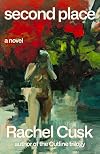
Rachel Cusk in the master of the monologue - but you have to be prepared for that to be the extent of the book. It is all told to one person, Jeffers, of whom we know almost nothing other than that he is a trusted confidante of the narrator M. You also have to realize you might be dealing with an unreliable narrator. She tells the events of a single summer - with some bits of personal history here and there to fill in the gaps, as well as a lot of self-analysis. She and her rock solid, show more reliable second husband Tony own property on the marshes (presumably England) that has two dwellings - their main home and the 'second place' a smaller cottage closer to the water that they lovingly restored and have rented out to various writers and artists over time. At a pivotal point in her life, M. discovers the artwork of L. and invites him to use their little hideaway for a retreat. After a few missteps, it finally comes to pass, but is disastrous in comparison to her ramped up expectations. He brings a woman with him, for starters, and is not in a good place professionally or personally. It quickly becomes a toxic set-up, not only for M and L but her family which includes Tony and her adult daughter Justine and her boyfriend Kurt. As spring changes to summer, M struggles to connect with L, but they have a weird push-pull relationship (not romantic or sexual, thankfully!) that does neither of them any favors. Lots of psychoanalysis, and then the action really takes off around page 100 when the visit takes a turn no one anticipated. Beautiful prose with a gem of observation about human nature or the arts on every page and a clever double meaning for the title, which come across without being heavy-handed. For a small book, it is a deep dive and requires a reflective mindset to engage with it. Luckily, I didn't bring it to the beach! But still worthwhile! show less
This book is full of beautiful writing and profound, unpretentious observations. Just by example, this reflection is inspired by watching her infant children dropping things from their highchairs for her to pick up:
It always surprised me that their response to this chain of events was to repeat it: as soon as the object was in their hands they would drop it again, leaning over to watch it fall. Their delight never lessened, and nor did their distress. I always expected that at some point show more they would realize the distress was unnecessary and would choose to avoid it, but they never did. The memory of suffering had no effect whatever on what they elected to do: on the contrary, it compelled them to repeat it, for the suffering was the magic that caused the object to come back and allowed the delight in dropping it to become possible again. Had I refused to return it the very first time they dropped it, I suppose they would have learned something very different, though what that might have been I wasn’t sure.
I was very taken with the series of stories told by a variety of people, all the time realizing that people don't really talk like this, at least people that I know. Yet, once I accepted that I was being given entrance to their thoughts (which, I would argue, generally speaking, people are not practiced at articulating), I could enjoy what was being offered.
The first in a loosely-connected trilogy, I am told, and, yes, I'll be reading the next two. show less
It always surprised me that their response to this chain of events was to repeat it: as soon as the object was in their hands they would drop it again, leaning over to watch it fall. Their delight never lessened, and nor did their distress. I always expected that at some point show more they would realize the distress was unnecessary and would choose to avoid it, but they never did. The memory of suffering had no effect whatever on what they elected to do: on the contrary, it compelled them to repeat it, for the suffering was the magic that caused the object to come back and allowed the delight in dropping it to become possible again. Had I refused to return it the very first time they dropped it, I suppose they would have learned something very different, though what that might have been I wasn’t sure.
I was very taken with the series of stories told by a variety of people, all the time realizing that people don't really talk like this, at least people that I know. Yet, once I accepted that I was being given entrance to their thoughts (which, I would argue, generally speaking, people are not practiced at articulating), I could enjoy what was being offered.
The first in a loosely-connected trilogy, I am told, and, yes, I'll be reading the next two. show less
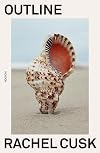
1st in a trilogy about an author named Faye who takes on various literary duties in addition to her writing - in this book it is a guest teaching fellowship in Athens. Kind of like Seinfeld, the book is about nothing, but at the same time, many many topics get touched upon, reflected on, discussed and dissected, which is really something. It takes place in a series of 10 conversations, which are really more like monologues, for Faye doesn't say much and seems to be an extraordinary listener. show more But that is part of her craft - as she queries, what did you notice? It is about paying attention - to everything. "The unexpected sometimes looks like a prompting of fate." (6) The first chapter is an airplane conversation - her seat-mate regales her with explanation and analysis of two of his three failed marriages. Athens is home, where there is a family estate, an island, a boat and a mentally ill son. He surfaces again under the designation of "my neighbor" referring to his seat proximity and takes her out on the boat a couple times. He is the most cogent thread in the book. The others are random: another guest author, a handful of old friends, and we get to sit in on her writing class and meet the students a couple times. But the writing is extraordinary and Cusk's observations of social constructs, how we interact with others, what art and literature are, and choices we make about how we live are really the meat of this book. It's a unique plot (or lack-of) device and gives the reader both an inside track and an outer distance.
Faye is working through something in her own life and the various conversations give us little glimpses of it, but we don't have the whole picture yet. Here's a sample of Cusk's brilliance: "Sometimes it has seemed to me that life is a series of punishments for such moments of unawareness, that one forges one's own destiny by what one doesn't notice or feel compassion for' that what you don't know and don't make the effort to understand will become the very thing you are forced into knowledge of." (94) show less
Faye is working through something in her own life and the various conversations give us little glimpses of it, but we don't have the whole picture yet. Here's a sample of Cusk's brilliance: "Sometimes it has seemed to me that life is a series of punishments for such moments of unawareness, that one forges one's own destiny by what one doesn't notice or feel compassion for' that what you don't know and don't make the effort to understand will become the very thing you are forced into knowledge of." (94) show less
Lists
Awards


You May Also Like


Associated Authors
Statistics
- Works
- 30
- Also by
- 16
- Members
- 9,112
- Popularity
- #2,639
- Rating
- 3.7
- Reviews
- 392
- ISBNs
- 402
- Languages
- 22
- Favorited
- 15

