
Ali Smith (1) (1962–)
Author of The Accidental
For other authors named Ali Smith, see the disambiguation page.
About the Author
Image credit: © Jerry Bauer/AP
Series
Works by Ali Smith
A Cage Went in Search of a Bird: Ten Kafkaesque Stories (2024) — Editor & Introduction; Contributor — 66 copies, 2 reviews
Let's Call the Whole Thing Off: Love Quarrels from Anton Chekhov to ZZ Packer (Penguin Modern Classics) (2009) 16 copies, 1 review
The Door 3 copies
Last 1 copy
Whiter 1 copy
Temps de llibreries 2016 1 copy
Associated Works
The Infernal Desire Machines of Doctor Hoffman (1972) — Introduction, some editions — 1,229 copies, 19 reviews
The Collected Stories of Katherine Mansfield (1945) — Introduction, some editions — 1,018 copies, 15 reviews
Sculptor's Daughter: A Childhood Memoir (1968) — Introduction, some editions — 348 copies, 15 reviews
The Creative Writing Coursebook: Forty Authors Share Advice and Exercises for Fiction and Poetry (2001) — Contributor — 281 copies, 3 reviews
Object Lessons: The Paris Review Presents the Art of the Short Story (2012) — Introduction — 255 copies, 9 reviews
Poems Between Women: Four Centuries of Love, Romantic Friendship, and Desire (1997) — Contributor — 97 copies, 1 review
Freedom: Stories Celebrating the Universal Declaration of Human Rights (2009) — Contributor — 85 copies, 2 reviews
So, What Kept You?: New Stories inspired by Anton Chekhov and Raymond Carver (2006) — Contributor — 4 copies
Ein Haus mit vielen Zimmern: Autorinnen erzählen vom Schreiben (edition fünf 27) (German Edition) (2015) — Contributor — 2 copies
Tagged
Common Knowledge
- Canonical name
- Smith, Ali
- Birthdate
- 1962-08-24
- Gender
- female
- Education
- University of Aberdeen (English Language and Literature)
Newnham College, Cambridge (American and Irish Modernism) - Occupations
- author
playwright
academic
journalist - Nationality
- Scotland
- Birthplace
- Inverness, Scotland, UK
- Places of residence
- Inverness, Scotland, UK
Edinburgh, Scotland, UK
Cambridge, Cambridgeshire, England, UK - Map Location
- Scotland, UK
Members
Discussions
2017 Booker Prize longlist: Autumn by Ali Smith in Booker Prize (October 2017)
2014 Booker Prize longlist: How to Be Both in Booker Prize (August 2014)
Group Read, April 2014: There But For The in 1001 Books to read before you die (April 2014)
England, lit fic, newer, at a party in Name that Book (January 2012)
The Accidental by Ali Smith in Orange January/July (January 2012)
Reviews
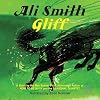
If McEwan‘s Atonement was a rework of Hartley’s The Go-Between, could Gliff be a reworking of Huxley’s Brave New World? Not really but there are some deliberate similarities.
In Gliff you notice as you do now in Brave New World, many of the technological “ innovations” seem old-fashioned or even in the case of Gliff, current. But Huxley was presenting an imagined future world, whereas Smith knows our present only too well. Her references to technical surveillance is deliberately of show more this world. The CCTV cameras on street corners seem out of place in Smith’s book that is meant to be set in the near future. Of course it’s done on purpose as she fears that the near future is already upon us. Smith deliberately refers to songs by recent musicians, putting them into in the future now.
What I really enjoyed about the actual read was the word-play. But first what of the storyline? The book is not just word-play although at times it seems that way. There is a story - two girls an absent mother, a horse, and a couple of young boys tell of the progress of two sisters from childhood on, in a world dominated by government surveillance and petro-chemicals. The story is told almost as if it’s a background to the word-play, it hovers there, letting the reader pick up the missing pieces as they read along.
The sisters are called Briar and Rose, and the story starts with their moving from their home to a temporary dwelling that is empty, apparently abandoned. The sisters are alone and ponder on the people who used to live there. Briar: I reached and slid a finger along one of the spaces between the boards.If you could take these boards up and look at what had ended up down there. In that under-the-board space it would look like just dirt and brine, but you don’t just have DNA galore. You’d have the actual matter of what was left of those people in their times. This was a completely different sort of matter the kind people say it doesn’t matter when they talk about what history is.
Words like “matter” are given several meanings, often contradictory. They change as the book moves forward, and this is particularly evident in how the words, “brave new world” change along the way. The words mutate and erode. Individual letters are missed or replaced and the well-known title, Brave New World does not form itself completely until the end.
The younger sister Rose is innocent in her would-play. In Gliff UVs stand for Unverifiables, those people who are discarded by society. Like undocumented immigrants, they do not exist. But the precocious Rose is a master of malapropisms. She takes the modern meeting and bends it to her own : UVs Untra violets, flowers, Marianne Faithful becomes Marianne Unfaithful. When asked about passports, Rose legitimately explains that passports don’t have people attached to them, that. people have themselves and own the passports not the other way around. The reader cannot help but smile while listening to her.
As the reader reveals the story to herself, the word-plays seem to increase. Reading the novel is like listening to music. It’s not necessary to know why it was written. One can enjoy it in the how. The now.
4 stars show less
In Gliff you notice as you do now in Brave New World, many of the technological “ innovations” seem old-fashioned or even in the case of Gliff, current. But Huxley was presenting an imagined future world, whereas Smith knows our present only too well. Her references to technical surveillance is deliberately of show more this world. The CCTV cameras on street corners seem out of place in Smith’s book that is meant to be set in the near future. Of course it’s done on purpose as she fears that the near future is already upon us. Smith deliberately refers to songs by recent musicians, putting them into in the future now.
What I really enjoyed about the actual read was the word-play. But first what of the storyline? The book is not just word-play although at times it seems that way. There is a story - two girls an absent mother, a horse, and a couple of young boys tell of the progress of two sisters from childhood on, in a world dominated by government surveillance and petro-chemicals. The story is told almost as if it’s a background to the word-play, it hovers there, letting the reader pick up the missing pieces as they read along.
The sisters are called Briar and Rose, and the story starts with their moving from their home to a temporary dwelling that is empty, apparently abandoned. The sisters are alone and ponder on the people who used to live there. Briar: I reached and slid a finger along one of the spaces between the boards.If you could take these boards up and look at what had ended up down there. In that under-the-board space it would look like just dirt and brine, but you don’t just have DNA galore. You’d have the actual matter of what was left of those people in their times. This was a completely different sort of matter the kind people say it doesn’t matter when they talk about what history is.
Words like “matter” are given several meanings, often contradictory. They change as the book moves forward, and this is particularly evident in how the words, “brave new world” change along the way. The words mutate and erode. Individual letters are missed or replaced and the well-known title, Brave New World does not form itself completely until the end.
The younger sister Rose is innocent in her would-play. In Gliff UVs stand for Unverifiables, those people who are discarded by society. Like undocumented immigrants, they do not exist. But the precocious Rose is a master of malapropisms. She takes the modern meeting and bends it to her own : UVs Untra violets, flowers, Marianne Faithful becomes Marianne Unfaithful. When asked about passports, Rose legitimately explains that passports don’t have people attached to them, that. people have themselves and own the passports not the other way around. The reader cannot help but smile while listening to her.
As the reader reveals the story to herself, the word-plays seem to increase. Reading the novel is like listening to music. It’s not necessary to know why it was written. One can enjoy it in the how. The now.
4 stars show less
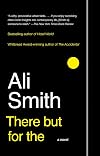
Whether you enjoy this one depends on whether you prefer “doing” books or “thinking” books. There’s a plot of sorts – a dinner guest (Miles Garth) locks himself into one of his host’s bedrooms and won’t come out – but no one actually ends up “doing” anything: there’s no rising action, no climax, no resolution. Instead, we get four peripherally-involved narrators engaged in introspection (“thinking”) inspired by the absurd situation. The introspection is the real show more point of the book.
Not to suggest that there isn’t entertainment value in each of the four separate narratives that comprise the tale. We get Anna, a single working woman, realizing that Miles’ simple act of kindness 20yrs earlier gave her permission to think independently. We get Mark Palmer, a gay man, reflecting on a horrific dinner party in which people quickly shed their masks to reveal their true natures. We get May, an elderly woman, reflecting on the meaning of life. And finally Brooke, 9yrs old and precocious, laboring to create a holistic, comprehensible cosmology out of the bewildering bits and pieces of her world. Smith does an especially good job of bestowing upon each character a unique voice and world view. There’s probably enough storytelling here to keep most readers entertained, even without a more driving story arc.
So what is Smith so determined to communicate? There’s a *lot* going on here, but mostly I feel like she’s exploring the idea that everything - language, history, "facts," cultural norms, relationships - is relative. People, events, ideas: they mean what we think they mean, what we need them to mean at the time.
This is demonstrated on a meta level by the way people react to Miles’ self-imposed exile. The circus that develops outside the window of the room where he has exiled himself is composed of people who need him to be a hero, a rebel, an activist, a money-making opportunity, a prophet - not a single one of them remotely disturbed that Miles isn’t pretending to be any of things; that all he’s doing is occasionally stirring a windowshade.
But it’s also demonstrated via dozens of subordinate storylines and structures. In the way, for instance, that Smith constantly employs puns and other forms of figurative language (symbols, metaphors) to remind us that words only have the meanings we give them, and are easily manipulated. In the way she exposes “facts” (memory, historical information, cliches) as easily corrupted by misunderstanding, unreliable memory, bias, and perspective. In the many ways that people define themselves relative to each other, and ever-shifting cultural norms. In the arbitrary way we humans insist on parsing space (the story takes place in Greenwich, the spot arbitrarily chosen to represent 0o longitude) and time (is the past really the past if we live among artifacts; is the future really the future if our current actions are constantly reshaping it?).
There But For The - a statement that suggests that truth & predictable outcomes exist, if only we can dispatch the impediments that stand in the way. Feel like what Smith's trying is that truth isn't a destination; it's an ephemeral, shifting mark.
Ordinarily, this is the kind of book I actually prefer: I like my fiction enhanced by layers of deeper meaning. But I also long ago recognized that there’s a difference between clever authors interested in telling a good story vs. clever authors interested in communicating their cleverness. F. Scott Fitzgerld swung both ways – his Great Gatsby being a lovely example of the former, his This Side of Paradise a rather tedious example of the latter. Can’t help feeling that there’s a little too much of “clever author interested in communicating their cleverness” here. Smith's very good at what she does, but this definitely hit me as something intended to impress the judges of literary prizes literary rather than deliver an entirely satisfying reading experience. show less
Not to suggest that there isn’t entertainment value in each of the four separate narratives that comprise the tale. We get Anna, a single working woman, realizing that Miles’ simple act of kindness 20yrs earlier gave her permission to think independently. We get Mark Palmer, a gay man, reflecting on a horrific dinner party in which people quickly shed their masks to reveal their true natures. We get May, an elderly woman, reflecting on the meaning of life. And finally Brooke, 9yrs old and precocious, laboring to create a holistic, comprehensible cosmology out of the bewildering bits and pieces of her world. Smith does an especially good job of bestowing upon each character a unique voice and world view. There’s probably enough storytelling here to keep most readers entertained, even without a more driving story arc.
So what is Smith so determined to communicate? There’s a *lot* going on here, but mostly I feel like she’s exploring the idea that everything - language, history, "facts," cultural norms, relationships - is relative. People, events, ideas: they mean what we think they mean, what we need them to mean at the time.
This is demonstrated on a meta level by the way people react to Miles’ self-imposed exile. The circus that develops outside the window of the room where he has exiled himself is composed of people who need him to be a hero, a rebel, an activist, a money-making opportunity, a prophet - not a single one of them remotely disturbed that Miles isn’t pretending to be any of things; that all he’s doing is occasionally stirring a windowshade.
But it’s also demonstrated via dozens of subordinate storylines and structures. In the way, for instance, that Smith constantly employs puns and other forms of figurative language (symbols, metaphors) to remind us that words only have the meanings we give them, and are easily manipulated. In the way she exposes “facts” (memory, historical information, cliches) as easily corrupted by misunderstanding, unreliable memory, bias, and perspective. In the many ways that people define themselves relative to each other, and ever-shifting cultural norms. In the arbitrary way we humans insist on parsing space (the story takes place in Greenwich, the spot arbitrarily chosen to represent 0o longitude) and time (is the past really the past if we live among artifacts; is the future really the future if our current actions are constantly reshaping it?).
There But For The - a statement that suggests that truth & predictable outcomes exist, if only we can dispatch the impediments that stand in the way. Feel like what Smith's trying is that truth isn't a destination; it's an ephemeral, shifting mark.
Ordinarily, this is the kind of book I actually prefer: I like my fiction enhanced by layers of deeper meaning. But I also long ago recognized that there’s a difference between clever authors interested in telling a good story vs. clever authors interested in communicating their cleverness. F. Scott Fitzgerld swung both ways – his Great Gatsby being a lovely example of the former, his This Side of Paradise a rather tedious example of the latter. Can’t help feeling that there’s a little too much of “clever author interested in communicating their cleverness” here. Smith's very good at what she does, but this definitely hit me as something intended to impress the judges of literary prizes literary rather than deliver an entirely satisfying reading experience. show less
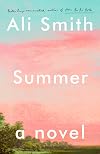
Sacha is a precocious teenager moved by the plight of the environment, both physical and social. Her younger brother, Robert, is even more precocious. He is moved by reading about Einstein, and curiously, his ties with his sister, whom he somewhat tortures. Their parents are separated but living next door to each other. They took opposing sides in the Brexit vote and, rather like Britain and Europe, they remain adjacent even after they leave. (A bit on the nose there, but that’s okay.) show more Charlotte and Arthur are rather like brother and sister, though they were once much more. Their connection to Sacha and Robert is at first tenuous but they become ever more entangled. And their entanglements will lead them to Daniel, who is now one hundred and four years old. But he too once had a sister, now lost in the mists of time.
If the plot of this novel begins to sound excruciatingly straightforward — teenage siblings meet adult near-siblings who take them to meet an ancient remainder of a sibling pair — then I’m not telling it right. For in fact everything here is connected to everything else (perhaps unsurprisingly in Einstein’s connected universe). And the reader is left to just raft along in the wake of Ali Smith’s indefatigable wordplay and enthusiasms. What always surprises me is how this doesn’t become tiring or tiresome. Ali Smith must just have the right lightness of touch.
Of course, this fourth “seasonal” novel from Smith is as much in tune with the zeitgeist as the other three in the set. Here we have abusive internment of migrants, a pandemic whose response is being bungled, the looming precipice of Brexit, and a long hot summer ahead (for all of us). From anyone else I’d shun their loquacious modishness. But here, again, it (mostly) works.
Gently recommended. show less
If the plot of this novel begins to sound excruciatingly straightforward — teenage siblings meet adult near-siblings who take them to meet an ancient remainder of a sibling pair — then I’m not telling it right. For in fact everything here is connected to everything else (perhaps unsurprisingly in Einstein’s connected universe). And the reader is left to just raft along in the wake of Ali Smith’s indefatigable wordplay and enthusiasms. What always surprises me is how this doesn’t become tiring or tiresome. Ali Smith must just have the right lightness of touch.
Of course, this fourth “seasonal” novel from Smith is as much in tune with the zeitgeist as the other three in the set. Here we have abusive internment of migrants, a pandemic whose response is being bungled, the looming precipice of Brexit, and a long hot summer ahead (for all of us). From anyone else I’d shun their loquacious modishness. But here, again, it (mostly) works.
Gently recommended. show less
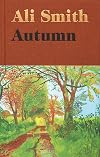
This isn’t fiction, the man says. This is the Post Office.
I liked How to Be Both and this novel picked up Smith's themes around time, relationships and really looking at art. With Elisabeth, a young art historian, we remember her childhood with Mr Gluck, the neighbour who introduced her to the work of Pauline Boty. She reads to him in the hospital bed and lives in a hostile post-Brexit-vote village. The dry humour is laced with anger at the intolerance and little Englander show more attitude.
Recommended. show less
I liked How to Be Both and this novel picked up Smith's themes around time, relationships and really looking at art. With Elisabeth, a young art historian, we remember her childhood with Mr Gluck, the neighbour who introduced her to the work of Pauline Boty. She reads to him in the hospital bed and lives in a hostile post-Brexit-vote village. The dry humour is laced with anger at the intolerance and little Englander show more attitude.
Recommended. show less
Lists
Ghosts (1)
to get (1)
Gimmicks (1)
. (1)
Spirit of Place (1)
Female Author (1)
A Novel Cure (1)
To read (2)
To Read (3)
Favourite Books (3)
Five star books (3)
Booker Prize (4)
Take Four Books (1)
Unread books (1)
Awards


You May Also Like
Associated Authors
Statistics
- Works
- 50
- Also by
- 45
- Members
- 17,718
- Popularity
- #1,242
- Rating
- 3.8
- Reviews
- 728
- ISBNs
- 532
- Languages
- 26
- Favorited
- 9