
Tessa Hadley
Author of The Past
About the Author
Tessa Hadley teaches literature and creative writing at Bath Spa University College in Cardiff, Wales.
Works by Tessa Hadley
Funny Little Snake 2 copies
Dido's Lament 1 copy
The Trojan Prince 1 copy
The Bunty Club 1 copy
Experience 1 copy
Cecilia Awakened 1 copy
An Abduction [short story] 1 copy
Associated Works
The Best Short Stories 2021: The O. Henry Prize Winners (2021) — Contributor — 101 copies, 5 reviews
The Book Lovers' Appreciation Society: Breast Cancer Care Short Story Collection (2009) — Contributor — 97 copies, 1 review
The O. Henry Prize Stories 2014: The Best Stories of the Year (2014) — Contributor — 85 copies, 4 reviews
The O. Henry Prize Stories 2019: 100th Anniversary Edition (2019) — Contributor — 62 copies, 2 reviews
The Selected Stories of Elizabeth Bowen: Selected and Introduced by Tessa Hadley (2021) — Introduction — 16 copies
Eagle in the Maze: An Anthology of Stories from the Rhys Davies Short Story Competition 2008 (2008) — Contributor — 2 copies
Tagged
Common Knowledge
- Birthdate
- 1957
- Gender
- female
- Education
- University of Cambridge (BA/English ∙ PGCE)
Bath Spa University (MA/Creative Writing)
University of the West of England (PhD) - Occupations
- senior lecturer
novelist
short story writer - Organizations
- Bath Spa University
- Awards and honors
- Windham–Campbell Literature Prize (2016)
- Relationships
- Hadley, Eric (spouse)
- Nationality
- UK
- Birthplace
- Bristol, Gloucestershire, England, UK
- Places of residence
- Cardiff, Wales, UK
- Associated Place (for map)
- UK
Members
Reviews

Episodic infancy-to-middle-age novels have rather fallen out of fashion since Roxana and Moll Flanders, but the "just one damn thing after another" approach to fiction can still be very effective, as this book demonstrates. Hadley spent quite some years writing about her heroine Stella (several chapters were originally published as standalone short stories) before stitching it all together into a novel that takes her from a sixties childhood in a single parent family in an inner-city show more district of Bristol right through to 21st century middle-class life outside Taunton with an Aga, a businessman husband, and a complicated extended family of children and stepchildren that would do credit to a Margaret Drabble heroine.
There's not much obvious coherence in the plot: the things that drive the course of Stella's life are almost all complete accidents, good and bad: the point of the book seems to be in her ability as first-person narrator to take a step back from herself and look coolly at the things that are happening to her and how she has dealt with them. And of course in Hadley's clever ability to capture the feel of each of the decades she whisks us through in a few telling images.
The question of Stella's "cleverness" doesn't quite come to the fore quite as much as the title leads us to expect. This isn't a Jeanette Winterson novel in which the clever heroine is constantly surrounded by stupid people of both sexes. Hadley quietly allows Stella to switch her interest in bookish things on and off at will, depending on the stage of life she happens to be going through — it's OK to be perceived to be clever at school and later on as a mature student at university, but it's not a good look when you're a struggling teenage single mum and part-time waitress. Obviously, that's something that real people (women in particular) feel obliged to do in real situations, but it struck me as behaviour you don't often see in fictional characters. Interesting. show less
There's not much obvious coherence in the plot: the things that drive the course of Stella's life are almost all complete accidents, good and bad: the point of the book seems to be in her ability as first-person narrator to take a step back from herself and look coolly at the things that are happening to her and how she has dealt with them. And of course in Hadley's clever ability to capture the feel of each of the decades she whisks us through in a few telling images.
The question of Stella's "cleverness" doesn't quite come to the fore quite as much as the title leads us to expect. This isn't a Jeanette Winterson novel in which the clever heroine is constantly surrounded by stupid people of both sexes. Hadley quietly allows Stella to switch her interest in bookish things on and off at will, depending on the stage of life she happens to be going through — it's OK to be perceived to be clever at school and later on as a mature student at university, but it's not a good look when you're a struggling teenage single mum and part-time waitress. Obviously, that's something that real people (women in particular) feel obliged to do in real situations, but it struck me as behaviour you don't often see in fictional characters. Interesting. show less
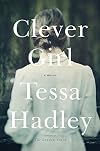
Sometimes a character reveals her layers slowly, showing the tiniest glimpse of soul spread thin over many pages. A novel builds and builds, progressing to an explosive end, and we hurry toward it — unable to pause before we know the illustrious End.
Tessa Hadley’s Clever Girl fits the first description, certainly, but this is the sort of novel — definitely literary fiction — that enfolds you gradually. There is no dynamic pay-off, no shocking reveal or plot twist. It’s quiet, show more enveloping, sharply-focused and beautifully written. As with The London Train, Hadley draws us deeply into the lives of her characters — and though we may not love these people or feel endeared to them, exactly, they are alive and memorable and real to us.
Stella was real to me.
From the beginning of Clever Girl to its satisfying end, we span half a century of our narrator’s life. Stella morphs from a young girl preparing to share her single mother with a new husband to an impetuous, lonely teen mother and, later, a middle-aged woman wondering where everything got so twisty. The story opens in 1960s England and progresses almost to present-day — a transition that could have felt clunky and odd in the hands of a less skilled author, but believe me: Hadley is more than up for the task.
What kept me so captivated by Stella, her sons and the strange layers of their lives was absolutely Hadley’s writing. Gripping, detailed and so focused that sometimes it took my breath away, this is not the sort of story you tear through at breakneck speed — or skim halfheartedly with “Survivor” on in the background. To look away from the text for even a moment is to miss some gorgeous, transient moment; and as Stella’s story is revealed slowly in careful insertions throughout the text, it has a very blink-and-you’ll-miss-it feel. I loved that.
An older, wiser, more chastened Stella is obviously recalling the details of her youth — and we know things about the fate of characters long before the action is revealed. In that way, Stella functions as our omniscient narrator; even in the brilliant moments, we know darkness is coming. That effect left me both curious and unsettled, and I often hurried through passages so I could finally uncover the fate of these poor people.
And poor they were. Not financially, maybe, but definitely in spirit. Valentine, Stella’s irreverent boyfriend, is a fascinating character; I didn’t guess his secret for a while, but then it was impossible to ignore. He was the typical “bad boy” arriving to both fascinate and horrify Stella and Madeleine, her best friend, and you couldn’t help but wonder what was hiding beneath that sheath of dark and dirty hair. All in good time.
While I didn’t love Stella, I respected her — and everything she’d gone through. She makes some questionable choices, yes, but it wasn’t hard to separate those calls from the overarching hippie-commune-love-fest of the 1960s and ’70s. In time, she grows into a respectable person and mother — even if she seems to need rescuing from various men to finally pull herself together.
If you love literary fiction and character studies, Clever Girl is a fantastic novel that provokes questions of love and purpose through life’s dips and turns. But if you’re a reader who leans more heavily into action-packed plots or prefer a faster pace, I could see Hadley’s novel leaving you a bit cold. For me? Well, I loved it, just as I loved The London Train.
Hadley is a truly gifted author. Honestly, I’m in awe of her skill — and will look forward to reading more of her work. show less
Tessa Hadley’s Clever Girl fits the first description, certainly, but this is the sort of novel — definitely literary fiction — that enfolds you gradually. There is no dynamic pay-off, no shocking reveal or plot twist. It’s quiet, show more enveloping, sharply-focused and beautifully written. As with The London Train, Hadley draws us deeply into the lives of her characters — and though we may not love these people or feel endeared to them, exactly, they are alive and memorable and real to us.
Stella was real to me.
From the beginning of Clever Girl to its satisfying end, we span half a century of our narrator’s life. Stella morphs from a young girl preparing to share her single mother with a new husband to an impetuous, lonely teen mother and, later, a middle-aged woman wondering where everything got so twisty. The story opens in 1960s England and progresses almost to present-day — a transition that could have felt clunky and odd in the hands of a less skilled author, but believe me: Hadley is more than up for the task.
What kept me so captivated by Stella, her sons and the strange layers of their lives was absolutely Hadley’s writing. Gripping, detailed and so focused that sometimes it took my breath away, this is not the sort of story you tear through at breakneck speed — or skim halfheartedly with “Survivor” on in the background. To look away from the text for even a moment is to miss some gorgeous, transient moment; and as Stella’s story is revealed slowly in careful insertions throughout the text, it has a very blink-and-you’ll-miss-it feel. I loved that.
An older, wiser, more chastened Stella is obviously recalling the details of her youth — and we know things about the fate of characters long before the action is revealed. In that way, Stella functions as our omniscient narrator; even in the brilliant moments, we know darkness is coming. That effect left me both curious and unsettled, and I often hurried through passages so I could finally uncover the fate of these poor people.
And poor they were. Not financially, maybe, but definitely in spirit. Valentine, Stella’s irreverent boyfriend, is a fascinating character; I didn’t guess his secret for a while, but then it was impossible to ignore. He was the typical “bad boy” arriving to both fascinate and horrify Stella and Madeleine, her best friend, and you couldn’t help but wonder what was hiding beneath that sheath of dark and dirty hair. All in good time.
While I didn’t love Stella, I respected her — and everything she’d gone through. She makes some questionable choices, yes, but it wasn’t hard to separate those calls from the overarching hippie-commune-love-fest of the 1960s and ’70s. In time, she grows into a respectable person and mother — even if she seems to need rescuing from various men to finally pull herself together.
If you love literary fiction and character studies, Clever Girl is a fantastic novel that provokes questions of love and purpose through life’s dips and turns. But if you’re a reader who leans more heavily into action-packed plots or prefer a faster pace, I could see Hadley’s novel leaving you a bit cold. For me? Well, I loved it, just as I loved The London Train.
Hadley is a truly gifted author. Honestly, I’m in awe of her skill — and will look forward to reading more of her work. show less
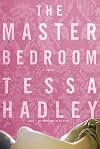
The Master Bedroom by Tessa Hadley is the first book I've received through LibraryThing's Early Reviewer program. Oddly, I received the book on June 11, about six weeks after the book was available in paperback, and the copy I received was an actual trade paperback, not an ARC. At any rate, I selected several books and received this one, possibly the one book I was unsure I even wanted to read. The synopsis was intriguing, but in a Jerry Springer/train wreck sort of way: Bored Kate Flynn show more leaves her London academic job and returns to her childhood home to care for her mother. While she is there, a married childhood friend and his seventeen-year-old son "set about their parallel courtships" and "Kate cannot quite resist either man." This all sounds rather seamy, in (I am happy to say) a completely inaccurate way, and I was delighted at the whim that led me to request this book. Tessa Hadley is a gifted writer of lyrical, evocative prose who has crafted a novel (her third) that is touching, funny, and complex.
Kate is both sympathetic and infuriating in her midlife crisis. Hadley has drawn her as a woman who has come untethered; though she has taken a one-year leave of absence instead of quitting her job and let her flat instead of giving it up completely, there is a sense that these steps are just delaying the inevitable. Speaking to David, a public health doctor, she calls her academic life "a kind of dream, a mistake. A life lost in books. What an abyss of difference, between your usefulness and mine. How did I choose it: this play life? I should have been a nurse. We carelessly make one choice after another and our lives pile up." She is not always nice, to put it bluntly, and there were times I didn't like her. Though her purported reason for moving home to Wales is her aging mother, it's clear that her mother is a means of escape from a life she had thought she wanted. When she first comes home, she finds her mother asleep and nearly decides to drive back to London without waking her, and she can be sharp with her mother. She takes her childhood friend Carol (who should be nominated for sainthood) for granted. She throws a lavish party purely to spite the practical David and his wife, Suzie. She tells seventeen-year-old Jamie, who has fallen in love with her, that he's too young to be her friend. But despite all these flaws, or perhaps because they make her real, I hoped that she would find what she was looking for by the end. I was expecting, rather dejectedly, for the story to end without any meaning found, without the hollows of life being filled, and I was both surprised and satisfied by the ending. Kate remakes her life, but not in any trite way, nor in the way I had expected.
This is a quiet book, with many small movements rather than a single dramatic action. Hadley's prose is well-suited to the story (or rather, stories, as the subplots share a dance floor with Kate's midlife crisis, even if they don't cut in), with simple, accurate language, like this description of her reunion with David: "They were falling into a pattern of friendship that had been, before Kate came back to live in Cardiff, exactly her idea of the sort of thing that would evolve in a place like this between grown-up cultured people" and elegant description, as when she first arrives at home: "The falling rain was blotted up overhead by the tall monkey puzzle tree or pattered onto the evergreen bushes. Below, on the lake, an invisible duck blundered splashily. A cold perfume of pines and bitter garden mulch seemed to her like the smell of the past itself." I marked dozens of pages where I found beautiful, lyrical prose or turns of phrase so elegant and perfect they made me smile. Hadley is funny, too. David's wife has fallen in with new hippie friends, and this is his parenthetical description of Menna and Neil's old van when they come to take Suzie camping: "its puttering filthy exhaust more polluting, surely, than anything they could make up for with their puritanical veganism." After Jamie cuts the grass, she tells him, "I think it looked better with the grass long. That grass was beautiful, it blew in the wind, it was blond like hair, the sound it made was like the sea. Now what does it look like? Stubbled and ugly, a poor cropped head." When Jamie looks crestfallen, she laughs.
The word "hollow" and variations on it appear too many times to count, and this is no coincidence. At forty-three, Kate feels hollow, that her life is empty. She doesn't take care of herself; she smokes and drinks, but rarely eats. The return to Wales doesn't immediately help; she reflects that "She had screwed up her own professional life as if it didn't matter and stepped outside it into where she was no one." She talks of being unmoored, of longing to be broken down and remade. Even literature is hollow: "Nothing written now has enough in it. I have to swap about, as soon as I get the hang of what they're up to; they're only ever up to one thing at a time." This is certainly not the case with this novel. In addition to Kate's search for meaning, we have glimpses into David and Suzie's failing marriage, Billie's failing health, Jamie's youthful search for meaning in his life (which makes for an interesting contrast to Kate's). This is the sort of book that I would have loved writing papers on in college. The story is unbelievably rich, and I could easily make this review pages and pages long, but I'll stop here. I'd recommend this book to anyone who looking for a rich, complex novel about the human experience, written in gorgeous, decadent prose.
http://hollybooknotes.blogspot.com/2008/06/master-bedroom-by-tessa-hadley.html show less
Kate is both sympathetic and infuriating in her midlife crisis. Hadley has drawn her as a woman who has come untethered; though she has taken a one-year leave of absence instead of quitting her job and let her flat instead of giving it up completely, there is a sense that these steps are just delaying the inevitable. Speaking to David, a public health doctor, she calls her academic life "a kind of dream, a mistake. A life lost in books. What an abyss of difference, between your usefulness and mine. How did I choose it: this play life? I should have been a nurse. We carelessly make one choice after another and our lives pile up." She is not always nice, to put it bluntly, and there were times I didn't like her. Though her purported reason for moving home to Wales is her aging mother, it's clear that her mother is a means of escape from a life she had thought she wanted. When she first comes home, she finds her mother asleep and nearly decides to drive back to London without waking her, and she can be sharp with her mother. She takes her childhood friend Carol (who should be nominated for sainthood) for granted. She throws a lavish party purely to spite the practical David and his wife, Suzie. She tells seventeen-year-old Jamie, who has fallen in love with her, that he's too young to be her friend. But despite all these flaws, or perhaps because they make her real, I hoped that she would find what she was looking for by the end. I was expecting, rather dejectedly, for the story to end without any meaning found, without the hollows of life being filled, and I was both surprised and satisfied by the ending. Kate remakes her life, but not in any trite way, nor in the way I had expected.
This is a quiet book, with many small movements rather than a single dramatic action. Hadley's prose is well-suited to the story (or rather, stories, as the subplots share a dance floor with Kate's midlife crisis, even if they don't cut in), with simple, accurate language, like this description of her reunion with David: "They were falling into a pattern of friendship that had been, before Kate came back to live in Cardiff, exactly her idea of the sort of thing that would evolve in a place like this between grown-up cultured people" and elegant description, as when she first arrives at home: "The falling rain was blotted up overhead by the tall monkey puzzle tree or pattered onto the evergreen bushes. Below, on the lake, an invisible duck blundered splashily. A cold perfume of pines and bitter garden mulch seemed to her like the smell of the past itself." I marked dozens of pages where I found beautiful, lyrical prose or turns of phrase so elegant and perfect they made me smile. Hadley is funny, too. David's wife has fallen in with new hippie friends, and this is his parenthetical description of Menna and Neil's old van when they come to take Suzie camping: "its puttering filthy exhaust more polluting, surely, than anything they could make up for with their puritanical veganism." After Jamie cuts the grass, she tells him, "I think it looked better with the grass long. That grass was beautiful, it blew in the wind, it was blond like hair, the sound it made was like the sea. Now what does it look like? Stubbled and ugly, a poor cropped head." When Jamie looks crestfallen, she laughs.
The word "hollow" and variations on it appear too many times to count, and this is no coincidence. At forty-three, Kate feels hollow, that her life is empty. She doesn't take care of herself; she smokes and drinks, but rarely eats. The return to Wales doesn't immediately help; she reflects that "She had screwed up her own professional life as if it didn't matter and stepped outside it into where she was no one." She talks of being unmoored, of longing to be broken down and remade. Even literature is hollow: "Nothing written now has enough in it. I have to swap about, as soon as I get the hang of what they're up to; they're only ever up to one thing at a time." This is certainly not the case with this novel. In addition to Kate's search for meaning, we have glimpses into David and Suzie's failing marriage, Billie's failing health, Jamie's youthful search for meaning in his life (which makes for an interesting contrast to Kate's). This is the sort of book that I would have loved writing papers on in college. The story is unbelievably rich, and I could easily make this review pages and pages long, but I'll stop here. I'd recommend this book to anyone who looking for a rich, complex novel about the human experience, written in gorgeous, decadent prose.
http://hollybooknotes.blogspot.com/2008/06/master-bedroom-by-tessa-hadley.html show less
 This review was written for LibraryThing Early Reviewers.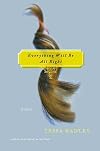
A novel that spans more than fifty years of lived experience, unless it is bound to a singular protagonist, will need to focus on first one individual and then another and then another. Who the author chooses to put principally in our gaze becomes as significant, at times, as what they end up saying and doing. Here, Tessa Hadley traces a line through a series of women, mother to daughter, through four generations. But of course over that many generations there will also be a host of other show more candidates, in this case also mostly women, who might have been equally worthy of further attention. And likewise there will be themes that take on the centre stage while others just as enticing wait patiently off-stage. Sometimes these choices will coalesce into a tightly wound cord of character, action, and theme. Sometimes these choices will result in a diffuse sprawl. The latter is the case in this novel. The question is whether a bit of sprawl is a weakness in itself, especially if, as might be hinted here, life itself just does tend towards sprawl.
The women catching Tessa Hadley’s eye begin with Lil, whose husband died on the beaches during the disaster that was Dunkirk. Lil’s oldest daughter, Joyce, the picks up the author’s gaze when she is a teenager, eventually heading off to art college and marrying one of her drawing instructors. Joyce’s daughter, Zoe, takes over for a time until we end up with Zoe’s daughter, Pearl. Each of these women has different aspirations and inclinations. They tend towards a fierce intelligence that emerges in varying forms. And although they have very different temperaments, there is an inescapable sense of sameness across them. A bit Radio 4? A bit Women’s Hour? Perhaps it’s just the curse of living in a thoroughly moderated and modulated class-bound society. How could they hope to be distinctive? And that raises a slight problem, because the women in the larger tale who really are distinctive, such as Lil’s sister Vera, are shunted off to the sidelines. Or at least it seems that way.
And how do the men fare in such a novel? Not well. Not well, at all. Across the generations, it seems like Lil, whose husband dies at Dunkirk, has just about the best that can be hoped for from a man. Even the one relationship that persists, between Joyce and Ray, shows Ray as overbearing and egotistical and, frankly, insufferable. One rather wishes that he could have met his Dunkirk as well. And that goes double for Zoe’s partner, Simon. But the one who tops them all is Vera’s husband, Dick, who totally lives up to his name.
It doesn’t sound like a recipe for a thoroughly engrossing novel, does it? And yet, I found it so. It is variable, certainly. At times the tone and level of seriousness switches into a different key, if you will, without seeming to want to sustain it. But overall it remains a colourful canvas of women, the choices some of them make, and the consequences of those choices. show less
The women catching Tessa Hadley’s eye begin with Lil, whose husband died on the beaches during the disaster that was Dunkirk. Lil’s oldest daughter, Joyce, the picks up the author’s gaze when she is a teenager, eventually heading off to art college and marrying one of her drawing instructors. Joyce’s daughter, Zoe, takes over for a time until we end up with Zoe’s daughter, Pearl. Each of these women has different aspirations and inclinations. They tend towards a fierce intelligence that emerges in varying forms. And although they have very different temperaments, there is an inescapable sense of sameness across them. A bit Radio 4? A bit Women’s Hour? Perhaps it’s just the curse of living in a thoroughly moderated and modulated class-bound society. How could they hope to be distinctive? And that raises a slight problem, because the women in the larger tale who really are distinctive, such as Lil’s sister Vera, are shunted off to the sidelines. Or at least it seems that way.
And how do the men fare in such a novel? Not well. Not well, at all. Across the generations, it seems like Lil, whose husband dies at Dunkirk, has just about the best that can be hoped for from a man. Even the one relationship that persists, between Joyce and Ray, shows Ray as overbearing and egotistical and, frankly, insufferable. One rather wishes that he could have met his Dunkirk as well. And that goes double for Zoe’s partner, Simon. But the one who tops them all is Vera’s husband, Dick, who totally lives up to his name.
It doesn’t sound like a recipe for a thoroughly engrossing novel, does it? And yet, I found it so. It is variable, certainly. At times the tone and level of seriousness switches into a different key, if you will, without seeming to want to sustain it. But overall it remains a colourful canvas of women, the choices some of them make, and the consequences of those choices. show less
Lists
Awards


You May Also Like


Associated Authors
Statistics
- Works
- 24
- Also by
- 14
- Members
- 3,321
- Popularity
- #7,702
- Rating
- 3.6
- Reviews
- 181
- ISBNs
- 194
- Languages
- 10
- Favorited
- 14
