
Elizabeth Strout
Author of Olive Kitteridge
About the Author
Elizabeth Strout (born January 6, 1956) is an American author of fiction. She was born in Portland, Maine. After graduating from Bates College, she spent a year in Oxford, England. In 1982 she graduated with honors, and received both a law degree from the Syracuse University College of Law and a show more Certificate of Gerontology from the Syracuse School of Social Work. Strout wrote Amy and Isabelle over the course of six or seven years, which when published was shortlisted for the 2000 Orange Prize and nominated for the 2000 PEN/Faulkner Award for fiction. Amy and Isabelle was made into a television movie starring Elisabeth Shue and was produced by Oprah Winfrey's studio, Harpo Films. Strout was a NEH (National Endowment for the Humanities) professor at Colgate University during the Fall Semester of 2007, where she taught creative writing. She was also on the faculty of the MFA program at Queens University of Charlotte in Charlotte, North Carolina. In 2009 Strout was honored with a Pulitzer Prize for Fiction for Olive Kitteridge, a collection of connected short stories she wrote about a woman and her immediate family who lived on the coast of Maine. Strout also wrote The Burgess Boys in 2013 which made The New York Times Best Seller List. Ms. Strout's title, My name is Lucy Barton, made the New York Times Best Seller List in 2016. Her newest title, Anything is Possible (2017), won the 2018 Story Prize. (Bowker Author Biography) show less
Series
Works by Elizabeth Strout
A Different Road {short story} 2 copies
The Family Fortune 1 copy
The Fort 1 copy
Haluan kuulla kaiken 1 copy
Det vi aldri sier 1 copy
Πες μου τα πάντα 1 copy
Associated Works
Fight of the Century: Writers Reflect on 100 Years of Landmark ACLU Cases (2020) — Contributor — 261 copies, 5 reviews
The Friend Who Got Away: Twenty Women's True Life Tales of Friendships that Blew Up, Burned Out or Faded Away (2005) — Contributor — 213 copies, 9 reviews
Tagged
Common Knowledge
- Birthdate
- 1956-01-06
- Gender
- female
- Education
- Bates College (BA, 1977)
Syracuse University (JD, 1982) - Occupations
- faculty (MFA program, Queens University)
fiction writer
lecturer (Creative Writing ∙ Colgate University) - Organizations
- Queens University of Charlotte
- Agent
- Molly Friedrich (Aaron Priest Literary Agency)
- Short biography
- Elizabeth Strout (born January 6, 1956) is a US-American novelist and author. She is widely known for her works in literary fiction and her descriptive characterization. Born and raised in Portland, Maine, her experiences in her youth served as inspiration for her novels–the fictional "Shirley Falls, Maine" is the setting of four of her seven novels.
Strout's first novel, Amy and Isabelle (1998) met with widespread critical acclaim, became a national bestseller, and was adapted into a movie starring Elisabeth Shue. Her second novel, Abide with Me (2006), received critical acclaim but ultimately failed to be recognized to the extent of her debut novel. Two years later, Strout wrote and published Olive Kitteridge (2008), to critical and commercial success grossing nearly $25 million with over one million copies sold as of May 2017. The novel won the 2009 Pulitzer Prize for Fiction. The book was adapted into a multi Emmy Award-winning mini series and became a New York Times bestseller.
Five years later, she published The Burgess Boys (2013), which became a national bestseller. My Name Is Lucy Barton (2016) was met with international acclaim and topped the New York Times bestseller list. Lucy Barton later became the main character in Strout's 2017 novel, Anything is Possible. A sequel to Olive Kitteridge, titled Olive, Again, was published in 2019. - Nationality
- USA
- Birthplace
- Portland, Maine, USA
- Places of residence
- Portland, Maine, USA
New York, New York, USA
Durham, New Hampshire, USA
Brunswick, Maine, USA - Map Location
- USA
Members
Reviews

In her latest novel, Elizabeth Strout brings together two long-running characters: the 90-year-old, somewhat curmudgeonly Olive Kitteridge, and the 60-something writer Lucy Barton. Olive has spent her life in Crosby, Maine; Lucy and William moved from New York to Crosby during the pandemic. Although Lucy mostly keeps to herself, locals are proud to have a successful author in their midst. Olive invites Lucy to a visit at her retirement home, which begins a regular exchange of what Lucy calls show more “unrecorded lives”: stories about people they have known.
Lucy has also forged a strong friendship with Bob Burgess, a town lawyer married to Margaret, a minister. They began taking regular walks during the pandemic, and the routine and conversation became an important part of their lives. Lucy is concerned about relationships with her adult daughters. Bob is dealing with his own issues, from a brother going through a very difficult period in his life, to his wife’s career crisis, to defending a man accused of murder. Both Lucy and Bob believe their relationship is strictly platonic, but their deepening affection is not lost on readers.
Elizabeth Strout shifts seamlessly between Olive, Lucy, and Bob, advancing each part of the storyline and bringing increased depth to each character. The people and situations felt very real, and I found myself smiling, nodding along, and wiping away tears again and again. This novel had a deep emotional impact from beginning to end – a very rare experience for me. I loved this book. show less
Lucy has also forged a strong friendship with Bob Burgess, a town lawyer married to Margaret, a minister. They began taking regular walks during the pandemic, and the routine and conversation became an important part of their lives. Lucy is concerned about relationships with her adult daughters. Bob is dealing with his own issues, from a brother going through a very difficult period in his life, to his wife’s career crisis, to defending a man accused of murder. Both Lucy and Bob believe their relationship is strictly platonic, but their deepening affection is not lost on readers.
Elizabeth Strout shifts seamlessly between Olive, Lucy, and Bob, advancing each part of the storyline and bringing increased depth to each character. The people and situations felt very real, and I found myself smiling, nodding along, and wiping away tears again and again. This novel had a deep emotional impact from beginning to end – a very rare experience for me. I loved this book. show less
Loved this book. Absolutely loved it.
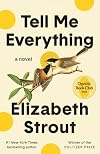
I love Elizabeth Strout. Or maybe it's just a crush, like Bob Burgess had on Lucy Barton. But "Love is love," as Olive Kitteridge mused on the final page of Strout's latest novel, TELL ME EVERYTHING (2024), which is all about the folks from Crosby and Shirley Falls, Maine. (I've now read all of her books except OH WILLIAM!.) The first fifty-some pages made me laugh out loud multiple times as Strout reintroduced many of the same characters who populated show more her other books. And they are almost all in here, only much older now. Olive, of course, along with the Burgess brothers, Lucy and William and more. But there are much darker things in here too, beginning with a murder mystery, followed by revelations of incest, rape, adultery, and also the isolation and loneliness experienced by so many, especially in the societal lockdown of the Covid era. And yes, this story is set in present day Maine and New York City.
TELL ME EVERYTHING was a huge bestseller, so I'm not going to try to summarize the plot, if indeed there even IS one. But Lucy, who is a writer, you'll remember, tells a lot of stories to Olive and to Bob, and vice-versa. So here are a few tidbits and observations from those stories.
From Lucy to Bob - "I mean, we don't ever really KNOW another person. And so we make them up according to when they came into our lives, and if you're young, as many people are when they marry, you have no idea who that person really is. And so you live with them for years, you have a house together, kids together ... What I'm trying to say, Bob, is that people just live their lives with no REAL knowledge of anybody ... My POINT is that every person on this earth is so complicated, Bob, we're all so complicated."
And, when Olive asks Lucy what's the point of a story Lucy just told her, Lucy replies: "People ... People and the lives they lead. That's the point."
And, after another exchange with Olive, Lucy reflects: "People are mysteries. We are all such mysteries."
I love Lucy. Just about everyone here loves Lucy. And there's the omniscient narrator here too, who talks to you much like the stage manager from OUR TOWN. I love this voice, which seems to be summing things up, bringing us up to date on what happened to all those characters from her earlier books. I love this author, and I loved this book. I hope there are more, and I hope I'm still here to read them. My very highest recommendation.
- Tim Bazzett, author of the memoir, BOOKLOVER show less
I love Elizabeth Strout. Or maybe it's just a crush, like Bob Burgess had on Lucy Barton. But "Love is love," as Olive Kitteridge mused on the final page of Strout's latest novel, TELL ME EVERYTHING (2024), which is all about the folks from Crosby and Shirley Falls, Maine. (I've now read all of her books except OH WILLIAM!.) The first fifty-some pages made me laugh out loud multiple times as Strout reintroduced many of the same characters who populated show more her other books. And they are almost all in here, only much older now. Olive, of course, along with the Burgess brothers, Lucy and William and more. But there are much darker things in here too, beginning with a murder mystery, followed by revelations of incest, rape, adultery, and also the isolation and loneliness experienced by so many, especially in the societal lockdown of the Covid era. And yes, this story is set in present day Maine and New York City.
TELL ME EVERYTHING was a huge bestseller, so I'm not going to try to summarize the plot, if indeed there even IS one. But Lucy, who is a writer, you'll remember, tells a lot of stories to Olive and to Bob, and vice-versa. So here are a few tidbits and observations from those stories.
From Lucy to Bob - "I mean, we don't ever really KNOW another person. And so we make them up according to when they came into our lives, and if you're young, as many people are when they marry, you have no idea who that person really is. And so you live with them for years, you have a house together, kids together ... What I'm trying to say, Bob, is that people just live their lives with no REAL knowledge of anybody ... My POINT is that every person on this earth is so complicated, Bob, we're all so complicated."
And, when Olive asks Lucy what's the point of a story Lucy just told her, Lucy replies: "People ... People and the lives they lead. That's the point."
And, after another exchange with Olive, Lucy reflects: "People are mysteries. We are all such mysteries."
I love Lucy. Just about everyone here loves Lucy. And there's the omniscient narrator here too, who talks to you much like the stage manager from OUR TOWN. I love this voice, which seems to be summing things up, bringing us up to date on what happened to all those characters from her earlier books. I love this author, and I loved this book. I hope there are more, and I hope I'm still here to read them. My very highest recommendation.
- Tim Bazzett, author of the memoir, BOOKLOVER show less
IN A NUTSHELL
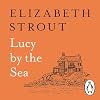
‘Lucy by the Sea’ is a quietly told, introspective fictional memoir of Lucy Barton’s experience of the first COVID Lockdown and the changes, frustrations, fears and reassessments of priorities that came in its wake. It’s an undramatic, truthful account, focused on Lucy’s emotional landscape. It deals as much with ageing as it does with the stresses of Lockdown. Not so much the physical changes that ageing brings, but the changes in priorities and attitudes, the show more adjustment of long-term relationships: with her ex-husband and with her now adult daughters. For me, it ran a little long, but that was partly because this felt like a slice of life, albeit a life disrupted by Lockdown, rather than a story with a beginning, a middle and an end.
I relished the first two books in the Amgash series, ‘My Name Is Lucy Barton’ (2016) and ‘Anything Is Possible’ (2018). The writing was astonishingly good and exceptionally honest. Lucy Barthon’s voice was distinctive and engaging. They were novels that described life as we live it in a compelling and truthful way. Lucy Barton’s relationships showed all the signs of fracture and wear that you might expect from people who’ve lived through hard times. Lucy Barton grew up in extreme poverty. She is no longer poor, but she has never left the experience of poverty behind. I have the third book, ‘Oh William!’ (2021) on my shelves, but I skipped it to read the fourth book, ‘Lucy By The Sea’ (2022) out of sequence because it fits into my ‘Fiction in a Time of COVID’ reading challenge.
‘Lucy By The Sea’ was a quietly told fictional memoir of the emotions and reflections triggered by lockdown and the pandemic. It was not dramatic, but it was truthful, and the truths it shared, even though they were not my truths, summoned my own memories of lockdown: my rage at the loss of life that my incompetent government tolerated and the contrast between all that death and the relative comfort and safety of my lockdown.
Part of my fascination with the Lucy Barton character is that I have very little in common with her. She is empathetic, deeply curious about people and is good at intuiting their emotions. She’s often anxious, sometimes to a crippling degree. She’s so focused on her inner life that the mechanics of the world tend to pass her by. Through her, I finally understood how so many people failed to take in the scale of COVID and the likely length of lockdowns, even though all the relevant information was widely available by the beginning of March 2020.
The start of the novel, when Lucy accedes to her ex-husband’s request to leave NYC and live in Maine, was powerful and evocative. Lucy’s interior landscape and her shifting, increasingly fraught relationships with her daughters and her ex-husband felt authentic. Lockdown disrupted Lucy’s life, taking her from the familiar into the unknown, throwing her back into daily contact with her ex-husband while adding worries about, and restricting contact with, her daughters.
One of the things that resonated with me in Lucy’s reaction to the disruption of her life was her recognition that, when Lockdown was over, things would not go back to normal. Her life, and the lives of most of the people she knew, had been changed. Lucy recognises that she no longer has any desire to return to her Manhattan apartment or to the way of life she had there. Lockdown and the losses inflicted by COVID triggered this recognition, but they didn’t cause the change. They enforced a hiatus that enabled a reassessment of what was important. Lucy comes to recognise that she has entered old age and that what she wants for herself and from others is no longer what she wanted when she was young or middle-aged.
For me, the book ran a little long, perhaps because Elizabeth Strout wanted to show what the new normal looked like, or perhaps she wanted to show that life asserts itself even in the middle of a large-scale disruption. Whatever the reason, the final sections of the book felt to me like watching the tide go out on a gently sloping shore: not dramatic but easy to believe in.
Kimberly Farr’s narration was masterful. In my head, she is the voice of Lucy Barton, even when I read the text off the page. I recommend listening to the audiobook. Kimberley Farr’s narration added a level of intimacy to the reading experience. As I listened to her, it was easy to feel that she was sharing her thoughts and emotions only with me. Click on the YouTube link below to hear a sample.
https://youtu.be/AgU0C3NhUAI?si=QVeFbwmFSFWXqhu9
https://youtu.be/AgU0C3NhUAI?si=IMhiwgb__QRj8O_Q show less
‘Lucy by the Sea’ is a quietly told, introspective fictional memoir of Lucy Barton’s experience of the first COVID Lockdown and the changes, frustrations, fears and reassessments of priorities that came in its wake. It’s an undramatic, truthful account, focused on Lucy’s emotional landscape. It deals as much with ageing as it does with the stresses of Lockdown. Not so much the physical changes that ageing brings, but the changes in priorities and attitudes, the show more adjustment of long-term relationships: with her ex-husband and with her now adult daughters. For me, it ran a little long, but that was partly because this felt like a slice of life, albeit a life disrupted by Lockdown, rather than a story with a beginning, a middle and an end.
I relished the first two books in the Amgash series, ‘My Name Is Lucy Barton’ (2016) and ‘Anything Is Possible’ (2018). The writing was astonishingly good and exceptionally honest. Lucy Barthon’s voice was distinctive and engaging. They were novels that described life as we live it in a compelling and truthful way. Lucy Barton’s relationships showed all the signs of fracture and wear that you might expect from people who’ve lived through hard times. Lucy Barton grew up in extreme poverty. She is no longer poor, but she has never left the experience of poverty behind. I have the third book, ‘Oh William!’ (2021) on my shelves, but I skipped it to read the fourth book, ‘Lucy By The Sea’ (2022) out of sequence because it fits into my ‘Fiction in a Time of COVID’ reading challenge.
‘Lucy By The Sea’ was a quietly told fictional memoir of the emotions and reflections triggered by lockdown and the pandemic. It was not dramatic, but it was truthful, and the truths it shared, even though they were not my truths, summoned my own memories of lockdown: my rage at the loss of life that my incompetent government tolerated and the contrast between all that death and the relative comfort and safety of my lockdown.
Part of my fascination with the Lucy Barton character is that I have very little in common with her. She is empathetic, deeply curious about people and is good at intuiting their emotions. She’s often anxious, sometimes to a crippling degree. She’s so focused on her inner life that the mechanics of the world tend to pass her by. Through her, I finally understood how so many people failed to take in the scale of COVID and the likely length of lockdowns, even though all the relevant information was widely available by the beginning of March 2020.
The start of the novel, when Lucy accedes to her ex-husband’s request to leave NYC and live in Maine, was powerful and evocative. Lucy’s interior landscape and her shifting, increasingly fraught relationships with her daughters and her ex-husband felt authentic. Lockdown disrupted Lucy’s life, taking her from the familiar into the unknown, throwing her back into daily contact with her ex-husband while adding worries about, and restricting contact with, her daughters.
One of the things that resonated with me in Lucy’s reaction to the disruption of her life was her recognition that, when Lockdown was over, things would not go back to normal. Her life, and the lives of most of the people she knew, had been changed. Lucy recognises that she no longer has any desire to return to her Manhattan apartment or to the way of life she had there. Lockdown and the losses inflicted by COVID triggered this recognition, but they didn’t cause the change. They enforced a hiatus that enabled a reassessment of what was important. Lucy comes to recognise that she has entered old age and that what she wants for herself and from others is no longer what she wanted when she was young or middle-aged.
For me, the book ran a little long, perhaps because Elizabeth Strout wanted to show what the new normal looked like, or perhaps she wanted to show that life asserts itself even in the middle of a large-scale disruption. Whatever the reason, the final sections of the book felt to me like watching the tide go out on a gently sloping shore: not dramatic but easy to believe in.
Kimberly Farr’s narration was masterful. In my head, she is the voice of Lucy Barton, even when I read the text off the page. I recommend listening to the audiobook. Kimberley Farr’s narration added a level of intimacy to the reading experience. As I listened to her, it was easy to feel that she was sharing her thoughts and emotions only with me. Click on the YouTube link below to hear a sample.
https://youtu.be/AgU0C3NhUAI?si=QVeFbwmFSFWXqhu9
https://youtu.be/AgU0C3NhUAI?si=IMhiwgb__QRj8O_Q show less

Not a novel in the traditional sense with one story arc, instead Strout uses the interconnected vignette to show the life and effect that Olive Kitteridge has in her small town. She is a woman who has many sides to her personality and almost all of them unattractive. My first note about the book is how on earth does Henry stand her? She’s judgemental, paranoid and suffers the hubris that many with low self-esteem have. She hates anyone she feels threatened by (Dr. Sue) and condemns anyone show more who she thinks is below her. It’s hard to think well of her and few people do. I wondered how differently this book might have been received if Strout had made her a man instead. We tend to forgive these same traits in a man that we revile in a woman. Olive is flawed, as are we all, but she means well. Not exactly a loving curmudgeon, but there are glimmers. You have to wait for them though.
It’s through other people that we see Olive more fully. Sometimes there are moments of kindness and tenderness amid the judgement and manipulation. Any feelings of sympathy, empathy or compassion are reserved for those other people, most of whom have thoughts of, or actually commit, suicide. I guess a life lived too close to Olive Kitteridge makes that seem like a good idea. The most sympathy goes to Henry, who must see something worthwhile in his wife and in the end, when he’s in the nursing home, she does well by him. She also reveals some startling depths of feeling and how much of what she does seems against her will. I think she’d like to act better in some circumstances, and over time I think she bit her tongue more often.
Not all of the stories are equally interesting or feature Olive prominently and some of them I just skimmed. I did like how some introduced entirely new things and others elaborated on previous stories. The time seemed to jump around a lot though and could have used some date stamping along with the chapter titles. I doubt I’ll revisit the book, but I don’t regret the time I spent with it. show less
It’s through other people that we see Olive more fully. Sometimes there are moments of kindness and tenderness amid the judgement and manipulation. Any feelings of sympathy, empathy or compassion are reserved for those other people, most of whom have thoughts of, or actually commit, suicide. I guess a life lived too close to Olive Kitteridge makes that seem like a good idea. The most sympathy goes to Henry, who must see something worthwhile in his wife and in the end, when he’s in the nursing home, she does well by him. She also reveals some startling depths of feeling and how much of what she does seems against her will. I think she’d like to act better in some circumstances, and over time I think she bit her tongue more often.
Not all of the stories are equally interesting or feature Olive prominently and some of them I just skimmed. I did like how some introduced entirely new things and others elaborated on previous stories. The time seemed to jump around a lot though and could have used some date stamping along with the chapter titles. I doubt I’ll revisit the book, but I don’t regret the time I spent with it. show less
Lists
Allie's Wishlist (1)
. (1)
Family Drama (1)
READ IN 2021 (1)
To Read (1)
Carole's List (1)
Booker Prize (1)
GeoCAT 2016 (1)
Five star books (5)
Female Author (2)
Favourite Books (2)
Must-Read Maine (2)
AP Lit (2)
To Read (3)
Unread books (1)
LRB 48(12) (1)
Awards


You May Also Like


Associated Authors
Statistics
- Works
- 23
- Also by
- 11
- Members
- 33,465
- Popularity
- #577
- Rating
- 3.9
- Reviews
- 1,982
- ISBNs
- 461
- Languages
- 24
- Favorited
- 60


