
Jim Shepard
Author of The Book of Aron
About the Author
Jim Shepard was born on December 29, 1956 in Bridgeport, Connecticut. He received a BA from Trinity College and a MFA from Brown University. He teaches creative writing and film at Williams College and in the Warren Wilson MFA program. He received the Guggenheim Fellowship for Creative Arts, US and show more Canada. His short story collection, Like You'd Understand, won the 2007 Story Prize. His other short story collections include Battling against Castro, Love and Hydrogen, and You Think That's Bad. He won the 2005 Massachusetts Book Award for his novel, Project X. His other novels include Flights, Paper Doll, Lights Out in the Reptile House, Kiss of the Wolf, Nosferatu, and The Book of Aron. (Bowker Author Biography) show less
Image credit: Author Jim Shepard at the 2015 Texas Book Festival. By Larry D. Moore, CC BY-SA 4.0, https://commons.wikimedia.org/w/index.php?curid=44359570
Works by Jim Shepard
You've Got to Read This: Contemporary American Writers Introduce Stories that Held Them in Awe (1994) — Editor; Introduction — 413 copies, 3 reviews
Writers at the Movies: 26 Contemporary Authors Celebrate 26 Memorable Movies (2000) — Editor & Contributor — 40 copies
Safety Tips for Living Alone (Kindle Single) (Electric Literature's Recommended Reading Book 133) (2014) 4 copies
Tedford and the Megalodon 3 copies
Minotaur [short story] 2 copies
Sans Farine 1 copy
Hadrian's Wall [short story] 1 copy
Associated Works
My Mother She Killed Me, My Father He Ate Me: Forty New Fairy Tales (2010) — Contributor — 1,099 copies, 26 reviews
McSweeney's 14: McSweeney's at War for the Foreseeable Future and He's Never Been So Scared (2004) — Contributor — 412 copies, 5 reviews
McSweeney's 27: With Lots of Things Like This/Autophobia (2008) — Contributor — 230 copies, 4 reviews
Light the Dark: Writers on Creativity, Inspiration, and the Artistic Process (2017) — Contributor — 162 copies, 5 reviews
Who Can Save Us Now? Brand-New Superheroes and Their Amazing (Short) Stories (2008) — Contributor — 160 copies, 7 reviews
Loosed upon the World: The Saga Anthology of Climate Fiction (2015) — Contributor — 129 copies, 4 reviews
The Worst Years of Your Life: Stories for the Geeked-Out, Angst-Ridden, Lust-Addled, and Deeply Misunderstood Adolescent in All of Us (2007) — Contributor — 93 copies, 1 review
Mentors, Muses & Monsters: 30 Writers on the People Who Changed Their Lives (2009) — Contributor — 71 copies, 2 reviews
Significant Objects: 100 Extraordinary Stories about Ordinary Things (2012) — Contributor — 63 copies, 1 review
Tagged
Common Knowledge
- Birthdate
- 1956
- Gender
- male
- Education
- Trinity College
Brown University - Occupations
- author
professor - Organizations
- Williams College
- Relationships
- Shepard, Karen (wife)
- Nationality
- USA
- Birthplace
- Bridgeport, Connecticut, USA
- Associated Place (for map)
- Connecticut, USA
Members
Reviews
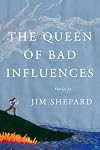
In this collection, Jim Shepard writes about catastrophes. Each of the twelve short stories focuses on a catastrophe, and Shepard creates characters, many of whom are based on real people of the time. He doesn't necessarily craft each story chronologically, with a beginning, middle, and end; rather, he uses different techniques in each. In the "Village of Islands" about the 1935 Florida hurricane, we meet characters who give us background on how people ended up in the Florida Keys and what show more the horrible living conditions were like. Then, we learn the reality of the hurricane and the chaos that ensued.
In "Our Day of Grace," the text consists of a correspondence between William, a Confederate soldier in the American Civil War, and his wife, Lucy. Both report on trying to cope with their unique circumstances and report on elements of war, William experiencing its actual horrors, and his wife attempting to maintain the household without her loved one. In this same story, we read a one-sided letter from Hattie, whose husband, CW, is fighting alongside William. CW doesn't seem to write, yet Hattie is persistent in communicating. Shepard effectively conveys the realities of the war from a Southern perspective, and the letters underscore how people documented their lives during that era.
One story that will stay with me long after reading the collection is "The Mentally Ill Are Not Alone." The narrator describes the overwhelming challenges posed by his brother's mental illness. It is a sobering reminder of the stigma that has long surrounded mental health issues. Particularly disturbing is the story's depiction of schools that were incapable of meeting the needs of children with disabilities. Although the events take place in the 1960s, and some progress has certainly been made, it is still unsettling to see how much trust the parents placed in a Catholic school ill-equipped to help their son. Shepard is equally critical of the ineffective treatments provided at Yale. The story invites readers to consider how society treats people whose minds work in atypical ways.
In the title story, "Queen of Bad Influences," Shepard writes about the sinking of the Lusitania. The story features a friendship between two girls on the cusp of adulthood as they try to forge a possibly romantic bond while traveling aboard the Lusitania. At least one survives, and we learn of the catastrophic sinking as we also learn about the catastrophe of the relationship that never completely developed.
Shepard is an engaging writer, and this collection encouraged me to reconsider both well-known historical disasters and the quieter calamities that occur within families, friendships, and communities. His stories prompt reflection not only on the people affected by large-scale tragedies but also on the ways ordinary relationships are tested as individuals struggle to survive the challenges of everyday life. show less
In "Our Day of Grace," the text consists of a correspondence between William, a Confederate soldier in the American Civil War, and his wife, Lucy. Both report on trying to cope with their unique circumstances and report on elements of war, William experiencing its actual horrors, and his wife attempting to maintain the household without her loved one. In this same story, we read a one-sided letter from Hattie, whose husband, CW, is fighting alongside William. CW doesn't seem to write, yet Hattie is persistent in communicating. Shepard effectively conveys the realities of the war from a Southern perspective, and the letters underscore how people documented their lives during that era.
One story that will stay with me long after reading the collection is "The Mentally Ill Are Not Alone." The narrator describes the overwhelming challenges posed by his brother's mental illness. It is a sobering reminder of the stigma that has long surrounded mental health issues. Particularly disturbing is the story's depiction of schools that were incapable of meeting the needs of children with disabilities. Although the events take place in the 1960s, and some progress has certainly been made, it is still unsettling to see how much trust the parents placed in a Catholic school ill-equipped to help their son. Shepard is equally critical of the ineffective treatments provided at Yale. The story invites readers to consider how society treats people whose minds work in atypical ways.
In the title story, "Queen of Bad Influences," Shepard writes about the sinking of the Lusitania. The story features a friendship between two girls on the cusp of adulthood as they try to forge a possibly romantic bond while traveling aboard the Lusitania. At least one survives, and we learn of the catastrophic sinking as we also learn about the catastrophe of the relationship that never completely developed.
Shepard is an engaging writer, and this collection encouraged me to reconsider both well-known historical disasters and the quieter calamities that occur within families, friendships, and communities. His stories prompt reflection not only on the people affected by large-scale tragedies but also on the ways ordinary relationships are tested as individuals struggle to survive the challenges of everyday life. show less
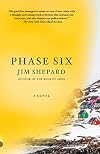
This book could destroy any comfort you are feeling in the (hopefully) waning days of the COVID-19 pandemic.
Sometime in the near future, eleven-year-old Aleq and his best friend Malik live in Ilimanaq, a tiny community in Greenland. One day they explore a rare metals mining site where they play on a “giant pile of excavated permafrost” and are exposed to “a cluster of molecules that had previously thrived in the respiratory tract of an early variant of the Bering goose and that had show more been trapped . . . during the Holocene glaciation [and now] had been reintroduced to the air and the warming sun.” Shortly after their return home, everyone starts becoming ill. Though the number of dead climbs, Aleq survives. The Center for Disease Control sends Jeannine Dziri and Danice Torrone to Greenland to investigate the illness. They need information from Aleq, but he is severely traumatized. The disease has a mortality rate of about 40 percent and spreads so rapidly that “By day thirty-five, estimations were as high as fourteen million infected.”
The novel focuses on four characters: Aleq, Jeannine, Danice, and Val. Aleq, as a survivor of the initial infection site, is kept in quarantine and studied to determine why he has survived. Danice and Jeannine and researchers around the world work to determine what causes the illness, how it spreads, how to treat the sick, and how to stop the spread. Val is an ICU physician who treats patients on the front lines; her hospital is quickly overwhelmed by the number of cases.
The book was penned before COVID-19, though references to it were added during editing. The reactions in the book certainly are exactly what we have experienced in the last 1 ½ years: panic, uncertainty, resistance to public health restrictions, and an overload of media coverage and speculation. Mention is made to a flood of online misinformation: “reality was being abandoned the way you might walk away from farmland that had lost its water source.” Anyone who followed the WHO press conferences will nod at this description: “The WHO, which had followed its global alert with a series of travel warnings and then a series of travel bans, and then a series of situation bulletins, on day thirty-six finally ceased its foot-dragging and upped its announced pandemic level to Phase 6, its highest, designating for anyone who might have missed it by this point that a global pandemic was officially under way.” Hearing about low vaccination rates in Republican states, I agreed with a suggestion that there be “an immediate halt to all flights out of states with Republican governors to reduce the spread of political imbecility.”
Interspersed throughout the narrative are short informational passages giving the reader some sobering facts: “Well before COVID-19, a survey in Global Public Health in 2006 had caused a stir in the international medical community by revealing that 90 percent of the epidemiologists polled predicted a major pandemic – one that would kill more than 150 million people – in one of the next two generations.” Did you know that “On average, the world encounters one new communicable disease each year, as pathogens evolve by leaps and bounds in ways that enhance their durability, transmissibility, and virulence”? If you’re a betting person, “’Who would you put your money on? Humans have been around for what, two hundred thousand years? And bacteria for like three and a half billion.’” Anyone wanting to dismiss Shepard’s opinion might want to look at the extensive bibliography provided.
Shepard understands human nature because he suggests that we tend to revert to our old ways once a crisis has passed: “The COVID-19 pandemic had exposed the way America’s health care system, having been stripped to the bare bones to maximize profit, was uniquely ill-equipped to handle the dramatically added burdens of disaster. But as in so many instances in American politics, after the lesson had been learned nothing had been done about it.” Later, there is reference to there being “no adequately funded or internationally coordinated system of focus, cooperation, and response. Public policy’s position in the U.S. and a surprising number of other countries had been to rebuild the status quo and then to sit back and wait for the next avalanche, as though pandemics were not a recurring natural phenomenon.”
In the book, the bonds of love and friendship that are formed in the midst of the catastrophe are heart-warming, but if such bonds are all that we have to bring us through a crisis, we are in deep trouble. The fate of some characters and the ending may leave readers angry and frustrated, but given the book’s subject matter and message, it is the only acceptable conclusion.
I recommend this cautionary tale, but I warn you that it is not escapist literature.
Note: Please check out my reader's blog (https://schatjesshelves.blogspot.com/) and follow me on Twitter (@DCYakabuski). show less
Sometime in the near future, eleven-year-old Aleq and his best friend Malik live in Ilimanaq, a tiny community in Greenland. One day they explore a rare metals mining site where they play on a “giant pile of excavated permafrost” and are exposed to “a cluster of molecules that had previously thrived in the respiratory tract of an early variant of the Bering goose and that had show more been trapped . . . during the Holocene glaciation [and now] had been reintroduced to the air and the warming sun.” Shortly after their return home, everyone starts becoming ill. Though the number of dead climbs, Aleq survives. The Center for Disease Control sends Jeannine Dziri and Danice Torrone to Greenland to investigate the illness. They need information from Aleq, but he is severely traumatized. The disease has a mortality rate of about 40 percent and spreads so rapidly that “By day thirty-five, estimations were as high as fourteen million infected.”
The novel focuses on four characters: Aleq, Jeannine, Danice, and Val. Aleq, as a survivor of the initial infection site, is kept in quarantine and studied to determine why he has survived. Danice and Jeannine and researchers around the world work to determine what causes the illness, how it spreads, how to treat the sick, and how to stop the spread. Val is an ICU physician who treats patients on the front lines; her hospital is quickly overwhelmed by the number of cases.
The book was penned before COVID-19, though references to it were added during editing. The reactions in the book certainly are exactly what we have experienced in the last 1 ½ years: panic, uncertainty, resistance to public health restrictions, and an overload of media coverage and speculation. Mention is made to a flood of online misinformation: “reality was being abandoned the way you might walk away from farmland that had lost its water source.” Anyone who followed the WHO press conferences will nod at this description: “The WHO, which had followed its global alert with a series of travel warnings and then a series of travel bans, and then a series of situation bulletins, on day thirty-six finally ceased its foot-dragging and upped its announced pandemic level to Phase 6, its highest, designating for anyone who might have missed it by this point that a global pandemic was officially under way.” Hearing about low vaccination rates in Republican states, I agreed with a suggestion that there be “an immediate halt to all flights out of states with Republican governors to reduce the spread of political imbecility.”
Interspersed throughout the narrative are short informational passages giving the reader some sobering facts: “Well before COVID-19, a survey in Global Public Health in 2006 had caused a stir in the international medical community by revealing that 90 percent of the epidemiologists polled predicted a major pandemic – one that would kill more than 150 million people – in one of the next two generations.” Did you know that “On average, the world encounters one new communicable disease each year, as pathogens evolve by leaps and bounds in ways that enhance their durability, transmissibility, and virulence”? If you’re a betting person, “’Who would you put your money on? Humans have been around for what, two hundred thousand years? And bacteria for like three and a half billion.’” Anyone wanting to dismiss Shepard’s opinion might want to look at the extensive bibliography provided.
Shepard understands human nature because he suggests that we tend to revert to our old ways once a crisis has passed: “The COVID-19 pandemic had exposed the way America’s health care system, having been stripped to the bare bones to maximize profit, was uniquely ill-equipped to handle the dramatically added burdens of disaster. But as in so many instances in American politics, after the lesson had been learned nothing had been done about it.” Later, there is reference to there being “no adequately funded or internationally coordinated system of focus, cooperation, and response. Public policy’s position in the U.S. and a surprising number of other countries had been to rebuild the status quo and then to sit back and wait for the next avalanche, as though pandemics were not a recurring natural phenomenon.”
In the book, the bonds of love and friendship that are formed in the midst of the catastrophe are heart-warming, but if such bonds are all that we have to bring us through a crisis, we are in deep trouble. The fate of some characters and the ending may leave readers angry and frustrated, but given the book’s subject matter and message, it is the only acceptable conclusion.
I recommend this cautionary tale, but I warn you that it is not escapist literature.
Note: Please check out my reader's blog (https://schatjesshelves.blogspot.com/) and follow me on Twitter (@DCYakabuski). show less
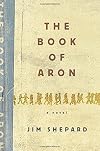
For a reader, it’s inadvisable to invest too much emotional capital in a Holocaust novel because of the inevitable fate awaiting characters that we grow to care for. Recognizing this, Jim Shepard has written a Holocaust novel from the perspective of a boy who views life dispassionately, at an emotional distance from family and friends. For young Aron Rozycki the world is simply what it is and he doesn't feel one way or another about it. Aron’s family subsists in peasant squalor in a show more Polish village near the Lithuanian border. It's a life filled with casual brutality. For Aron and his family there is no hope of an improved existence, so when the Germans invade and start treating them like cattle, it’s just one more setback. Aron has no expectations of a positive outcome and never once considers his world or his fate in terms of right and wrong, justice and injustice: misery and every sort of discomfort followed by an early death are constants long before the Nazis move the Rozyckis along with their Jewish neighbours into a Warsaw ghetto. In the ghetto Aron the opportunist quickly adapts to his new surroundings. Along with a group of other children he begins smuggling goods to bring in extra money, taking huge risks daily and witnessing first-hand examples of Nazi retribution. Over time conditions in the ghetto worsen. Freedoms are restricted, more families are brought in, overcrowding adds to the misery. People start dying from typhus and other diseases. At a certain point, Aron is approached by a Jewish collaborator and pressured into becoming an informant, and without much internal debate gives up his best friend to the Gestapo. Left alone after his father and brothers are taken away for a work detail and his mother dies, he is living on the street and watching out for the friends he betrayed when he is taken into an orphanage. However, the safe haven is only temporary, and eventually the Nazis empty the orphanage and everyone is carted off to one of the death camps. Shepard’s novel does not sugar coat the dire situation of Aron, the other orphans, and the orphanage staff. It is the fact that Aron looks evil squarely in the eye and does not look away that gives his story its poignancy and its power. Aron never sets out to avoid his fate. He does not think long term. He has no time for sentiment or hope. The world he inhabits has made him what he is, and as far as he's concerned nothing outside his immediate sphere exists. Aron narrates his own story in prose that is flatly observant, recounting harrowing events without emotional embellishment. The sacrifice that Shepard makes telling the story in this fashion is that though we are often horrified, we are rarely touched, and this seems to be his intention. The book has a narrow focus and gives the reader no respite from the horrors it describes. Potent and bitter, like an elixir, The Book of Aron adds to Shepard’s reputation as one of the most adventurous and versatile fiction writers at work today. show less
Eric Weinstein:
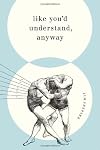
Devastation—physical, emotional, social, environmental—and the many possible responses to its impact is the theme of Jim Shepard's new collection of short stories. From the Chernobyl nuclear reactor accident of 1986 to a perilous nineteenth century exploration of the Australian interior, from war-torn ancient Greece to Nazi expeditions in the Himalayas, Shepard guides us through the human struggle for hope in the face of insurmountable odds, bringing to life a cast of show more characters whose beliefs, choices, and personalities are not only wholly credible—even against the backdrop of fantastic circumstance—but will strike you closer to home than you thought possible. "like you'd understand, anyway" challenges us to identify with these disparate minds, to overcome the chaos of their lives and ours, and to erase the boundaries, real and imagined, that prevent one life from connecting with another. show less
Devastation—physical, emotional, social, environmental—and the many possible responses to its impact is the theme of Jim Shepard's new collection of short stories. From the Chernobyl nuclear reactor accident of 1986 to a perilous nineteenth century exploration of the Australian interior, from war-torn ancient Greece to Nazi expeditions in the Himalayas, Shepard guides us through the human struggle for hope in the face of insurmountable odds, bringing to life a cast of show more characters whose beliefs, choices, and personalities are not only wholly credible—even against the backdrop of fantastic circumstance—but will strike you closer to home than you thought possible. "like you'd understand, anyway" challenges us to identify with these disparate minds, to overcome the chaos of their lives and ours, and to erase the boundaries, real and imagined, that prevent one life from connecting with another. show less
Lists
Awards


You May Also Like


Associated Authors
Statistics
- Works
- 38
- Also by
- 35
- Members
- 2,623
- Popularity
- #9,785
- Rating
- 3.7
- Reviews
- 80
- ISBNs
- 99
- Languages
- 7
- Favorited
- 5
