
Pauline Kael (1919–2001)
Author of 5001 Nights at the Movies
About the Author
Series
Works by Pauline Kael
Black films and film-makers: A comprehensive anthology from stereotype to superhero (1975) — Contributor — 8 copies
State of the Art: 2 2 copies
"That lettrous mountain of friendship" : the selected letters of Pauline Kael and Robert Duncan, 1945-1946 (2013) 1 copy
Early Uncollected Kael 1 copy
Associated Works
Shakespeare in America: An Anthology from the Revolution to Now (2014) — Contributor — 136 copies, 1 review
The Dylan Companion: A Collection of Essential Writing About Bob Dylan (1990) — Contributor, some editions — 103 copies
Last Tango in Paris: The Screenplay With Photographs From The Film (1973) — Contributor, some editions; Contributor — 40 copies, 1 review
Awake in the Dark: An Anthology of American Film Criticism, 1915 to the Present (1977) — Contributor — 27 copies
Three Screen Comedies by Samson Raphaelson: Trouble in Paradise; The Shop Around the Corner; Heaven Can Wait (1983) — Introduction — 9 copies
Tagged
Common Knowledge
- Birthdate
- 1919-06-19
- Date of death
- 2001-09-03
- Gender
- female
- Education
- University of California, Berkeley (BA|1940)
- Occupations
- film critic
advertising copywriter - Organizations
- McCall's
The New Republic
The New Yorker - Awards and honors
- George Polk Award (1970)
American Academy of Arts and Letters Academy Award (Literature ∙ 1970)
Crystal Award (1978)
Muse Award (1980)
Mel Novikoff Award (1991)
Los Angeles Film Critics Association Special Award (1994) (show all 8)
Gotham Independent Film Awards Writer Award (1995)
OFTA Film Hall of Fame (2012) - Relationships
- Broughton, James (lover)
James, Gina (daughter) - Nationality
- USA
- Birthplace
- Petaluma, California, USA
- Places of residence
- New York, New York, USA
San Francisco, California, USA - Place of death
- Great Barrington, Massachusetts, USA
- Associated Place (for map)
- USA
Members
Reviews
The Age of Movies: Selected Writings of Pauline Kael: A Library of America Special Publication by Pauline Kael
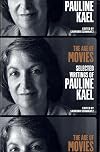
I find it somewhat surprising that so few people have this one in their collections, and that I am the first to review it here. Certainly there are a lot of cinephiles on LT, and they would benefit from reading Kael's writings on individual films. I am loathe to call them reviews, because she went much deeper into meaning; they are instead essays that place the film within film history and the trends of the day.
She famously did not buy into French "auteur" theory and celebrated filmmakers show more for not repeating themselves. It strikes me that one of the reasons a director fits into that theory is just that: repetition. Of themes, of techniques.
This collection cherrypicks her work from various books she wrote, I think about ten books in all. Some of her most famous pieces are included here, such as "Bonnie and Clyde" and "Last Tango in Paris". By championing these two films in The New Yorker, she provided convincing evidence of their worth and managed to help make them financial successes -- that's how much clout she had.
She could be exasperatingly wrong about some films, such as "2001" and "West Side Story". Although I could see her points, I felt like she was missing the forest for the trees at times. But even those bad reviews are compelling reading. I was prepared to be upset, but that didn't happen. It is one of the qualities of a film that it affects each of us differently; it is what we bring to the film from personal experience, our philosophy of life, our visceral reaction that determines our opinion. So we bound to agree here and disagree there with others. Unfortunately, the editor (Sanford Schwartz) picks almost exclusively the best known films of the various decades; I would have loved to see some obscure films that she praised included here.
I have never really bought into the so-called genius of Godard, Fellini, Antonioni, and neither does Kael. After championing early Godard, she rightly dismisses his later "political" films as polemical drudgery. For her there are no sacred cows, which should be a prerequisite for becoming a critic.
She reviewed primarily from the late 60's, when The New Yorker hired her, until the early 90's. She was pretty opinionated, for sure, about the state of American cinema in the 60's, was excited about it in the 70's, and was disappointed by it in the 80's, which she saw as driven by box office receipts and primarily by the success of Spielberg and Lucas. She finally got fed up (and she had health issues).
There is another Kael collection that is somewhat similar, although it is over 1300 pages and this one is about 800. If you're looking for a Maltin-like film guide, they put out the "5001 Nights" collection of capsule reviews; this is obviously not intended for one seeking out her detailed analysis, but it does includes her snapshot opinions of the pre-60's films.
If you are at all interested in film criticism of the period, you need to read Pauline Kael. show less
She famously did not buy into French "auteur" theory and celebrated filmmakers show more for not repeating themselves. It strikes me that one of the reasons a director fits into that theory is just that: repetition. Of themes, of techniques.
This collection cherrypicks her work from various books she wrote, I think about ten books in all. Some of her most famous pieces are included here, such as "Bonnie and Clyde" and "Last Tango in Paris". By championing these two films in The New Yorker, she provided convincing evidence of their worth and managed to help make them financial successes -- that's how much clout she had.
She could be exasperatingly wrong about some films, such as "2001" and "West Side Story". Although I could see her points, I felt like she was missing the forest for the trees at times. But even those bad reviews are compelling reading. I was prepared to be upset, but that didn't happen. It is one of the qualities of a film that it affects each of us differently; it is what we bring to the film from personal experience, our philosophy of life, our visceral reaction that determines our opinion. So we bound to agree here and disagree there with others. Unfortunately, the editor (Sanford Schwartz) picks almost exclusively the best known films of the various decades; I would have loved to see some obscure films that she praised included here.
I have never really bought into the so-called genius of Godard, Fellini, Antonioni, and neither does Kael. After championing early Godard, she rightly dismisses his later "political" films as polemical drudgery. For her there are no sacred cows, which should be a prerequisite for becoming a critic.
She reviewed primarily from the late 60's, when The New Yorker hired her, until the early 90's. She was pretty opinionated, for sure, about the state of American cinema in the 60's, was excited about it in the 70's, and was disappointed by it in the 80's, which she saw as driven by box office receipts and primarily by the success of Spielberg and Lucas. She finally got fed up (and she had health issues).
There is another Kael collection that is somewhat similar, although it is over 1300 pages and this one is about 800. If you're looking for a Maltin-like film guide, they put out the "5001 Nights" collection of capsule reviews; this is obviously not intended for one seeking out her detailed analysis, but it does includes her snapshot opinions of the pre-60's films.
If you are at all interested in film criticism of the period, you need to read Pauline Kael. show less
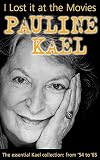
A high but delicate three stars. Kael evolved into one of the pivotal film critics of the second half of the 20th century, and the seeds are here already but I think this, her first collected volume, is in some ways less essential than what comes after. It's astonishing how many films listed here are still important but inevitably some are less so. Kael's core traits - a desire to be contrary and a resistance to films that seek to be art-for-art's-sake - both shine through here, but not show more always in ways that are pleasing to me. I love disagreeing with Kael as much as I love agreeing with her, and she offers eternal riches to the film student. But more casual lovers of film may find her later volumes more relevant and varied. show less

My all-time favourite film reviewer. About 1300 pages of fun opinionated pyrotechnics.
Her reviews sometimes have a stream-of-consciousness quality. Not only do we get her thoughts at the typewriter after the screening, but her mood as she walked in the theatre and sat down. Reviewing was not adhering to some objective standard of quality, it was personal.
Anyone that has ever engaged with “the arts” knows that objectivity is a farce, there is too much baggage in us for that. And anyone show more can write from that position, I suppose, but Pauline Kael had dynamite style for the ages.
I adore her, she's the One! show less
Her reviews sometimes have a stream-of-consciousness quality. Not only do we get her thoughts at the typewriter after the screening, but her mood as she walked in the theatre and sat down. Reviewing was not adhering to some objective standard of quality, it was personal.
Anyone that has ever engaged with “the arts” knows that objectivity is a farce, there is too much baggage in us for that. And anyone show more can write from that position, I suppose, but Pauline Kael had dynamite style for the ages.
I adore her, she's the One! show less

Initial use as guide to foreign films. In retirement I picked it up again as I began to explore the TCM database via my cable channel. Her capsule evaluations seem more critical than I recollected. My introduction to Pauline Kael’s writing – and movies as a serious subject -- was a chapter from her book I Lost it at the Movies excerpted years ago in The Atlantic, read probably when I was in high school. The article was on Franju’s Eyes without a Face, which I only got around to viewing show more in 2017.
New York my freshman year in college was a mecca for revivals both foreign and domestic. I’m currently reading Susan Sontag’s journal from that period, and it’s another example of how film as an art form was part of the cultural moment. There was the French New Wave, and their critical writing in Cahiers du Cinema that reevaluated the productions of the American studio system. My freshman English instructor persuaded me to see Alphaville and my 18th century English lit. prof Leo Braudy was writing a book on Jean Renoir. I remember walking out on Last Year at Marienbad when it was shown at the Thalia on 99th St., being the only person at an afternoon matinee of My Dinner at Maud’s in an art house on the East Side, watching Peckinpah’s Major Dundee at one of the seedy 42nd St. second-run houses after coming from an unsatisfactory viewing of Lola Montes at one of the tonier 5th Avenue theaters. I first learned to navigate the West Village by hunting up a revival of Jules and Jim – still my favorite New Wave movie -- at the small theater featured in the Madonna film Desperately Seeking Susan. The afternoon after the attack on the World Trade Center, I was in my apartment in New Haven watching a TCM revival of The World of Henry Orient, recalling Manhattan as I had imagined it when I was in high school in Honolulu.
When Bonnie and Clyde premiered, the New York Times reviewer Bosley Crowther thought it was garbage, but Pauline Kael “got it,” as she pretty much got the Wild Bunch which I saw first run at a theater in Waikiki with my sister and which I tried to convince my dorm mates to catch on second run when I returned to college. When I moved to New Haven, I used her reviews in The New Yorker to keep up with the new Hollywood films, and I have her to thank for introducing me to the films of Robert Altman and Martin Scorsese.
My guide to classic American film was Andrew Sarris’s book, a paperback I picked up at the Columbia University Bookstore the year it was published – I remember stacks of the hardcover printing in one of the big Greenwich Village bookstores. I had the luck to have enrolled in a class on film history taught (sort of) by Sarris my junior year. Although generally identified with the study of films of the American studio system, he in fact did not focus on his specialty, at least in the part of the course he was able to present. He was well grounded in the world cinema of the time, and I got to see Ugetsu Monogatari (rather than one of the more popular Kurosawa films), Day of Wrath, and Murnau’s Sunrise, as well as American classics like The Magnificent Ambersons and Seven Chances as well as the historically significant Birth of a Nation. Unfortunately, the class was put on pause by campus turmoil (the invasion of Cambodia) and was never resumed.
Kael and Sarris were involved in an ongoing feud that I did not follow. (Happily they both loved Ugetsu) So I will speculate based on nothing much that this accounts for her relative sourness on Sarris auteur favorites like Minnelli and Cukor. (Did she write the capsule review of the Bad and the Beautiful after her unsuccessful sabbatical in Hollywood?) Her notes on movies of the 70s and 80s encapsulate her far longer New Yorker reviews you can usually find reprinted in her books. The New Wave, World Cinema, and American studio system movies, on the other hand, are, I believe, the original brief notes for the New Yorker weekly guides to the local revivals and for program notes written prior to the New Yorker gig. These were more useful for me, but for those who were not contemporary with films of the 70s and 80s, those reviews might be as interesting. As I was cycling through TCM I was disappointed she didn’t have notes on Barry Lyndon (she doesn’t care for Kubrick in general) or Cukor’s David Copperfield or Cool Hand Luke. It’s not a good source of reviews for cult films. (See Michael Weldon’s Psychotronic Video Guide). When I was searching the LT database I discovered that 5001 has also been issued as an e-book. I had the print version squirreled away because the book took up too much room; I think you might find the e-book more useful. I’ve also found my outdated Time Out Film Guide to be more comprehensive (the reviews are shorter and by a variety of hands but they’re generally pretty sharp). In my opinion, Kael or Time Out or Sarris make the reviewers on Rotten Tomatoes seem like amateurs (and of course some of them are amateurs). Beyond that, there’s something to be said for personality. Both Kael and Sarris have recognizable voices. There might be wisdom in the tomatoes crowd, but if you want to argue about movies, you probably want to argue with individuals who are strongly defined by a passion for and immersion in the history of the art.
Addendum: Kael seems to have overlooked Yasunari Ozu (Tokyo Story, Floating Weeds, Late Summer) entirely.. Docked 1/2 star. show less
New York my freshman year in college was a mecca for revivals both foreign and domestic. I’m currently reading Susan Sontag’s journal from that period, and it’s another example of how film as an art form was part of the cultural moment. There was the French New Wave, and their critical writing in Cahiers du Cinema that reevaluated the productions of the American studio system. My freshman English instructor persuaded me to see Alphaville and my 18th century English lit. prof Leo Braudy was writing a book on Jean Renoir. I remember walking out on Last Year at Marienbad when it was shown at the Thalia on 99th St., being the only person at an afternoon matinee of My Dinner at Maud’s in an art house on the East Side, watching Peckinpah’s Major Dundee at one of the seedy 42nd St. second-run houses after coming from an unsatisfactory viewing of Lola Montes at one of the tonier 5th Avenue theaters. I first learned to navigate the West Village by hunting up a revival of Jules and Jim – still my favorite New Wave movie -- at the small theater featured in the Madonna film Desperately Seeking Susan. The afternoon after the attack on the World Trade Center, I was in my apartment in New Haven watching a TCM revival of The World of Henry Orient, recalling Manhattan as I had imagined it when I was in high school in Honolulu.
When Bonnie and Clyde premiered, the New York Times reviewer Bosley Crowther thought it was garbage, but Pauline Kael “got it,” as she pretty much got the Wild Bunch which I saw first run at a theater in Waikiki with my sister and which I tried to convince my dorm mates to catch on second run when I returned to college. When I moved to New Haven, I used her reviews in The New Yorker to keep up with the new Hollywood films, and I have her to thank for introducing me to the films of Robert Altman and Martin Scorsese.
My guide to classic American film was Andrew Sarris’s book, a paperback I picked up at the Columbia University Bookstore the year it was published – I remember stacks of the hardcover printing in one of the big Greenwich Village bookstores. I had the luck to have enrolled in a class on film history taught (sort of) by Sarris my junior year. Although generally identified with the study of films of the American studio system, he in fact did not focus on his specialty, at least in the part of the course he was able to present. He was well grounded in the world cinema of the time, and I got to see Ugetsu Monogatari (rather than one of the more popular Kurosawa films), Day of Wrath, and Murnau’s Sunrise, as well as American classics like The Magnificent Ambersons and Seven Chances as well as the historically significant Birth of a Nation. Unfortunately, the class was put on pause by campus turmoil (the invasion of Cambodia) and was never resumed.
Kael and Sarris were involved in an ongoing feud that I did not follow. (Happily they both loved Ugetsu) So I will speculate based on nothing much that this accounts for her relative sourness on Sarris auteur favorites like Minnelli and Cukor. (Did she write the capsule review of the Bad and the Beautiful after her unsuccessful sabbatical in Hollywood?) Her notes on movies of the 70s and 80s encapsulate her far longer New Yorker reviews you can usually find reprinted in her books. The New Wave, World Cinema, and American studio system movies, on the other hand, are, I believe, the original brief notes for the New Yorker weekly guides to the local revivals and for program notes written prior to the New Yorker gig. These were more useful for me, but for those who were not contemporary with films of the 70s and 80s, those reviews might be as interesting. As I was cycling through TCM I was disappointed she didn’t have notes on Barry Lyndon (she doesn’t care for Kubrick in general) or Cukor’s David Copperfield or Cool Hand Luke. It’s not a good source of reviews for cult films. (See Michael Weldon’s Psychotronic Video Guide). When I was searching the LT database I discovered that 5001 has also been issued as an e-book. I had the print version squirreled away because the book took up too much room; I think you might find the e-book more useful. I’ve also found my outdated Time Out Film Guide to be more comprehensive (the reviews are shorter and by a variety of hands but they’re generally pretty sharp). In my opinion, Kael or Time Out or Sarris make the reviewers on Rotten Tomatoes seem like amateurs (and of course some of them are amateurs). Beyond that, there’s something to be said for personality. Both Kael and Sarris have recognizable voices. There might be wisdom in the tomatoes crowd, but if you want to argue about movies, you probably want to argue with individuals who are strongly defined by a passion for and immersion in the history of the art.
Addendum: Kael seems to have overlooked Yasunari Ozu (Tokyo Story, Floating Weeds, Late Summer) entirely.. Docked 1/2 star. show less
Lists
Awards


You May Also Like


Associated Authors
Statistics
- Works
- 41
- Also by
- 17
- Members
- 2,937
- Popularity
- #8,721
- Rating
- 4.1
- Reviews
- 23
- ISBNs
- 86
- Languages
- 3
- Favorited
- 21