

Phillip Lopate
Author of The Art of the Personal Essay
About the Author
Phillip Lopate is the author of more than a dozen books, including three personal essay collections, Bachelorhood, Against Joie de Vivre, and Portrait of My Body; and Waterfront. He directs the graduate nonfiction program at Columbia University and lives in Brooklyn with his wife and daughter.
Disambiguation Notice:
Correct spelling of author's first name is Phillip, not Philip. .
Image credit: Phillip Lopate. UH Photographs Collection.
Series
Works by Phillip Lopate
The Prince of Minor Writers: The Selected Essays of Max Beerbohm (2015) — Editor — 155 copies, 1 review
The Glorious American Essay: One Hundred Essays from Colonial Times to the Present (2020) — Editor — 118 copies
Writing New York: A Literary Anthology (Expanded 10th-Anniversary Edition) (2008) — Editor — 101 copies, 1 review
Associated Works
For the Love of Books: 115 Celebrated Writers on the Books They Love Most (1999) — Contributor — 480 copies, 4 reviews
Touchstone Anthology of Contemporary Creative Nonfiction: Work from 1970 to the Present (2007) — Contributor — 219 copies, 3 reviews
New York 400: A Visual History of America's Greatest City with Images from The Museum of the City of New York (2009) — Contributor — 74 copies
Genesis as It Is Written: Contemporary Writers on Our First Stories (1996) — Contributor — 69 copies
Here Lies My Heart: Essays on Why We Marry, Why We Don't, and What We Find There (1999) — Contributor — 62 copies, 3 reviews
Remote: Reflections on Life in the Shadow of Celebrity (1996) — Foreword, some editions — 50 copies, 2 reviews
Wanting a Child: Twenty-Two Writers on Their Difficult but Mostly Successful Quests for Parenthood in a High-Tech Age (1998) — Contributor — 18 copies
Telephone 9 — Contributor — 1 copy
Tagged
Common Knowledge
- Canonical name
- Lopate, Phillip
- Birthdate
- 1943-11-16
- Gender
- male
- Education
- Columbia University (BA)
Union University (PhD) - Occupations
- film critic
essayist
poet
teacher
professor - Organizations
- Hofstra University
- Awards and honors
- National Endowment for the Arts Fellowship
New York Public Library Center for Scholars and Writers Fellowship
New York Foundation for the Arts grant
Guggenheim Fellowship - Nationality
- USA
- Birthplace
- Brooklyn, New York, USA
- Places of residence
- Brooklyn, New York, USA
- Disambiguation notice
- Correct spelling of author's first name is Phillip, not Philip.
. - Associated Place (for map)
- Brooklyn, New York, USA
Members
Reviews
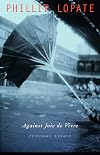
My daughter bought me this book for my birthday, and I'm glad she did, as was she, since she has a hard time finding things a curmudgeon like myself will appreciate (see the essay "Against Joie de Vivre," which led her to believe I'd enjoy this book).
Given the nature of the personal essay, which the author discusses in "What Happened to the Personal Essay?" there were of course some pieces I preferred to others. He stirred my interest, for example, in Montaigne and William Hazlitt, as show more progenitors of the personal essay, and reminded me of the pleasures I've gotten from Edmund Wilson, George Orwell, Seymour Krim, Norman Mailer, Joyce Carol Oates, Calvin Trillin, Albert Camus, E.M. Cioran, Milan Kundera, C. Wright Mills, and Susan Sontag, to name a few of the other "personal essayists" he cites.
On a more personal level--that is, having experienced similar situations and states of mind--I enjoyed "Never Live Above Your Landlord" and "Upstairs Neighbors" (living in Manhattan), and "... The 'Heroic' Age of Moviegoing" (the adventure of discovering, as a young man, foreign films when so-called art houses were in vogue). Other particular pleasures were Lopate's reflections upon "Modern Friendships," appearances ("On Shaving a Beard"), and the vulnerabilities of an author "Waiting for the Book to Come Out." And perhaps the most riveting piece: the author's experiences as a teacher, in "Chekhov for Children." show less
Given the nature of the personal essay, which the author discusses in "What Happened to the Personal Essay?" there were of course some pieces I preferred to others. He stirred my interest, for example, in Montaigne and William Hazlitt, as show more progenitors of the personal essay, and reminded me of the pleasures I've gotten from Edmund Wilson, George Orwell, Seymour Krim, Norman Mailer, Joyce Carol Oates, Calvin Trillin, Albert Camus, E.M. Cioran, Milan Kundera, C. Wright Mills, and Susan Sontag, to name a few of the other "personal essayists" he cites.
On a more personal level--that is, having experienced similar situations and states of mind--I enjoyed "Never Live Above Your Landlord" and "Upstairs Neighbors" (living in Manhattan), and "... The 'Heroic' Age of Moviegoing" (the adventure of discovering, as a young man, foreign films when so-called art houses were in vogue). Other particular pleasures were Lopate's reflections upon "Modern Friendships," appearances ("On Shaving a Beard"), and the vulnerabilities of an author "Waiting for the Book to Come Out." And perhaps the most riveting piece: the author's experiences as a teacher, in "Chekhov for Children." show less
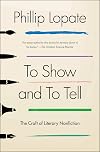
Writing about yourself seems like an incredibly easy task at first. Doing so in a way that captures the attention of an audience, however, is in truth quite difficult. Augustine of Hippo wrote his psychologically probing Confessions at the end of the fourth century CE and opened up the world of conveying a message with one’s life story. Ambitious authors have been doing so ever since, and the rate of personal nonfiction writing is only increasing in recent decades. In these reflections, show more writing professor Phillip Lopate explores effective ways to do this by looking at how great historical and recent authors did this.
The title of this book is accurate, but some of the promotional hype is not. This is not a “nuts-and-bolts” treatment of writing literary nonfiction. Its form is not like a writing workshop, and those who look for practical, actionable pointers will be let down. Instead, Lopate provides authors’ stories to convey his lessons. This illustrates the art while teasing out its underlying methods. Although a replay of literary history might at first sound boring, this master teacher knows how to keep readers engaged with their hearts and heads while conveying the information.
Lopate shares brief, eloquent biographies of authors like Ralph Waldo Emerson and James Baldwin through their personal writings. Though all centered around individual knowledge, related genres vary from personal essays to memoirs. Interested writers cannot acquire academic credentials every time to write a book, so composing nonfiction requires a broader understanding of how knowledge can be gained and an appreciation of the limits of one’s knowledge. Learning to do this by understanding past masters provides the most effective way of mastering this craft.
This book interests and engages readers first. It’s simply not boring. Again, those looking for an analytical treatment will be let down because this work itself shows how “to show and to tell.” Writers of nonfiction can learn much from this master. Those left wanting to learn more can consult the extensive bibliography at the end of the book for beneficial deep dives. Even when the material became a bit dense, Lopate’s storytelling took over and carried me safe and sound unto the end. I’m glad I read this book. show less
The title of this book is accurate, but some of the promotional hype is not. This is not a “nuts-and-bolts” treatment of writing literary nonfiction. Its form is not like a writing workshop, and those who look for practical, actionable pointers will be let down. Instead, Lopate provides authors’ stories to convey his lessons. This illustrates the art while teasing out its underlying methods. Although a replay of literary history might at first sound boring, this master teacher knows how to keep readers engaged with their hearts and heads while conveying the information.
Lopate shares brief, eloquent biographies of authors like Ralph Waldo Emerson and James Baldwin through their personal writings. Though all centered around individual knowledge, related genres vary from personal essays to memoirs. Interested writers cannot acquire academic credentials every time to write a book, so composing nonfiction requires a broader understanding of how knowledge can be gained and an appreciation of the limits of one’s knowledge. Learning to do this by understanding past masters provides the most effective way of mastering this craft.
This book interests and engages readers first. It’s simply not boring. Again, those looking for an analytical treatment will be let down because this work itself shows how “to show and to tell.” Writers of nonfiction can learn much from this master. Those left wanting to learn more can consult the extensive bibliography at the end of the book for beneficial deep dives. Even when the material became a bit dense, Lopate’s storytelling took over and carried me safe and sound unto the end. I’m glad I read this book. show less

Buying a book of essays is sort of like buying an album; maybe you already know and like one of the tracts and are hoping the majority of the rest are as good, but it's not a sure thing. In this collection, the best essay is the first, "Samson and Delilah and the Kids," sucking us in, so we want to buy the whole album.
Lopate, born in 1943 (the same year as both of my husbands - must be I like the thoughts of men born in that year) - says he "grew up in the era of the great Jewish lovers. show more Samson and Delilah, David and Bathsheba, Solomon and Sheba..." Who in our generation can't remember those film posters, especially the ones with Hedy Lamarr? And the biblical cartoons that ran in the Sunday papers: Lopate mentions those also as forming, along with the movies, his primary impressions of the Bible while growing up. Those of us who shared that intellectual [sic] background cannot but smile.
After a charming and witty discussion of the Bible epic movies, the author explores the question of "Why do men want Delilahs?" His answer, or many answers, strike me as brilliant. A smattering of his thoughts:
"Because one yearns to be swept away by a passion stronger than one's reason... because, while she may destroy you, she will not smother you with admiration or doting affection... because she confirms your worst ideas about women... because she is full of surprises and that keeps you off-balance..." And because of the many arts she possesses: "the ability to sustain an appearance of glamour... the control of scents... the manipulation of interior spaces...the ability to keep the humdrum everyday world at bay...the naughtiness of a young girl or a kitten or anything but a fully adult woman (who would remind you of your own death)..."
Some essays are enjoyable riffs on urban life; some, like "Chekhov for Children" keep you turning the pages; some seem way too self-oriented for anyone to care. As Lopate himself notes in "What Happened to the Personal Essay," "Informal, familiar esays tend to seize on the parade and minuitiae of daily life: vanities, fashions, oddballs, seasonal rituals, love and disappointment, the pleasures of solitude, reading going to plays, walking in the street." Sometimes I loved accompanying him on his quotidian travels; other times (as with "Waiting For the Book To Come Out"), I wished he would change the subject. ...but never enough to stop reading; a personal essayist becomes your friend; you listen to your friends through the good, bad, and boring, because you have come to love them and appreciate their observations, their wit, and the generous way they share their innermost thoughts with you. And even when you grimace to recognize some unsavory thought as similar to one of your own, you marvel at the ability and even courage to articulate it.
(JAF) show less
Lopate, born in 1943 (the same year as both of my husbands - must be I like the thoughts of men born in that year) - says he "grew up in the era of the great Jewish lovers. show more Samson and Delilah, David and Bathsheba, Solomon and Sheba..." Who in our generation can't remember those film posters, especially the ones with Hedy Lamarr? And the biblical cartoons that ran in the Sunday papers: Lopate mentions those also as forming, along with the movies, his primary impressions of the Bible while growing up. Those of us who shared that intellectual [sic] background cannot but smile.
After a charming and witty discussion of the Bible epic movies, the author explores the question of "Why do men want Delilahs?" His answer, or many answers, strike me as brilliant. A smattering of his thoughts:
"Because one yearns to be swept away by a passion stronger than one's reason... because, while she may destroy you, she will not smother you with admiration or doting affection... because she confirms your worst ideas about women... because she is full of surprises and that keeps you off-balance..." And because of the many arts she possesses: "the ability to sustain an appearance of glamour... the control of scents... the manipulation of interior spaces...the ability to keep the humdrum everyday world at bay...the naughtiness of a young girl or a kitten or anything but a fully adult woman (who would remind you of your own death)..."
Some essays are enjoyable riffs on urban life; some, like "Chekhov for Children" keep you turning the pages; some seem way too self-oriented for anyone to care. As Lopate himself notes in "What Happened to the Personal Essay," "Informal, familiar esays tend to seize on the parade and minuitiae of daily life: vanities, fashions, oddballs, seasonal rituals, love and disappointment, the pleasures of solitude, reading going to plays, walking in the street." Sometimes I loved accompanying him on his quotidian travels; other times (as with "Waiting For the Book To Come Out"), I wished he would change the subject. ...but never enough to stop reading; a personal essayist becomes your friend; you listen to your friends through the good, bad, and boring, because you have come to love them and appreciate their observations, their wit, and the generous way they share their innermost thoughts with you. And even when you grimace to recognize some unsavory thought as similar to one of your own, you marvel at the ability and even courage to articulate it.
(JAF) show less
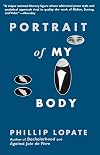
I liked Lopate's Against Joie de Vivre enough to purchase Portrait of My Body a few weeks later. Again, Lopate delves into himself and presents his findings with self-deprecation, where warranted, and assertion, even indignance, when it's called for. It's a pleasure to find someone who expresses himself so well and with such uncommon sense.
If his essays have a flaw, it's in his overaffection for the past. Lopate knows this aspect of himself, and says as much: the desire to dwell in rich show more remembrance of certain times and places; an inclination I share with him. At times it waylays his clear-eyed observations, and perhaps his editorial judgment, as in his clunker in Joi de Vivre: an overlong essay on Houston, Lopate's adopted city.
In this book, I found it influenced his portrait of the West Village, a place I know too, and in a similar manner: Lopate lived on Bank Street, and I was around the corner on Perry, at roughly the same time, both of us looking back at the past while there. Contemplating those narrow, old-fashioned streets, recalling his bohemian friends and acquaintances, nostalgia nudges enough of Lopate's acuity aside so that his piece settles too much on two literary characters he knew, who serve as personifications of the place; always a tricky gambit, and one that didn't work for me here.
Then again, perhaps it's because Lopate's highs are so high that they call attention to the pieces that fall short. And in this book, what he has to say about the contemporary Jewish attitude toward the concentration camps--the Holocaust, as it's all but universally called now, a "superlative" that he critically examines--sums up and goes beyond the arguments a Jew hears at Passover, or whenever the state of Israel comes up in conversation. After reading it, I had the notion of making copies and carrying them around with me in case I found myself among relatives, so I wouldn't have to waste my breath, as usual, but just hand out Lopate's essay like a pamphlet. show less
If his essays have a flaw, it's in his overaffection for the past. Lopate knows this aspect of himself, and says as much: the desire to dwell in rich show more remembrance of certain times and places; an inclination I share with him. At times it waylays his clear-eyed observations, and perhaps his editorial judgment, as in his clunker in Joi de Vivre: an overlong essay on Houston, Lopate's adopted city.
In this book, I found it influenced his portrait of the West Village, a place I know too, and in a similar manner: Lopate lived on Bank Street, and I was around the corner on Perry, at roughly the same time, both of us looking back at the past while there. Contemplating those narrow, old-fashioned streets, recalling his bohemian friends and acquaintances, nostalgia nudges enough of Lopate's acuity aside so that his piece settles too much on two literary characters he knew, who serve as personifications of the place; always a tricky gambit, and one that didn't work for me here.
Then again, perhaps it's because Lopate's highs are so high that they call attention to the pieces that fall short. And in this book, what he has to say about the contemporary Jewish attitude toward the concentration camps--the Holocaust, as it's all but universally called now, a "superlative" that he critically examines--sums up and goes beyond the arguments a Jew hears at Passover, or whenever the state of Israel comes up in conversation. After reading it, I had the notion of making copies and carrying them around with me in case I found myself among relatives, so I wouldn't have to waste my breath, as usual, but just hand out Lopate's essay like a pamphlet. show less
Lists
Awards


You May Also Like


Associated Authors
Statistics
- Works
- 43
- Also by
- 22
- Members
- 4,131
- Popularity
- #6,095
- Rating
- 3.8
- Reviews
- 57
- ISBNs
- 85
- Languages
- 2
- Favorited
- 2
