
Susan Sontag (1933–2004)
Author of On Photography
About the Author
Susan Sontag was born in New York City on January 16, 1933. She received a B.A. from the University of Chicago and did graduate work in philosophy, literature and theology at Harvard University and Saint Anne's College, Oxford University. She was the author of 17 books including four novels, a show more collection of short stories, several plays, and eight works of nonfiction. Her novels are The Benefactor, Death Kit, The Volcano Lover, and In America, which won the 2000 National Book Award for fiction. On Photography received the 1978 National Book Critics Circle Award. Her stories and essays have appeared in numerous magazines including The New Yorker, The New York Review of Books, The Times Literary Supplement, and Art in America. She also wrote and directed four feature films and stage plays in the United States and Europe. She died from leukemia on December 28, 2004 at the age of 71. (Bowker Author Biography) show less
Series
Works by Susan Sontag
As Consciousness Is Harnessed to Flesh: Journals and Notebooks, 1964-1980 (2012) 375 copies, 4 reviews
Susan Sontag: Obra imprescindible / Susan Sontag: Essential Works: Edición de David Rieff (Spanish Edition) (2022) 14 copies, 1 review
Odio sentirmi una vittima. Intervista su amore, dolore e scrittura con Jonathan Cott (2016) 5 copies, 1 review
Thel Lady From The Sea 2 copies
Granta: Sobre la marcha. Tomo #7 (Granta: As [You] Go Through Life. Volume #7) (Spanish Edition) (2007) 2 copies
Om kvinner 1 copy
L'Œuvre Parle 1 copy
Death Kitt 1 copy
Alice im Bett 1 copy
Yanardağ Sevgilim 1 copy
Under the Sign of Saturn 1 copy
Bàn về nhiếp ảnh 1 copy
Boyle Yasıyoruz Artık: Solgun ve Hastalıklı ve Kırılgan, Onu Tanımlamak Icin Hep Kullanılagelmemis miydi? (2020) 1 copy
What Have We Done? 1 copy
Holocaust 1 copy
BİLİNCİN KAPISINI ARALAMAK 1 copy
Godard 1 copy
Ako knjige nestanu 1 copy
Fascinating Fascism 1 copy
Theatre and film 1 copy
Associated Works
The Story and Its Writer: An Introduction to Short Fiction (1976) — Contributor — 1,216 copies, 3 reviews
Fierce Pajamas: An Anthology of Humor Writing from The New Yorker (2001) — Contributor — 790 copies, 5 reviews
The Scribner Anthology of Contemporary Short Fiction: Fifty North American American Stories Since 1970 (1999) — Contributor — 586 copies, 4 reviews
Writers on Writing: Collected Essays from the New York Times (2001) — Contributor — 480 copies, 5 reviews
A Barthes Reader (1982) — Editor, some editions; Introduction, some editions — 436 copies, 2 reviews
The Art of the Tale: An International Anthology of Short Stories (1986) — Contributor — 381 copies, 3 reviews
Antonin Artaud: Selected Writings (1976) — Editor, some editions; Introduction, some editions — 356 copies, 5 reviews
McLuhan: Hot & Cool - A Primer for the Understanding and a Critical Symposium with a Rebuttal by McLuhan (1967) — Contributor — 171 copies, 1 review
The Norton Anthology of American Literature, Volume 2: 1865 to Present (1979) — Contributor, some editions — 137 copies
The Glorious American Essay: One Hundred Essays from Colonial Times to the Present (2020) — Contributor — 119 copies
Wrestling with Zion: Progressive Jewish-American Responses to the Israeli-Palestinian Conflict (2003) — Contributor — 84 copies, 1 review
Who's Writing This? Notations on the Authorial I, with Self-Portraits {not Antæus} (1995) — Contributor — 75 copies
Best of The Oxford American: Ten Years from the Southern Magazine of Good Writing {anthology} (2002) — Contributor — 45 copies
Antaeus No. 64/65, Spring/Autumn 1990 - Twentieth Anniversary Issue (1990) — Contributor — 14 copies
Amerika, Amerika bloemlezing — Contributor — 8 copies
海 1972年05月号 — Contributor — 1 copy
Tagged
Common Knowledge
- Canonical name
- Sontag, Susan
- Legal name
- Rosenblatt, Susan Lee (birth)
- Birthdate
- 1933-01-16
- Date of death
- 2004-12-28
- Gender
- female
- Education
- University of California, Berkeley
University of Chicago (BA|1951)
Harvard University (MA|1954|MA|1955)
St. Anne's College, Oxford
Sorbonne University - Occupations
- novelist
screenwriter
critic
teacher
essayist - Organizations
- American Academy of Arts and Letters (Literature, 1979)
- Awards and honors
- Jerusalem Prize (2001)
Premio Príncipe de Asturias (Letters, 2003)
American Academy of Arts and Letters Academy Award (Literature, 1976)
Friedenspreis des Deutschen Buchhandels (2003)
MacArthur Fellowship (1990)
Premio Malaparte (1992) (show all 10)
National Book Critics' Circle Award for Criticism (1977)
Commandeur des Arts et des Lettres (1999)
National Book Award (2000)
George Polk Award (2002) - Relationships
- Rieff, Philip (husband|divorced)
Rieff, David (son)
Leibovitz, Annie (partner)
Fornes, Maria Irene (partner)
Taubes, Susan (friend) - Short biography
- Susan Sontag was an iconic American essayist, novelist, philosopher, and political activist. She earned degrees from the University of Chicago and Harvard University. Her seminal works include Notes on 'Camp', Illness as Metaphor, and Regarding the Pain of Others. Her verified biographies and published journals document her personal romantic relationships with both men and women; she openly rejected rigid labels regarding her bisexuality
- Cause of death
- acute myelogenous leukemia
- Nationality
- USA
- Birthplace
- New York, New York, USA
- Places of residence
- Tucson, Arizona, USA
Los Angeles, California, USA - Place of death
- New York, New York, USA
- Burial location
- Cimetière du Montparnasse, Paris, Île-de-France, France
- Associated Place (for map)
- USA
Members
Discussions
AMERICAN AUTHORS CHALLENGE--FEBRUARY 2024--SUSAN SONTAG in 75 Books Challenge for 2024 (February 2024)
Susan Sontag in Legacy Libraries (April 2018)
Novel about a melancholic couple in Name that Book (June 2012)
Reviews

This was Sontag's first essay-collection, first published in 1966 when she had broken out of academia and was starting to make her way as a critic in New York and Paris. It includes several of her most famous pieces — "Against interpretation", "On style", "Notes on camp", etc., as well as a selection of book, film and theatre reviews.
"Against interpretation" sets the tone for the whole book, really: Sontag is on a mission to persuade the world of the arts that they have all been focussing show more too much on content at the expense of form. Works of art (novels, films, paintings, poems, plays, ...) should not do their aesthetic work through the ideas they present, but by the elegance and originality of the way in which they engage with the viewer. This is a message which she develops further in many of her reviews, and it is also at the heart of "Notes on camp" — camp is all about the disconnect between style and substance.
Picking the book up fifty years on, the first thing that struck me was the tremendous confidence and authority she expresses. About everything from philosophy and anthropology to Japanese science-fiction films and New York "Happenings", she has read all the relevant background literature (like all properly-scary critics, she's normally better-informed than the author whose work she's taking apart), made up her mind, and tells us without any equivocation or self-doubt exactly what's good and bad about the work. I can well imagine that the presumption of this young woman telling them what to think must have made quite a few elderly male readers of the Partisan Review and NYRB splutter over their cornflakes back in the early sixties...
It's interesting to see how many of the names that really mattered (to someone like Sontag) in the early sixties have faded into the background a bit now: Sartre, Genet, Camus, Antonin Artaud, Claude Lévi-Strauss, Simone Weil, Robert Bresson, Alain Robbe-Grillet, Alain Resnais, Jean-Luc Godard. We still know who most of them are, and perhaps have one or two of them in our personal pantheons as well, but we'd be unlikely to come up with that exact list. Barthes and Foucault were only just beginning to show up on the map then, and Derrida (whose first major book only came out in 1967) doesn't even get a mention. (There is also the interesting question of how much room she leaves for non-French intellectuals. Answer: not much. We do get mention of a handful of Germans, Hungarians, Russians, Japanese and maybe two Americans in the course of the book, but France occupies about 95% of the seats in her intellectual debating-chamber at this point...)
In a silly anachronistic way, it's also amusing to see how often Sontag writes things in a way that would set 21st century feminists' teeth on edge. When she opens her essay on Camus with the memorable sentence, "Great writers are either husbands or lovers", we're supposed to understand that she's using that image to make us imagine two particular kinds of relationships between writer and reader, and that this doesn't have anything to do with the gender or sexuality that either of them happen to have in real life. We still understand and enjoy the image, of course, but she'd never get away with that nowadays!
Something similar applies to her comments about "homosexuals" at various points, e.g. in "Notes on camp" and in her review of Blues for Mister Charlie. Baldwin gets taken to task for using a play that's ostensibly about racism to deal covertly with his own sexual hang-ups — a perceptive judgement by Sontag, but the way she delivers it is more than a little brusque. show less
"Against interpretation" sets the tone for the whole book, really: Sontag is on a mission to persuade the world of the arts that they have all been focussing show more too much on content at the expense of form. Works of art (novels, films, paintings, poems, plays, ...) should not do their aesthetic work through the ideas they present, but by the elegance and originality of the way in which they engage with the viewer. This is a message which she develops further in many of her reviews, and it is also at the heart of "Notes on camp" — camp is all about the disconnect between style and substance.
Picking the book up fifty years on, the first thing that struck me was the tremendous confidence and authority she expresses. About everything from philosophy and anthropology to Japanese science-fiction films and New York "Happenings", she has read all the relevant background literature (like all properly-scary critics, she's normally better-informed than the author whose work she's taking apart), made up her mind, and tells us without any equivocation or self-doubt exactly what's good and bad about the work. I can well imagine that the presumption of this young woman telling them what to think must have made quite a few elderly male readers of the Partisan Review and NYRB splutter over their cornflakes back in the early sixties...
It's interesting to see how many of the names that really mattered (to someone like Sontag) in the early sixties have faded into the background a bit now: Sartre, Genet, Camus, Antonin Artaud, Claude Lévi-Strauss, Simone Weil, Robert Bresson, Alain Robbe-Grillet, Alain Resnais, Jean-Luc Godard. We still know who most of them are, and perhaps have one or two of them in our personal pantheons as well, but we'd be unlikely to come up with that exact list. Barthes and Foucault were only just beginning to show up on the map then, and Derrida (whose first major book only came out in 1967) doesn't even get a mention. (There is also the interesting question of how much room she leaves for non-French intellectuals. Answer: not much. We do get mention of a handful of Germans, Hungarians, Russians, Japanese and maybe two Americans in the course of the book, but France occupies about 95% of the seats in her intellectual debating-chamber at this point...)
In a silly anachronistic way, it's also amusing to see how often Sontag writes things in a way that would set 21st century feminists' teeth on edge. When she opens her essay on Camus with the memorable sentence, "Great writers are either husbands or lovers", we're supposed to understand that she's using that image to make us imagine two particular kinds of relationships between writer and reader, and that this doesn't have anything to do with the gender or sexuality that either of them happen to have in real life. We still understand and enjoy the image, of course, but she'd never get away with that nowadays!
Something similar applies to her comments about "homosexuals" at various points, e.g. in "Notes on camp" and in her review of Blues for Mister Charlie. Baldwin gets taken to task for using a play that's ostensibly about racism to deal covertly with his own sexual hang-ups — a perceptive judgement by Sontag, but the way she delivers it is more than a little brusque. show less

In 1876, the celebrated Polish actress Maryna Załężowska and a group of her Warsaw-intellectual friends set off to live on a Fourier-inspired commune in California. As so often happens with idealistic communities, it doesn’t quite work out as they had hoped, and Maryna finds herself going back on stage to create a new career for herself in America.
Sontag uses this historical-fiction framework to explore what it might have meant to be a famous woman, successful in a high-profile show more profession, in late-19th century Europe and America, as well as picking out some of the oddities of American life and thought from a European perspective, and vice-versa, and dissecting the ways that acting on stage intersect with real (family) life and relationships. But also about the way that migration creates opportunities — and pressures — for us to adopt new personas and names. We learn quite a lot about Victorian tastes in theatre, meet some interesting real-life figures from the period, and generally get an awful lot of information thrown at us.
Sontag also has a lot of fun playing around with a range of clever — and sometimes plain theatrical — narrative techniques, most notably in the opening chapter, where the far-from-omniscient narrator finds herself watching from the sidelines of a party taking place in an era and a place far outside her own experience, and trying to piece together who these characters might be and how they fit together. The closing chapter is another tour-de-force, a monologue, with stage directions, addressed to Maryna and delivered by her fellow-actor Edwin Booth (brother of…) as he slips in and out of the roles of himself and an assortment of Shakespearean protagonists.
A demanding read, but also quite a rewarding one, with its share of fun. show less
Sontag uses this historical-fiction framework to explore what it might have meant to be a famous woman, successful in a high-profile show more profession, in late-19th century Europe and America, as well as picking out some of the oddities of American life and thought from a European perspective, and vice-versa, and dissecting the ways that acting on stage intersect with real (family) life and relationships. But also about the way that migration creates opportunities — and pressures — for us to adopt new personas and names. We learn quite a lot about Victorian tastes in theatre, meet some interesting real-life figures from the period, and generally get an awful lot of information thrown at us.
Sontag also has a lot of fun playing around with a range of clever — and sometimes plain theatrical — narrative techniques, most notably in the opening chapter, where the far-from-omniscient narrator finds herself watching from the sidelines of a party taking place in an era and a place far outside her own experience, and trying to piece together who these characters might be and how they fit together. The closing chapter is another tour-de-force, a monologue, with stage directions, addressed to Maryna and delivered by her fellow-actor Edwin Booth (brother of…) as he slips in and out of the roles of himself and an assortment of Shakespearean protagonists.
A demanding read, but also quite a rewarding one, with its share of fun. show less
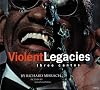
In Violent Legacies the acclaimed photographer Richard Misrach compiles three "cantos" in his ongoing series of photographs exploring the desert of the American West. The desert has long been a metaphor in Misrach's art. Here, this barren land, so often romanticized, undergoes an eerie transformation at the hands of man and becomes an unmistakable reflection of militarism, violence, and environmental destruction. Misrach's political commitment and activism--filtered through an ironic show more counterposing of form and content, as well as his exquisite use of color and composition--have never been as powerfully articulated as in these three new cantos, which are centered around the Utah deadlands and a former nuclear test site in Nevada. The late Susan Sontag contributes a subtle yet probing allegorical meditation on violence in contemporary society, and in a postscript interview, Misrach provides background information about the photographed sites. show less
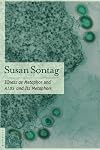
“Modern disease metaphors specify an ideal of society’s wellbeing, analogised to physical health, that is frequently anti-political as it is a call for a new political order.”
Illness as Metaphor & AIDS and Its Metaphors is an eloquently incisive dissection of how diseases used as metaphors limit, twist, and bring forth several other meanings that can jeopardise and vaporise their medical definition. This, in turn, can have a strange, harmful effect to people who have these diseases and show more the people within their “communities.” More than that the usage of metaphors not only in a literary sense but also to the advantage of any political agenda (to alienate/isolate a minority, incite ridiculous fear to the public, et cetera), the romanticisation/stigmatisation of these diseases along their accompanied demise are fascinatingly magnificent additions to their history of metaphors throughout the years.
Sontag, although perhaps a bit repetitive here and there, is seamless: from tuberculosis as a fashion trend, a standard beauty in all its pale and sallow, gaunt glory, cancer as an overused metaphor (ex., as “unqualifiedly and unredeemably wicked”) which mentally affects patients with cancer and its further association to a type of extremism that causes displacement and discrimination (ex. “Islam is spreading like cancer”) to the AIDS epidemic in ‘80s US where it's labelled as the “gay plague” and how this perpetuated, exacerbated the already ingrained hatred and prejudice on top of the government’s intentional inaction. This painfully claimed a lot of lives. Sadly, bigoted beliefs still exist today in those who choose to be ignorant and stupid. And similar to what’s currently happening, there is a pattern of justified discrimination, this time of a racial kind, with the initial identification of COVID19 in Hubei, China. Asians—Chinese and people mistaken as Chinese (because of people’s narrow idea of what Asians look like and the lack of geographical knowledge)—are subjected to verbal abuse even physical violence across the globe. And this doesn’t stop there, people of colour also receive worse, little to no medical attention because of the implicit social hierarchy established particularly in western countries. This slim book does not end here, it inspects countless of metaphors I'm afraid to blabber about.
By the end, Sontag's polemic is unforgettably powerful and strikingly remains frighteningly relevant during this pandemic we are all in. It is despairing that she predicts these metaphors will be obsolete in the future, maybe it's indeed better, but it seems to me they only pile up like clothes in an otherwise already full closet, metaphors we use at our disposal without critically thinking of their lasting impact. show less
Illness as Metaphor & AIDS and Its Metaphors is an eloquently incisive dissection of how diseases used as metaphors limit, twist, and bring forth several other meanings that can jeopardise and vaporise their medical definition. This, in turn, can have a strange, harmful effect to people who have these diseases and show more the people within their “communities.” More than that the usage of metaphors not only in a literary sense but also to the advantage of any political agenda (to alienate/isolate a minority, incite ridiculous fear to the public, et cetera), the romanticisation/stigmatisation of these diseases along their accompanied demise are fascinatingly magnificent additions to their history of metaphors throughout the years.
Sontag, although perhaps a bit repetitive here and there, is seamless: from tuberculosis as a fashion trend, a standard beauty in all its pale and sallow, gaunt glory, cancer as an overused metaphor (ex., as “unqualifiedly and unredeemably wicked”) which mentally affects patients with cancer and its further association to a type of extremism that causes displacement and discrimination (ex. “Islam is spreading like cancer”) to the AIDS epidemic in ‘80s US where it's labelled as the “gay plague” and how this perpetuated, exacerbated the already ingrained hatred and prejudice on top of the government’s intentional inaction. This painfully claimed a lot of lives. Sadly, bigoted beliefs still exist today in those who choose to be ignorant and stupid. And similar to what’s currently happening, there is a pattern of justified discrimination, this time of a racial kind, with the initial identification of COVID19 in Hubei, China. Asians—Chinese and people mistaken as Chinese (because of people’s narrow idea of what Asians look like and the lack of geographical knowledge)—are subjected to verbal abuse even physical violence across the globe. And this doesn’t stop there, people of colour also receive worse, little to no medical attention because of the implicit social hierarchy established particularly in western countries. This slim book does not end here, it inspects countless of metaphors I'm afraid to blabber about.
By the end, Sontag's polemic is unforgettably powerful and strikingly remains frighteningly relevant during this pandemic we are all in. It is despairing that she predicts these metaphors will be obsolete in the future, maybe it's indeed better, but it seems to me they only pile up like clothes in an otherwise already full closet, metaphors we use at our disposal without critically thinking of their lasting impact. show less
Lists
Awards


You May Also Like


Associated Authors
Statistics
- Works
- 111
- Also by
- 66
- Members
- 21,390
- Popularity
- #1,013
- Rating
- 3.8
- Reviews
- 238
- ISBNs
- 724
- Languages
- 28
- Favorited
- 56

