
Roland Barthes (1915–1980)
Author of Mythologies
About the Author
Roland Barthes (1915-1980), a French critic and intellectual, was a seminal figure in late twentieth-century literary criticism. Barthes's primary theory is that language is not simply words, but a series of indicators of a given society's assumptions. He derived his critical method from show more structuralism, which studies the rules behind language, and semiotics, which analyzes culture through signs and holds that meaning results from social conventions. Barthes believed that such techniques permit the reader to participate in the work of art under study, rather than merely react to it. Barthes's first books, Writing Degree Zero (1953), and Mythologies (1957), introduced his ideas to a European audience. During the 1960s his work began to appear in the United States in translation and became a strong influence on a generation of American literary critics and theorists. Other important works by Barthes are Elements of Semiology (1968), Critical Essays (1972), The Pleasure of the Text (1973), and The Empire of Signs (1982). The Barthes Reader (1983), edited by Susan Sontag, contains a wide selection of the critic's work in English translation. (Bowker Author Biography) show less
Image credit: Roland Barthes chez lui en 1979
Series
Works by Roland Barthes
The Preparation of the Novel: Lecture Courses and Seminars at the Collège de France, 1978-1979 and 1979-1980 (2003) 97 copies
Signs and Images. Writings on Art, Cinema and Photography: Essays and Interviews, Volume 4 (The French List) (2016) 15 copies
"Masculine, Feminine, Neuter"and Other Writings on Literature: Essays and Interviews, Volume 3 (The French List) (2016) 14 copies
"The 'Scandal' of Marxism" and Other Writings on Politics: Essays and Interviews, Volume 2 (The French List) (2015) 13 copies
Public Photographic Spaces: Propaganda Exhibitions from Pressa to The Family of Man, 1928-55 (2008) 12 copies
"A Very Fine Gift" and Other Writings on Theory: Essays and Interviews, Volume 1 (The French List) (2015) 12 copies
Roland Barthes 8 copies
Structural Analysis and Biblical Exegesis: Interpretational Essays (Pittsburgh Theological Monograph Series) (1974) 7 copies
Roland Barthes, le texte et l'image, Paris, Pavillon des Arts, 7 mai-3 août 1986 (1986) 4 copies, 1 review
Literatura y sociedad: Problemas de metodologia en sociologia de la literatura (Novocurso) (1969) 4 copies, 1 review
Story of the Eye 4 copies
La semiología 2 copies
A crise da sociedade contemporânea 2 copies
L'univers de l'Encyclopédie [Les 135 plus belles planches de l'Encyclopédie de Diderot et d'Alembert (1964) 2 copies
Lo verosimil 2 copies
Cy Twombly: Catalogue raisonne des oeuvres sur papier par Yvon Lambert, Volume VI, 1973-1976 2 copies
El grau zero de l'escriptura 1 copy
Le Degre Zero De L'ecriture Suivi De Nouveaux Essais Critiques by Roland Barthes (2014-03-03) 1 copy
มายาคติ 1 copy
Những huyền thoại 1 copy
ESSAIS CRITIQUES 1 copy
ROLAND BARTHES 1 copy
Roland Barthes's Novel 1 copy
Cómo Vivir Juntos 1 copy
Placerea textului 1 copy
Romanul scriiturii 1 copy
DITARI I ZISË 1 copy
MITOLOGJITË 1 copy
Roland Barthes's Narratology 1 copy
LE DEGRE ZERO DE L'ECRITURE 1 copy
Proust: Aufsätze und Notizen | Das Dokument einer bedeutenden literarischen Wahlverwandtschaft (2022) 1 copy
*ANY 1 copy
Théorie du texte 1 copy
Kritiska essäer 1 copy
Ensayos estructuralistas 1 copy
The World of Wrestling 1 copy
l'empire des signes de Roland Barthes édition rare / format moyen skira sentiers création [Paperback] Barthes Roland (1970) 1 copy
From Work to Text 1 copy
TDR #37: Bertolt Brecht 1 copy
Válogatott írások 1 copy
Linguística e literatura 1 copy
Ensayos críticos 1 copy
Ролан Барт о Ролане Барте : [здесь все должно рассматриваться как сказанное романным персонажем] (2014) 1 copy
Mais além com... 1 copy
Bataille par... 1 copy
Associated Works
Literature: An Introduction to Fiction, Poetry, and Drama (1995) — Contributor, some editions — 1,017 copies, 7 reviews
Satanism and Witchcraft: The Classic Study of Medieval Superstition (1862) — Foreword, some editions — 574 copies, 7 reviews
Reading Aesthetics and Philosophy of Art: Selected Texts with Interactive Commentary (2005) — Contributor — 11 copies
季刊パイデイア 4号 1969年冬 特集=ヌーヴォー・ロマンの可能性 — Contributor — 1 copy
Tagged
Common Knowledge
- Canonical name
- Barthes, Roland
- Legal name
- Barthes, Roland Gerard
- Other names
- BARTHES, Roland Gerard
BARTHES, Roland - Birthdate
- 1915-11-12
- Date of death
- 1980-03-25
- Gender
- male
- Education
- University of Paris (lic.|1939|DES|1941|lic.|1943)
- Occupations
- professor
literary critic
philosopher
social critic
linguist - Organizations
- Collège de France
École Pratique des Hautes Études - Relationships
- Baudrillard, Jean (Elève)
- Cause of death
- road accident
- Nationality
- France
- Birthplace
- Cherbourg, France
- Places of residence
- Cherbourg, France (birth)
Paris, Île-de-France, France
Bayonne, France - Place of death
- Paris, Île-de-France, France
- Burial location
- Cimetière de Urt, Bayonne, Aquitaine Region, France
- Map Location
- France
- Associated Place (for map)
- France
Members
Reviews
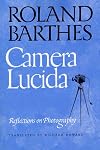
Meu lance com Barthes vai além da minha profunda paixão por Semiótica, mais do que sobre o que ele escreve, meu prazer em sua leitura está no como ele escreve.
Exalando cultura, Barthes é um dos mais deliciosos teóricos da palavra justamente por saber usá-la com maestria e estou dando cinco estrelas para este livro em que ele destrincha a arte fotográfica de forma afetiva, não porque concordo inteiramente com ele, longe disso, mas porque é um deleite absorver cada frase.
Exalando cultura, Barthes é um dos mais deliciosos teóricos da palavra justamente por saber usá-la com maestria e estou dando cinco estrelas para este livro em que ele destrincha a arte fotográfica de forma afetiva, não porque concordo inteiramente com ele, longe disso, mas porque é um deleite absorver cada frase.
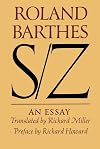
“Well, I never seen one guy take so much trouble for another guy. I just like to know what your interest is.”
― John Steinbeck, Of Mice and Men
We used to read books like this in junior high
It was something of an eighth-grade revelation to realize that so-called "Great Books" were deeper than the stories they told. We were reading John Steinbeck. It was April. Our teacher showed us how Of Mice and Men was working double-time; constructing a chthonic web of symbols from the show more window-dressing. So we began to understand that Lennie's love of rabbits symbolized his child-like innocence, the dusty floor symbolized the inhospitable life and (biblical) impermanence of the transient laborer, Curley's wife's absent name symbolized her status as a women trapped in a situation of total dependence. Such reading is enticing because it promises access to a rich structure of secret codes. But it's a mistake to read symbols this way. The literary symbol gives up its meaning so easily because it's always already fixated within the reader's semiotic understanding of the text. To prove a point, one imagines Lenny's hatred of rabbits as a symbol of his child-like innocence which has internalized the brutality of a world it must reject; one imagines the spotless dormitory as symbolizing the inhospitable life and impermanence of the transient laborer, who leaves no trace of creaturely comfort; one imagines Curley's wife given a real name which only proves her degraded status as a women who must answer to the names given by others. These symbolic readings are not very interesting because they can't show us anything we didn't already recognize.
Barthes' proposition in S/Z for a semiotic reading of the various "connotations" of a "polysemous" text appears to be the grown-up version of this kind of junior-high reading. But we think it's suspicious the same way Sheila Heti's Motherhood (2018) is suspicious: Heti's use of the I Ching to write dialogue-by-coin-flip always produces the "interesting" conversations we expect. In theory there are an unlimited number of I Ching conversations or semiotic readings to be found. But everything really-interesting never makes the cut, since even these strategies are limited by what the reader/writer is capable of doing with the text. Barthes's line-by-line reading of Sarrasine somehow never says anything unexpected, from the depiction of a wintery landscape in the opening lines (a symbol of castration) to the denouement depicting a chilled debutante and one of her suitors (also a symbol of castration). Barthes summarizes the rule which produces this banality as follows: "The force of meaning depends on its degree of systematization: the strongest meaning is the one whose systematization includes a large number of elements, to the point where it appears to include everything noteworthy in the world” (154).
Such reading can never produce an analysis of a text divided against itself (like all texts are), in which the truly unexpected (i.e. a brief flash of brilliance) doesn't always yield to banality (i.e. the worst kind of bad writing). We are reminded here of another novella by Balzac, Colonel Chabert, in which our Colonel, interred in a mass grave during Napoleon's Battle of Eylau, (miraculously!) returns to Paris after recovering from the blow which knocked him unconscious. Of course, despite his remarkable similarity to the gentleman everyone once knew, his place in society has already been taken. Chabert, who realizes he has become "a sign without its signified," remains a man of impeccable character, always ready for his moment of redemption ― if only society could read the signs. Yet, Barthes's reading can't recognize this trace of a man whose little petition hardly moves the scales of justice when weighed against the petitions of "[everyone] noteworthy in the world." Chabert, after a final magnanimous swoon (typical of Balzac), dies a penniless indigent. The author, if charged with the responsibility of his burial, would perhaps state that, in such cases of confusion, one should go by the general rule: for this man who calls himself Chabert, back to the mass grave. show less

Well, it wouldn't be a dull, conventional memoir, would it? Writing about himself, Barthes limits the hard biographical facts to a few briefly annotated family photos from his childhood in Bayonne and a two-page CV, and in between them he gives us a couple of hundred index-card sized fragments talking about his "real" life, which of course revolves around ideas and writings rather than boring things like dates, places and people. None of the fragments is much more than a paragraph or two show more long, with the only slightly longer pieces being a catalogue of books he might have written but didn't, and a discussion (you can see where this is going...) of the pleasures of the very short form.
In between times, we get cartoons, photos, sample exam questions, and a couple of examples of Barthes's painting — my favourite was an abstract doodle in the middle of a sheet of Sorbonne notepaper, titled "Gaspillage" (wasting paper). As if that wasn't enough, we also get the sheet music for a song he composed — I haven't tried to play that. He was obviously the Richard Feynman of semiotics.
You probably need at least a little bit of tolerance for French semioticians to enjoy this, and it's obviously more of a bedside book to dip into than a book you should read in one go, but if you like that sort of thing... show less
In between times, we get cartoons, photos, sample exam questions, and a couple of examples of Barthes's painting — my favourite was an abstract doodle in the middle of a sheet of Sorbonne notepaper, titled "Gaspillage" (wasting paper). As if that wasn't enough, we also get the sheet music for a song he composed — I haven't tried to play that. He was obviously the Richard Feynman of semiotics.
You probably need at least a little bit of tolerance for French semioticians to enjoy this, and it's obviously more of a bedside book to dip into than a book you should read in one go, but if you like that sort of thing... show less
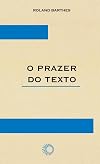
Que livro delicioso! Com uma escrita descomplicada e de fácil compreensão - li numa sentada, Barthes vai alinhavando psicanálise e o papel dialético do escritor/leitor em seu prazer dual. Meu único porém quanto a esta edição é que o tradutor preferiu traduzir jouissance como fruição e não como gozo, este que seria mais pertinente ao conteúdo da obra que busca dialogar com a psicanálise.
Lists
Deathreads (2)
culture (2)
Art of Reading (1)
Art Books (1)
Shaking a Leg (1)
Favourite Books (1)
1980 great books (1)
Awards


You May Also Like


Associated Authors
Statistics
- Works
- 191
- Also by
- 25
- Members
- 22,323
- Popularity
- #952
- Rating
- 4.0
- Reviews
- 173
- ISBNs
- 886
- Languages
- 31
- Favorited
- 69


