
Umberto Eco (1932–2016)
Author of The Name of the Rose
About the Author
Umberto Eco was born in Alessandria, Italy on January 5, 1932. He received a doctorate of philosophy from the University of Turin in 1954. His first book, Il Problema Estetico in San Tommaso, was an extension of his doctoral thesis on St. Thomas Aquinas and was published in 1956. His first novel, show more The Name of the Rose, was published in 1980 and won the Premio Strega and the Premio Anghiar awards in 1981. In 1986, it was adapted into a movie starring Sean Connery. His other works include Foucault's Pendulum, The Island of the Day Before, Baudolino, The Prague Cemetery, and Numero Zero. He also wrote children's books and more than 20 nonfiction books including Serendipities: Language and Lunacy. He taught philosophy and then semiotics at the University of Bologna. He also wrote weekly columns on popular culture and politics for L'Espresso. He died from cancer on February 19, 2016 at the age of 84. (Bowker Author Biography) show less
Series
Works by Umberto Eco
From the tree to the labyrinth: historical studies on the sign and interpretation (2007) 252 copies, 1 review
The People's Comic Book: Red Women's Detachment, Hot on the Trail, and Other Chinese Comics (1973) 27 copies, 1 review
Povero Pinocchio: Giochi linguistici di studenti del Corso di comunicazione (Libri di Comix) (Italian Edition) (1995) 18 copies
The Bond Affair — Editor — 10 copies
La Nueva edad media (El Libro de bolsillo ; 524 : Seccion Humanidades) (Spanish Edition) (1974) 9 copies
L'énigme de la Hanau 1609: Enquête bio-bibliographique sur "l'Amphithéâtre de l'éternelle sapience--" de Heinrich Khunrath, suivie… (1990) 7 copies
La bellezza 6 copies
Trent'anni di costume: parte prima 4 copies
Riflessioni sulla bibliofilia 4 copies
L'Antichità - 1. Le civiltà del vicino Oriente Storia, politica economica e sociale 4 copies, 1 review
Carmi 3 copies
[unidentified works] 3 copies
Trent'anni di costume: parte seconda 3 copies
L'antichità 2 copies
SPIEGEL Interview with Umberto Eco: 'We Like Lists Because We Don't Want to Die' - SPIEGEL ONLINE 2 copies
Entwicklungsperspektiven der Unternehmensfrung und ihrer Berichterstattung : Festschrift f Helmut Kuhnle anlslich seiner Emeritierung (2006) 2 copies
Costumi di casa 2 copies
Reazionari e moderati 2 copies
Overpeinzingen over pijn 2 copies
La fabrique de l'ennemi 2 copies
Il complotto 2 copies
Narratologia 2 copies
LA GRANDE STORIA. L'ANTICHITA'. LE CIVILTA' DEL VICINO ORIENTE. STORIA POLITICA, ECONOMICA E SOCIALE. VOL. 1 (2011) 2 copies
Vero, falso, segreto, finto 2 copies
プラハの墓地 2 copies
薔薇の名前 2 copies
11: Testi Quattrocento e Cinquecento 2 copies
16: Testi Novecento 2 copies
Informazione: consenso e dissenso 2 copies
9: Testi Grecia e Roma 2 copies
Le ragioni della retorica: atti del Convegno Retorica: verità, opinione, persuasione: Cattolica, 22 febbraio-20 aprile 1985 (1986) 2 copies
Una tromba sulle colline 2 copies
10: Testi Il Medioevo 2 copies
Antichità - Il Vicino Oriente – Storia: Storia della Civiltà Europea a cura di Umberto Eco - 1 (2014) 2 copies
6 نزهات في غابة السرد 1 copy
On Signs; Manusia dan Tanda 1 copy
La Pendule De Faucoult 1 copy
Le Figure del Tempo. 1 copy
حاشية على اسم الوردة 1 copy
بندول فوكو 1 copy
كيفية السفر مع سلمون 1 copy
آليات الكتابة السردية 1 copy
I Beati Paoli 1 copy
O nome da rosa - Graphic Novel (Vol. 2) (O nome da rosa — Graphic novel) (Portuguese Edition) 1 copy
L’età moderna e contemporanea. Volume 9: Il Settecento, l’età dell’Illuminismo – Filosofia, Musica 1 copy
L’età moderna e contemporanea. Volume 12: L’Ottocento, l’età del Romanticismo – Arti visive, Musica 1 copy
L’età moderna e contemporanea. Volume 18: Il Novecento, il secolo breve – Scienze e tecniche II 1 copy
L’età moderna e contemporanea. Volume 17: Il Novecento, il secolo breve – Scienze e tecniche I 1 copy
Troppo internet? 1 copy
Costumi d'Italia 1 copy
L'opinione corrente 1 copy
Sulla guerra e sulla pace 1 copy
Isem il-Warda 1 copy
Tree Planting 1 copy
Feeding Wild Birds 1 copy
SI TË UDHËTOSH ME NJË SALMON 1 copy
I promessi sposi - la storia 1 copy
MBINJERIU I MASËS 1 copy
PËR LETËRSINË 1 copy
VARREZA E PRAGËS 1 copy
EMRI I TRËNDAFILIT 1 copy
O Nome da Rosa 1 copy
前日島 (下) 1 copy
MC-106 A Escolha do Tema 1 copy
LAVJERRËSI I FUKOIT 1 copy
Pilotnumurs 1 copy
Махалото на Фуко 1 copy
前日島 (上) 1 copy
История Средневековья 1 copy
Minunea sfîntului Baudolinio 1 copy
Teorie dell'architettura 1 copy
A Indústria da Cultura 1 copy
La Edad Media 1 copy
Ecrivains Du Brésil 1 copy
La guerre du faux - traduit de l'italien par Myriam Tanant, avec la collaboration de Piero Caracciolo (1986) 1 copy
Triumph des Barock 1 copy
COMO SE HACE UNA TESIS 1 copy
OBRA ABIERTA I VOLUMEN 1 copy
L'alto Medioevo volume 1-2 1 copy
La Grande Storia – L’Antichità. Volume 14: Vicino Oriente, Grecia, Roma – Temi trasversali, Indici 1 copy
Trent'anni di costume 1 copy
"A poética da obra aberta". In: Obra Aberta: forma e indeterminação nas poéticas contemporâneas 1 copy
Lo Zen 1 copy
Alımlama Göstergebilimi 1 copy
Middelalderens genkomst 1 copy
Autori e Autorita 1 copy
De Biblioteca 1 copy
Psicologia do vestir 1 copy
Πολιτιστικά κοιτάσματα : Προτάσεις για τη διατήρηση και τη διαχείριση της πολιτιστικής… (1992) 1 copy
Umberto Eco 1 copy
L'Antichità - Grecia 1 copy
Due chiacchiere fra barbari 1 copy
L'Antichità - 4 Grecia 1 copy
Segno e inferenza 1 copy
C'è vita e vita 1 copy
Eroe sarà lei e sua sorella 1 copy
Autori ed autorità 1 copy
O nombe da rosa 1 copy
Elogio del riassunto 1 copy
HOW TO SPOT A FACIST 1 copy
ensaios sobre a literatura 1 copy
Eco Umberto 1 copy
Umberto Eco: Der Name Der Rose, Literarische Hermeneutik, Die Insel Des Vorigen Tages, Baudolino, Das Foucaultsche Pendel (2010) 1 copy
Il ruolo dell'intellettuale 1 copy
Për foto të bëra mureve 1 copy
Razgovor o kraju vremena 1 copy
Tratado Geral da Semiótica 1 copy
Du 519: Die Fünfzigerjahre 1 copy
Ιστορία του Σύγχρονου Ευρωπαϊκού Πολιτισμού τ. 1: Η ιστορία των ευρωπαϊκών κρατών του εικοστού… 1 copy
Encyclomedia 1 copy
Associated Works
Homo Ludens: A Study of the Play-Element in Culture (1938) — Introduction, some editions — 1,430 copies, 13 reviews
American Fascists: The Christian Right and the War On America (2006) — Contributor, some editions — 1,274 copies, 14 reviews
The Plot: The Secret Story of The Protocols of the Elders of Zion (2005) — Introduction, some editions — 802 copies, 28 reviews
The Key to The Name of the Rose: Including Translations of All Non-English Passages (1987) 540 copies, 7 reviews
The Meaning of Meaning: A Study of the Influence of Language Upon Thought and of the Science of Symbolism (1923) — Preface, some editions — 326 copies, 2 reviews
The Graphic Canon, Vol. 3: From Heart of Darkness to Hemingway to Infinite Jest (2013) — Contributor — 162 copies, 1 review
Bread of Dreams: Food and Fantasy in Early Modern Europe (1980) — Introduction, some editions — 129 copies, 4 reviews
Lapham's Quarterly - Lines of Work: Volume IV, Number 2, Spring 2011 (2011) — Contributor — 32 copies, 2 reviews
LINUS. Settembre 2023 (Vol 09. 2023): Vol. 9 — Author — 3 copies
Urlaubsträume. Geschichten für die schönste Zeit des Jahres — Author — 1 copy
Tagged
Common Knowledge
- Canonical name
- Eco, Umberto
- Birthdate
- 1932-01-05
- Date of death
- 2016-02-19
- Gender
- male
- Education
- University of Turin (Laurea | 1954 | Philosophy and Literature)
- Occupations
- philosopher
semiotician
university professor
critic - Organizations
- Scuola Superiore di Studi Umanistici
University of Bologna
Milan Polytechnic
University of Florence
University of Milan
University of Turin (show all 9)
Radiotelevisione Italiana / RAI
Gruppo '63
Bopiani - Awards and honors
- Austrian State Prize for European Literature (2001)
Kenyon Review Award for Literary Achievement (2005)
Premio Príncipe de Asturias (2000)
Royal Society of Literature (1991)
Premio Strega (1981)
Prix Medicis Etranger (1982) (show all 14)
Italian Grand Cross of Merit (Knight)
American Academy of Arts and Letters (1999)
Accademia dei Lincei (2010)
Anghiari Prize (1981)
McLuhan Teleglobe Prize (1985)
Kenyon Review Award for Literary Achievement (2005)
Gutenberg Prize (2014)
Associate Member, Royal Academy of Belgium - Relationships
- Ramge, Renata (wife)
- Short biography
- Umberto Eco was born in the city of Alessandria in the Italian region of Piedmont, right in the middle of the Genova, Milan, Turin triangle. Before he was drafted to fight in 3 wars, his father, Giulio Eco, was an accountant. Young Umberto and his mother, Giovanna, moved to a small village in the Piedmontese mountainside during the Second World War. Eco received a Salesian education, and he has made references to the order and its founder in his works and interviews. His family name is supposedly an acronym of ex caelis oblatus (Latin: a gift from the heavens), which was given to his grandfather (a foundling) by a city official. His father came from a family of thirteen children, and was very keen of Umberto to read Law, but instead he entered the University of Turin in order to take up medieval philosophy and literature. Umberto's thesis was on the topic of Thomas Aquinas and this earned him a BA in philosophy in 1954. In that period, Eco abandoned the Roman Catholic Church after a crisis of faith. Following this, Eco worked as a cultural editor for RAI, Radiotelevisione Italiana, the state broadcasting station, he also became a lecturer at the University of Turin (1956–64). A group of avant-garde artists—painters, musicians, writers—whom he had befriended at RAI (Gruppo 63) became an important and influential component in Eco's future writing career. This was especially true after the publication of his first book in 1956, Il problema estetico di San Tommaso, which was an extension of his doctoral thesis. This also marked the beginning of his lecturing career at his alma mater. In September 1962, he married Renate Ramge, a German art teacher with whom he has a son and a daughter. He divides his time between an apartment in Milan and a vacation house near Rimini. He has a 30,000 volume library in the former and a 20,000 volume library in the latter.
- Cause of death
- pancreatic cancer
- Nationality
- Italy
- Birthplace
- Alessandria, Piedmont, Italy
- Places of residence
- Rimini, Italy
Milan, Lombardy, Italy
Urbino, Italy - Place of death
- Milan, Italy
- Map Location
- Italy
Members
Discussions
Umberto Eco in Legacy Libraries (July 7)
Umberto Eco / The Name of the Rose in Someone explain it to me... (July 2025)
test in Christopher's LT Testing Group (October 2020)
May Group Read - The Name of the Rose (Umberto Eco) in 75 Books Challenge for 2016 (September 2016)
Umberto Eco dead at 84 in Book talk (February 2016)
**Umberto Eco in 2014 Category Challenge (June 2014)
Bibliographie in Zwischen �t�p� und Wirklichkeit: Konstruierte Sprachen für die gl�b�l�s�rt� Welt (June 2012)
[The Name of the Rose] in Historical Mysteries (September 2006)
Reviews

"I challenge anyone to find himself abandoned on a deserted ship, between sea and sky in a vast space, and not be ready to dream that in his great misfortune he at least has had the good fortune to stumble into the heart of time" (273).
The Island of the Day Before is a fantasy about fantasy, with a documentary conceit and no genuinely supernatural elements. Some details of the seventeenth-century science may now seem rather occult, but the essential metaphysics of the entire tale are very show more much of our world. It is a tale about a quest for the secret of determining longitude, and it seeks to celebrate the mystery of the antipodes in the paradoxes of an international date line.
Although this story was set a century earlier, I found it rather reminiscent of Thomas Pynchon's Mason & Dixon. Both are big beefy novels written in the waning of the 20th century, and concerned with the exploratory push of European powers (in early modernity and the Enlightenment, respectively), as well as the relationships between objective and subjective worlds. But their titles show the biggest difference between the books. Mason & Dixon has two protagonists, and the surfeit of plot (to be expected from Pynchon) concerns their relationships to each other and their world. The insular Eco novel is instead nearly solipsistic in the extent to which characters other than the protagonist Roberto are practically reduced to figments of his imagination--the plot, such as it is, is largely in his reminiscences, dreams, and eventually, composed fictions.
The book is a long one, with many short chapters, and the slow pace of the plotting makes it easy to pick up and to put down. It took me more than a month to read it through. My two favorite chapters in the book could each stand on their own, and with particular reference to my occult interests. Chapter 26, "Delights for the Ingenious: A Collection of Emblems" is a long meditation on the symbolism of doves. Chapter 37, "Paradoxical Exercises Regarding the Thinking of Stones," is a contemplative demonstration of getting stoned in line with the discussion "On the Final Will" in Liber Aleph vel CXI.
The metafictional elements are pronounced in this novel, where the principal character himself ends up writing a "romance," in which his imagined half-brother and rival becomes his alter-ego. Eco makes both the opening and the closing of the book rather disorienting and unconventional, as part of his reflection on the composition of imaginative literature, and he uses the premise of working from a discovered three-hundred-year-old manuscript both to assert and to undermine the credibility of his story. show less
The Island of the Day Before is a fantasy about fantasy, with a documentary conceit and no genuinely supernatural elements. Some details of the seventeenth-century science may now seem rather occult, but the essential metaphysics of the entire tale are very show more much of our world. It is a tale about a quest for the secret of determining longitude, and it seeks to celebrate the mystery of the antipodes in the paradoxes of an international date line.
Although this story was set a century earlier, I found it rather reminiscent of Thomas Pynchon's Mason & Dixon. Both are big beefy novels written in the waning of the 20th century, and concerned with the exploratory push of European powers (in early modernity and the Enlightenment, respectively), as well as the relationships between objective and subjective worlds. But their titles show the biggest difference between the books. Mason & Dixon has two protagonists, and the surfeit of plot (to be expected from Pynchon) concerns their relationships to each other and their world. The insular Eco novel is instead nearly solipsistic in the extent to which characters other than the protagonist Roberto are practically reduced to figments of his imagination--the plot, such as it is, is largely in his reminiscences, dreams, and eventually, composed fictions.
The book is a long one, with many short chapters, and the slow pace of the plotting makes it easy to pick up and to put down. It took me more than a month to read it through. My two favorite chapters in the book could each stand on their own, and with particular reference to my occult interests. Chapter 26, "Delights for the Ingenious: A Collection of Emblems" is a long meditation on the symbolism of doves. Chapter 37, "Paradoxical Exercises Regarding the Thinking of Stones," is a contemplative demonstration of getting stoned in line with the discussion "On the Final Will" in Liber Aleph vel CXI.
The metafictional elements are pronounced in this novel, where the principal character himself ends up writing a "romance," in which his imagined half-brother and rival becomes his alter-ego. Eco makes both the opening and the closing of the book rather disorienting and unconventional, as part of his reflection on the composition of imaginative literature, and he uses the premise of working from a discovered three-hundred-year-old manuscript both to assert and to undermine the credibility of his story. show less
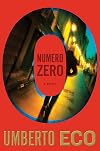
I will read pretty much anything Umberto Eco publishes, and I'm always delighted when a new novel of his appears in English. In this one, much slimmer than his usual offerings, Eco returns to his frequent themes of conspiracy theories, Italian politics, media criticism, and biting satire of journalistic practices and ethics. I suspect those with more knowledge of Italian media and politics may get more out of this one than I did, but the connections to Berlusconi's rise to power are veiled show more thinly enough even for me to catch. Hilariously funny in many places, and spot-on with much of its evisceration of modern media practices, this is very much worth a read if you're interested in Eco's themes. show less
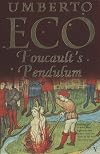
It's only taken me ... well, several months longer than I would care to admit to... to finish this book. And having now waded through all 623 pages of it, I can firmly state that it is one of the biggest exercises in intellectual onanism that it has ever been my misfortune to read. Self-indulgent, boring, incoherent and eminently unlikeable—Eco is clearly a learned person, but his ego is in even greater evidence here than his intellect.
Speaking as a medievalist, there is also one enormous show more plot hole: at least one of the main characters has a doctorate in medieval history, but is lacking in the basic palaeographical skills required to understand the difference between 'p' and the symbols for 'per' and 'pro'? This is a mistake on which a large chunk of the book turns, by the way. I almost threw the damn thing at the wall when I realised that. Avoid. show less
Speaking as a medievalist, there is also one enormous show more plot hole: at least one of the main characters has a doctorate in medieval history, but is lacking in the basic palaeographical skills required to understand the difference between 'p' and the symbols for 'per' and 'pro'? This is a mistake on which a large chunk of the book turns, by the way. I almost threw the damn thing at the wall when I realised that. Avoid. show less
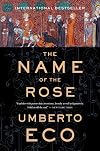
As Brother William of Baskerville, an English Franciscan monk, nears the Italian abbey where he’s to attend a conclave, he correctly deduces from tracks in the snow and other minute details that the party of brethren approaching him on the road are seeking a horse — whose name he also guesses.
Naturally, this astonishes both the search party and William’s companion, his scribe, a German novice named Adso. It also pleases the abbot, who’s delighted to have so keen an observer on hand, show more because a young monk has died under suspicious circumstances, and the mystery must be solved before the conclave takes place in a few days’ time.
Or, to be precise, the abbot seems pleased, but the readily apparent struggle between truth and expediency dividing the abbey’s occupants, heightened by the anticipated high-level meeting, clouds his motives.
The year is 1327, and the church is fighting itself, with one pope in Rome, and the other in Avignon. The expected French envoys — and, menacingly, their accompanying armed force — include a charismatic, unscrupulous inquisitor whom William knows and fears; he was once an inquisitor himself but gave it up because he felt the entire process of hunting heretics was irrational and unjust.
Since then, he has openly avowed the empirical philosophy of Roger Bacon and William Occam (he of the famous razor), beliefs that unsettle many other monks and, in their eyes, skate dangerously close to heresy.
Moreover, the abbot has forbidden William to investigate the library stacks, labyrinthine rooms that no one save the librarian himself may enter. This restriction cripples William’s efforts, particularly after more monks die, and he supposes that a hidden text holds the key. So, with Adso in tow, he invades the abbey’s sanctum sanctorum, with ever-startling results.
Adso makes a superb narrator and foil, a Watson scared of where knowledge will lead, to William’s Holmes, who thinks knowledge itself can be neither good nor evil. A weighty theme, and The Name of the Rose tips the scales at almost 600 pages, but Eco does a brilliant job focusing on two issues that, at first glance, seem too ridiculous to kill for, whether for personal motives, to serve the church, or for reasons of state.
First, did Christ ever laugh? And second, did he and his apostles choose poverty, the belief on which the Franciscan order rests?
But the narrative, if at length, shows why these questions matter in 1327 and today. If Christ did not laugh, the official reasoning goes, satire, jokes, and humor are either vile, a threat to faith, or both. However, William argues that if a devout person must have only a certain sober, humorless mind, then the inquisitors rule, as in fact they do, and the crucial precept of accepting faith through free will ceases to exist.
As William warns Adso, “The Antichrist can be born from piety itself, from excessive love of God or of the truth, as the heretic is born from the saint and the possessed from the seer. Fear prophets, Adso, and those prepared to die for the truth, for as a rule they make many others die with them, often before them, at times instead of them.”
The question of poverty has a more immediate political implication. The Franciscan order has splintered, prompting rebellions against church power, to which the church has responded by burning heretics, charging the use of magic, and accusing their opponents of free love and appalling butchery. But as William tells Adso, the rebels don’t care about church doctrines, especially; they resent the extreme wealth of the church and the regimes it supports, both of which contribute to keep the poor as they are.
Amid all this, monks continue to die, and William must divert his efforts from solving the mystery to play politician during the conclave, standing up for his beliefs while avoiding condemnation. As you may have figured out by now (how did I give it away?), The Name of the Rose is a discursive book, but no less mesmerizing for that:
The Name of the Rose does what the best historical fiction should: illuminate the past by its own lights and therefore reveal the present. As a mystery, it is excellent; to that, add profundity and power. show less
Naturally, this astonishes both the search party and William’s companion, his scribe, a German novice named Adso. It also pleases the abbot, who’s delighted to have so keen an observer on hand, show more because a young monk has died under suspicious circumstances, and the mystery must be solved before the conclave takes place in a few days’ time.
Or, to be precise, the abbot seems pleased, but the readily apparent struggle between truth and expediency dividing the abbey’s occupants, heightened by the anticipated high-level meeting, clouds his motives.
The year is 1327, and the church is fighting itself, with one pope in Rome, and the other in Avignon. The expected French envoys — and, menacingly, their accompanying armed force — include a charismatic, unscrupulous inquisitor whom William knows and fears; he was once an inquisitor himself but gave it up because he felt the entire process of hunting heretics was irrational and unjust.
Since then, he has openly avowed the empirical philosophy of Roger Bacon and William Occam (he of the famous razor), beliefs that unsettle many other monks and, in their eyes, skate dangerously close to heresy.
Moreover, the abbot has forbidden William to investigate the library stacks, labyrinthine rooms that no one save the librarian himself may enter. This restriction cripples William’s efforts, particularly after more monks die, and he supposes that a hidden text holds the key. So, with Adso in tow, he invades the abbey’s sanctum sanctorum, with ever-startling results.
Adso makes a superb narrator and foil, a Watson scared of where knowledge will lead, to William’s Holmes, who thinks knowledge itself can be neither good nor evil. A weighty theme, and The Name of the Rose tips the scales at almost 600 pages, but Eco does a brilliant job focusing on two issues that, at first glance, seem too ridiculous to kill for, whether for personal motives, to serve the church, or for reasons of state.
First, did Christ ever laugh? And second, did he and his apostles choose poverty, the belief on which the Franciscan order rests?
But the narrative, if at length, shows why these questions matter in 1327 and today. If Christ did not laugh, the official reasoning goes, satire, jokes, and humor are either vile, a threat to faith, or both. However, William argues that if a devout person must have only a certain sober, humorless mind, then the inquisitors rule, as in fact they do, and the crucial precept of accepting faith through free will ceases to exist.
As William warns Adso, “The Antichrist can be born from piety itself, from excessive love of God or of the truth, as the heretic is born from the saint and the possessed from the seer. Fear prophets, Adso, and those prepared to die for the truth, for as a rule they make many others die with them, often before them, at times instead of them.”
The question of poverty has a more immediate political implication. The Franciscan order has splintered, prompting rebellions against church power, to which the church has responded by burning heretics, charging the use of magic, and accusing their opponents of free love and appalling butchery. But as William tells Adso, the rebels don’t care about church doctrines, especially; they resent the extreme wealth of the church and the regimes it supports, both of which contribute to keep the poor as they are.
Amid all this, monks continue to die, and William must divert his efforts from solving the mystery to play politician during the conclave, standing up for his beliefs while avoiding condemnation. As you may have figured out by now (how did I give it away?), The Name of the Rose is a discursive book, but no less mesmerizing for that:
The Name of the Rose does what the best historical fiction should: illuminate the past by its own lights and therefore reveal the present. As a mystery, it is excellent; to that, add profundity and power. show less
Lists
Italian Literature (13)
2024 (1)
Edad Media (1)
Disco Elysium (1)
Gen X Library (1)
1980 great books (1)
Monastic life (1)
Read in 2006 (1)
Cult Classics (1)
Metafiction (1)
Europe (1)
Secret Histories (1)
A Novel Cure (1)
Winter Books (1)
to read list (1)
Finished in 2026 (1)
Very Long Novels (1)
Mooie titels (1)
Best Spy Fiction (1)
Didactic Fiction (1)
. (1)
My TBR (1)
Favourite Books (2)
Five star books (2)
Murder Mysteries (2)
Biblio-Mysteries (2)
Folio Society (2)
Unread books (5)
Magic Realism (4)
Art of Reading (1)
el (1)
BBC Big Read (1)
Read These Too (1)
. (1)
First Novels (1)
culture (1)
1980s (1)
Awards


You May Also Like


Associated Authors
Statistics
- Works
- 512
- Also by
- 40
- Members
- 115,627
- Popularity
- #71
- Rating
- 4.1
- Reviews
- 1,734
- ISBNs
- 2,505
- Languages
- 44
- Favorited
- 611


