
Roberto Calasso (1941–2021)
Author of The Marriage of Cadmus and Harmony
About the Author
Roberto Calasso is the publisher of Adelphi Edizioni and lives in Milan. The Ruin of Kasch is the first book in an ongoing series that includes The Marriage of Cadmus and Harmony, Ka, K., Tiepolo Pink, La Folie Baudelaire, and Ardor.
Image credit: Roberto Calasso, en 1986
Works by Roberto Calasso
Associated Works
A Pilgrim's Journey: The Autobiography of St. Ignatius of Loyola (1555) — Translator, some editions — 722 copies, 8 reviews
Tagged
Common Knowledge
- Canonical name
- Calasso, Roberto
- Legal name
- Calasso, Roberto
- Birthdate
- 1941-05-30
- Date of death
- 2021-07-28
- Gender
- male
- Education
- University of Rome (Ph.D)
- Occupations
- publisher
editor
novelist
translator - Organizations
- Adelphi Edizione
American Academy of Arts and Letters (Honorary member, 2015) - Awards and honors
- Viareggio Prize (2001)
Bagutta Prize (2002)
Prix Formentor (2018) - Agent
- The Wylie Agency
- Relationships
- Jaeggy, Fleur (wife)
Fröhlich, Anna Katharina (first wife) - Short biography
- Roberto Calasso (Florence, 1941) promoveerde op jonge leeftijd bij Mario Praz en trad vervolgens in dienst bij de vooraanstaande uitgeverij Adelphi te Milaan, waarvan hij sinds 1968 directeur is. Hij debuteerde in 1974 met L’impuro folle, over het geval-Schreber, een van de meest intrigerende kwesties uit de geschiedenis van de psycho-analyse. In 1983 volgde La rovina di Kasch, waarin hij een nieuwe geschiedenis schrijft van de Europese cultuur sinds de romantiek. Zijn internationale doorbraak kwam in 1988 met De bruiloft van Cadmus en Harmonia, dat inmiddels in meer dan tien talen werd vertaald.
- Nationality
- Italy
- Birthplace
- Florence, Italy
- Place of death
- Milan, Italy
- Map Location
- Italy
Members
Reviews
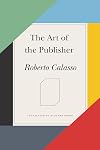
The exact right book for the exact right moment.
I'd been kicking around this idea of starting a micro press for a little while when I spied this book at the store -- a little stack left for me by fate with this book and The Clothing of Books. I couldn't ignore such a sign so of course I bought them both.
I did worry a bit that I'd made a poor choice. Calasso spends a lot of time name-checking Italian and Austrian authors and publishers, and detailing the scene of publishing in Europe. So many show more names went by that I was utterly unfamiliar with. But to say it was worth wading through all that would be a colossal understatement.
So many thoughts here about the role of a publisher, as opposed to an editor. About the nature of a series or a collection. About the importance of a publisher's voice. About cover designs and blurbs. About relationships between publishers and authors, publishers and readers. About halfway through I had to go grab a set of pencils and start marking my copy up, something I do very rarely - a book has to make a significant impression on me to overcome my reticence to deface a book.
The whole thing, in combination with Simon & Schuster's Milo debacle, has given me a major attitude about publishing -- and the major houses that "seem to be like formless stockpiles where you can find everything, with a particular emphasis on the worst." Not only has this strengthened my resolve to start my tiny press, but I have also resolved to buy no more books from the big five this year -- to seek out independents, micro presses, university presses, and the like, instead. (This shall also curb my impulse buying, I'm sure.)
I'll close with one more quote from the book:
I'd been kicking around this idea of starting a micro press for a little while when I spied this book at the store -- a little stack left for me by fate with this book and The Clothing of Books. I couldn't ignore such a sign so of course I bought them both.
I did worry a bit that I'd made a poor choice. Calasso spends a lot of time name-checking Italian and Austrian authors and publishers, and detailing the scene of publishing in Europe. So many show more names went by that I was utterly unfamiliar with. But to say it was worth wading through all that would be a colossal understatement.
So many thoughts here about the role of a publisher, as opposed to an editor. About the nature of a series or a collection. About the importance of a publisher's voice. About cover designs and blurbs. About relationships between publishers and authors, publishers and readers. About halfway through I had to go grab a set of pencils and start marking my copy up, something I do very rarely - a book has to make a significant impression on me to overcome my reticence to deface a book.
The whole thing, in combination with Simon & Schuster's Milo debacle, has given me a major attitude about publishing -- and the major houses that "seem to be like formless stockpiles where you can find everything, with a particular emphasis on the worst." Not only has this strengthened my resolve to start my tiny press, but I have also resolved to buy no more books from the big five this year -- to seek out independents, micro presses, university presses, and the like, instead. (This shall also curb my impulse buying, I'm sure.)
I'll close with one more quote from the book:
Today, in fact, more than ever before, one of the prime objectives of publishing could be to shift the line determining what is publishable, and include as feasible a lot of what currently lies outside that line.show less
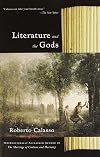
This brief book is one to read, reread, and consult when reading the great literature with ancient beginnings since it provides an extraordinary and perceptive analysis of the nature of the literature of classical mythology. The Weidenfeld Lectures Calasso delivered at Oxford in 2000 represent Calasso's lifetime investigation into the gods providing the basis for Literature and the Gods. The book follows the reemergence of paganism in Western literature from the early modern period to the show more present.
This is a brilliant, imaginative, and beautifully scholarly work. Calasso gives us a renewed understanding of the mystique and magic of great literature by revealing the divine whisper that lurks underneath the greatest poetry and prose from throughout history. Even though it is a brief yet deep essay, it takes the reader on a personal tour of contemporary European literature and philosophy. I found it was not only smart, but inspired and intellectual as well.
The history of the gods can also be interpreted as a ciphered and magnificent history of creative inspiration, from the exile of the classical divinities during the Age of Reason to their release by the Romantics and their role in the literature of our own day. By rewriting that tale, Calasso creates a hallowed literary realm where the gods' influence can be felt. His investigation into "absolute literature" takes us to the worlds of Dionysus and Orpheus, Baudelaire and Mallarme, and inspires a clear-eyed and passionate defense of poetic form, even when it appears to be detached from any social role. Literature and the Gods, a lyrical and confident work of literary affirmation, is deserving of reading among the greats. show less
This is a brilliant, imaginative, and beautifully scholarly work. Calasso gives us a renewed understanding of the mystique and magic of great literature by revealing the divine whisper that lurks underneath the greatest poetry and prose from throughout history. Even though it is a brief yet deep essay, it takes the reader on a personal tour of contemporary European literature and philosophy. I found it was not only smart, but inspired and intellectual as well.
The history of the gods can also be interpreted as a ciphered and magnificent history of creative inspiration, from the exile of the classical divinities during the Age of Reason to their release by the Romantics and their role in the literature of our own day. By rewriting that tale, Calasso creates a hallowed literary realm where the gods' influence can be felt. His investigation into "absolute literature" takes us to the worlds of Dionysus and Orpheus, Baudelaire and Mallarme, and inspires a clear-eyed and passionate defense of poetic form, even when it appears to be detached from any social role. Literature and the Gods, a lyrical and confident work of literary affirmation, is deserving of reading among the greats. show less

I have long observed that the reason why every effort to adapt The Iliad to film fails so spectacularly is because the gods—so integral to Homer’s epic—are somehow excluded from the big screen. It was not entirely his fault that beefcake Brad Pitt looked so ridiculous trying to channel Achilles in Oliver Stone’s 2004 dreadful attempt: Homer’s Achilles is himself half-divine, spawn of the sea nymph Thetis and the mortal Peleus, and it is the intervention of the Olympian gods to show more palliate the rage of Achilles when he is wronged by Agamemnon that is the essential theme of The Iliad. Absent the gods, Achilles lacks all authenticity and the plot makes no sense.
In his unique and spectacular The Marriage of Cadmus and Harmony, Roberto Calasso reminds us that ancient Greek civilization also made no sense without its gods, which were as integral to the lives of the Hellenes as food, and sleep, and sex. For the Greeks—to borrow a line from an old Jethro Tull lyric—their gods were “not the kind that you wind up on Sundays.” In a remarkable achievement, Calasso has written his very own epic to rival those of the ancients, and in the process masterfully succeeds in restoring the gods to their essential role in the lives of the Greeks, a constant that ran through the Bronze Age and the Dark Age that followed, and all through the Archaic, the Classical, the Hellenistic and the Roman eras—until Christianity first crippled then crushed them forever. The Greeks of Homer asserted that the gods could never die, but then they never anticipated Augustine . . .
It is sometimes difficult for the modern mind (of the theist or the atheist) to wrap itself around the gods of the ancient Greeks. The violent and vengeful Yahweh of the Torah mellowed into a much nicer deity once appropriated by Christianity, but both versions came bundled with a certain set of laws and morality. The Hellenic gods were very different, much more akin to the mortals who worshiped them, warts and all, and rather than paragons of virtue they often showcased the worst traits of humanity. Cadmus and Harmony opens with the abduction of Europa by Zeus, disguised as a bull. On another occasion, Zeus rapes Leda, this time in the guise of a swan. The gods do as they please. Zeus, especially, takes his sexual pleasure at will—of both girls and boys—while his jealous Olympian wife Hera seethes at a distance. The mortals always get the worst of it, even when they stumble innocently, as when the hunter Actaeon happens upon the naked Artemis, bathing in a spring: in punishment the hapless Actaeon is turned into a stag whose fate is to be torn apart by his own dogs. The Greek gods are not to emulate, but rather to avoid whenever possible, for it is within their orbit that mere humans are to be tossed about on a rocky universe of pain and suffering. Absent the free-will of Judeo-Christianity, the Greek mortals have almost no responsibility for their own behavior; Homer tells us that all of the bloodshed on the plain of Ilium was simply due to fate and to the will of the gods. Men and gods are here inextricably entwined with one another, but that is dangerous business. Thus, the title of Calasso’s work becomes his thesis:
After that remote time when gods and men had been on familiar terms, to invite the gods to one’s house became the most dangerous thing one could do, a source of wrongs and curses, a sign of the now irretrievable malaise in relations between heaven and earth. At the marriage of Cadmus and Harmony, Aphrodite gives the bride a necklace which, passing from hand to hand, will generate one disaster after another right up to the massacre of the Epigoni beneath the walls of Thebes and beyond. [p387]
I came to Calasso with what I thought was a pretty strong background in ancient Greek literature and history. I have read The Iliad three times, in three different translations, and The Odyssey once; I have also read much of Aeschylus, Sophocles, Euripides and Aristophanes. On the temporal side, I have read Herodotus, Thucydides, Diodorus and a good deal more, not to mention another dozen modern books about the ancients. But The Marriage of Cadmus and Harmony humbled me almost from the first. It seems as if Calasso has read everything ever written by the ancient Greeks or about the ancient Greeks, especially of their gods, myths and epics. Not only read, though, but studied, analyzed, and memorized every detail. To praise the extent of his command of the subject as encyclopedic still seems to fall short somehow. While the twelve Olympians get most of the press in popular culture, there were many hundreds—perhaps thousands—of lesser deities in the Greek pantheon, and while Calasso doesn’t reference every single one, I have little doubt that if put to the test he could name them all. As much as I enjoyed the topic and the prose, my repeated reaction as I turned the pages was that I am not worthy!
One of the benefits of having a fine personal library, as I do, is that I can usually put my fingers on a powerful work of reference which—even in the age of Google—can still offer a fond comfort. I kept my hardcover copy of The Concise Dictionary of Classical Mythology, by Pierre Grimal, on my nightstand alongside Cadmus and Harmony for the duration. But after a while, I stopped looking up everything unfamiliar or forgotten, and instead just allowed myself to indulge in Calasso’s wonderful prose, which—like Faulkner, for instance—is a joy to get lost within even if you do not always know exactly what he is talking about. It is impossible to describe except by excerpt, as in this one that underscores the centrality of Zeus to all things:
Night was the wet nurse of the gods; her very substance was ambrosia. She advised Zeus to swallow up Phanes, the Protogonos, firstborn of the sovereigns of the world, and then to swallow the other gods and goddesses born from him, and the universe too. Thus gods, goddesses, earth and starry splendor, Ocean, rivers, and the deep cavern of the underworld all wound up in Zeus’s sacred belly, which now contained everything that had been and ever would be. Everything grew together inside him, clutching his innards as a bat clutches to a tree or a bloodsucker to flesh. Then Zeus, who had been just another of the Titans’ children, became, alone, the beginning, the middle, and the end. [p199]
There’s almost four hundred pages of stylized prose like that, evidence of a splendid work of genius that Calasso has crafted in a singular brand of literature that defies genre, and ultimately leaves the reader dizzied and in awe. It would be fair to say that The Marriage of Cadmus and Harmony is hardly suitable for every audience, but now that I have read it, I would strongly recommend it to those, like myself, who have been bitten by that bug that begets an irrepressible passion for the ancient Greeks, who themselves—if hardly the fathers of our own civilization—were without doubt our hoary great-grandfathers. There is, of course, a calculated risk in getting caught up in great literature, just as there is in letting yourself get tangled up with the gods. But for that I will let Calasso have the last word here, plucked from a paragraph towards the end of this magnificent work:
What conclusions can we draw? To invite the gods ruins our relationship with them but sets history in motion. A life in which the gods are not invited isn’t worth living. It will be quieter, but there won’t be any stories. And you could suppose that these dangerous invitations were in fact contrived by the gods themselves, because the gods get bored with men who have no stories. [p387]
My review of: “The Marriage of Cadmus and Harmony,” by Roberto Calasso https://regarp.com/2017/12/17/review-of-the-marriage-of-cadmus-and-harmony-by-ro... show less
In his unique and spectacular The Marriage of Cadmus and Harmony, Roberto Calasso reminds us that ancient Greek civilization also made no sense without its gods, which were as integral to the lives of the Hellenes as food, and sleep, and sex. For the Greeks—to borrow a line from an old Jethro Tull lyric—their gods were “not the kind that you wind up on Sundays.” In a remarkable achievement, Calasso has written his very own epic to rival those of the ancients, and in the process masterfully succeeds in restoring the gods to their essential role in the lives of the Greeks, a constant that ran through the Bronze Age and the Dark Age that followed, and all through the Archaic, the Classical, the Hellenistic and the Roman eras—until Christianity first crippled then crushed them forever. The Greeks of Homer asserted that the gods could never die, but then they never anticipated Augustine . . .
It is sometimes difficult for the modern mind (of the theist or the atheist) to wrap itself around the gods of the ancient Greeks. The violent and vengeful Yahweh of the Torah mellowed into a much nicer deity once appropriated by Christianity, but both versions came bundled with a certain set of laws and morality. The Hellenic gods were very different, much more akin to the mortals who worshiped them, warts and all, and rather than paragons of virtue they often showcased the worst traits of humanity. Cadmus and Harmony opens with the abduction of Europa by Zeus, disguised as a bull. On another occasion, Zeus rapes Leda, this time in the guise of a swan. The gods do as they please. Zeus, especially, takes his sexual pleasure at will—of both girls and boys—while his jealous Olympian wife Hera seethes at a distance. The mortals always get the worst of it, even when they stumble innocently, as when the hunter Actaeon happens upon the naked Artemis, bathing in a spring: in punishment the hapless Actaeon is turned into a stag whose fate is to be torn apart by his own dogs. The Greek gods are not to emulate, but rather to avoid whenever possible, for it is within their orbit that mere humans are to be tossed about on a rocky universe of pain and suffering. Absent the free-will of Judeo-Christianity, the Greek mortals have almost no responsibility for their own behavior; Homer tells us that all of the bloodshed on the plain of Ilium was simply due to fate and to the will of the gods. Men and gods are here inextricably entwined with one another, but that is dangerous business. Thus, the title of Calasso’s work becomes his thesis:
After that remote time when gods and men had been on familiar terms, to invite the gods to one’s house became the most dangerous thing one could do, a source of wrongs and curses, a sign of the now irretrievable malaise in relations between heaven and earth. At the marriage of Cadmus and Harmony, Aphrodite gives the bride a necklace which, passing from hand to hand, will generate one disaster after another right up to the massacre of the Epigoni beneath the walls of Thebes and beyond. [p387]
I came to Calasso with what I thought was a pretty strong background in ancient Greek literature and history. I have read The Iliad three times, in three different translations, and The Odyssey once; I have also read much of Aeschylus, Sophocles, Euripides and Aristophanes. On the temporal side, I have read Herodotus, Thucydides, Diodorus and a good deal more, not to mention another dozen modern books about the ancients. But The Marriage of Cadmus and Harmony humbled me almost from the first. It seems as if Calasso has read everything ever written by the ancient Greeks or about the ancient Greeks, especially of their gods, myths and epics. Not only read, though, but studied, analyzed, and memorized every detail. To praise the extent of his command of the subject as encyclopedic still seems to fall short somehow. While the twelve Olympians get most of the press in popular culture, there were many hundreds—perhaps thousands—of lesser deities in the Greek pantheon, and while Calasso doesn’t reference every single one, I have little doubt that if put to the test he could name them all. As much as I enjoyed the topic and the prose, my repeated reaction as I turned the pages was that I am not worthy!
One of the benefits of having a fine personal library, as I do, is that I can usually put my fingers on a powerful work of reference which—even in the age of Google—can still offer a fond comfort. I kept my hardcover copy of The Concise Dictionary of Classical Mythology, by Pierre Grimal, on my nightstand alongside Cadmus and Harmony for the duration. But after a while, I stopped looking up everything unfamiliar or forgotten, and instead just allowed myself to indulge in Calasso’s wonderful prose, which—like Faulkner, for instance—is a joy to get lost within even if you do not always know exactly what he is talking about. It is impossible to describe except by excerpt, as in this one that underscores the centrality of Zeus to all things:
Night was the wet nurse of the gods; her very substance was ambrosia. She advised Zeus to swallow up Phanes, the Protogonos, firstborn of the sovereigns of the world, and then to swallow the other gods and goddesses born from him, and the universe too. Thus gods, goddesses, earth and starry splendor, Ocean, rivers, and the deep cavern of the underworld all wound up in Zeus’s sacred belly, which now contained everything that had been and ever would be. Everything grew together inside him, clutching his innards as a bat clutches to a tree or a bloodsucker to flesh. Then Zeus, who had been just another of the Titans’ children, became, alone, the beginning, the middle, and the end. [p199]
There’s almost four hundred pages of stylized prose like that, evidence of a splendid work of genius that Calasso has crafted in a singular brand of literature that defies genre, and ultimately leaves the reader dizzied and in awe. It would be fair to say that The Marriage of Cadmus and Harmony is hardly suitable for every audience, but now that I have read it, I would strongly recommend it to those, like myself, who have been bitten by that bug that begets an irrepressible passion for the ancient Greeks, who themselves—if hardly the fathers of our own civilization—were without doubt our hoary great-grandfathers. There is, of course, a calculated risk in getting caught up in great literature, just as there is in letting yourself get tangled up with the gods. But for that I will let Calasso have the last word here, plucked from a paragraph towards the end of this magnificent work:
What conclusions can we draw? To invite the gods ruins our relationship with them but sets history in motion. A life in which the gods are not invited isn’t worth living. It will be quieter, but there won’t be any stories. And you could suppose that these dangerous invitations were in fact contrived by the gods themselves, because the gods get bored with men who have no stories. [p387]
My review of: “The Marriage of Cadmus and Harmony,” by Roberto Calasso https://regarp.com/2017/12/17/review-of-the-marriage-of-cadmus-and-harmony-by-ro... show less
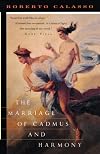
Mr. Calasso has created a wonderful, (in both senses of the word!) meditation on the religious structure pf the Ancient World. One must recognize that only at the time of the Roman Emperor Julian the apostate (361 - 63 CE) was there an attempt to create a consistent organized, picture of the Pagan Gods and their exploits and duties, trying to rival the tidy picture of the Christian gospels and Acts. Pausanias' travelogue has shown us that the Pagan world's religion was a confused picture, show more where various temples created their own versions of Genesis and Exodus, and Joshua, mixing and matching names and attributes of their Gods but seldom trying to co-ordinate the narrative to be consistent. Julian did not remain in office long enough to complete his attempt. Thus, to this day, the Pagan religion remains a mass of material and it's expression is primarily found in the Works of the Athenian Tragedians, the epic
and lyric poets of the Hellenistic and Roman Worlds, and Homer. There's no plan! Some Gods are described as children of gods who, elsewhere are described as the fathers of the same Gods. Into what is often an Escher-like set of Genealogies, a conflicting set of actions, and confused power relationships , Robert Colasso plunges, and manges, very cleverly, to produce a set of meditations on this canon. His scholarship is deep, and in my mind at least, he manages to create a set of explanations and interactions that may have occurred in the minds of a very clever and well read mythographer of the later Roman Empire. Do not look for a connected narrative here, but the modern reader will come away with a fuller appreciation of what the classical mindset could contain. This is not a book for a single reading, but a keeper and consultation fountain. Bravo! show less
and lyric poets of the Hellenistic and Roman Worlds, and Homer. There's no plan! Some Gods are described as children of gods who, elsewhere are described as the fathers of the same Gods. Into what is often an Escher-like set of Genealogies, a conflicting set of actions, and confused power relationships , Robert Colasso plunges, and manges, very cleverly, to produce a set of meditations on this canon. His scholarship is deep, and in my mind at least, he manages to create a set of explanations and interactions that may have occurred in the minds of a very clever and well read mythographer of the later Roman Empire. Do not look for a connected narrative here, but the modern reader will come away with a fuller appreciation of what the classical mindset could contain. This is not a book for a single reading, but a keeper and consultation fountain. Bravo! show less
Lists
Awards


You May Also Like


Associated Authors
Statistics
- Works
- 43
- Also by
- 4
- Members
- 6,163
- Popularity
- #3,991
- Rating
- 3.9
- Reviews
- 64
- ISBNs
- 303
- Languages
- 18
- Favorited
- 16

