
W. G. Sebald (1944–2001)
Author of Austerlitz
About the Author
He studied German language and literature in Freiburg, Switzerland and Manchester. He has taught at the University of East Anglia in Norwich, England since 1970. He became a professor of European literature in 1987. From 1989 to 1994 was the first director of the British Centre for Literary show more Translation. He was born in Wertach in Allgau, Germany in 1944. (Bowker Author Biography) show less
Series
Works by W. G. Sebald
Sebald Winfried Georg 2 copies
المغتربون 1 copy
Associated Works
Tagged
Common Knowledge
- Canonical name
- Sebald, W.G.
- Legal name
- Sebald, Winfried Georg
- Other names
- Sebald, Winfried Georg
Zebald, Vinfrid Georg
Zebald, V. G. - Birthdate
- 1944-05-18
- Date of death
- 2001-12-14
- Gender
- male
- Education
- University of Freiburg
University of Manchester - Occupations
- writer
author
academic - Organizations
- University of East Anglia
- Awards and honors
- Heinrich Heine Preis (2000)
Heinrich-Böll-Preis (1997)
Sebaldweg, Wertach, Oberallgäu, Bavaria, Germany (Sebald Way)
Sebald Copse, University of East Anglia, Norwich, Norfolk, England, UK - Cause of death
- car crash
aneurysm - Nationality
- Germany
- Birthplace
- Wertach im Allgäu, Bavaria, Germany
- Places of residence
- Wertach im Allgäu, Bavaria, Germany
Sonthofen, Germany
Manchester, England, UK
Wymondham, Norfolk, England, UK
Poringland, Norfolk, England, UK - Place of death
- Norwich, Norfolk, England, UK
- Map Location
- Germany
Members
Reviews
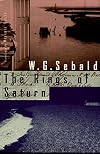
A most beautiful scrapbook, a wormhole of memories, a way to trap the mind in a maze which delights it. This travel story is joy-killing at the same time it brings a quiet humor to everything, even the most dead of ends, the most morose ruins and the agentless way they fall from their height and grace. Sebald shows how everything is destroyed through the agency of human cruelty, human inattention, and the will of nature.
“Where a short while ago the dawn chorus had at times reached such a show more pitch that we had to close the bedroom windows, where larks had risen on the morning air above the fields and where, in the evenings, we occasionally even heard a nightingale in the thicket, its pure and penetrating song punctuated by theatrical silences, there was now not a living sound.”
It is these descriptions, and the photos, and the winding topics, and the impossibility and needlessness of getting a straight-on look at the narrator (a true fictional travel narrative if I've ever seen one) that give this book the invisible scaffolding for which it deserves the abundant praise it has received. show less
“Where a short while ago the dawn chorus had at times reached such a show more pitch that we had to close the bedroom windows, where larks had risen on the morning air above the fields and where, in the evenings, we occasionally even heard a nightingale in the thicket, its pure and penetrating song punctuated by theatrical silences, there was now not a living sound.”
It is these descriptions, and the photos, and the winding topics, and the impossibility and needlessness of getting a straight-on look at the narrator (a true fictional travel narrative if I've ever seen one) that give this book the invisible scaffolding for which it deserves the abundant praise it has received. show less
Haunting is a term that keeps appearing in popular and critical discourse of late. This makes sense to me. We live in a time when things disappear or become irrelevant very quickly, because of the feedback loop that’s been established between technological change and an economic system that expands as a result of it. The real consequence of this is not just the emergence of the new, or what might better be called the pseudo-new, but the disappearance of a large number of things and ideas show more that were not that old. However, things that disappear from the physical world are not lost to our minds, if we had some experience of them. Lost things, people, places, concepts, haunt our minds. If we felt some strong emotion for them, they haunt us more powerfully, because somehow affect plants things in our brains in a way that intellect or sensory perception alone cannot.
If there ever was a writer, or a book, to illustrate the power of this kind of haunting, it is WG Sebald and it is The Rings of Saturn. Walking through one small part of Europe, but ranging far beyond it in time and space, he writes of modern Europe's ghostliness, and you begin to see it as the only possible state for a society where layers and layers of the past drift far deeper than any future it is likely to have. At the vacant center of those layers of time is the Holocaust, but one grim apocalypse after another has piled up along the way, and you sense another one, a holocaust of nature, is in the wings. And all of this is presented with that most elusive of modern qualities, a kind of lyricism that makes it charming, in the almost magical sense of that word.
If great writers either "found a tradition or abolish one," Sebald is now among our greats. He has created his own genre. I can't believe he doesn't have a school of followers, but, at the same time, I'm tremendously glad. show less
If there ever was a writer, or a book, to illustrate the power of this kind of haunting, it is WG Sebald and it is The Rings of Saturn. Walking through one small part of Europe, but ranging far beyond it in time and space, he writes of modern Europe's ghostliness, and you begin to see it as the only possible state for a society where layers and layers of the past drift far deeper than any future it is likely to have. At the vacant center of those layers of time is the Holocaust, but one grim apocalypse after another has piled up along the way, and you sense another one, a holocaust of nature, is in the wings. And all of this is presented with that most elusive of modern qualities, a kind of lyricism that makes it charming, in the almost magical sense of that word.
If great writers either "found a tradition or abolish one," Sebald is now among our greats. He has created his own genre. I can't believe he doesn't have a school of followers, but, at the same time, I'm tremendously glad. show less
I had already intended to read The Rings of Saturn after my LT friend Janet* read and reviewed it last year, saying among other things, that if she had become a writer, this was how she would have wanted to write. Her praise bumped it up my list considerably. Somehow Janet was very much in my mind as I read occasionally making it hard not to feel quite emotional. For the book is about loss and change, about the way things and people and events are intertwined and overlapped and connected in show more eerie and unexpected ways - which you find out the minute you begin to explore anything in depth. As a result I found myself spending hours on line, looking at photographs of Dunwich, the town along the Suffolk (I think) coast of many churches, for a short while a major port, that began to be eaten by the sea in the 13th century until it was altogether given up on in the 19th. Or reading about Edward FitzGerald the first translator into English of the Rubaiyat or the story behind the story of Roger Casement, put to death for his part in the Irish Rebellion. Sebald walked about this area of the English coast extensively and the book is put together as one long walk, and perhaps the bones of it were this one long walk in 1995, but almost everywhere he goes he either says or implies that he has been there before. To return though, to the threads (a significant word choice, as one of the constant subjects is trade, weaving, silk cultivation) is violence and loss from this stems a sense of his sorrow at finding these themes everywhere, even in his adopted land, England. The war and all of the Nazi horrors are a dark theme, an undercurrent running through the text - surfacing here and there, as in the description of a Major LeStrange, who never recovered from being one of the first to witness the Belsen camp, and ended up leading an utterly eccentric and isolated life. Sebald resonates and identifies with this area which has changed beyond recognition in this age - no more windmills, no more grand estates, no more silk cultivation and weaving..... indeed..... no more anything really, not even trees after the terrible hurricane of 1987. You get a sense of an abandoned part of England, in a fallow and unused time of its long history, of people, that, at least for now, nobody values. In the final pages you even get a whiff, no more than the lightest silken-winged suggestion of one way the Nazis in their maniacally orderly way may have come up with how to eradicate the peoples they did not care for, in the same sterile and serene and 'scientific' way they killed the larvae in the silkworm - an unbelievably chilling moment.....
I'm making the book sound too sad to even think of reading, but it doesn't feel that way at all, in fact it is insanely beautiful and thought-provoking - Sebald's manner of writing is calm, thoughtful, and somehow both warm and detached, if that is possible. He admits being completely rattled when he gets lost on some labyrinthine pathways, for example, or shares the ghastly modern furniture in an otherwise beautiful and ancient inn, or a tramp on a roman road that ended up being strangely tedious (which sounds about right - any kind of rigidity does become tedious). *****
*Janet's review can be found a few comments below mine in the reviews - JanetinLondon. For those of you who do not know her, she died in early January this year.
**Here is a strange correspondance Sebald would have noted: I am 57 right now, Janet was 57 when she read Saturn (and maybe still was when she died, I don't know). Sebald was 57 when he died in a car crash.
I was mistaken about a few points in Sebald's life and have revised this review a little. show less
I'm making the book sound too sad to even think of reading, but it doesn't feel that way at all, in fact it is insanely beautiful and thought-provoking - Sebald's manner of writing is calm, thoughtful, and somehow both warm and detached, if that is possible. He admits being completely rattled when he gets lost on some labyrinthine pathways, for example, or shares the ghastly modern furniture in an otherwise beautiful and ancient inn, or a tramp on a roman road that ended up being strangely tedious (which sounds about right - any kind of rigidity does become tedious). *****
*Janet's review can be found a few comments below mine in the reviews - JanetinLondon. For those of you who do not know her, she died in early January this year.
**Here is a strange correspondance Sebald would have noted: I am 57 right now, Janet was 57 when she read Saturn (and maybe still was when she died, I don't know). Sebald was 57 when he died in a car crash.
I was mistaken about a few points in Sebald's life and have revised this review a little. show less
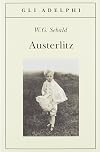
È un libro densissimo, questo di Sebald, a partire dalla struttura ininterrotta del testo, con paragrafi spesso molto lunghi e in più arricchiti dal dialogo con le fotografie in esso inserite (di certo non solo un vezzo, come alcuni magari potrebbero sostenere). Densa è la storia di Austerlitz, con tutti i suoi tratti di ambiguità legati alla relazione con la memoria e l'identità. E densa è infine la relazione tra realtà e immaginazione, che viene data in pasto al lettore da show more decifrare, quasi come un vero e proprio compito da svolgere. Per questo la lettura è tutt'altro che "leggera", non solo per i temi trattati ma forse soprattutto per il modo in cui essi vengono esposti. In più ci sono le tantissime divagazioni, a volte brevi a volte lunghe, che rendono la trama ancora una volta più affascinante (e, di nuovo, densa). Appena finito di leggerlo, mi viene voglia di ricominciare la lettura. Credo che non lo farò (preferirò prima leggere gli altri libri di Sebald), ma è raro che mi accada di sentire questo impulso e questo per me rappresenta un valore in più di questo testo.
Una citazione:
«Tutti noi, e anche persino quelli che ritengono di avere badato persino ai minimi dettagli, ci accontentiamo di elementi scenici mobili, che già altri hanno fatto girare a sufficienza in su e in giù sulle tavole del teatro. Cerchiamo di riprodurre la realtà, ma quanto maggiore è l’impegno in tal senso, tanto più si impone al nostro sguardo quel che da sempre si è visto sulla scena della storia: il tamburino caduto, il fante che ne sta infilzando un altro, la morte nell’occhio di un cavallo, l’imperatore invulnerabile circondato dai suoi generali nel pieno della mischia irrigidita nell’attimo. Il nostro rapporto con la storia – questa era la tesi di Hillary - è un rapporto con immagini già definite e impresse nella nostra mente, immagini che noi continuiamo a fissare mentre la verità è altrove, in un luogo remoto che nessun uomo ha ancora scoperto». show less
Una citazione:
«Tutti noi, e anche persino quelli che ritengono di avere badato persino ai minimi dettagli, ci accontentiamo di elementi scenici mobili, che già altri hanno fatto girare a sufficienza in su e in giù sulle tavole del teatro. Cerchiamo di riprodurre la realtà, ma quanto maggiore è l’impegno in tal senso, tanto più si impone al nostro sguardo quel che da sempre si è visto sulla scena della storia: il tamburino caduto, il fante che ne sta infilzando un altro, la morte nell’occhio di un cavallo, l’imperatore invulnerabile circondato dai suoi generali nel pieno della mischia irrigidita nell’attimo. Il nostro rapporto con la storia – questa era la tesi di Hillary - è un rapporto con immagini già definite e impresse nella nostra mente, immagini che noi continuiamo a fissare mentre la verità è altrove, in un luogo remoto che nessun uomo ha ancora scoperto». show less
Lists
04 (1)
Backlisted (1)
Overdue Podcast (1)
Elegant Prose (1)
Walking (1)
NTS Book Channel (2)
1990s (2)
. (1)
Holocaust (1)
. (1)
Read These Too (1)
Cooper (1)
2000s decade (1)
Awards


You May Also Like


Associated Authors
Statistics
- Works
- 33
- Also by
- 5
- Members
- 17,027
- Popularity
- #1,303
- Rating
- 4.1
- Reviews
- 360
- ISBNs
- 406
- Languages
- 26
- Favorited
- 167


