
Joseph Roth (1894–1939)
Author of The Radetzky March
About the Author
Author and journalist Joseph Roth was born on September 2, 1894. During World War I, he served in the Austro-Hungarian army from 1916 to 1918. Afterwards, he worked as a journalist in Vienna and in Berlin. His best-known works are The Radetzky March and Job. He died in Paris on May 27, 1939 and is show more buried in Thiais Cemetery. (Bowker Author Biography) Joseph Roth is the author of such classics as The Radetzky March and The Emperor's Tomb. He died in Paris in 1939. (Publisher Provided) show less
Image credit: Joseph Roth, 1918
Works by Joseph Roth
Report from a Parisian Paradise: Essays from France, 1925-1939 (1999) — Author — 223 copies, 1 review
Three Novellas: The Legend of the Holy Drinker / Fallmerayer the Stationmaster / The Bust of the Emperor (1997) 55 copies, 3 reviews
Años de hotel: Postales de la Europa de entreguerras: 401 (El Acantilado) (2020) 25 copies, 1 review
Joseph Roth, waarnemer van zijn tijd : een keuze uit zijn journalistieke werk (1919-1939) (1981) — Author — 13 copies
I cento giorni e altri racconti 8 copies
Fyra romaner : Spindelnt̃et; Den stumme profeten; Den falska vikten; Kapucinerkryptan (2018) 7 copies
Joseph Roth Werke. Das journalistische Werk 1915-1939. Romane und Erzaehlungen 1916-1940. 6 volumes (1989) 5 copies
La montée du nazisme: Suivi de L’Anneau des Niebelungen puis de Les Juifs et les Niebelungen (2024) 4 copies
I grandi romanzi: Fuga senza fine-Giobbe-La marcia di Radetzky-La cripta dei cappuccini-La leggenda del santo bevitore. Ediz. integrali (2012) 4 copies
Aber das Leben marschiert weiter und nimmt uns mit : der Briefwechsel zwischen Joseph Roth und dem Verlag De Gemeenschap 1936-1939 (1991) 4 copies
Schijnwereld filmkritieken 1919-1935 3 copies
Le Cabinet des figures de cire, précédé d' Images viennoises. Esquisses et portraits (2009) 3 copies
Various 3 copies
Joseph Roth - Gesammelte Werke: Die Geschichte von der 1002. Nacht, Hotel Savoy, Hiob, Radetzkymarsch, Das Spinnennetz, Die Flucht ohne Ende, Reportagen ... Werke bei Null Papier… (2014) — Author — 3 copies
Werke in drei Bänden (Zweiter Band) 3 copies
Werke in drei Bänden (Erster Band) 2 copies
Werke in drei Bänden (Dritter Band) 2 copies
Joseph Roth: Gesamtausgabe - Sämtliche Romane und Erzählungen und Ausgewählte Journalistische Werke: Neue überarbeitete Auflage (2020) 2 copies
L'avventuriera di Montecarlo: Scritti sul cinema (1919-1935) (Piccola biblioteca Adelphi) (Italian Edition) (2015) 2 copies
El leviatan i altres narracions (Stationsche Fallmerayer, Die Büste des Kaisers, Der leviathan) (2014) 2 copies, 1 review
Sämtliche Werke von Joseph Roth 2 copies
DIE REBELLION. Fruhe romane. [Das Spinnennetz. Hotel Savoy. Die Rebellion. Die F (1984) — Author — 2 copies
Hành khúc Radetzky 1 copy
Radetsky mars 1 copy
Le Parapluie 1 copy
Hotel Savoy 1 copy
Βερολινέζικη χρόνια 1 copy
Das Moskauer Jüdische Akademische Theater — Author — 1 copy
Ο σταθμάρχης Φαλλμεράυερ 1 copy
Οι εκατό μέρες 1 copy
Φράουλες 1 copy
Schijnwereld 1 copy
Job roman van een gewone man 1 copy
The Spiderweb 1 copy
Flyktningen Franz Tunda 1 copy
Veronica 2030 1 copy
Joseph Roth Werke - Neue erweiterte Ausgabe in vier Bänden (4 Bände komplett). (1975) — Author — 1 copy
Opere 1916-1930 1 copy
Der neue Tag 1 copy
Albania 1 copy
Werke [6 Bände] 1 copy
Bežanje bez kraja 1 copy
Karriere (German Edition) 1 copy
Gesammelte Werke von Joseph Roth: Radetzkymarsch + Hiob + Hotel Savoy + Das Spinnennetz + Beichte eines Mörders… (2017) 1 copy
Professor Cecil Roth 1 copy
La Rebel·lió. Tasta'm 1 copy
Associated Works
A Very German Christmas: The Greatest Austrian, Swiss and German Holiday Stories of All Time (2020) — Contributor — 36 copies, 1 review
Tagged
Common Knowledge
- Legal name
- Roth, Moses Joseph (birth name)
- Birthdate
- 1894-09-02
- Date of death
- 1939-05-27
- Gender
- male
- Education
- Lviv University
University of Vienna - Occupations
- journalist
features correspondent
novelist
short story writer - Organizations
- Imperial Habsburg army (WWI)
Frankfurter Zeitung - Relationships
- Keun, Irmgard (lover)
Zweig, Stefan (friend)
Morgenstern, Soma (friend) - Short biography
- Joseph Roth was born into a Jewish family in the Austrian-Hungarian Empire and served in the Imperial army in World War I. After the war, he became a journalist and travelled widely, including making numerous trips to Russia. During this period, he wrote several novels, novellas, and volumes of short stories. He became a star correspondent for the Frankfurter Zeitung, and in 1932 published his masterpiece, The Radetzky March. As a Jew, a leftist, and an outspoken critic of Nazism, he knew he had to flee Germany on January 30, 1933, the day the Nazis took power -- never to return. Thereafter, he lived hand-to-mouth working as a journalist alternately in Amsterdam and Paris. He died in the latter city in alcoholism and poverty in 1939.
- Cause of death
- pneumonia
alcoholism - Nationality
- Austria-Hungary (Austrian)
- Birthplace
- Brody, Galicia, Austria-Hungary
- Places of residence
- Brody, Galicia, Ukraine
Berlin, Germany
Thiais, Paris, Île-de-France, France
Amsterdam, Netherlands - Place of death
- Paris, Île-de-France, France
- Burial location
- Thiais cemetery, Paris, France
- Map Location
- Austria
Members
Discussions
The Radetzky March ~ Joseph Roth in Quote Keepers (June 2025)
132. Job by Joseph Roth in Backlisted Book Club (March 2022)
Group Read, June 2014: The Radetsky March in 1001 Books to read before you die (July 2014)
Reviews
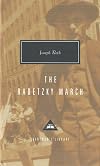
The Radetzky March takes its title from the musical composition authored by Johann Strauss, father of the "waltz king", Strauss, junior. It is a classic military march, that you can hear, and view conducted by Andre Rieu on YouTube. Joseph Radetzky von Radetz was an Austrian marshal of Bohemian descent who fought in the Napoleonic Wars and let the Austrian army during the first war for Italian independence in 1848-49. He died in 1858, roughly a decade before the story that Roth unfolds in show more the Battle of Solferino in 1869, a failed campaign against the Italians that could be said to be the second major milestone in the decline of the Dual Monarchy led by Kaiser Franz Jospeh I following its defeat by Prussia in 1866 which foreclosed the possibility of German reunification occurring under the leadership of Austria.
Decline is the theme of The Radetzky March. Although, in our times it could be said with more than a little truth that decline is a choice, in Roth's account, the decline of the empire is the result of the movement of historical processes, chiefly the rise of nationalism and the gradual breaking apart of the spiritual bonds that held together the monarchy and the empire. This decline is paralleled by the story of the quick rise and decline of the fortunes of the Trotta family. At the Battle of Solferino in 1869 the youthful Kaiser is saved from a bullet and possible death on the battlefield by a Lt. Joseph Trotta, an officer of Slovenian peasant stock. Trotta is promoted to a captaincy and is, in effect, the recipient of a battlefield promotion to the nobility, henceforth to be known as Joseph Trotta von Sipolje, Baron Trotta.
The Hero of Solferino passes from the scene early on in the story. What he leaves beside his title is a portrait painted by a friend of his son. The portrait, even more so than the march, dominates the persons of his son, a "district captain" which is basically a minor government functionary position, and the grandson, Carl Jospeh Trotta, who is groomed from early in his life for a military career for which he is unsuited. Carl Jospeh is commissioned into the cavalry despite his mediocre horsemanship. Following a fatal confrontation between his only friend in his regiment, the Jewish regimental surgeon and another officer from the nobility for which Trotta was the inadvertent cause, he transfers to a rifle regiment in a remote outpost on the Eastern frontier. Here he falls into patterns of dissolution from the usual causes, drinking, gambling and women. Eventually his debts are called in and he is forced to petition his father, the district commissioner to bail him out of his predicament. The father, unable to borrow the needed funds from any other source petitions the emperor directly. Franz Joseph, vaguely remembering the service to him by the grandfather of our scapegrace, directs that the debts be discharged, and for good measure that the holder of the debt be deported.
At a regimental celebration in the summer of 1914, the rumor of the assassination of Archduke Franz Ferdinand, is circulated among the officers. Trotta sends in his resignation, but the resulting war brings him back into uniform and he meets his fate at the hands of Russian snipers while trying to retrieve water for his parched troops. The novel concludes with the parallel deaths of the Kaiser and the district commissioner in 1916.
The Radetzky March is a beautifully written, albeit melancholy metaphor for decline - of the empire, the monarchy, the Trotta family. The empire and the Trottas adhere more or less faithfully to the time-honored forms, but the protagonists become gradually aware that the substance underlying the forms have become hollowed out and that the forms are on the verge of extinction. Roth is at his best in his sketches and development of his characters. This excerpt from early in the novel provides a portrait of Carl Jospeh's father Franz, the district commissioner.
"He spoke the nasal Austrian German of higher officials and lesser nobles. It vaguely recalled distant guitars twanging in the night and also the last dainty vibrations of fading bells; it was a soft but also precise language, tender and spiteful at once. It suited the speaker's thin, bony face, his curved, narrow nose, in which the sonorous, somewhat rueful consonants seemed to be lying. His nose and mouth, when the district captain spoke, were more like wind instruments than facial features. Aside from the lips, nothing moved in his face. The dark whiskers that Herr von Trotta wore as part of his uniform, as insignia demonstrating his fealty to Franz Jospeh I, as proof of his dynastic conviction--these whiskers likewise remained immobile when Herr von Trotta und Sipolje spoke. He sat upright at the table, as if clutching reins in his hard hands. When sitting he appeared to be standing, and when rising he always surprised others with his full ramrod height. He always worse dark blue, summer and winter, Sundays and weekdays: a dark-blue jacket with gray striped trousers that lay snug on his long legs and were tautened by straps over the smooth boots. Between the second and third course he would usually get up in order to 'stretch my legs'. But it seemed more as is he wanted to show the rest of the household how to rise, stand, and walk without relinquishing immobility."
The Radetzky March is a masterpiece and a sober meditation on the problem of decline, a problem that confronts his contemporary readers as it confronted the characters of this outstanding work. show less
Decline is the theme of The Radetzky March. Although, in our times it could be said with more than a little truth that decline is a choice, in Roth's account, the decline of the empire is the result of the movement of historical processes, chiefly the rise of nationalism and the gradual breaking apart of the spiritual bonds that held together the monarchy and the empire. This decline is paralleled by the story of the quick rise and decline of the fortunes of the Trotta family. At the Battle of Solferino in 1869 the youthful Kaiser is saved from a bullet and possible death on the battlefield by a Lt. Joseph Trotta, an officer of Slovenian peasant stock. Trotta is promoted to a captaincy and is, in effect, the recipient of a battlefield promotion to the nobility, henceforth to be known as Joseph Trotta von Sipolje, Baron Trotta.
The Hero of Solferino passes from the scene early on in the story. What he leaves beside his title is a portrait painted by a friend of his son. The portrait, even more so than the march, dominates the persons of his son, a "district captain" which is basically a minor government functionary position, and the grandson, Carl Jospeh Trotta, who is groomed from early in his life for a military career for which he is unsuited. Carl Jospeh is commissioned into the cavalry despite his mediocre horsemanship. Following a fatal confrontation between his only friend in his regiment, the Jewish regimental surgeon and another officer from the nobility for which Trotta was the inadvertent cause, he transfers to a rifle regiment in a remote outpost on the Eastern frontier. Here he falls into patterns of dissolution from the usual causes, drinking, gambling and women. Eventually his debts are called in and he is forced to petition his father, the district commissioner to bail him out of his predicament. The father, unable to borrow the needed funds from any other source petitions the emperor directly. Franz Joseph, vaguely remembering the service to him by the grandfather of our scapegrace, directs that the debts be discharged, and for good measure that the holder of the debt be deported.
At a regimental celebration in the summer of 1914, the rumor of the assassination of Archduke Franz Ferdinand, is circulated among the officers. Trotta sends in his resignation, but the resulting war brings him back into uniform and he meets his fate at the hands of Russian snipers while trying to retrieve water for his parched troops. The novel concludes with the parallel deaths of the Kaiser and the district commissioner in 1916.
The Radetzky March is a beautifully written, albeit melancholy metaphor for decline - of the empire, the monarchy, the Trotta family. The empire and the Trottas adhere more or less faithfully to the time-honored forms, but the protagonists become gradually aware that the substance underlying the forms have become hollowed out and that the forms are on the verge of extinction. Roth is at his best in his sketches and development of his characters. This excerpt from early in the novel provides a portrait of Carl Jospeh's father Franz, the district commissioner.
"He spoke the nasal Austrian German of higher officials and lesser nobles. It vaguely recalled distant guitars twanging in the night and also the last dainty vibrations of fading bells; it was a soft but also precise language, tender and spiteful at once. It suited the speaker's thin, bony face, his curved, narrow nose, in which the sonorous, somewhat rueful consonants seemed to be lying. His nose and mouth, when the district captain spoke, were more like wind instruments than facial features. Aside from the lips, nothing moved in his face. The dark whiskers that Herr von Trotta wore as part of his uniform, as insignia demonstrating his fealty to Franz Jospeh I, as proof of his dynastic conviction--these whiskers likewise remained immobile when Herr von Trotta und Sipolje spoke. He sat upright at the table, as if clutching reins in his hard hands. When sitting he appeared to be standing, and when rising he always surprised others with his full ramrod height. He always worse dark blue, summer and winter, Sundays and weekdays: a dark-blue jacket with gray striped trousers that lay snug on his long legs and were tautened by straps over the smooth boots. Between the second and third course he would usually get up in order to 'stretch my legs'. But it seemed more as is he wanted to show the rest of the household how to rise, stand, and walk without relinquishing immobility."
The Radetzky March is a masterpiece and a sober meditation on the problem of decline, a problem that confronts his contemporary readers as it confronted the characters of this outstanding work. show less
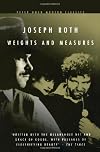
I must confess to some disappointment—disappointment that I am somewhat at a loss to understand—with this short work narrating the decline or, perhaps more accurately, the disintegration of Anselm Eibenschütz. A soldier who enjoyed his life in the military, he nevertheless abandoned it because “his wife, in her rigorous, even inflexible, manner…compelled him to do so.” Eibenschütz is a paragon of honesty and rectitude but he has no backbone, no strength of character. He accepts a show more position as an inspector of weights and measures and is assigned to a region where no merchant has ever used honest weights: the people there distrusted him because “they supposed him to be a thoroughly honest man who had not yet become a lost soul. For they themselves were lost souls. They suffered themselves to be bribed and they bribed others. They defrauded God and the world and their superiors. But even the superiors in turn defrauded their higher superiors.” Eibenschütz discovers that his wife is cheating on him and eventually falls under the spell of a gypsy woman who is, in turn, in thrall to a man nearly entirely evil. As always, Roth tells an absorbing, even fascinating story. And yet, I finished the book somehow disappointed. Roth uses the notion of weights and measures both literally--Eibenschütz’s position gives him power to determine the fate of those who use false weights or measures—and figuratively for Eibenschütz’s inability to apply what he knows to be the true weights and measures of morality to his own life. Most depressing of all, Eibenschütz sees clearly his own failure. Well-written, well-translated, well-told and yet…. show less
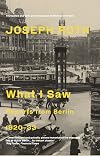
Over a couple of months I have read this uneven collection of newspaper articles by Joseph Roth, famous to me as the author of The Radetsky March. The articles are mainly from the Frankfurter Zeitung about Berlin in the 1920's. These are not political, but more about everyday events or, better, random musings.
The book starts with some articles about Jews - refugees from the East (Poland, Hungary and many from Russian POW camps following WWI) and their area in Berlin, including an article show more about a model miniature rebuilding of the Temple of Solomon.
There are then a series of articles on various locations or events in Berlin that have caught Roth's attention - night dives (cafes etc), the homeless refugees, the steam baths, the police morgue, the traffic system, new buildings and the pleasure industry.
These sometimes soar, such as the article on skyscrapers:
"It is impossible for the proximity of clouds to have no effect on human beings. The view out of the window, taking in the full boundlessness of the horizon, works on both heart and soul. The lungs take in the air of heaven. Clouds wander past the brows of mortal man as previously only around the brows of Olympians."
and
"Oh— and already you hear that the first skyscraper in Berlin is to contain a great entertainment palace, with cinemas, dance hall, bar, Negro bands, vaudeville, jazz. Because human nature will not deny its weaknesses, even where it is seemingly in the process of overcoming them. And if it were possible for us to build a “planet scraper” and to construct settlements on Mars, the expeditions of scientists and engineers would be accompanied by a delegation of bartenders. I have a shining vision of a bar in the clouds. It’s raining champagne cocktails."
Sometimes the effect is far more prosaic, but still enlightening of a different time.
The final, longer essay written in 1933 and published in Paris after Roth's "voluntary" exile when the Nazis came to power is about the Nazi rise to power. This is a powerful essay and although it is easy to be clever with hindsight, this was wise at the time. The article opens:
"Very few observers anywhere in the world seem to have understood what the Third Reich’s burning of books, the expulsion of Jewish writers, and all its other crazy assaults on the intellect actually mean. The technical apotheosis of the barbarians, the terrible march of the mechanized orangutans, armed with hand grenades, poison gas, ammonia, and nitroglycerine, with gas masks and airplanes, the return of the spiritual (if not the actual) descendants of the Cimbri and Teutoni— all this means far more than the threatened and terrorized world seems to realize: It must be understood. Let me say it loud and clear: The European mind is capitulating. It is capitulating out of weakness, out of sloth, out of apathy, out of lack of imagination (it will be the task of some future generation to establish the reasons for this disgraceful capitulation)."
Overall it is a powerful collection and, through the overall impression of the times it portrays, is more than the sum of its uneven parts. show less
The book starts with some articles about Jews - refugees from the East (Poland, Hungary and many from Russian POW camps following WWI) and their area in Berlin, including an article show more about a model miniature rebuilding of the Temple of Solomon.
There are then a series of articles on various locations or events in Berlin that have caught Roth's attention - night dives (cafes etc), the homeless refugees, the steam baths, the police morgue, the traffic system, new buildings and the pleasure industry.
These sometimes soar, such as the article on skyscrapers:
"It is impossible for the proximity of clouds to have no effect on human beings. The view out of the window, taking in the full boundlessness of the horizon, works on both heart and soul. The lungs take in the air of heaven. Clouds wander past the brows of mortal man as previously only around the brows of Olympians."
and
"Oh— and already you hear that the first skyscraper in Berlin is to contain a great entertainment palace, with cinemas, dance hall, bar, Negro bands, vaudeville, jazz. Because human nature will not deny its weaknesses, even where it is seemingly in the process of overcoming them. And if it were possible for us to build a “planet scraper” and to construct settlements on Mars, the expeditions of scientists and engineers would be accompanied by a delegation of bartenders. I have a shining vision of a bar in the clouds. It’s raining champagne cocktails."
Sometimes the effect is far more prosaic, but still enlightening of a different time.
The final, longer essay written in 1933 and published in Paris after Roth's "voluntary" exile when the Nazis came to power is about the Nazi rise to power. This is a powerful essay and although it is easy to be clever with hindsight, this was wise at the time. The article opens:
"Very few observers anywhere in the world seem to have understood what the Third Reich’s burning of books, the expulsion of Jewish writers, and all its other crazy assaults on the intellect actually mean. The technical apotheosis of the barbarians, the terrible march of the mechanized orangutans, armed with hand grenades, poison gas, ammonia, and nitroglycerine, with gas masks and airplanes, the return of the spiritual (if not the actual) descendants of the Cimbri and Teutoni— all this means far more than the threatened and terrorized world seems to realize: It must be understood. Let me say it loud and clear: The European mind is capitulating. It is capitulating out of weakness, out of sloth, out of apathy, out of lack of imagination (it will be the task of some future generation to establish the reasons for this disgraceful capitulation)."
Overall it is a powerful collection and, through the overall impression of the times it portrays, is more than the sum of its uneven parts. show less

Joseph Roth's novel takes its name from a march by Johann Strauss Senior who composed the rollicking tune, and a hundred years ago you could hear it in market towns the length and breadth of the Empire. The story follows the destiny of a family of humble Slovenian origins who rise to prominence through valor on the battlefield. Ennobled by the Emperor, the Trottas become part of the establishment, but by this stage, the cosmopolitan empire is beginning to come apart at the seams. The show more author's ability to evoke a sense of place, and Michael Hofmann's translation present the novel to wonderfully lyrical effect. The whole work has a dream-like quality, but there is a brooding sense of foreboding. Much of the The Radetzky March is focused on Carl von Trotta, who on joining the army, struggles to live up to the legend of his grandfather. The novel is peopled with memorable characters, such as the nonchalant Polish Count Chojnacki and the troubled Doctor Demant. Even some of the peripheral figures are beautifully sketched, such as Lieutenant Taittinger, 'whose single passion in life was the consumption of pastries.' The decline in the Trotta family that is so exquisitely presented mirrors a similar decline in the fortunes of the Austro-Hungarian Empire. By the time of Carl the empire had frayed at its edges and was a mess after the First World War. The Radetzky March is far more than an exercise in mawkish sentimentality, and the Habsburg regime is not given a white-washing. Roth was largely a forgotten figure for several decades, and this, his most acclaimed novel, was rarely cited by Western academics. However, when Michael Hofmann published the current translation, writers queued up to hail The Radetzky March as one of the great European novels of the twentieth century - some consolation for the embattled author, who died tragically at the advent of war in 1939. But much consolation for readers like myself who were able to discover this author and include him in our personal pantheon of great twentieth century authors. show less
Lists
German Literature (11)
Best War Stories (1)
Jewish Books (1)
. (1)
Reading Globally (1)
Favourite Books (1)
Five star books (1)
THE WAR ROOM (1)
A Novel Cure (1)
Liste Otto (2)
1930s (1)
LJ Veen Klassiek (1)
Schwob Nederland (1)
e-books activity (1)
War Literature (1)
Awards


You May Also Like


Associated Authors
Statistics
- Works
- 233
- Also by
- 13
- Members
- 13,192
- Popularity
- #1,768
- Rating
- 3.9
- Reviews
- 325
- ISBNs
- 1,130
- Languages
- 27
- Favorited
- 70
