
Arthur Schnitzler (1862–1931)
Author of Dream Story
About the Author
Arthur Schnitzler, Viennese playwright, novelist, short story writer, and physician, was a sophisticated writer much in vogue in his time. He chose themes of an erotic, romantic, or social nature, expressed with clarity, irony, and subtle wit. Reigen, a series of ten dialogues linking people of show more various social classes through their physical desire for one another, has been filmed many times as La Ronde. As a Jew, Schnitzler was sensitive to the problems of anti-Semitism, which he explored in the play Professor Bernhardi (1913), seen in New York in a performance by the Vienna Burgtheater in 1968. Henry Hatfield calls Schnitzler "second only to Hofmannsthal among the Austrian writers of his generation and one of the most underrated of German authors... . He combined the naturalist's devotion to fact with the impressionist's interest in nuance; in other words, he told the truth" (Modern German Literature). In his most famous story, Lieutenant Gustl (1901), Schnitzler employs the stream-of-consciousness technique in an exposition of the follies and gradual disintegration of society in fin de siecle Vienna. Schnitzler has also been linked with Freud (see Vols. 3 and 5) and is credited with consciously introducing elements of modern psychology into his works. (Bowker Author Biography) show less
Image credit: Atelier Madame D'Ora / Photo © ÖNB/Wien
Works by Arthur Schnitzler
Das erzählerische Werk I. Die Frauen des Weisen und andere Erzählungen. ( Gesammelte Werke in Einzelausgaben) (1977) 9 copies
Dream Story (Translated, Annotated, & Illustrated) (aka Traumnovelle, Rhapsody, Eyes Wide Shut): Ovid Publishing Edition 6 copies, 1 review
Professor Bernhardi and Other Plays (Studies in Austrian Literature, Culture, and Thought Translation Series) (1993) 5 copies
Anatol och andra enaktare 5 copies
Comedies of Words & Other Plays 3 copies
Paracelsus and Other One-Act Plays (Studies in Austrian Literature, Culture, and Thought Translation Series) (1995) 3 copies
Plačiai užmerktos akys 3 copies
Sammeln als Wissen: Das Sammeln und seine wissenschaftsgeschichtliche Bedeutung (Wissenschaftsgeschichte) (2001) 3 copies
Die dramatischen Werke 3 copies
In de ban van het noodlot 3 copies
I morti tacciono e altri racconti 3 copies
Gesammelte Werke in zwei Abteilungen. Erste Abteilung. Die erzählenden Schriften Erster Band 3 copies
Commedia delle Parole; Tre atti unici. L'ora della verità - Scena madre - Baccanale (1986) 3 copies
Liebelei und andere Bühnenwerke 2 copies
La contessina Mizzi 2 copies
Demasqué 2 copies
Sterben : Erzählungen ; 1880 - 1892 2 copies
Interlude 2 copies
Gespräch in der Kaffeehausecke 2 copies
Sterben. Erzählungen 1880 - 1892 2 copies
Therese - Illustrierte Fassung: Chronik eines Frauenlebens (Erotik bei Null Papier) (German Edition) (2019) 2 copies
Aphorismen und Betrachtungen 2 copies
Masques et Prodiges 2 copies
Collected Works of Arthur Schnitzler 2 copies
The Final Plays (Studies in Austrian Literature, Culture, and Thought. Translation Series) (1996) 2 copies
Ölüler Susar 2 copies
Der Schlüssel zu Rebecca. - Denuziere, Maurice: Ein Hund für einen Sommer. - Denker, Henry: Der Geheimpatient. - Schni (1982) 2 copies
Fräulein Else. Textausgabe mit Kommentar und Materialien: Reclam XL – Text und Kontext (2017) 2 copies
ËNDËRR 2 copies
Stories and plays 2 copies
Werke in historisch-kritischen Ausgaben. Der grüne Kakadu ; Historisch-kritische Ausgabe (2020) 2 copies
The Correspondence of Arthur Schnitzler and Raoul Auernheimer with Raoul Auernheimer's Aphorisms (2020) 2 copies
l'etrangere 2 copies
Flirt 2 copies
Tales from the DUAL MONARCHY: Twenty Austrian and Hungarian stories from the Golden Age before the First World War (2025) 2 copies
Rüya Roman 2 copies
Girotondo e altre commedie 2 copies
Die Weissagung 2 copies
Die Weissagung : 1905 1 copy
Put u otvoreno 1 copy
Η κυρία Μπέρτα Γκάρλαν 1 copy
Minne-spel 1 copy
El Anatol, Kvin Unuaktaĵoj 1 copy
Adele Sandrock und Arthur Schnitzler Geschichte einer Liebe in Briefen, Bildern u. Dokumenten. Fischer; 5609 (1983) 1 copy
Traumnovelle zwei Novellen 1 copy
La ronde 1 copy
Rhapsody - A Dream Story 1 copy
Erzählungen I 1 copy
masques et prodiges 1 copy
Траумновелле 1 copy
Sterben Novelle 1 copy
La senyora Berta Garlan 1 copy
Voor een uur 1 copy
Povratak Kazanove 1 copy
Snová novela 1 copy
Signorina Else 1 copy
Über Krieg und Frieden 1 copy
Arthur Schnitzler: Traumnovelle, Der junge Medardus, Der Weg ins Freie, Spiel im Morgengrauen, Das weite Land (German Edition) (2010) 1 copy
Havepigernes hus 1 copy
Dämmerseelen: Novellen 1 copy
Spreuken en gedachten 1 copy
Erzählungen : Band 1 1 copy
Die Erzählenden Schriften. Zweiter Band (von 2) [= Arthur Schnitzler, Gesammelte Werke] (1981) 1 copy
Lekturehilfen Arthur Schnitzler "Leutnant Gustl" und "Die Traumnovelle". Ausfuhrliche Inhaltsangabe und Interpretation (2009) 1 copy
Commedie dell'estraneità e della seduzione. Terra sconosciuta. Professor Bernhardi. Commedia della seduzione (2001) 1 copy
Liebelei, Leutnant Gustl 1 copy
Literatur (in Omnibus) 1 copy
Schnitzler zum Vergnügen 1 copy
Der Ruf des Lebens 1 copy
Schnitzler Arthur 1 copy
Arthur Schnitzler. Ausgewählte Werke in acht Bänden: Der einsame Weg: Zeitstücke 1891-1908 (2001) 1 copy
1960 1 copy
Gesammelte Werke in zwei Abteilungen. Abt. 1. Die erzählenden Schriften in 4 Bdn; Bd. 4. Novellen 1 copy
The round dance: (a comedy for adults)...one interval of twenty minutes...British premiere...January 1982 1 copy, 1 review
Kurzgeschichten 1 copy
Contos 1 copy
Die Erzählenden Schriften. Erster Band (von 2) [= Arthur Schnitzler, Gesammelte Werke] (1981) 1 copy
Unenäonovell 1 copy
Die Hörspiel-Edition: Liebelei/ Spiel im Morgengrauen/ Berta Garlan/ Der Reigen/ Fräulen Else (2011) 1 copy
Silvestarska noć 1 copy
Gesammelte Schriften 1 copy
Familie 1 copy
Opere 1 copy
El padrino y otros cuentos 1 copy
Associated Works
Drama in the modern world: plays and essays (1964) — Contributor, some editions — 82 copies, 1 review
A Very German Christmas: The Greatest Austrian, Swiss and German Holiday Stories of All Time (2020) — Contributor — 36 copies, 1 review
The Dedalus/Ariadne Book of Austrian Fantasy: The Meyrink Years 1890-1930 (1992) — Contributor — 28 copies
American Aphrodite: A Quarterly for the Fancy-Free, Volume Three, Number Twelve (1953) — Contributor — 4 copies
50 seltsame Geschichten — Contributor — 1 copy
Tagged
Common Knowledge
- Other names
- Ŝniclo, Arturo
- Birthdate
- 1862-05-15
- Date of death
- 1931-10-21
- Gender
- male
- Education
- University of Vienna (MD|1885)
- Occupations
- physician
dramatist
novelist
short story writer
diarist
autobiographer - Organizations
- Young Vienna
- Awards and honors
- Bauernfeld-Preis (1899)
- Relationships
- Schnitzler, Michael (grandson)
Schnitzler, Heinrich (son) - Short biography
- Arthur Schnitzler was born to a Jewish family in Vienna, Austria. His parents were Luise (Markbreiter) and Johann Schnitzler, an internationally renowned physician. He studied medicine at the University of Vienna from 1879 and received his medical degree in 1885. He first won literary recognition in 1891 with a series of one-act plays. As a member of the avant-garde group Young Vienna (Jung-Wien), Schnitzler experimented with format as well as social conventions. In 1903, he married Olga Gussmann, alias Dina Marius, an aspiring actress and singer with whom he had two children; the couple divorced in 1921.
- Cause of death
- brain hemorrhage
- Nationality
- Austria
- Birthplace
- Vienna, Austrian Empire
- Places of residence
- Vienna, Austria
- Place of death
- Vienna, Austria
- Burial location
- Zentralfriedhof, Vienna, Austria
- Associated Place (for map)
- Vienna, Austria
Members
Reviews

Back in the late seventies, Masterpiece Theatre "did" a bunch of Schnitzler's stories which I found haunting and marvelous. (After seeing the program I went and read the stories). He was Viennese and mainly wrote between the 1880's and his death in 1931. This novella is about a man, Eduard Saxberger, now in his late sixties who is "discovered" by a small group of young writers who call themselves "The Enthusiasts". He wrote one book of poetry called "Wanderings" in his twenties and then gave show more up poetry and took a job in the civil service. He has led a quiet and uneventful and not unhappy life, although, maybe yes, something has been missing . . . This sudden recognition awakens dormant feelings and ideas, long ago set aside and buried. The group settle on having a recital, and want him to write a new poem, when he fails to do this (not without trying) they agree that someone else can read some of his published poems. The timing is somewhat vague, but let us say it all transpires in that time of late winter to early spring, maybe six weeks. The novella explores the sources of contentment and discontentment, of envy and disillusion, of sensitivity and callousness (especially in artists!) -- and, as is written in the afterward, the uncomfortable gap between the creative and the "bourgeois" life. While the novella is rather harsh about the egotism of the young artists, and whiule you might think Schnitzler is showing that the life of the straightforward bourgeois is preferable to the foolish delusions of writers, there is great compassion too for this desire that the young have to create something of beauty and value -- and don't have the determination or talent with which to succeed in the end. I was left with the sense that Schnitzler didn't think it foolish at all to try, but that so few would succeed and that recognizing your limitations is not the worst thing. A lovely novella -- deceptively quiet. **** show less
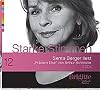
Die 19jährige Else führt ein wohlbehütetes Leben und ist gerade mit ihrer wohlhabenden Tante im Urlaub in einem vornehmen Hotel. Dort erreicht sie ein Eilbrief ihrer Mutter, die sie anfleht, sie möge den ebenfalls im Hotel weilenden Kunsthändler Dorsdale bitten, ihrer Familie mit 30.000 Gulden auszuhelfen. Elses Vater hat diese Summe veruntreut und soll verhaftet werden. Dorsdale erklärt sich dazu bereit, aber nur unter einer Bedingung...
Arthur Schnitzler hat diese kleine, aber sehr show more feine Novelle ausschließlich aus Elses Sicht geschrieben, was zu der Zeit ihres Erscheinens (1924) wohl recht ungewöhnlich war. Umso mehr erstaunt es mich, wie unglaublich glaubwürdig er die Gedanken und Empfindungen der jungen Else dargestellt hat: ihre jugendliche Lebensfreude, ihr Ungestüm ebenso wie ihre Furcht, Scham, aber auch den Ärger auf die Menschen, die sie in diese Situation gebracht haben. Man lebt und leidet mit der jungen Frau und versteht voll und ganz das Wechselbad der Gefühle, durch das sie geht. Die Liebe zu ihren Eltern und das daraus resultierende Verantwortungsgefühl wie auch die Wut darüber, dass sie deren Fehler ausbaden soll. Wer befürchtet, eine vielleicht etwas altertümliche Sprache würde den Lesegenuss verringern, kann beruhigt sein: Elses Monolog wirkt so authentisch, dass er mit ein paar kleinen Änderungen ebenso in unserer Zeit gesprochen worden sein könnte.
Aber auch Senta Bergers Anteil an dieser Lesung ist nicht zu gering zu schätzen. Sie ist derart überzeugend, dass ich das Gefühl hatte, Else unmittelbar vor mir zu sehen. Wie sie Else vergnügt ins Hotel spazieren lässt, die sich am Leben freut um kurz darauf zwischen Angst, Scham, Ärger und Trotz hin und her gerissen zu werden - das ist einfach große Klasse.
Ein Ärgernis ist jedoch, dass dieses Hörbuch mit 85 Minuten Laufzeit auf zwei CDs aufgebläht wurde. Was soll das? Lässt es sich damit teurer verkaufen? show less
Arthur Schnitzler hat diese kleine, aber sehr show more feine Novelle ausschließlich aus Elses Sicht geschrieben, was zu der Zeit ihres Erscheinens (1924) wohl recht ungewöhnlich war. Umso mehr erstaunt es mich, wie unglaublich glaubwürdig er die Gedanken und Empfindungen der jungen Else dargestellt hat: ihre jugendliche Lebensfreude, ihr Ungestüm ebenso wie ihre Furcht, Scham, aber auch den Ärger auf die Menschen, die sie in diese Situation gebracht haben. Man lebt und leidet mit der jungen Frau und versteht voll und ganz das Wechselbad der Gefühle, durch das sie geht. Die Liebe zu ihren Eltern und das daraus resultierende Verantwortungsgefühl wie auch die Wut darüber, dass sie deren Fehler ausbaden soll. Wer befürchtet, eine vielleicht etwas altertümliche Sprache würde den Lesegenuss verringern, kann beruhigt sein: Elses Monolog wirkt so authentisch, dass er mit ein paar kleinen Änderungen ebenso in unserer Zeit gesprochen worden sein könnte.
Aber auch Senta Bergers Anteil an dieser Lesung ist nicht zu gering zu schätzen. Sie ist derart überzeugend, dass ich das Gefühl hatte, Else unmittelbar vor mir zu sehen. Wie sie Else vergnügt ins Hotel spazieren lässt, die sich am Leben freut um kurz darauf zwischen Angst, Scham, Ärger und Trotz hin und her gerissen zu werden - das ist einfach große Klasse.
Ein Ärgernis ist jedoch, dass dieses Hörbuch mit 85 Minuten Laufzeit auf zwei CDs aufgebläht wurde. Was soll das? Lässt es sich damit teurer verkaufen? show less
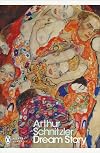
Enigmatic and otherworldly. Maybe it's the translation, but Schnitzler writes with a wonderful restraint and an eye only for relevant detail. The novella is just about the perfect length, giving you enough to feel satisfied but not enough for it to suffer from its limited plotting. Schnitzler was an artist. This is everything I want from a novella, nothing more, nothing less, and it's everything weird fiction writers now wish they could do. He just makes it seem effortless.
“A game of gallantry, seduction, resistance and fulfilment” with “a whiff of freedom, danger, and adventure”.
That’s the intention, anyway.
Many editions have one of Klimt’s golden paintings on the cover: a mystical, sexual enticement that seems to fit the dreamy, steamy story. At first. But recreate those pictures with real people, as above, and they become disturbing in a way that is far more appropriate to the full dark arc of the story.
This novella takes place over barely 48 show more hours. It opens with an idyllic family scene and fond reference to the frisson of flirting at a masked ball the night before. But masks rarely symbolise anything benign, especially not black masks...
Fidelity, Temptation, and Truth
If we promise and expect fidelity, we’re usually thinking of sexual exclusivity, but the word also means truth, in the sense of a full and accurate recreation or reportage.
• Where does honest confession of sexual infidelity - real or imagined - fit?
• Is relishing the fantasy of betrayal as bad as committing it in the flesh, as the Bible says?
• Is seeking temptation, but not submitting to it, dishonourable, dangerous, or brave?
• Is true love unconditional, or is that an impossibility?
Love of one’s child would probably survive their deliberate harm of one’s partner, but would the converse be true?
• What if both partners get a thrill from an admission of infidelity?
• What if that flower of arousal then ripens into the toxic fruit of jealousy?
Truth… and Dare?
“Neither the reality of a single night nor even of a person’s entire life can be equated with the full truth about his innermost being.”
Deep, honest, and frequent communication is oft cited as the key to a happy long-term relationship, including sharing (though not necessarily carrying out) fantasies.
“With self-tormenting anxiety and sordid curiosity, each sought to coax admissions from the other.”
Such truths can be exciting and arousing, but are risky too. As Algy says in Wilde’s The Importance of Being Earnest (see my review HERE),
“The truth is rarely pure, and never simple”.
Fridolin is unexpectedly disoriented by Albertine’s fairly innocuous fantasy, despite his encouraging her to share it. He embarks on a night of costumes, passwords, clandestine encounters, secret societies, rituals, dire warnings, confusion, revenge, and redemption. When he returns, he finds Albertine laughing in a dream, and when she awakes, he implores her to describe the dream. Just a dream. But such a dream. It changes everything, and what has been said cannot be unsaid.
Fridolin is unmoored and rudderless, as he sets sail on unfamiliar, choppy waters, for another voyage of strange encounters and enquiries, destination unknown.
Dreams may not be “real”, but their effects can be.
The Reality of Dreams
“No dream… is altogether a dream.”
The pages are suffused with the vocabulary of doubt about reality and free will: melancholy enchantment; secrets; magically infused illusions; masks; dreams; brooding menace; intoxication; mysterious people, events, and places; soporific atmospheres; being enveloped by a sultry fragrance, and surrendering to a swelling melody, as if under compulsion. The dark, disorienting, surreal, sexualised mood reminded me of scenes from Kafka.
“Everything was becoming increasingly unreal… His very identity”.
This confusion is not so strange. Boundaries between dreams and reality can be uncomfortably hard to discern. When my mother-in-law recently came round from a week of heavy post-op sedation, she recounted bizarre events as real. A fortnight later, she began to realise they were drug-induced dreams, even though they still felt too real to be dismissed as such. And when reading this, I had a couple of nights of vivid and memorable dreams – to the extent that during one dream, I remembered the dream from the previous night, and wondered if I was dreaming that imagined world again.
The veil is thin; we are easily confused. How much licence does that give us to explore and experiment, in mind - and maybe body?
Fridolin’s adventures appear to be real, in vengeful response to Albertine’s imagined and dreamed exploits. But readers cannot be certain, and I’m not sure the protagonists are either. (Fridolin, a doctor, questions whether he is hallucinating, and later plans to recount what he thinks are real events as if they were dreams, but neither point is definitive.)
That is the intoxicating essence of the story.
Quotes
• Real people “had all withdrawn into the realm of ghosts”.
• “Those trivial encounters became magically and painfully interfused with the treacherous illusion of missed opportunities.”
• “In every woman with whom I thought I was in love, it was always you that I was searching for.”
• “He quickened his pace, as if to escape all forms of responsibility and temptation.”
• “Her blood-red mouth glistened beneath her black lace mask.”
• “The torment of unsatisfied longing for the mysterious woman’s body, whose fragrance still caressed him.”
• “Fridolin’s eyes roved hungrily from sensuous to slender figures, from budding figures to figures in glorious full bloom; and the fact that each of these naked beauties still remained a mystery… transformed his indescribably strong urge to watch into an almost intolerable torment of desire.”
• “Fridolin was intoxicated, and not merely by her presence, her fragrant body and burning red lips, nor by the atmosphere of the room and the aura of lascivious secrets that surrounded him; he was at once thirsty and delirious.”
• “The breeze… even warmer and more springlike, seemed to bring with it a mild fragrance from the distant wakening woods.”
• “The treacherous warm air, pregnant with dangers.”
• “A triumphant sunbeam coming in between the curtains”. The culmination of many allusions to thawing, spring, and liberation.
Notes
• This story was filmed by Stanley Kubrik as Eyes Wide Shut, starring Tom Cruise and Nicole Kidman. I’ve reviewed and compared the film, via the screenplay HERE, but in summary, the plot is very similar, but the atmosphere is very different.
• A year before Eyes Wide Shut was released, Kidman starred in the premiere of David Hare’s play, The Blue Room, which is based on Schnitzler’s La Ronde. Daily Telegraph theatre critic, Charles Spencer, coined the phrase “theatrical Viagra” for the production.
• It seems appropriate that I reread this around the time Oxford Dictionaries announced “post-truth” as their Word of the Year 2016, albeit from its use in global-political, rather than inter-personal contexts.
• I read this in 2008 and in November 2016. This review replaces my two-sentence one from 2008.
• The image at the top is Inge Prader’s recreation of Klimt’s The Beethoven Frieze. See:
http://flavorwire.com/543239/gustav-klimts-iconic-paintings-recreated-by-real-mo.... show less
That’s the intention, anyway.
Many editions have one of Klimt’s golden paintings on the cover: a mystical, sexual enticement that seems to fit the dreamy, steamy story. At first. But recreate those pictures with real people, as above, and they become disturbing in a way that is far more appropriate to the full dark arc of the story.
This novella takes place over barely 48 show more hours. It opens with an idyllic family scene and fond reference to the frisson of flirting at a masked ball the night before. But masks rarely symbolise anything benign, especially not black masks...
Fidelity, Temptation, and Truth
If we promise and expect fidelity, we’re usually thinking of sexual exclusivity, but the word also means truth, in the sense of a full and accurate recreation or reportage.
• Where does honest confession of sexual infidelity - real or imagined - fit?
• Is relishing the fantasy of betrayal as bad as committing it in the flesh, as the Bible says?
• Is seeking temptation, but not submitting to it, dishonourable, dangerous, or brave?
• Is true love unconditional, or is that an impossibility?
Love of one’s child would probably survive their deliberate harm of one’s partner, but would the converse be true?
• What if both partners get a thrill from an admission of infidelity?
• What if that flower of arousal then ripens into the toxic fruit of jealousy?
Truth… and Dare?
“Neither the reality of a single night nor even of a person’s entire life can be equated with the full truth about his innermost being.”
Deep, honest, and frequent communication is oft cited as the key to a happy long-term relationship, including sharing (though not necessarily carrying out) fantasies.
“With self-tormenting anxiety and sordid curiosity, each sought to coax admissions from the other.”
Such truths can be exciting and arousing, but are risky too. As Algy says in Wilde’s The Importance of Being Earnest (see my review HERE),
“The truth is rarely pure, and never simple”.
Fridolin is unexpectedly disoriented by Albertine’s fairly innocuous fantasy, despite his encouraging her to share it. He embarks on a night of costumes, passwords, clandestine encounters, secret societies, rituals, dire warnings, confusion, revenge, and redemption. When he returns, he finds Albertine laughing in a dream, and when she awakes, he implores her to describe the dream. Just a dream. But such a dream. It changes everything, and what has been said cannot be unsaid.
Fridolin is unmoored and rudderless, as he sets sail on unfamiliar, choppy waters, for another voyage of strange encounters and enquiries, destination unknown.
Dreams may not be “real”, but their effects can be.
The Reality of Dreams
“No dream… is altogether a dream.”
The pages are suffused with the vocabulary of doubt about reality and free will: melancholy enchantment; secrets; magically infused illusions; masks; dreams; brooding menace; intoxication; mysterious people, events, and places; soporific atmospheres; being enveloped by a sultry fragrance, and surrendering to a swelling melody, as if under compulsion. The dark, disorienting, surreal, sexualised mood reminded me of scenes from Kafka.
“Everything was becoming increasingly unreal… His very identity”.
This confusion is not so strange. Boundaries between dreams and reality can be uncomfortably hard to discern. When my mother-in-law recently came round from a week of heavy post-op sedation, she recounted bizarre events as real. A fortnight later, she began to realise they were drug-induced dreams, even though they still felt too real to be dismissed as such. And when reading this, I had a couple of nights of vivid and memorable dreams – to the extent that during one dream, I remembered the dream from the previous night, and wondered if I was dreaming that imagined world again.
The veil is thin; we are easily confused. How much licence does that give us to explore and experiment, in mind - and maybe body?
Fridolin’s adventures appear to be real, in vengeful response to Albertine’s imagined and dreamed exploits. But readers cannot be certain, and I’m not sure the protagonists are either. (Fridolin, a doctor, questions whether he is hallucinating, and later plans to recount what he thinks are real events as if they were dreams, but neither point is definitive.)
That is the intoxicating essence of the story.
Quotes
• Real people “had all withdrawn into the realm of ghosts”.
• “Those trivial encounters became magically and painfully interfused with the treacherous illusion of missed opportunities.”
• “In every woman with whom I thought I was in love, it was always you that I was searching for.”
• “He quickened his pace, as if to escape all forms of responsibility and temptation.”
• “Her blood-red mouth glistened beneath her black lace mask.”
• “The torment of unsatisfied longing for the mysterious woman’s body, whose fragrance still caressed him.”
• “Fridolin’s eyes roved hungrily from sensuous to slender figures, from budding figures to figures in glorious full bloom; and the fact that each of these naked beauties still remained a mystery… transformed his indescribably strong urge to watch into an almost intolerable torment of desire.”
• “Fridolin was intoxicated, and not merely by her presence, her fragrant body and burning red lips, nor by the atmosphere of the room and the aura of lascivious secrets that surrounded him; he was at once thirsty and delirious.”
• “The breeze… even warmer and more springlike, seemed to bring with it a mild fragrance from the distant wakening woods.”
• “The treacherous warm air, pregnant with dangers.”
• “A triumphant sunbeam coming in between the curtains”. The culmination of many allusions to thawing, spring, and liberation.
Notes
• This story was filmed by Stanley Kubrik as Eyes Wide Shut, starring Tom Cruise and Nicole Kidman. I’ve reviewed and compared the film, via the screenplay HERE, but in summary, the plot is very similar, but the atmosphere is very different.
• A year before Eyes Wide Shut was released, Kidman starred in the premiere of David Hare’s play, The Blue Room, which is based on Schnitzler’s La Ronde. Daily Telegraph theatre critic, Charles Spencer, coined the phrase “theatrical Viagra” for the production.
• It seems appropriate that I reread this around the time Oxford Dictionaries announced “post-truth” as their Word of the Year 2016, albeit from its use in global-political, rather than inter-personal contexts.
• I read this in 2008 and in November 2016. This review replaces my two-sentence one from 2008.
• The image at the top is Inge Prader’s recreation of Klimt’s The Beethoven Frieze. See:
http://flavorwire.com/543239/gustav-klimts-iconic-paintings-recreated-by-real-mo.... show less
Lists
Elegant Prose (1)
Favourite Books (1)
1890s (1)
Reading LIst (1)
Short and Sweet (3)
Liste Otto (1)
1920s (2)
Awards


You May Also Like


Associated Authors
Statistics
- Works
- 449
- Also by
- 42
- Members
- 7,592
- Popularity
- #3,213
- Rating
- 3.7
- Reviews
- 107
- ISBNs
- 923
- Languages
- 22
- Favorited
- 21

