
Elias Canetti (1905–1994)
Author of Auto-da-Fe
About the Author
Elias Canetti was born in Rustschuk, Bulgaria on July 25, 1905 into a Sephardic Jewish family. He was educated in Germany, Switzerland, and Austria and received a Ph.D. in chemistry from the University of Vienna in 1929. He wrote novels and plays in German. His works explored the emotions of show more crowds, the psychopathology of power, and the position of the individual at odds with the society around him. His novels include Auto-da- Fé and Masse und Macht. His plays include Hochzeit, Komödie der Eitelkeit, and Die Befristeten. He also published excerpts from his notebooks, a book of character sketches, and an autobiography. He received numerous awards including the Vienna Prize in 1966, the Critics Prize (Germany) in 1967, the Great Austrian State Prize in 1967, the Buchner Prize in 1972, the Sachs Prize in 1975, the Hebbel Prize in 1980, and the Nobel Prize for Literature in 1981. He died on August 14, 1994. (Bowker Author Biography) show less
Image credit: Copyright ÖNB/Wien
Series
Works by Elias Canetti
The Memoirs of Elias Canetti: The Tongue Set Free, The Torch in My Ear, The Play of the Eyes (1997) 203 copies, 1 review
Arrebatos verbales (Obra completa Canetti 9): Dramas, ensayos, discursos y conversaciones (2013) 4 copies
Welt im Kopf 4 copies
Ich erwarte von Ihnen viel: Briefe. Aus dem Nachlass herausgegeben von Sven Hanuschek und Kristian Wachinger (2018) 3 copies
Fritz Wotruba 3 copies
GJUHA E SHPËTUAR 2 copies
Zwiesprache : 1931 - 1976 2 copies
Franz Kafka. 1883-1924. Katalog zu einer Ausst. d. Bundesmin. f. Auswärtige Angelegenheiten, zsgest. v. Heinz Lunzer (1983) — Contributor — 2 copies
Obra completa 2 copies
Hochzeit / Komödie der Eitelkeit / Die Befristeten / Der Ohrenzeuge. Dramen / Fünfzig Charaktere (1995) 2 copies
Rudolf Hartung. Briefe, Autobiographisches und Fotos. Aus dem Nachlaß von Elias Canetti (2011) 1 copy
Processi 1 copy
ラクダとの出会い 1 copy
PISHTARI NË VESHIN TIM 1 copy
VETËDIJA E FJALËVE 1 copy
uma luz no meu ouvido 1 copy
As Vozes de Marraqueque 1 copy
As Vozes de Marraquexe 1 copy
A semjáték 1 copy
Gespräche 1 copy
Die Berge 1 copy
Een krankzinnigengesticht 1 copy
Vadonis. Vara. Vārds 1 copy
Associated Works
Tagged
Common Knowledge
- Canonical name
- Canetti, Elias
- Legal name
- Canetti, Elias
- Birthdate
- 1905-07-05
- Date of death
- 1994-08-14
- Gender
- male
- Education
- University of Vienna (Ph.D | 1929)
- Occupations
- novelist
playwright
essayist
sociologist - Awards and honors
- Nobel Prize (Literature ∙ 1981)
Foreign Honorary Member, American Academy of Arts and Letters (1984)
Großes Verdienstkreuz, Verdienstorden der Bundesrepublik Deutschland (1983)
Franz Kafka Prize (1981)
Johann-Peter-Hebel-Preis (1980)
Pour le Mérite (1979) (show all 11)
Gottfried-Keller-Preis (1977)
Nelly Sachs Prize (1975)
Georg Büchner Preis (1972)
Großer Literaturpreis der Bayerischen Akademie der Schönen Künst (1969)
Literaturpreis der Stadt Wien (1966) - Relationships
- Canetti, Veza (wife)
Canetti, Jacques (brother) - Short biography
- Elias Canetti was born in Bulgaria to a Jewish family. The family moved to Britain in 1911; to Vienna the following year; to Zürich in 1916; and then (until 1924) to Frankfurt, where Canetti graduated from high school. He learned to speak Ladino (his native language), Bulgarian, English, German, and French. In 1938, a few days after Kristallnacht, Canetti and his wife Veza escaped to London, where they received British citizenship in 1952. Veza died in 1963, and for his last 20 years, Canetti mostly lived in Zürich. Nearly all his writings were in German. Canetti won the Nobel Prize in Literature in 1981.
- Nationality
- UK (naturalized 1952)
Bulgaria (birth) - Birthplace
- Ruse, Bulgaria
Roetsjoek/Rustschuk, Bulgaria - Places of residence
- Vienna, Austria
Hampstead, London, England, UK
Manchester, England, UK
Berlin, Germany
Zürich, Switzerland - Place of death
- Zürich, Switzerland
- Burial location
- Fluntern Cemetery, Zurich, Switzerland
- Map Location
- UK
Members
Reviews

Canetti originally planned five volumes of memoirs, as you might have picked up from the allusions to three of the five senses in the titles of the three he completed. But somewhere after the publication of Das Augenspiel in 1985 he changed track, and when he took up the story again with his move to England before WWII, he abandoned the narrative technique of the earlier books altogether, replacing it with a series of sketches (inspired by Aubrey’s Brief Lives) of people who were important show more to him during his time in England, so that his own story almost disappears from the book altogether, apart from glimpses reflected in the lives of his friends. We jump around in time and space — the thirties, forties and fifties; Hampstead, Chesham Bois (where he and Veza lived during the worst of the Blitz), Scotland, and elsewhere. He worked on the book during the last few years of his life, but didn’t finish it (this seems to have been at least partly intentional — he realised he was saying things about living people that couldn’t really be published as they were). Kristian Wachinger compiled this posthumous edition, published in 2003, from two incomplete shorthand manuscripts, a half-finished typescript and some diary-notes, so there is quite some uncertainty about the final form Canetti might have intended.
It’s a frustrating book, in many ways, but there are also some delightful glimpses of interesting people of the time. Canetti was close to the critic William Empson and poets like Kathleen Raine and Dylan Thomas (but not T S Eliot, whom he regarded as a charlatan and gives quite the hatchet-job here); his self-appointed Viennese pupil, Friedl Benedikt (who wrote in English as Anna Sebastian) flits in and out of the story — she seems to have introduced Canetti to a lot of literary London. The historian C V (Veronica) Wedgwood was one of the first British fans of his novel Die Blendung; she worked hard to get a British publisher interested and eventually translated it herself (as Auto-da-fé). Canetti adored Bertrand Russell, whom he met a couple of times, and leaves a very charming sketch of him. The orientalist Arthur Waley pops up as well — he could have been the model for the protagonist of Die Blendung, if Canetti had only met him a little earlier.
Slightly incongruously, we get Gavin Maxwell (Ring of bright water) and his brother Aymer. Although it’s hard to see a priori what they might have had in common (the Maxwells were outdoorsy types, and both gay), they became close friends of Canetti, and Sir Aymer, who inherited a big Scottish estate, was able to help the Canettis out financially and support the completion of Masse und Macht.
The trickiest bit of the book is Canetti’s account of Iris Murdoch, with whom he had a sexual relationship that lasted several years. They were both married to people they depended on absolutely, and both given to sleeping around, so they probably deserved each other, but Canetti is very rude about Murdoch after the fact — he belittles both her philosophy and her fiction, characterising them as cleverly-recycled Oxford chatter, mocks her taste in clothes, and generally seems to be doing whatever he can to hurt her and those who care about her. In his afterword, Jeremy Adler tries to argue that this is just Canetti deliberately exposing his own insecurity, but it comes over as simply nasty. When he’s rude about Eliot, we don’t mind, because he is clearly only talking about Eliot’s work and public persona, but with Murdoch it’s personal and very uncomfortable to read.
There are some interesting things here about England and the English character, as current around Hampstead some eighty years ago, but mostly it’s a book that you will read for the names that are dropped, and if you do that, I suppose you have to be ready for both the good and the bad… show less
It’s a frustrating book, in many ways, but there are also some delightful glimpses of interesting people of the time. Canetti was close to the critic William Empson and poets like Kathleen Raine and Dylan Thomas (but not T S Eliot, whom he regarded as a charlatan and gives quite the hatchet-job here); his self-appointed Viennese pupil, Friedl Benedikt (who wrote in English as Anna Sebastian) flits in and out of the story — she seems to have introduced Canetti to a lot of literary London. The historian C V (Veronica) Wedgwood was one of the first British fans of his novel Die Blendung; she worked hard to get a British publisher interested and eventually translated it herself (as Auto-da-fé). Canetti adored Bertrand Russell, whom he met a couple of times, and leaves a very charming sketch of him. The orientalist Arthur Waley pops up as well — he could have been the model for the protagonist of Die Blendung, if Canetti had only met him a little earlier.
Slightly incongruously, we get Gavin Maxwell (Ring of bright water) and his brother Aymer. Although it’s hard to see a priori what they might have had in common (the Maxwells were outdoorsy types, and both gay), they became close friends of Canetti, and Sir Aymer, who inherited a big Scottish estate, was able to help the Canettis out financially and support the completion of Masse und Macht.
The trickiest bit of the book is Canetti’s account of Iris Murdoch, with whom he had a sexual relationship that lasted several years. They were both married to people they depended on absolutely, and both given to sleeping around, so they probably deserved each other, but Canetti is very rude about Murdoch after the fact — he belittles both her philosophy and her fiction, characterising them as cleverly-recycled Oxford chatter, mocks her taste in clothes, and generally seems to be doing whatever he can to hurt her and those who care about her. In his afterword, Jeremy Adler tries to argue that this is just Canetti deliberately exposing his own insecurity, but it comes over as simply nasty. When he’s rude about Eliot, we don’t mind, because he is clearly only talking about Eliot’s work and public persona, but with Murdoch it’s personal and very uncomfortable to read.
There are some interesting things here about England and the English character, as current around Hampstead some eighty years ago, but mostly it’s a book that you will read for the names that are dropped, and if you do that, I suppose you have to be ready for both the good and the bad… show less

The second part of Canetti’s memoirs opens in 1921 with him as a sixteen-year-old who has just been transplanted, on his mother’s whim, from the school and friends he loved in Zürich to an anonymous boarding-house in Frankfurt. We follow him through his last years in school and his time as a chemistry(!) student in Vienna up to the moment in 1931 when the structure of his great novel Die Blendung/Auto-da-fé became clear in his mind.
As the title implies, the big intellectual figure show more dominating Canetti’s Vienna years was the satirist Karl Kraus, although it’s clear by the end of the book that Canetti was starting to break with his hegemony. In his personal life, there is a bitter duel being fought over him between his mother and his future wife, Veza Taubner-Calderon. But there’s also a more picaresque female figure playing a prominent part in the latter part of the book, the Hungarian poet Ibby Gordon, who introduced Canetti to Brecht, Georg Grosz, Isaac Babel, and a host of other big names in Berlin after she moved there from Vienna in 1927. Canetti spends rather too much energy on persuading us that he wasn’t in love with Ibby, all the while talking about her in a way that people normally only use for talking about those they are in love with…
The great turning point at the centre of the book is the moment when he finally asserts himself as an independent adult and moves out of the apartment he’s been sharing with his mother and brothers — in the most Austrian way possible, the symbolic moment of rupture comes when he goes off with a friend for a summer climbing holiday. But the book has another, more literary and political turning-point too: the Vienna workers’ rising of 15 July 1927, which culminated in the burning of the Palace of Justice and the shooting of 90 workers by the police. The young Canetti was in the middle of all the action, and it turned into a key scene of Die Blendung as well as being an important part of the inspiration for Masse und Macht.
An engaging and often witty and chatty stream of reminiscence, which also turns from time to time into serious reflection about the way we see the world as we grow up into it, the tension between the family pressure to find a useful career and make money and the individual desire to explore deep ideas and find artistic expression. There’s oddly little in the way of direct reaction to the political and economic events of the time, except for things he experienced at first hand — perhaps Canetti felt that a memoir should keep the focus on individual development, or perhaps he just thought that his understanding of wider politics at the time was simply too naive to be worth discussing? show less
As the title implies, the big intellectual figure show more dominating Canetti’s Vienna years was the satirist Karl Kraus, although it’s clear by the end of the book that Canetti was starting to break with his hegemony. In his personal life, there is a bitter duel being fought over him between his mother and his future wife, Veza Taubner-Calderon. But there’s also a more picaresque female figure playing a prominent part in the latter part of the book, the Hungarian poet Ibby Gordon, who introduced Canetti to Brecht, Georg Grosz, Isaac Babel, and a host of other big names in Berlin after she moved there from Vienna in 1927. Canetti spends rather too much energy on persuading us that he wasn’t in love with Ibby, all the while talking about her in a way that people normally only use for talking about those they are in love with…
The great turning point at the centre of the book is the moment when he finally asserts himself as an independent adult and moves out of the apartment he’s been sharing with his mother and brothers — in the most Austrian way possible, the symbolic moment of rupture comes when he goes off with a friend for a summer climbing holiday. But the book has another, more literary and political turning-point too: the Vienna workers’ rising of 15 July 1927, which culminated in the burning of the Palace of Justice and the shooting of 90 workers by the police. The young Canetti was in the middle of all the action, and it turned into a key scene of Die Blendung as well as being an important part of the inspiration for Masse und Macht.
An engaging and often witty and chatty stream of reminiscence, which also turns from time to time into serious reflection about the way we see the world as we grow up into it, the tension between the family pressure to find a useful career and make money and the individual desire to explore deep ideas and find artistic expression. There’s oddly little in the way of direct reaction to the political and economic events of the time, except for things he experienced at first hand — perhaps Canetti felt that a memoir should keep the focus on individual development, or perhaps he just thought that his understanding of wider politics at the time was simply too naive to be worth discussing? show less

The first part of Canetti’s memoirs takes him up to the age of sixteen, in 1921, when he left Zürich. We read about his early childhood in Ruse (Bulgaria) and Manchester, and about the wartime years as a schoolboy in Vienna and Zürich. He has a wonderfully clear-sighted way of digging out his childhood memories, but sometimes seems to forget that he is writing about a small child who deserves a little bit of leeway when we are judging his moral attitudes and literary preferences.
At the show more heart of the story is the young Canetti’s relationship with his mother, initially often absent or at least eclipsed by servants and by his father, but at the centre of his life after the father’s early death. As eldest son he is projected into the “little father“ role at the age of six, feeling a responsibility to look after his mother but also jealously asserting a privileged relationship with her that shuts out potential new men in her life. (She gets her own back by imposing a taboo on any thoughts of erotic love on his part, which he claims he respected throughout his teens.)
This is a writer’s memoir as well, of course, so it’s also the chronicle of his discovery of writers and ideas, turning during the Zürich years into a rather detailed catalogue of his experiences of the men who taught him at the Cantonal Grammar School. And even more interesting, it’s a chronicle of his complicated relationship with languages: Spanish (Ladino) was the normal language within his Sephardic family, but as a small child in Ruse he was also speaking Bulgarian with the servants. Then, when he was six, the family moved to Manchester and there was an English nursery-maid and an English primary school, but within two years he was going to school in Vienna and speaking German. That lasted three years, and then they were in Zürich and he had to deal with an entirely different (spoken) version of German.
A wonderful, sharp, critical account of bourgeois Mitteleuropa a hundred years go from a very particular perspective, fascinating both in itself and for what it tells us about Canetti’s development and his way of seeing the world. show less
At the show more heart of the story is the young Canetti’s relationship with his mother, initially often absent or at least eclipsed by servants and by his father, but at the centre of his life after the father’s early death. As eldest son he is projected into the “little father“ role at the age of six, feeling a responsibility to look after his mother but also jealously asserting a privileged relationship with her that shuts out potential new men in her life. (She gets her own back by imposing a taboo on any thoughts of erotic love on his part, which he claims he respected throughout his teens.)
This is a writer’s memoir as well, of course, so it’s also the chronicle of his discovery of writers and ideas, turning during the Zürich years into a rather detailed catalogue of his experiences of the men who taught him at the Cantonal Grammar School. And even more interesting, it’s a chronicle of his complicated relationship with languages: Spanish (Ladino) was the normal language within his Sephardic family, but as a small child in Ruse he was also speaking Bulgarian with the servants. Then, when he was six, the family moved to Manchester and there was an English nursery-maid and an English primary school, but within two years he was going to school in Vienna and speaking German. That lasted three years, and then they were in Zürich and he had to deal with an entirely different (spoken) version of German.
A wonderful, sharp, critical account of bourgeois Mitteleuropa a hundred years go from a very particular perspective, fascinating both in itself and for what it tells us about Canetti’s development and his way of seeing the world. show less
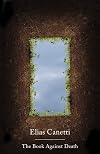
The Nobel Prize winner Elias Canetti all his life declared himself a “mortal enemy” of death―and here, in English at last, is his landmark book on the subject
The Book Against Death is the work of a lifetime: a collection of Elias Canetti’s powerful, disarming, and often bleakly comic observations, diatribes, musings, and commentaries on and against death. Evoking despair, melancholy, and fury, Canetti examines the inevitable demise of all beings―from the ant, the fish, and the worm show more to an executioner, a court painter, and a Greek god―while fiercely protesting the mass deaths incurred during war and the willingness of the despot to wield death as power. Interspersed with material from philosophers and writers such as Goethe, Walter Benjamin, and Robert Walser, The Book Against Death is ultimately a moving affirmation of the value of life itself.
Canetti famously refused to die before he’d read all his obituaries and corrected them.
“I accept no death.”―Elias Canetti (1905–1994) show less
The Book Against Death is the work of a lifetime: a collection of Elias Canetti’s powerful, disarming, and often bleakly comic observations, diatribes, musings, and commentaries on and against death. Evoking despair, melancholy, and fury, Canetti examines the inevitable demise of all beings―from the ant, the fish, and the worm show more to an executioner, a court painter, and a Greek god―while fiercely protesting the mass deaths incurred during war and the willingness of the despot to wield death as power. Interspersed with material from philosophers and writers such as Goethe, Walter Benjamin, and Robert Walser, The Book Against Death is ultimately a moving affirmation of the value of life itself.
Canetti famously refused to die before he’d read all his obituaries and corrected them.
“I accept no death.”―Elias Canetti (1905–1994) show less
Lists
Awards


You May Also Like


Associated Authors
Statistics
- Works
- 98
- Also by
- 8
- Members
- 10,462
- Popularity
- #2,275
- Rating
- 3.9
- Reviews
- 101
- ISBNs
- 667
- Languages
- 28
- Favorited
- 47
