
Peter Handke
Author of The Goalie's Anxiety at the Penalty Kick
About the Author
Peter Handke was born in Griffen, Austria on December 6, 1942. He studied law at Graz University from 1961 to 1965. He is a playwright, novelist, poet, and essayist. His plays include Offending the Audience, Kaspar, and The Ride across Lake Constance. His novels include The Goalie's Anxiety at the show more Penalty Kick, The Left-Handed Woman, and A Sorrow beyond Dreams. He was awarded the Buchner Prize in 1973 and refused to accept the Kafka Prize in 1979. (Bowker Author Biography) Peter Handke was born in Griffen, Austria, in 1942. His many works include Absence (FSG, 1990), The Jukebox and Other Essays on Storytelling (FSG, 1994), and, most recently, My Year in the No-Man's-Bay (FSG, 1998). (Publisher Provided) show less
Image credit: Peter Handke, in 2019
Series
Works by Peter Handke
Drei Versuche. Versuch über die Müdigkeit - Versuch über die Jukebox - Versuch über den geglückten Tag. (1992) 28 copies, 1 review
Preguntando entre lágrimas : apuntes sobre Yugoslavia bajo las bombas y en torno al Tribunal de La Haya (2000) 27 copies, 1 review
The Second Sword: A Tale from the Merry Month of May, and My Day in the Other Land: A Tale of Demons: Two Novellas (2024) 13 copies
Peter Handke Plays: "Offending the Audience", "My Foot My Tutor", "Self Accusation", "Kaspar", "Ride Across Lake Constan (1997) 7 copies
Les innocents, moi et l'inconnue au bord de la route départementale: un spectacle en quatre saisons (2015) 6 copies
Gaspar. El pupilo quiere ser tutor. Insultos al público (Alianza Tres (At)) (Spanish Edition) (1982) 4 copies
Franz Kafka. 1883-1924. Katalog zu einer Ausst. d. Bundesmin. f. Auswärtige Angelegenheiten, zsgest. v. Heinz Lunzer (1983) — Contributor — 2 copies
Óskabarn ógæfunnar 2 copies
Gesamtwerk I: 1966-1995 1 copy
Nueve Poemas 1 copy
Psovanje publike 1 copy
Ogledi 1 copy
Kukavice iz velike hoće 1 copy
Istorija iz pripovesti 1 copy
Gesamtwerk II: 1996-2025 1 copy
The Hour We Knew Nothing Of Each Other (Die Stunde,da Wir Nichts Voneinander Wubten) (Chinese Edition) (2016) 1 copy
Selbstbezichtigung 1 copy
Yineleme 1 copy
Drugi mač - Majska povest 1 copy
Η μεγάλη πτώση 1 copy
Bir Kış Yolculuğu 1 copy
Das Mündel will Vormund sein 1 copy
O CHINÊS DA DOR 1 copy
Forsøg over svampenarren 1 copy
Teatro Livro 1 1 copy
Deutsche Gedichte 1 copy
Die drei Versuche 1 copy
infelicità senza desideri 1 copy
Teatro 1 copy
Juče na putu 1 copy
Die linksgandige Frau 1 copy
Associated Works
Antaeus No. 64/65, Spring/Autumn 1990 - Twentieth Anniversary Issue (1990) — Contributor — 14 copies
German Radio Plays: Jurgen Becker, Gunter Eich, Peter Handke, and others (German Library) (1991) — Contributor — 12 copies
Gedichte: Ausgewählt von Peter Handke (Bibliothek Suhrkamp) (2011) — Editor, some editions — 4 copies
Spectaculum Band 13: Beckett, Bond, Fleißer, Hacks, Handke, Horváth, Michelsen (1951) — Contributor — 4 copies
The Paris Review 75 1979 Spring — Contributor — 2 copies
Fiction, Volume 1, Number 1 — Contributor — 1 copy
Fiction, Volume 6, Number 1 — Contributor — 1 copy
Tagged
Common Knowledge
- Birthdate
- 1942-12-06
- Gender
- male
- Education
- Roman Catholic boys' boarding school (Tanzenberg, Carinthia)
High school (Klagenfurt)
University of Graz (Law) - Occupations
- novelist
playwright
poet
essayist - Organizations
- Grazer Gruppe (the Graz Authors' Assembly)
Verlag der Autoren (co-founder)
Grazer Autorenversammlung (member)
Gruppe 47 - Awards and honors
- Georg Büchner Preis (1973)
Heinrich Heine Preis ( [2006])
Franz Kafka Prize (2009)
Vilenica International Literary Prize (1987)
Nobel Prize for Literature (2019) - Relationships
- Wenders, Wim (collaborator)
Goldschmidt, Georges-Arthur (friend, translator) - Nationality
- Austria
- Birthplace
- Griffen, Kärnten, Austria
- Places of residence
- East Berlin, Germany
Klagenfurt, Carinthia, Austria
Düsseldorf, Germany
Kronberg, Germany
Paris, France
USA (show all 8)
Salzburg, Austria
Chaville, France.
Members
Discussions
Librarything and Peter Handke in Book talk (October 2019)
Reviews

A Sorrow Beyond Dreams is a memoir that Peter Handke wrote following his mother's suicide in 1971. It is a brief gut-wrenching examination of a life that spanned the rise of Nazi Germany, the 2nd World War, and the years of national impoverishment, confusion and shame that followed. Handke's mother was an invisible woman. Her sporadic flirtations with self-assertion ended when necessity or illness dragged her back down to earth. She married a man she grew to loathe and worked her fingers to show more the bone. Readers of his early works know that Handke's style is normally restrained to the point of minimalism. In this instance he exerts such control over the emotional content of the story he is telling that, like some potion or elixir, its bitterness is concentrated and overpowering. This is an account of a life so desolate, so utterly lacking in hope, it seems narrated in shades of grey. One wonders how much is fact, how much fiction, and how much speculation. It is a difficult but necessary book-- more easily admired than enjoyed--that provides a glimpse into the life of one person who endured the austerity and bleakness of post-war Germany, but in the end succumbed to physical decline, personal despair and an overwhelming sense of worthlessness. show less

Peter Handke's 1990 novel Absence is perhaps the most dreamlike of his shorter works, a brazenly experimental fiction in which he seems content to let his characters loose and see where fate takes them. The setting is Europe at some unspecified time, though certainly post-World War Two. The four characters (an old man who scribbles cryptic symbols in a notebook, a very young and mostly silent soldier, a man of middle age who is a gambler, and a young woman who may or may not be emotionally show more unbalanced) set out from four separate places in an unnamed city and converge on a train compartment. Here they seem to recognize that some inexplicable fellowship exists among them, and when the train stops in the countryside they disembark as a group. Their subsequent wanderings take them through a variety of rural settings. They picnic on the edge of a lake, they endure a heavy storm, they take refuge in a cave. Perhaps the gambler is leading them somewhere. Or maybe it's the old man. Along the way, each delivers one or two lengthy soliloquies touching upon the path he or she has taken through life, and their impressions of themselves and the people and situations they have encountered along the way. Initially, the narrator is merely an observer recording what is happening, but about midway through the book, the narrative perspective shifts into the first person and the narrator begins to speak as if he is one of the group. There is no attempt at explanation, and indeed the essential nature of the story does not change. In the end, the reader feels that these lives have unfolded in the only manner possible. The novel is elegiac rather than dramatic, and a literal description of the action would, to be frank, make little sense. But strangely enough, at the end we relinquish these characters with reluctance, though we have known them for a very short time. As with his earlier fictions, in Absence Handke again pushes against the boundaries of prose narrative, performing a high-wire act with deceptive ease and grace. show less
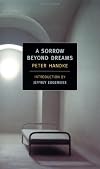
“She was afraid of losing her mind. Quickly, for fear it would be too late, she wrote a few letters of farewell.
Her letters were full of urgency, as if she tried to etch herself into the paper” (54)
This is a moving novella about the author’s loss of his mother and the inadequacy of language to capture what is essential and meaningful about her in life. As the author, Handke attempts to remember and reflect on his mother through memories, fragments of experiences, and a jumble of sense show more data that contribute only partially sketched recollections.
Language and narrative are what Handke has at his disposal as tools of attesting and analyzing and through that remembering and elevating, but he reflects that language is inadequate to convey a person because it is a medium that makes objects out of subjects. To capture something or someone and put it into language isolates the subject, removes it from time, flattens a life into points and moments, denies it magnitude, makes it mundane by filtering it through the relatability of language.
“At times it worked and everything personal was swallowed up by the typical” (27)
The challenge Handke faces is to portray his mother as distinctly as he experienced her, to say something true and precise about her. But in writing about her, to himself and other readers, Handke must choose images and memories that compress the manifold of his experience, to make it relatable. This move makes his mother, her death, and his reaction, objects of analysis and no longer a subjective experiences. Even his own grief becomes an object in language and for the reader.
“As usual when engaged in literary work, I am alienated from myself and transformed into an object, a remembering and formulating machine” (5)
As Handke notes at the beginning of the narrative: “I need the feeling that what I’m going through is incomprehensible and incommunicable; only then does the horror seem meaningful and real“ (4). And perhaps he achieves something of this as the narrative never really comes fully together. By the end it is a scattershot of clauses and phrases that may reflect things slipping away, fragments unmoored from the context of a lived history. And this fragmentation captures palpable sorrow of whole memories shredding and dissolving.
A powerful piece of writing and an intellectually interesting reflection on the shortcomings of language. show less
Her letters were full of urgency, as if she tried to etch herself into the paper” (54)
This is a moving novella about the author’s loss of his mother and the inadequacy of language to capture what is essential and meaningful about her in life. As the author, Handke attempts to remember and reflect on his mother through memories, fragments of experiences, and a jumble of sense show more data that contribute only partially sketched recollections.
Language and narrative are what Handke has at his disposal as tools of attesting and analyzing and through that remembering and elevating, but he reflects that language is inadequate to convey a person because it is a medium that makes objects out of subjects. To capture something or someone and put it into language isolates the subject, removes it from time, flattens a life into points and moments, denies it magnitude, makes it mundane by filtering it through the relatability of language.
“At times it worked and everything personal was swallowed up by the typical” (27)
The challenge Handke faces is to portray his mother as distinctly as he experienced her, to say something true and precise about her. But in writing about her, to himself and other readers, Handke must choose images and memories that compress the manifold of his experience, to make it relatable. This move makes his mother, her death, and his reaction, objects of analysis and no longer a subjective experiences. Even his own grief becomes an object in language and for the reader.
“As usual when engaged in literary work, I am alienated from myself and transformed into an object, a remembering and formulating machine” (5)
As Handke notes at the beginning of the narrative: “I need the feeling that what I’m going through is incomprehensible and incommunicable; only then does the horror seem meaningful and real“ (4). And perhaps he achieves something of this as the narrative never really comes fully together. By the end it is a scattershot of clauses and phrases that may reflect things slipping away, fragments unmoored from the context of a lived history. And this fragmentation captures palpable sorrow of whole memories shredding and dissolving.
A powerful piece of writing and an intellectually interesting reflection on the shortcomings of language. show less

Peter Handke is capable of producing some of the most delicate and lasting images in his prose. Late in the novel, narrator Filip Kobal, and later in life, reimagines his walks up the hills of the Karst region and his encounters with the winds. The wind, he says, takes him by the armpits and raises him up making his climb easier, whether as a headwind or a tailwind. A moment earlier, he says that this wind which comes from the sea only delivers with it an imaginary hint of its saltiness. But show more there on the summer slopes, it raises the aroma of all the herbs and plants growing there; these he says are real.
Real and imagined form a tension in this story. I confess, I have read this now three times. And each time, I read with a focus on something new. It is so richly detailed, so intricately constructed, that I can only concentrate on a few pages, or one dimension, at a time before surrendering to a kind of exhaustion from the effort. That has happened each time. I first read it decades ago. I saw it then as a young man’s adventure to search for his brother, a kind of familial kinship story. But I missed some of the significant details of who his family are, where they come from, and their sense of not fitting neatly into the southern Austrian alpine village where the narrator grew up near the border of Slovenia (also referred to as Yugoslavia, depending on the line of enquiry.)
The Kobals it seems had been in southern Austria since a rebellious ancestor Gregor Kobal led a peasant revolt in 1713, failed, and was executed along with his colleagues, resulting in the Kobals fleeing to what is now Austria. We learn this early, at the point at which Filip steps (as a very young man) across the border from Austria into Slovenia (this is in Iron Curtain days) in search of his brother who made the same crossing twenty-odd years earlier at a similar age. (Filip has two siblings a generation older than him) This parallel sets up that same paradigm of real and imagined. The brother left before WW2, served in that war, disappeared, and Filip can only recreate a relationship through the documentary traces his brother left behind. There are three of these documents – an apple orchard where the brother practiced his agricultural college skills located in a subsided little valley where an underground watercourse caused the land to collapsed and never visible when looking across the landscape. It remains hidden until you stand over it and in it. The other is the notebooks from agricultural college and the Slovenian/German dictionary his brother used to practice his new/old language, ticking off words as he went along. But Filip can only know his brother from the images that this documentary evidence conjures in him. He was a toddler when the brother left.
Why is this Slovenia/Austria divide so prominent, I kept asking myself. It is everywhere. When I first read the opening pages of Filip’s first step into this new land, I realised quickly that Handke has always written against the current of history. He was one of those rebellious authors Austria produced in the middle of the last century, Bernhard and Bachman are among the others, challenging power and authority through literature. Yet this novel is intimate, told like a memoir of a loving younger brother yearning and seeking. It is delicate in its layering of image on image, action on action with thoughts and feelings travelling on these images as the young man travels on both the land and in the mind. His most vivid sense, if it is one, is imagination. He interacts with landscapes to feel the faces and actions of the inhabitants of towns he passes, the texture and materials of buildings and the world of nature. He journeys through all these objects and observations attempting to know them, and to know something of his brother. It is a most striking book in that sense, sometimes I feel like I’m reading a 19thC novel by a Bronte, Hardy or G Eliot.
What is it about Slovenia? No matter how long the Kobals had lived in southern Austria, the distance between the locals and the Kobals is expressed through the father in the following way:
The household’s present, its daily life, was dominated by my father’s prisoner mentality. His being a stranger in the village made him a domestic tyrant.
Correspondingly, the father spoke German cleansed of local dialect:
passed onto everybody else in the family
It's a permanent punishment to keep purging corruptions in the German language, purifying it, then ensuring no future generation of his introduces corruptions. An exile (and an immigrant) is always looking to prove themselves. Multi-generational factors are always at play here. Even Filip's two siblings are so much older as to be a generation removed from him.
While the father could speak Slovene it could only erupt into being: As he regularly showed when talking to himself, often very loudly, in his workshop, he himself spoke it in his innermost consciousness, but he felt forbidden to let it out or pass it on to his children.
Handke painstakingly builds a picture of cultural alienation of a deep historical nature, of living a perpetual exile on the only land the (his) Kobals have ever occupied while carrying this cultural artefact of a home language around like a carapace, a home, a weight, a burden, a point of endless differentiation. One cannot settle in this land because it is forever a ‘foreign (Austrian) land’ and language. This picture perfectly explained my own sense of belonging nowhere. It takes a novel of this depth to explain an intangible, unknowable thing. I think Fernando Pessoa with all his examinations of unknowable states of being does something similar, though in more abstract imagery than Handke does. Bifurcated language and the intimate relationship to this divided self, incessantly haunts the mind.
Filip has two ages in the book. He is the young man barely 20 who crosses the border, and the middle-aged man twenty-five years later, examining his former self the way he examined the world of his lost brother. Their journeys parallel in time. One is real, the other unknowable and only recreated through a personal journey through the imagination.
Language, acquiring Slovenian, becomes part of the brother quest. Filip follows his brother’s use of the Slovenian/German dictionary as though following a path through mountains, villages, towns, landscapes. He accumulates words as an adult, studying their nuanced meaning in this new language, explaining like a pedagogue to his reader meanings he had no idea of and states he realises seem only possible in this new Slovenian. As though he can never truly know them. The individual character of language, its untranslatability from its source, is a fascinating journey in itself. Though it seems only academic since it is abstracted from the reality of growing up with it as a lived language. It’s like saying did you know they have this and that word in Slovenian for all sorts of weird and whacky matters. He knows he can only pursue language so far. He reaches a limit, which returns him to that state like his father of permanent exile. Neither in one place nor another.
I have marked this book in hundreds of places. It is only 246 pages long with large print and open line structure. I wish I had the time and place to write out dozens of quotes. It is such a worthwhile reading experience. Like no other. Expansive an unsettling at the same time. show less
Real and imagined form a tension in this story. I confess, I have read this now three times. And each time, I read with a focus on something new. It is so richly detailed, so intricately constructed, that I can only concentrate on a few pages, or one dimension, at a time before surrendering to a kind of exhaustion from the effort. That has happened each time. I first read it decades ago. I saw it then as a young man’s adventure to search for his brother, a kind of familial kinship story. But I missed some of the significant details of who his family are, where they come from, and their sense of not fitting neatly into the southern Austrian alpine village where the narrator grew up near the border of Slovenia (also referred to as Yugoslavia, depending on the line of enquiry.)
The Kobals it seems had been in southern Austria since a rebellious ancestor Gregor Kobal led a peasant revolt in 1713, failed, and was executed along with his colleagues, resulting in the Kobals fleeing to what is now Austria. We learn this early, at the point at which Filip steps (as a very young man) across the border from Austria into Slovenia (this is in Iron Curtain days) in search of his brother who made the same crossing twenty-odd years earlier at a similar age. (Filip has two siblings a generation older than him) This parallel sets up that same paradigm of real and imagined. The brother left before WW2, served in that war, disappeared, and Filip can only recreate a relationship through the documentary traces his brother left behind. There are three of these documents – an apple orchard where the brother practiced his agricultural college skills located in a subsided little valley where an underground watercourse caused the land to collapsed and never visible when looking across the landscape. It remains hidden until you stand over it and in it. The other is the notebooks from agricultural college and the Slovenian/German dictionary his brother used to practice his new/old language, ticking off words as he went along. But Filip can only know his brother from the images that this documentary evidence conjures in him. He was a toddler when the brother left.
Why is this Slovenia/Austria divide so prominent, I kept asking myself. It is everywhere. When I first read the opening pages of Filip’s first step into this new land, I realised quickly that Handke has always written against the current of history. He was one of those rebellious authors Austria produced in the middle of the last century, Bernhard and Bachman are among the others, challenging power and authority through literature. Yet this novel is intimate, told like a memoir of a loving younger brother yearning and seeking. It is delicate in its layering of image on image, action on action with thoughts and feelings travelling on these images as the young man travels on both the land and in the mind. His most vivid sense, if it is one, is imagination. He interacts with landscapes to feel the faces and actions of the inhabitants of towns he passes, the texture and materials of buildings and the world of nature. He journeys through all these objects and observations attempting to know them, and to know something of his brother. It is a most striking book in that sense, sometimes I feel like I’m reading a 19thC novel by a Bronte, Hardy or G Eliot.
What is it about Slovenia? No matter how long the Kobals had lived in southern Austria, the distance between the locals and the Kobals is expressed through the father in the following way:
The household’s present, its daily life, was dominated by my father’s prisoner mentality. His being a stranger in the village made him a domestic tyrant.
Correspondingly, the father spoke German cleansed of local dialect:
passed onto everybody else in the family
It's a permanent punishment to keep purging corruptions in the German language, purifying it, then ensuring no future generation of his introduces corruptions. An exile (and an immigrant) is always looking to prove themselves. Multi-generational factors are always at play here. Even Filip's two siblings are so much older as to be a generation removed from him.
While the father could speak Slovene it could only erupt into being: As he regularly showed when talking to himself, often very loudly, in his workshop, he himself spoke it in his innermost consciousness, but he felt forbidden to let it out or pass it on to his children.
Handke painstakingly builds a picture of cultural alienation of a deep historical nature, of living a perpetual exile on the only land the (his) Kobals have ever occupied while carrying this cultural artefact of a home language around like a carapace, a home, a weight, a burden, a point of endless differentiation. One cannot settle in this land because it is forever a ‘foreign (Austrian) land’ and language. This picture perfectly explained my own sense of belonging nowhere. It takes a novel of this depth to explain an intangible, unknowable thing. I think Fernando Pessoa with all his examinations of unknowable states of being does something similar, though in more abstract imagery than Handke does. Bifurcated language and the intimate relationship to this divided self, incessantly haunts the mind.
Filip has two ages in the book. He is the young man barely 20 who crosses the border, and the middle-aged man twenty-five years later, examining his former self the way he examined the world of his lost brother. Their journeys parallel in time. One is real, the other unknowable and only recreated through a personal journey through the imagination.
Language, acquiring Slovenian, becomes part of the brother quest. Filip follows his brother’s use of the Slovenian/German dictionary as though following a path through mountains, villages, towns, landscapes. He accumulates words as an adult, studying their nuanced meaning in this new language, explaining like a pedagogue to his reader meanings he had no idea of and states he realises seem only possible in this new Slovenian. As though he can never truly know them. The individual character of language, its untranslatability from its source, is a fascinating journey in itself. Though it seems only academic since it is abstracted from the reality of growing up with it as a lived language. It’s like saying did you know they have this and that word in Slovenian for all sorts of weird and whacky matters. He knows he can only pursue language so far. He reaches a limit, which returns him to that state like his father of permanent exile. Neither in one place nor another.
I have marked this book in hundreds of places. It is only 246 pages long with large print and open line structure. I wish I had the time and place to write out dozens of quotes. It is such a worthwhile reading experience. Like no other. Expansive an unsettling at the same time. show less
Lists
Awards


You May Also Like


Associated Authors
Statistics
- Works
- 209
- Also by
- 26
- Members
- 8,757
- Popularity
- #2,733
- Rating
- 3.6
- Reviews
- 171
- ISBNs
- 946
- Languages
- 27
- Favorited
- 28

