
Ingeborg Bachmann (1926–1973)
Author of Malina
About the Author
Ingeborg Bachmann was born in the Austrian town of Klagenfurt, in 1926. As a young women she moved to Vienna to study philosophy. After World War II, she moved to West Berlin, where her first volume of poetry, Die gestundete Zeit (On Borrowed Time, 1953), received the prestigious Group 47 prize. show more Bachmann also published fiction, radio plays, and songs. Like most writers who lived under Nazism, Bachmann often distrusts her society and its institutions. Her rebellion, however, has not taken the form of political activism but of a romantic longing for the absolute. Her verse, notable for its strong rhythms, usually employs traditional forms. She excels in describing landscapes. show less
Image credit: Ingeborg Bachmann
Series
Works by Ingeborg Bachmann
»Wir haben es nicht gut gemacht.«: Der Briefwechsel | Ein einzigartiges Dokument der Liebesbeziehung eines der berühmtesten Paare der deutschsprachigen Literatur (2022) 32 copies, 1 review
The Critical Writings of Ingeborg Bachmann (Studies in German Literature Linguistics and Culture, 224) (2021) 9 copies
»Male oscuro«: Aufzeichnungen aus der Zeit der Krankheit. Traumnotate, Briefe, Brief- und Redeentwürfe (2017) 9 copies
»schreib alles was wahr ist auf«: Der Briefwechsel Ingeborg Bachmann – Hans Magnus Enzensberger (2018) 5 copies
Frankfurter Buchmesse 4 copies
Det er rimelig å kreve sannheten av mennesket : essays, mindre skrifter og intervjuer (1997) 3 copies
Alles 2 copies
Brev : samt brevväxlingen mellan Paul Celan och Max Frisch och mellan Ingeborg Bachmann och Gisèle Celan-Lestrange (2012) 2 copies
Ingeborg Bachmann in Ägypten. 'Landschaft, für die Augen gemacht sind.' (1996) — Contributor — 2 copies
Ba lối tới hồ 1 copy
Undine geht 1 copy
Adelphiana 1971 1 copy
Spontano 1 copy
"The Barking" 1 copy
Lírica amorosa alemã moderna — Author — 1 copy
Symultanka 1 copy
Gedichte : eine Auswahl 1 copy
Dito ao amanhecer 1 copy
Básně 1 copy
Ingeborg Bachmann 1 copy
Todesarten- Projekt: Band 2 1 copy
Todesarten- Projekt: Band 1 1 copy
Fără delicatese 1 copy
Die Zikaden 1 copy
Associated Works
Spells of Enchantment: The Wondrous Fairy Tales of Western Culture (1991) — Contributor — 605 copies, 5 reviews
World Poetry: An Anthology of Verse from Antiquity to Our Time (1998) — Contributor — 499 copies, 2 reviews
The Art of the Tale: An International Anthology of Short Stories (1986) — Contributor — 381 copies, 3 reviews
Against Forgetting: Twentieth-Century Poetry of Witness (1993) — Contributor — 376 copies, 2 reviews
Tales of the German Imagination from the Brothers Grimm to Ingeborg Bachmann (Penguin Classics) (2012) — Contributor — 78 copies, 2 reviews
German Radio Plays: Jurgen Becker, Gunter Eich, Peter Handke, and others (German Library) (1991) — Contributor — 12 copies
Die Sammlung der Nationalgalerie : 1945-1968 : Der geteilte Himmel : die Dokumentation einer Ausstellung (2014) — Contributor — 6 copies
Transit : Oostenrijkse lyriek van de twintigste eeuw = Österreichische Lyrik des zwanzigsten Jahrhunderts. I: 1988 (1989) — Contributor — 3 copies
Dark Ages Clasp the Daisy Root #2 — Contributor — 1 copy
Tagged
Common Knowledge
- Canonical name
- Bachmann, Ingeborg
- Other names
- Keller, Ruth
- Birthdate
- 1926-06-25
- Date of death
- 1973-10-17
- Gender
- female
- Education
- University of Innsbruck, Austria
University of Graz
University of Vienna, Austria - Occupations
- poet
playwright
novelist
short story writer
Librettist
columnist (show all 7)
essayist - Organizations
- Gruppe 47
- Awards and honors
- Georg Büchner Preis (1964)
- Relationships
- Frisch, Max (lover)
Celan, Paul (lover)
Henze, Hans Werner (lover, colleague) - Cause of death
- fire
- Nationality
- Austria
- Birthplace
- Klagenfurt, Austria
- Places of residence
- Munich, Germany
Berlin, Germany
Zurich, Switzerland
Rome, Italy - Place of death
- Rome, Italy
- Burial location
- Annabichl Cemetery, Klagenfurt, Austria
Members
Reviews
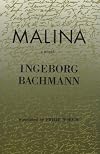
A soberba adaptação de Malina roteirizada por Elfriede Jelinek estreava há exatos 30 anos na Alemanha e eu sinceramente não sei do qual gosto mais, se do livro ou do filme.
O livro tem uma estrutura interessante: dividido em três partes, a primeira dá conta do envolvimento da narradora (obviamente com tintas autobiográficas da Bachmann) com Ivan, na segunda parte (e seu ápice narrativo) é um desenrolar contínuo e febril sobre as questões arquetípicas que envolvem o passado show more austríaco (especialmente a contemporaneidade/conterraneidade da narradora com Hitler) e finalmente a terceira parte é sobre o apagamento e invisibilidade feminina e o porquê de Malina ser o personagem título.
Na versão fílmica tudo isso é trazido de forma brilhante com um ponto que me fez gostar ainda mais: o leitmotiv do fogo sempre em cena, indicando também a causa da morte da própria Ingeborg Bachmann, o apagamento da escritora diante da chama sempre presente. show less
O livro tem uma estrutura interessante: dividido em três partes, a primeira dá conta do envolvimento da narradora (obviamente com tintas autobiográficas da Bachmann) com Ivan, na segunda parte (e seu ápice narrativo) é um desenrolar contínuo e febril sobre as questões arquetípicas que envolvem o passado show more austríaco (especialmente a contemporaneidade/conterraneidade da narradora com Hitler) e finalmente a terceira parte é sobre o apagamento e invisibilidade feminina e o porquê de Malina ser o personagem título.
Na versão fílmica tudo isso é trazido de forma brilhante com um ponto que me fez gostar ainda mais: o leitmotiv do fogo sempre em cena, indicando também a causa da morte da própria Ingeborg Bachmann, o apagamento da escritora diante da chama sempre presente. show less

Bachmann szereplői nagyon nem érzik jól magukat. Valami kizökkentette őket az időből. Eltévedtek benne. Ezek a történetek olyanok, mint a labirintus*: a tudat elnyújtott kacskaringóiban bolyongunk egy rémes belső terem felé, és véletlenül nincs nálunk a fonál. Ez nem baj – én szeretem az olyan írásokat, amik nem érzik jól magukat. Szoktam is mondani a szerzőknek: gyertek, vágjátok belém a szuronyt! Forgassátok is meg! Kínozzatok! Dobjatok a pöcegödörbe! show more Úgyhogy erre a könyvre is látatlanban öt csillagot adtam volna. Talán ez volt a gond. Végig az járt az eszemben, hogy én ezt máshogy írtam volna meg – ami nyilván a legócskább dolog, amit olvasó mondhat, mert erre az az adekvát válasz, hogy akkor nesze, írjad meg máshogy. Meg az is az eszemben járt, hogy a különböző történetek szereplői és szituációi felcserélhetők egymással – hogy tulajdonképpen újra és újra ugyanazt az elbeszélést olvasom. Tudom, ez a monománia, és hát vannak monomán írók. Sőt: vannak eszméletlenül jó monomán írók is. Elfogadom, hogy Bachmann is közéjük tartozik – csak nekem most nem esett jól. Talán szakaszokban kellett volna olvasnom, nem így egyben.
(Az igazság kedvéért tegyük hozzá, mert szeretem a lehúzós kritikát, de az igazságot jobban: két nagyon jó – talán mert konvencionálisabb –, és egy káprázatos novellát azért találtam benne. Az utolsó kisregényt is nagyra értékeltem, csak már jól ki lettem fárasztva előtte.)
* Santarcangeli óta mindenhová labirintusokat vizionálok. De tényleg. show less
(Az igazság kedvéért tegyük hozzá, mert szeretem a lehúzós kritikát, de az igazságot jobban: két nagyon jó – talán mert konvencionálisabb –, és egy káprázatos novellát azért találtam benne. Az utolsó kisregényt is nagyra értékeltem, csak már jól ki lettem fárasztva előtte.)
* Santarcangeli óta mindenhová labirintusokat vizionálok. De tényleg. show less

La obra de Ingeborg Bachmann no sólo representa el compromiso político de su autora sino también una búsqueda incesante de un nuevo lenguaje para encontrar la verdad.
Un grito a quien no quiere condenar el pasado nazi de su país, Austria y un aviso sobre la permanencia en el poder de aquellos que habían provocado esta tragedia.
Y un verso premonitorio que pone la carne de gallina: "Con la mano chamuscada sigo escribiendo sobre la naturaleza del fuego"
Un grito a quien no quiere condenar el pasado nazi de su país, Austria y un aviso sobre la permanencia en el poder de aquellos que habían provocado esta tragedia.
Y un verso premonitorio que pone la carne de gallina: "Con la mano chamuscada sigo escribiendo sobre la naturaleza del fuego"

Das dreißigste Jahr is a collection of seven short prose pieces all written in the late 1950s. There are two "key themes" that run through all the pieces, in various ways: the unequal relations between men and women, and the moral problem of living in a post-war world. As you would expect (in hindsight) there's a strong feminist sensibility everywhere, but oddly enough Bachmann chose to write four of the seven from an explicitly masculine point of view, and one from a point of view that show more does not bring the narrator's gender into play. Only "Undine goes" and "A step to Gomorrah" have explicitly feminine narrative viewpoints.
All the pieces seem to deal with people who are facing a crucial choice in their lives, but who ultimately don't quite have the courage to take it.
The title story is a miniature version of the classic German form, the Bildungsroman, describing a year in the life of a young man who suddenly realises that he's going to be thirty, and that all the endless possibilities there used to be in his life are condensing into the choices he has already made. It's the most ambitious in the collection in terms of form, switching between third and first person, prose and poetry, bringing in a character "Moll" who turns out to be a composite of all the hero's mediocre friends, and generally hitting us with the full armoury of modernist writing. And it works.
But I think the pieces that will stick in my mind most are the shorter opening and closing stories. The first is a beautiful, but jagged and painful, account of how the terrible experience of war has made it impossible to reconnect with memories of childhood and the comfortable isolation of small-town life; the last is Undine's delightfully lyrical, angry, sad and ultimately affectionate farewell rant directed at humans in general and men named Hans in particular. Definitely something you should have on hand for the Hans in your life... show less
All the pieces seem to deal with people who are facing a crucial choice in their lives, but who ultimately don't quite have the courage to take it.
The title story is a miniature version of the classic German form, the Bildungsroman, describing a year in the life of a young man who suddenly realises that he's going to be thirty, and that all the endless possibilities there used to be in his life are condensing into the choices he has already made. It's the most ambitious in the collection in terms of form, switching between third and first person, prose and poetry, bringing in a character "Moll" who turns out to be a composite of all the hero's mediocre friends, and generally hitting us with the full armoury of modernist writing. And it works.
But I think the pieces that will stick in my mind most are the shorter opening and closing stories. The first is a beautiful, but jagged and painful, account of how the terrible experience of war has made it impossible to reconnect with memories of childhood and the comfortable isolation of small-town life; the last is Undine's delightfully lyrical, angry, sad and ultimately affectionate farewell rant directed at humans in general and men named Hans in particular. Definitely something you should have on hand for the Hans in your life... show less
Lists
Awards


You May Also Like


Associated Authors
Statistics
- Works
- 160
- Also by
- 27
- Members
- 3,355
- Popularity
- #7,605
- Rating
- 4.0
- Reviews
- 44
- ISBNs
- 381
- Languages
- 22
- Favorited
- 21
