
Robert Walser (1) (1878–1956)
Author of Jakob von Gunten
For other authors named Robert Walser, see the disambiguation page.
Series
Works by Robert Walser
Sämtliche Werke in zwanzig Bänden: Dritter Band: Aufsätze (suhrkamp taschenbuch) (1913) 15 copies, 1 review
Sämtliche Werke in zwanzig Bänden: Sechzehnter Band: Träumen. Prosa aus der Bieler Zeit. 1913-1920 (suhrkamp taschenbuch) (1985) 10 copies
Escrito a lapiz/ Written with pencil: Microgramas III/ Writings III (1925-1932) (Libros Del Tiempo) (Spanish Edition) (2007) 8 copies
Aus dem Bleistiftgebiet : Mikrogramme aus dem Jahren 1924-1925 Bd 2 Gedichte und dramatische Szenen (1985) 6 copies
Komödie, Märchenspiel und szenische Dichtungen. ( Sämtliche Werke in Einzelausgaben, 14). (1986) 5 copies
Der Roman, woran ich weiter und weiter schreibe: Ich-Buch der Berner Jahre (German Edition) (1994) 3 copies
Kleist in Thun 3 copies
Estou só e fora do mundo. 50 poemas 3 copies
Prosastücke I 3 copies
Prosastücke II 3 copies
Aus dem Bleistiftgebiet : Mikrogramme aus dem Jahren 1925-1932 Bd 6 Gedichte und Dramatische Szenen 2 copies
Walser Robert 1 copy
Willa pod Gwiazdą Wieczorną 1 copy
Di un poeta (in Storie) 1 copy
Romane 1 copy
Der Gehülfe Hauptbd.] 1 copy
Lasst mich doch so 1 copy
HISTORI NGA BERLINI 1 copy
日々はひとつの響き: ヴァルザー=クレー詩画集 1 copy
Człowiek do wszystkiego 1 copy
L'homme à tout faire - Illustrations de Luis Murschetz - Traduction et présentation de Walter Weideli. (1970) 1 copy
Prosastücke 1 copy
L'attrice (in Storie) 1 copy
Wenzel (in Storie) 1 copy
Una mattinata (in Storie) 1 copy
Storie 1 copy
Pianoforte (in Storie) 1 copy
Ora mi sovviene (in Storie) 1 copy
C'era una volta (in Storie) 1 copy
Il bel posto (in Storie) 1 copy
Il genio (in Storie) 1 copy
Mondo (in Storie) 1 copy
Strana città (in Storie) 1 copy
Il Greifensee (in Storie) 1 copy
Il parco (in Storie) 1 copy
Illusione (in Storie) 1 copy
Romane : Band I : Geschwister Tanner | Der Gehülfe : Band II : Jakob von Gunten | Der Räuber (1984) 1 copy
Liuto (in Storie) 1 copy
Institute Benjamenta (Extraordinary Classics) by Robert Walser (15-Oct-1995) Paperback (1702) 1 copy
Dichtungen in Prosa 1 copy
Associated Works
Tales of the German Imagination from the Brothers Grimm to Ingeborg Bachmann (Penguin Classics) (2012) — Contributor — 78 copies, 2 reviews
Die Geschichtenerzähler: Neues und Unbekanntes von Allende bis Zafón (suhrkamp taschenbuch) (2008) — Contributor — 5 copies
Deutsche Kurzgeschichten : eine Auswahl für mittlere Klassen (1972) — Author, some editions — 5 copies, 1 review
Winterzeit : eine fotografisch-poetische Betrachtung — Contributor — 1 copy
Tagged
Common Knowledge
- Birthdate
- 1878-04-15
- Date of death
- 1956-12-25
- Gender
- male
- Occupations
- writer
- Relationships
- Walser, Karl (broer)
- Nationality
- Switzerland
- Birthplace
- Biel, Bern, Switzerland
- Places of residence
- Zurich, Zurich, Switzerland
Stuttgart, Baden-Württemberg, Germany - Place of death
- Herisau, Appenzell Ausserrhoden, Switzerland
- Map Location
- Switzerland
Members
Discussions
Jakob von Gunten in Book talk (June 2012)
Reviews

I joined the reading group The Catherine Project and was assigned to the group reading Jakob von Gunten, a book which sounded more interesting than it turned out to be. In our first discussion group, someone questioned whether the word here in the novel's opening sentence ("One learns very little here...") might refer to the book itself and not merely the school Jakob is attending. While the answer is probably no, the question is justified: the novel is frustratingly afactual. Jakob, writing show more what might be labeled a thought book, expends more ink on his fluctuating feelings than details about the Benjamenta Institute, a school which trains boys for service in private homes and repeatedly contradicts himself, often within the same paragraph. Readers never learn where the school is or what subjects are taught—they aren't even provided an understanding of Jakob's reasons for apparently running away from home to enroll. Worse, the strong sexual undertones in everything he writes, regardless of the sex of the person he is writing about, are never clearly resolved.
Instead, Jakob's vague descriptions of events fail to explain the odd situations he finds himself in or adequately describe his own behavior. Readers are left to interpret what exactly happened on his visit to a "restaurant...with hostesses", where he spends all his money on drinks for himself and a Polish hostess and plays an unexplained game with her called Saying Hello, going so far as to kiss her garter, presumably on her thigh where garters are worn.
In another scene, Fraülein Benjamenta, his instructress, takes him on an underground journey to the "hall of poverty and deprivation", where she makes him kiss the earth, then to visit to the "Wall of Worries", which he is forced to fondle, and on to "freedom"—where she stops him from reading the wrong kind of book—and "calamity", which he must bravely face, before ending up swimming in the "river of despair". Afterwards, he finds himself in the classroom, with Fraülein Benjamenta still standing behind him. Jakob opens this section vacillating whether this episode is significant or not and ends wondering whether he dreamed it or not.
Another person in the group thought the novel seemed more like vignettes the author strung together like leftovers. Given the book's lack of a plot until it is nearly finished and cryptic ending, this characterization is reasonable regardless of its accuracy. Fraülein Benjamenta dies from her lack of a romantic relationship and Jakob leaves with Herr Benjamenta, her brother, to "start something together" although Jakob never clarifies what this something is.
To Jakob von Gunten's ending line—"So now Adieu, Benjamenta Institute."—I would add, bon débarras: good riddance. show less
Instead, Jakob's vague descriptions of events fail to explain the odd situations he finds himself in or adequately describe his own behavior. Readers are left to interpret what exactly happened on his visit to a "restaurant...with hostesses", where he spends all his money on drinks for himself and a Polish hostess and plays an unexplained game with her called Saying Hello, going so far as to kiss her garter, presumably on her thigh where garters are worn.
In another scene, Fraülein Benjamenta, his instructress, takes him on an underground journey to the "hall of poverty and deprivation", where she makes him kiss the earth, then to visit to the "Wall of Worries", which he is forced to fondle, and on to "freedom"—where she stops him from reading the wrong kind of book—and "calamity", which he must bravely face, before ending up swimming in the "river of despair". Afterwards, he finds himself in the classroom, with Fraülein Benjamenta still standing behind him. Jakob opens this section vacillating whether this episode is significant or not and ends wondering whether he dreamed it or not.
Another person in the group thought the novel seemed more like vignettes the author strung together like leftovers. Given the book's lack of a plot until it is nearly finished and cryptic ending, this characterization is reasonable regardless of its accuracy.
To Jakob von Gunten's ending line—"So now Adieu, Benjamenta Institute."—I would add, bon débarras: good riddance. show less
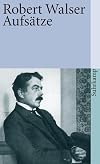
Walser started out as a novelist, but he's really best known today (Jakob von Gunten aside) for his shorter works. Aufsätze was his first collection of short pieces to be published in book form. It appeared at a time (1913) when the initial success of Walser's novels had faded, and he was showing signs of losing confidence in his own abilities. This was also the moment when he moved back to Switzerland from Berlin. The book was a modest success and got rave reviews from some influential show more critics, including Max Brod, who also reported that Kafka had been very enthusiastic about it.
Walser chose the schoolish title "Aufsätze" in a typical self-deprecatory ploy - in fact the fifty or so pieces collected here are a mix of stories, fables, prose-poems, letters, paraphrases of Great Literature, criticism and journalistic description. Other than their length, the only obvious thing that they have in common is a subversive tendency never quite to be what they look like. When he's writing about the theatre, Walser always remembers to bring the house-lights up at some point; when he's masquerading as his patron's 12-year-old daughter he makes sure to turn the knowing naiveté just half a notch too far to be plausible; when he's writing as himself he slips in little jokes which are clearly parodies of the little jokes a self-deprecatory writer would slip in when writing about himself. Even a simple-looking account of a busy Berlin fast-food establishment manages to slip in some profound existential doubts in between the hyperbole about beer-fountains and sausage-mountains. Brod talks about Walser's style as "freedom in its highest form", the opposite of the schoolish, and it's not hard to see how he came to that conclusion - without ever quite putting aside the layer of unassuming modesty, every piece here manages to push the language out in a different direction and take you by surprise in a new way. A book to read slowly and come back to, more than once. show less
Walser chose the schoolish title "Aufsätze" in a typical self-deprecatory ploy - in fact the fifty or so pieces collected here are a mix of stories, fables, prose-poems, letters, paraphrases of Great Literature, criticism and journalistic description. Other than their length, the only obvious thing that they have in common is a subversive tendency never quite to be what they look like. When he's writing about the theatre, Walser always remembers to bring the house-lights up at some point; when he's masquerading as his patron's 12-year-old daughter he makes sure to turn the knowing naiveté just half a notch too far to be plausible; when he's writing as himself he slips in little jokes which are clearly parodies of the little jokes a self-deprecatory writer would slip in when writing about himself. Even a simple-looking account of a busy Berlin fast-food establishment manages to slip in some profound existential doubts in between the hyperbole about beer-fountains and sausage-mountains. Brod talks about Walser's style as "freedom in its highest form", the opposite of the schoolish, and it's not hard to see how he came to that conclusion - without ever quite putting aside the layer of unassuming modesty, every piece here manages to push the language out in a different direction and take you by surprise in a new way. A book to read slowly and come back to, more than once. show less
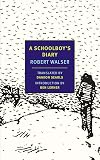
A collection of short stories and prose sketches by early 20th-century writer Robert Walser, A Schoolboy's Diary is uneven, idiosyncratic, and often strangely charming. These pieces—sometimes only a page long—show Walser returning over and over to issues of authority, obedience, childhood, and the beauty of the Swiss landscape. Inevitably, some of these are much stronger than others. But when Walser was on, he was on: whether with verbal watercolours of various places, sometimes show more whimsical and sometimes eerie; or with his channelling of the eponymous schoolboy with a narrative voice that's doing something more complex and subversive than it appears at first glance. show less

Frustrated at his inability to find a way to follow up the modest success of his three novels, Walser left Berlin in March 1913 and returned to Switzerland, to settle in Biel for the next few years. He continued to publish pieces in newspapers and magazines, and he even won a literary prize for the last of his collections published in Germany, Kleine Dichtungen (the money was trapped in a German bank account and wiped out by inflation before he was able to touch it), but the outbreak of war show more interrupted his relations with his German publishers. In 1916 he was approached independently by three different Swiss publishers looking to include him in their catalogue of home-grown authors, which resulted in the publication within a short space of time of the novella-length Der Spaziergang, and two collections of short pieces, the pamphlet Prosastücke and the book-length Kleine Prosa. These three are brought together in Vol.5 of the Suhrkamp complete works, but you might find other combinations in translations.
Der Spaziergang sets the tone for all the pieces in the book - superficially a very simple account of a stroll the narrator takes on a sunny day in the Swiss town where he lives. He comments on shops and people he passes, reflects on the weather and the scenery, talks about a couple of encounters that sound significant but don't seem to lead to anything, and describes a lunch he's been invited to and a few small errands he has reserved for the afternoon (posting a letter, a fitting with the tailor, an appointment at the town hall). It's all set up in a very modest, self-deprecating and ironic tone, but we soon realise that there's something else going on under the surface. The prose defies the apparently realistic context by looping away in grand, rhythmic structures that often take the reader's breath away. The conversations the narrator describes clearly aren't meant to be taken as realistic accounts of what he has said (or what anyone could get away with saying in real life), but rather what he wishes he could have said, or what he was thinking when he said whatever he did actually say. This creates an uneasy sense of disconnection, alienation, from the banal, ordinary events of life. Images and chance remarks keep reminding us that there's a horrific war going on just offstage. Although all the explicit references are to German Romanticism of the Brentano era, this is unmistakably the voice of modernism - you can't help reading Walser's strolling writer posting his letters, eating his lunch and worrying about his tailor as a contemporary (or precursor) of Bloom wandering through Dublin, Mrs Dalloway buying her flowers or Prufrock walking on the beach.
In the two collections of prose pieces - most of which slide between categories like essay, sketch, story, memoir and review in undefinable ways - there's a similar sense of disconnection between the writer and the world, and a slightly amused astonishment at how strange everything is. We read pieces that are about nothing but themselves and the language they are made of, pieces about great writers (Dickens is chastised for being so good at what he did that he discourages all others from even trying to write), about a sausage, about odd characters who reject social norms, about fairy-tale-like incidents, and very frequently about young writers with various different names (in one case three different names in the same story) who work in offices or factories, become domestic servants, or live in isolation and penury in the suburbs and try to write - all things that Walser had done at various points in his career. Fascinating and delightful! show less
Der Spaziergang sets the tone for all the pieces in the book - superficially a very simple account of a stroll the narrator takes on a sunny day in the Swiss town where he lives. He comments on shops and people he passes, reflects on the weather and the scenery, talks about a couple of encounters that sound significant but don't seem to lead to anything, and describes a lunch he's been invited to and a few small errands he has reserved for the afternoon (posting a letter, a fitting with the tailor, an appointment at the town hall). It's all set up in a very modest, self-deprecating and ironic tone, but we soon realise that there's something else going on under the surface. The prose defies the apparently realistic context by looping away in grand, rhythmic structures that often take the reader's breath away. The conversations the narrator describes clearly aren't meant to be taken as realistic accounts of what he has said (or what anyone could get away with saying in real life), but rather what he wishes he could have said, or what he was thinking when he said whatever he did actually say. This creates an uneasy sense of disconnection, alienation, from the banal, ordinary events of life. Images and chance remarks keep reminding us that there's a horrific war going on just offstage. Although all the explicit references are to German Romanticism of the Brentano era, this is unmistakably the voice of modernism - you can't help reading Walser's strolling writer posting his letters, eating his lunch and worrying about his tailor as a contemporary (or precursor) of Bloom wandering through Dublin, Mrs Dalloway buying her flowers or Prufrock walking on the beach.
In the two collections of prose pieces - most of which slide between categories like essay, sketch, story, memoir and review in undefinable ways - there's a similar sense of disconnection between the writer and the world, and a slightly amused astonishment at how strange everything is. We read pieces that are about nothing but themselves and the language they are made of, pieces about great writers (Dickens is chastised for being so good at what he did that he discourages all others from even trying to write), about a sausage, about odd characters who reject social norms, about fairy-tale-like incidents, and very frequently about young writers with various different names (in one case three different names in the same story) who work in offices or factories, become domestic servants, or live in isolation and penury in the suburbs and try to write - all things that Walser had done at various points in his career. Fascinating and delightful! show less
Lists
Awards


You May Also Like


Associated Authors
Statistics
- Works
- 274
- Also by
- 16
- Members
- 7,060
- Popularity
- #3,473
- Rating
- 4.0
- Reviews
- 158
- ISBNs
- 497
- Languages
- 23
- Favorited
- 72


