
Sigismund Krzyżanowski (1887–1950)
Author of Memories of the Future
About the Author
Image credit: Polish-Russian writer Sigizmund Krzhizhanovsky around 1910
Series
Works by Sigismund Krzyżanowski
KUJTIMET E SE ARDHMES 1 copy
Associated Works
Tagged
Common Knowledge
- Legal name
- Krzyzanowski, Sigismund Dominikowicz
Кржижановский, Сигизмунд Доминикович - Other names
- Krzhyzhanovskii, Sigizmund
Krzhizhanovsky, Sigizmund Dominikovich - Birthdate
- 1887-02-11
- Date of death
- 1950-12-28
- Gender
- male
- Occupations
- writer
translator (from Polish into Russian) - Nationality
- Russia
- Birthplace
- Kiev, Ukraine, Russian Empire
- Places of residence
- Kiev, Ukraine, Russian Empire
Moscow, Russia, USSR - Place of death
- Moscow, Russia, USSR
- Map Location
- Ukraine
Members
Discussions
Sigizmund Krzhizhanovsky in Fans of Russian authors (February 2023)
Reviews

This is a collection of weirdly imaginative, usually surreal, and always interesting tales. Written in the 1920s by a slightly subversive author whose stories couldn’t be published until after his death, these tales are darkly whimsical reflections on Soviet society: Existential despair in a room that gets bigger on the inside, everyday Literary Criticism on a city bench, a vagrant table-to-table philosopher who sells aphorisms and totally original systems of thought for a living, a Time show more Traveller struggling to build and rebuild his machine after the war.
Several of these are very entertaining in an off-beat, slighly unusual kind of way, as though they were written in a culture with perceptibly different standards, tropes and expectations. Some would do very well in collections of Early Science Fiction. Most of these tales would appeal to those with an academic interest in Literature or Criticism, because they are explicitly about writing, reading, engaging with literature, and confronting themes with Theories. This is why I’d recommend spacing these stories out a bit: they’re very different tales, but the approach gets a bit samey after three or four in quick succession.
If you’d like your Borges with more black humour and set in Moscow, less everything-and-the-kitchen-sink and more focused, then give Krzhizhanovsky a try. show less
Several of these are very entertaining in an off-beat, slighly unusual kind of way, as though they were written in a culture with perceptibly different standards, tropes and expectations. Some would do very well in collections of Early Science Fiction. Most of these tales would appeal to those with an academic interest in Literature or Criticism, because they are explicitly about writing, reading, engaging with literature, and confronting themes with Theories. This is why I’d recommend spacing these stories out a bit: they’re very different tales, but the approach gets a bit samey after three or four in quick succession.
If you’d like your Borges with more black humour and set in Moscow, less everything-and-the-kitchen-sink and more focused, then give Krzhizhanovsky a try. show less

I really liked this one. It was cheeky, professional, and even experimental, given it was written around 1926.
The framing device is an original spin on a classic trope. Seven authors, who have arrived at the conclusion that their published ideas are diverting their readers' creativity and interfering with their readers' capacity for original ideas, decide to cease publishing. Instead, they hold weekly gatherings where they narrate their stories and themes to each other through speech only. show more Thus having become the titular killers of letters, they invite a "pure reader" -- one who reads and reads without really reflecting on the contents -- to judge the quality of the tales: would they stand up next to traditionally published works?
The novel is told in seven chapters, in which the seven letter killers take turns spinning their yarns. There's a reworking of Hamlet, in which familiar characters are doubled to bring out the duplicities inherent in the play; references to specific actors and Shakespeare trivia abound. There's a medieval-style fable about three vagrants who scour the world for the answer to the question: "what is the ultimate purpose of the mouth: talking, kissing, or eating?" supported with many references to the Church Fathers and the Scholastics. There's a science fiction tale in which trained bacteria have disconnected the nerves that operate muscles from those that operate thoughts, and via manipulation of the "ether wind" the resulting bodies can be remote-controlled and forced into menial labour.
Krzhizhanovsky has penned an enjoyable collection of semi-unfinished stories to explore themes of storytelling, the independence of art, and the relation between thoughts and their physical containers. The tales on offer are amusingly diverse, a group of sassy challenges to more mainstream fiction. Not all of them are memorable, but the ones that stand out more than make up for that. All share, though, a flighty quality, and a sense of impish humour. Throughout I felt like Krzhizhanovsky had had enormous fun writing these tales, and his panache was infectious.
I will most definitely read more of Krzhizhanovsky's works! show less
The framing device is an original spin on a classic trope. Seven authors, who have arrived at the conclusion that their published ideas are diverting their readers' creativity and interfering with their readers' capacity for original ideas, decide to cease publishing. Instead, they hold weekly gatherings where they narrate their stories and themes to each other through speech only. show more Thus having become the titular killers of letters, they invite a "pure reader" -- one who reads and reads without really reflecting on the contents -- to judge the quality of the tales: would they stand up next to traditionally published works?
The novel is told in seven chapters, in which the seven letter killers take turns spinning their yarns. There's a reworking of Hamlet, in which familiar characters are doubled to bring out the duplicities inherent in the play; references to specific actors and Shakespeare trivia abound. There's a medieval-style fable about three vagrants who scour the world for the answer to the question: "what is the ultimate purpose of the mouth: talking, kissing, or eating?" supported with many references to the Church Fathers and the Scholastics. There's a science fiction tale in which trained bacteria have disconnected the nerves that operate muscles from those that operate thoughts, and via manipulation of the "ether wind" the resulting bodies can be remote-controlled and forced into menial labour.
Krzhizhanovsky has penned an enjoyable collection of semi-unfinished stories to explore themes of storytelling, the independence of art, and the relation between thoughts and their physical containers. The tales on offer are amusingly diverse, a group of sassy challenges to more mainstream fiction. Not all of them are memorable, but the ones that stand out more than make up for that. All share, though, a flighty quality, and a sense of impish humour. Throughout I felt like Krzhizhanovsky had had enormous fun writing these tales, and his panache was infectious.
I will most definitely read more of Krzhizhanovsky's works! show less
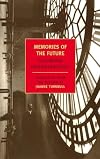
In each of Sigizmund Krzhizhanovsky's seven stories that are found in Memories of the Future, a character takes to the streets of Moscow to reflect on the central focus of the narrative. There's Sutulin, restlessly pacing back and forth, too afraid to enter his ever-expanding apartment. There's the "theme catcher" from The Bookmark, lamenting on the lack of artistry in contemporary Soviet Literature while making up incredible new stories just by observing his surroundings. There's the show more gravedigger from The Thirteenth Category of Reason, riding a tram with a dead man who was too late to go to his own funeral. And there's Max Shterer, sitting on a park bench with nowhere to stay now that he's back from the future. The characters' understanding of where they are and why they are there is central to the work of Krzhizhanovsky, a man who seems to have loved where he was without necessarily loving when he was.
The stories were very hit-or miss for me. I loved Quadraturin and The Bookmark, liked Someone Else's Theme and The Thirteenth Category of Reason, had mixed feelings about Memories of the Future, and couldn't get into the others at all.
Because of the limited amount of space an author has in a short story, creating a sense of place is crucial if the reader stands any chance of connecting with the narrative. If it takes too long for the reader to find his/her footing on whatever/wherever the literary terra firma of the piece may be, there just isn't enough time left to say anything interesting. Krzhizhanovsky deals with some lofty, abstract concepts, and I thought in The Branch Line and Red Snow, both of them heavy critiques of the Soviet Union, he didn't give himself room to flesh those out.
When Krzhizhanovky's on the ball, though, he's a funny and incisive critic of the world around him. The Bookmark in particular stuck out to me in this regard. Centered around a narrator who is interacting with a brilliant, unpublished writer (which parallels Krzhizhanovsky himself, as none of the stories in this book were published in his lifetime), we get a great feel for the limitations on artistic expression in Russia, even before Stalin's Great Purges.
While not one to be overly bitter about things, Krzhizhanovsky writes like a man who knows he was born at the wrong time to be successful. He was gracious enough, however, to not hold that against the city he inhabited. Moscow comes to life in these stories as a city filled with buildings that have given up and people who haven't. I'm far more familiar with literature based in Saint Petersburg, so I really enjoyed the opportunity to explore a new city through a contemporary author's eyes.
In Joanne Turnbull's introduction to the book, she includes a quote from Krzhizhanovsky about why Shakespeare's work was so inundated with dreams:
The stories were very hit-or miss for me. I loved Quadraturin and The Bookmark, liked Someone Else's Theme and The Thirteenth Category of Reason, had mixed feelings about Memories of the Future, and couldn't get into the others at all.
Because of the limited amount of space an author has in a short story, creating a sense of place is crucial if the reader stands any chance of connecting with the narrative. If it takes too long for the reader to find his/her footing on whatever/wherever the literary terra firma of the piece may be, there just isn't enough time left to say anything interesting. Krzhizhanovsky deals with some lofty, abstract concepts, and I thought in The Branch Line and Red Snow, both of them heavy critiques of the Soviet Union, he didn't give himself room to flesh those out.
When Krzhizhanovky's on the ball, though, he's a funny and incisive critic of the world around him. The Bookmark in particular stuck out to me in this regard. Centered around a narrator who is interacting with a brilliant, unpublished writer (which parallels Krzhizhanovsky himself, as none of the stories in this book were published in his lifetime), we get a great feel for the limitations on artistic expression in Russia, even before Stalin's Great Purges.
While not one to be overly bitter about things, Krzhizhanovsky writes like a man who knows he was born at the wrong time to be successful. He was gracious enough, however, to not hold that against the city he inhabited. Moscow comes to life in these stories as a city filled with buildings that have given up and people who haven't. I'm far more familiar with literature based in Saint Petersburg, so I really enjoyed the opportunity to explore a new city through a contemporary author's eyes.
In Joanne Turnbull's introduction to the book, she includes a quote from Krzhizhanovsky about why Shakespeare's work was so inundated with dreams:
"The answer is plain. A dream is the only instance when we apprehend our thoughts as external facts."Krzhizhanovsky wrote the way he dreamed, imagining new ways to evaluate life, death, time, and creativity while he wandered through a park in Moscow. show less

In an industry usually concerned with “moving units,” cashing in on the latest literary by-product of a reality television non-personality, or pushing out fiction that degrades the genre to a near metaphysical endpoint, it is a rare occasion when a publisher can be said to have acted “heroically.” The Letter Killers Club by Sigizmund Krzhizhanovsky (hereafter referred to as SK) represents an occasion to celebrate. With a downright intimidating name (unlike the two-syllable names of show more thriller writers on bestseller lists), the novel revolves around the machinations and stories told by a secret society in the 1920s Soviet Union. It is heroic to publish such a perplexing little volume by a Ukrainian Soviet writer who, according to the copy on the back cover, “went unpublished, though he was active among Moscow’s literati in the 1920s.” Seriously, why publish this? One could make more money releasing another volume of Ghostwriters Working for the Kardashian Machine. Let’s add zombies to Jane Austen or androids to Tolstoy. “Hey, at least people are reading!” quoth the sycophants of the Lowest Common Denominator.
Don’t let the author’s name or the strange plot dissuade you from reading this remarkable novel. Written in 1926 when Soviet Modernism slowly faded into the Stalinist Philistinism of the 1930s, the novel follows the meetings of a secretive group named “the Letter Killers Club.” Totalitarian paranoia taints the barbed elliptical narratives of the group members, creating stories that bristle with erudition, humor, and beauty.
“The Letter Killers Club” involves each member taking an alias that is a nonsense syllable. The names (Rar, Mov, Tyd, etc.) sound like the characters from Samuel Beckett’s Endgame (1957). The group gathers in a dark study. Empty bookshelves surround them. Every week a single member tells his story, but is duty bound not to publish his “conception.” The strictures recall the random oppressions of the police state. While the 1920s saw an aesthetic flowering in the Soviet Union, its totalitarian terrors existed under the aegis of Lenin and the Party. Stalin simply intensified and expanded the Reign of Terror. The rigidity of the rules also predicts the severity of Oulipo (a literary movement that began in the 1960s).
The meetings frame the stories, each meeting offering a different genre. The first story is actually a play, a heretical dissection of Hamlet. The play splits the characters into two entities; ergo Guildenstern becomes Guilden and Stern. Dueling Hamlets recite the “To be or not be” speech. In addition, the play’s actors go to The Land of Roles meeting previous actors who played Hamlet. The story is playful and postmodern, anticipating Tom Stoppard’s riff on the Bard’s most famous play. The fourth-wall-breaking and Land of Roles remind one of the anarchic interrelationships of Los Angeles and Toontown in Who Framed Roger Rabbit? (Robert Zemeckis, 1988).
Another story involves the transmission of a virus that turns people in automatons. Part science fiction, part biological horror, and part political satire, the story explores the same territory of Yevgeny Zamyatin’s We (1921). In this case, a scientist desires to make the mentally insane more productive members of society with a technique of remotely controlling the brain functions. What started as a technology “for the common good” becomes an instrument of totalitarian control.
The people turning into automatons because of technology should make people pause and think about the ties between self, autonomy, the state, and surveillance. (Whether it is Facebook or the National Security Agency, sacrificing one’s privacy to a monolithic institution usually involves a willing self-sacrifice. Our chains are self-inflicted.)
Other stories include a fable set in medieval times and a tale of a recently deceased Roman missing his requisite obol for his journey across the River Acheron. To complicate matters, the narrators get interrupted, chastised, or, a la “Exquisite Corpse”, other members finish the stories. The interruptions and snide commentary should be familiar to anyone seeing an Internet comment thread. If you disliked a casting choice in a movie involving a Marvel superhero or something similar, then you’ll enjoy the snark targeted at the storyteller. The snark and commentary in this cabal-like setting stands in stark contrast to the public uniformity of the police state. Even with the strictures and severity, the narratives, albeit unwritten, transcend the terror and stifling monotony outside the dark walls.
SK’s The Letter Killers Club is a monumental literary discovery, a gem buried in the Soviet Archives and only unearthed in 1976. With its daring experimentalism and acid commentary on state power, the book still stands as a work of revolutionary power.
http://driftlessareareview.com/2011/11/24/the-letter-killers-club-by-sigizmund-k... show less
Don’t let the author’s name or the strange plot dissuade you from reading this remarkable novel. Written in 1926 when Soviet Modernism slowly faded into the Stalinist Philistinism of the 1930s, the novel follows the meetings of a secretive group named “the Letter Killers Club.” Totalitarian paranoia taints the barbed elliptical narratives of the group members, creating stories that bristle with erudition, humor, and beauty.
“The Letter Killers Club” involves each member taking an alias that is a nonsense syllable. The names (Rar, Mov, Tyd, etc.) sound like the characters from Samuel Beckett’s Endgame (1957). The group gathers in a dark study. Empty bookshelves surround them. Every week a single member tells his story, but is duty bound not to publish his “conception.” The strictures recall the random oppressions of the police state. While the 1920s saw an aesthetic flowering in the Soviet Union, its totalitarian terrors existed under the aegis of Lenin and the Party. Stalin simply intensified and expanded the Reign of Terror. The rigidity of the rules also predicts the severity of Oulipo (a literary movement that began in the 1960s).
The meetings frame the stories, each meeting offering a different genre. The first story is actually a play, a heretical dissection of Hamlet. The play splits the characters into two entities; ergo Guildenstern becomes Guilden and Stern. Dueling Hamlets recite the “To be or not be” speech. In addition, the play’s actors go to The Land of Roles meeting previous actors who played Hamlet. The story is playful and postmodern, anticipating Tom Stoppard’s riff on the Bard’s most famous play. The fourth-wall-breaking and Land of Roles remind one of the anarchic interrelationships of Los Angeles and Toontown in Who Framed Roger Rabbit? (Robert Zemeckis, 1988).
Another story involves the transmission of a virus that turns people in automatons. Part science fiction, part biological horror, and part political satire, the story explores the same territory of Yevgeny Zamyatin’s We (1921). In this case, a scientist desires to make the mentally insane more productive members of society with a technique of remotely controlling the brain functions. What started as a technology “for the common good” becomes an instrument of totalitarian control.
The people turning into automatons because of technology should make people pause and think about the ties between self, autonomy, the state, and surveillance. (Whether it is Facebook or the National Security Agency, sacrificing one’s privacy to a monolithic institution usually involves a willing self-sacrifice. Our chains are self-inflicted.)
Other stories include a fable set in medieval times and a tale of a recently deceased Roman missing his requisite obol for his journey across the River Acheron. To complicate matters, the narrators get interrupted, chastised, or, a la “Exquisite Corpse”, other members finish the stories. The interruptions and snide commentary should be familiar to anyone seeing an Internet comment thread. If you disliked a casting choice in a movie involving a Marvel superhero or something similar, then you’ll enjoy the snark targeted at the storyteller. The snark and commentary in this cabal-like setting stands in stark contrast to the public uniformity of the police state. Even with the strictures and severity, the narratives, albeit unwritten, transcend the terror and stifling monotony outside the dark walls.
SK’s The Letter Killers Club is a monumental literary discovery, a gem buried in the Soviet Archives and only unearthed in 1976. With its daring experimentalism and acid commentary on state power, the book still stands as a work of revolutionary power.
http://driftlessareareview.com/2011/11/24/the-letter-killers-club-by-sigizmund-k... show less
Lists
Awards


You May Also Like


Associated Authors
Statistics
- Works
- 35
- Also by
- 3
- Members
- 1,911
- Popularity
- #13,465
- Rating
- 3.9
- Reviews
- 42
- ISBNs
- 51
- Languages
- 8
- Favorited
- 10