
Yuri Olesha (1899–1960)
Author of Invidia
About the Author
Image credit: From Wikipedia
Works by Yuri Olesha
Избранное 4 copies
Povesti i rasskazy 3 copies
The Cherry Stone 2 copies
Избранные сочинения 1 copy
Invidia: e I tre grassoni 1 copy
Envy | The Three Fat Men 1 copy
Три толстяка 1 copy
Love {story} 1 copy
Lyompa 1 copy
Associated Works
Anthology of Russian Literature in the Soviet Period from Gorki to Pasternak (1960) — Contributor — 69 copies
Tagged
Common Knowledge
- Legal name
- Оле́ша, Ю́рий Ка́рлович
- Other names
- Olesha, Yury Karlovich
Olesha, Iurii Karlovich - Birthdate
- 1899-03-03
- Date of death
- 1960-05-10
- Gender
- male
- Occupations
- journalist
novelist
short story writer
playwright - Organizations
- Red Army
- Relationships
- Olga Gustavovna Suok (wife)
- Nationality
- Russia
- Birthplace
- Elizavetgrad, Ukraine, Russian Empire
- Places of residence
- Elizavetgrad, Ukraine, Russian Empire
Moscow, Russia, USSR - Place of death
- Moscow, Russia, USSR
- Associated Place (for map)
- Elizavetgrad, Ukraine, Russian Empire
Members
Reviews
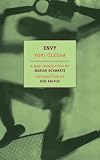
Here's a question for you: What do you get when you cross Dostoyevsky's underground man, Gogol's wicked satire, a Nabokovian gift for metaphor, and place them in early Soviet Russia?
Unfortunately, something less than the sum of its parts.
Envy is set in 1920s Soviet Russia, with a drunken loser, Kavalerov, living in the home of a porcine official sausage-maker, Babichev, who is beloved by all. Kavalerov hates Babichev's guts, and writes a letter full of bile against him. Soon after, there's show more some family drama with Babichev's brother, Ivan.
The language, aside from a few fantastic metaphors, is dull. The narrative is gormless, and largely exists to string together the better moments together. For a 'Modernist' work, it is not as metaphorical or colorful, like Petersburg. I'm not sure whether to ascribe it to undiscovered Soviet editorial mangling, or a subpar translation (the NYRB edition). A pity. show less
Unfortunately, something less than the sum of its parts.
Envy is set in 1920s Soviet Russia, with a drunken loser, Kavalerov, living in the home of a porcine official sausage-maker, Babichev, who is beloved by all. Kavalerov hates Babichev's guts, and writes a letter full of bile against him. Soon after, there's show more some family drama with Babichev's brother, Ivan.
The language, aside from a few fantastic metaphors, is dull. The narrative is gormless, and largely exists to string together the better moments together. For a 'Modernist' work, it is not as metaphorical or colorful, like Petersburg. I'm not sure whether to ascribe it to undiscovered Soviet editorial mangling, or a subpar translation (the NYRB edition). A pity. show less
Envy by Yuri Olesha
First published in 1927 at the wave of Soviet avant-garde fiction, it is a small wonder that this book got in print. Its surreal and playful style is a great precursor to Master and Margarita, which Bulgakov started to write in 1928. Olesha managed to write a deeply ironic and satiric piece that nevertheless won official critical acclaim - this alone is a testimony that the novel can be read on several different levels.
A masterpiece of Russian fiction that deserves to be listed among the show more major works of 20th century literature. show less
A masterpiece of Russian fiction that deserves to be listed among the show more major works of 20th century literature. show less
Envy by Yuri Olesha
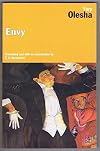
I confess I had a bit of trouble following. Maybe some of the allegories for early Soviet bureaucracy were lost on me. I'd be curious to read it again in a different translation, but maybe not curious enough to do so.
I just read John Haskell's The Tramp in the latest A Public Space, which is a weirdly literal retelling of the Charlie Chaplin movie, but the mirrored trope of the vagrant picked up by the rich guy, allowed to live in his home, still lacks depth for me. Again, I feel I may lack show more the cultural context. show less
I just read John Haskell's The Tramp in the latest A Public Space, which is a weirdly literal retelling of the Charlie Chaplin movie, but the mirrored trope of the vagrant picked up by the rich guy, allowed to live in his home, still lacks depth for me. Again, I feel I may lack show more the cultural context. show less
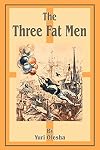
I read it in the past (right after 1989 of the Romanian Revolution). It is a colorful and savory mix expressing a sympathetic trilogy.
The children will be a little bit agitated about the evolution of the events, but they will remain overflowing realism. The people always rise against the tyrants, and each time it is defeated.
The children will be a little bit agitated about the evolution of the events, but they will remain overflowing realism. The people always rise against the tyrants, and each time it is defeated.
Lists
Awards


You May Also Like


Associated Authors
Statistics
- Works
- 32
- Also by
- 11
- Members
- 1,046
- Popularity
- #24,627
- Rating
- 3.7
- Reviews
- 6
- ISBNs
- 64
- Languages
- 11
- Favorited
- 5