
Vasily Grossman (1905–1964)
Author of Life and Fate
About the Author
Grossman, a graduate in physics and mathematics from Moscow University, worked first as a chemical engineer and became a published writer during the mid-1930s. His early stories and novel deal with such politically orthodox themes as the struggle against the tsarist regime, the civil war, and the show more building of the new society. Grossman served as a war correspondent during World War II, publishing a series of sketches and stories about his experiences. Along with Ehrenburg, he edited the suppressed documentary volume on the fate of Soviet Jews, The Black Book. In 1952 the first part of his new novel, For the Good of the Cause, appeared and was sharply criticized for its depiction of the war. The censor rejected another novel, Forever Flowing (1955), which was circulated in samizdat and published in the West. The secret police confiscated a sequel to For the Good of the Cause, the novel Life and Fate, in 1961, but a copy was smuggled abroad and published in 1970. Grossman's books were issued in the Soviet Union in the late 1980s and have met with both admiration and, on part of the nationalist right wing, considerable hostility. (Bowker Author Biography) show less
Series
Works by Vasily Grossman
A Writer at War. Vasily Grossman with the Red Army 1941-1945 (2005) — Author — 1,206 copies, 26 reviews
The Treblinka Hell: Photographic Album of Martyrs, Heroes, and Executioners (1944) 80 copies, 5 reviews
Grossman Vasilij Semenovic 2 copies
Mõned kurvad päevad : [jutustused] 2 copies
Stjepan Koljčugin 1 copy
Nekoliko tužnih dana 1 copy
Življenje in usoda 1 copy
Избранное, 2 тома 1 copy
Wszystko płynie... 1 copy
Armenische Reise: Die Reise des großen russischen Schriftstellers an die Ränder des Imperiums 1 copy
(A Writer At War: Vasily Grossman with the Red Army 1941-1945) [By: Grossman, Vasily] [Sep, 2006] 1 copy
Kolchugin's Youth 1 copy
Stepan Koltschugin - Band 2 1 copy
Kõik voolab 1 copy
Stepan Koltschugin - Band 1 1 copy
Associated Works
MHQ: The Quarterly Journal of Military History — Spring 2015 (2015) — Author "Experience: This Terrible Truth" — 3 copies
Moderne russische Erzähler — Author — 1 copy
Tagged
Common Knowledge
- Canonical name
- Grossman, Vasily
- Legal name
- Grossman, Vasily Semyonovich
Гроссман, Василий Семёнович - Birthdate
- 1905-12-12
- Date of death
- 1964-09-14
- Gender
- male
- Education
- Moscow State University
- Occupations
- author
journalist
war correspondent
chemical engineer - Organizations
- Red Star (Krasnaya Zvezda)
Unity - Awards and honors
- Red Banner of Labor
- Short biography
- Born in the Ukraine in 1905, Vasilly Grossman published his first novel 'Stepan Gluchkauf 'in 1933. Grossman was Jewish and his place of birth was one of the largest Jewish communities in Eastern Europe. Grossman is most notable for his work as a journalist during WWII and his eyewitness accounts of the fall of Stalingrad, the fall of Berlin and the Holocaust. He published the first account of a German death camp written by a journalist. He went on to publish a novel about Stalingrad in 1952 called "For a Just Cause" and in 1960 "Life and Fate".
- Nationality
- Russia
- Birthplace
- Berdichev, Ukraine, Russian Empire
- Places of residence
- Moscow, Soviet Union
Geneva, Switzerland
Kiev, Ukraine, Soviet Union - Place of death
- Moscow, Soviet Union
- Burial location
- Troyekurovskoye Cemetery Moscow, Russia
- Map Location
- Russia
Members
Discussions
Life and Fate featured on BBC R4 in Fans of Russian authors (September 2011)
Life and Fate: Part 1 in Group Reads - Literature (November 2009)
Reviews
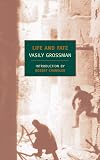
It took me eight months or more to read Life and Fate. Not, of course, in an ‘oh my goodness I cannot put this down’ sort of a scamper. More a sort of Himalayan hike with a growing monkey of determination on my back: I’ve bought it (actually I was given it, but why spoil a good story?) I’m bloody well going to finish it. There were moments in which the Himalayan hike seemed too much, and Vasily Grossman’s epic tome was fated to head off and join the three or four other (not show more necessarily long) volumes that have defeated me. Yet always there was just at the very least a hint that this was not one of those novels in which the folding of a handkerchief would be the pinnacle of excitement.
Fortunately I have consumed one or two mammoth tomes before – three (I won’t parade my egotism by naming names) rate as my all-time literary favourites. Alright: I shall name one, because it prepared me and inspired me to keep going with Life and Fate. The Brothers Karamazov is as inspirational a read as I have even encountered. And, while it appears Grossman was deliberately emulating that other great Russian tome War and Peace, on which I cannot comment, I can say that the experience of reading Karamazov and indeed of reading Crime and Punishment a few times prepared me for the sheer enormity of scratching around the Russian nomenclature. Russian patronymics, given names and surnames congeal in a bewildering cobweb of syllables, and I have long learned that it is best simply to allow the identity of the character slowly and imperfectly to dawn on this reader’s consciousness.
So, armed with the memory of conquering a few Russian tomes, I journeyed on. I’m glad I did. The fog was at times intense, and the List of Chief Characters at the back of the book is woefully inadequate (page references would have redeemed it), but as I journeyed I was taken into the depths of human vulnerability. The death of a child in a Nazi gas oven is as chilling, yet haunting beautiful a piece of writing as I have encountered. The dreadful carnage and the equally dreadful ennui of fields of battle, the desperate sexual encounters, the ghastly dehumanizing bastardry of war should all be compulsory reading for every thinking human being, pacifist or militarist, left or right or in between. The brutal yet understated irony that the evil of soviet oppression and the evil of Nazi oppression bend to become just two more superimposable chapters of human inhumanity should not be lost (Grossman never lived to see Life and Fate published, much less to read Alan Bullock’s monumental Hitler and Stalin, but it makes a similar point). The ability of the totalitarian State eventually to bend human wills to uncharacteristic compromise should not be lost on any of us who believe we are advocates of some Herculean cause: there is a Viktor Pavlovich Shtrum lurking in most of us. Coincidentally I have been reading Nineteen Eighty-Four during the same period that I was reading Grossman, and the same point is lurking in those shorter pages, albeit less forcefully. Totalitarianism sucks.
I doubt I will ever read Life and Fate again – I may not have a spare eight months. I will however never regret reading it, and I suspect Grossman’s instinctive and lonely wisdom will permeate my thoughts until I stop thinking. Grossman had of course no editor to tidy up the flaws in his work, but he cannot be blamed for that: this is a magisterial work that I will never forget or regret reading. If only the editor of this edition had improved that List of Chief Characters. show less
Fortunately I have consumed one or two mammoth tomes before – three (I won’t parade my egotism by naming names) rate as my all-time literary favourites. Alright: I shall name one, because it prepared me and inspired me to keep going with Life and Fate. The Brothers Karamazov is as inspirational a read as I have even encountered. And, while it appears Grossman was deliberately emulating that other great Russian tome War and Peace, on which I cannot comment, I can say that the experience of reading Karamazov and indeed of reading Crime and Punishment a few times prepared me for the sheer enormity of scratching around the Russian nomenclature. Russian patronymics, given names and surnames congeal in a bewildering cobweb of syllables, and I have long learned that it is best simply to allow the identity of the character slowly and imperfectly to dawn on this reader’s consciousness.
So, armed with the memory of conquering a few Russian tomes, I journeyed on. I’m glad I did. The fog was at times intense, and the List of Chief Characters at the back of the book is woefully inadequate (page references would have redeemed it), but as I journeyed I was taken into the depths of human vulnerability. The death of a child in a Nazi gas oven is as chilling, yet haunting beautiful a piece of writing as I have encountered. The dreadful carnage and the equally dreadful ennui of fields of battle, the desperate sexual encounters, the ghastly dehumanizing bastardry of war should all be compulsory reading for every thinking human being, pacifist or militarist, left or right or in between. The brutal yet understated irony that the evil of soviet oppression and the evil of Nazi oppression bend to become just two more superimposable chapters of human inhumanity should not be lost (Grossman never lived to see Life and Fate published, much less to read Alan Bullock’s monumental Hitler and Stalin, but it makes a similar point). The ability of the totalitarian State eventually to bend human wills to uncharacteristic compromise should not be lost on any of us who believe we are advocates of some Herculean cause: there is a Viktor Pavlovich Shtrum lurking in most of us. Coincidentally I have been reading Nineteen Eighty-Four during the same period that I was reading Grossman, and the same point is lurking in those shorter pages, albeit less forcefully. Totalitarianism sucks.
I doubt I will ever read Life and Fate again – I may not have a spare eight months. I will however never regret reading it, and I suspect Grossman’s instinctive and lonely wisdom will permeate my thoughts until I stop thinking. Grossman had of course no editor to tidy up the flaws in his work, but he cannot be blamed for that: this is a magisterial work that I will never forget or regret reading. If only the editor of this edition had improved that List of Chief Characters. show less
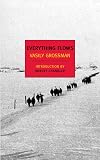
For a while, the Soviet Union held many people in thrall. It was the first serious competitor politically to human organisation probably since humans started farming. I say this because when farming took over from hunting and gathering, people had to stay put, grow enough for the ruler's surplus. In such a political system, order had to be maintained or workers would rebel and leave the world’s first crappy jobs of weeding, sowing, reaping and repetitive tasks like that. At least that is show more how Dave Graeber describes the loss of freedom and independence that agriculture brought to humanity.
Yet Grossman – who lived and wrote before and after Stalin came to understand that this political competitor to the historical order was tricky just after Stalin died when no one really knew what was going to happen. In the end he saw through the Soviet political system as another method of controlling vast populations:
Remember how Tolstoy said that no one in the world was guilty? But in our state, things are different: everyone is guilty – there is not one innocent person anywhere.
Here is the crux of any organised state, it’s population must either be forced through the risk of personal harm to follow the ways of its masters; or, each of us has to fall in line through the guilt that we are not worthy enough, good enough, correct thinking enough to be part of it. So we either adopt the ways of the master, and become guilty by simply being a thinking person. Theocratic states do more or less the same thing.
The time around Stalin’s death is such a clever time to set this book – it opened up possibilities of publication for Grossman and others – but also because those who had done well out the denunciations of the 1930s, who had signed statements about the less virtuous members of the soviet state and thus earned better jobs, better status, stability and the like, suddenly found themselves thinking twice about what documents they signed to save their careers, their skins, their futures.
Setting the story initially through the eyes of a scientist who was one of many who had denounced by making ‘nefarious’ accusations against fellow scientists for no other reason that they were part of a minority – like the Jews and anyone who showed signs of non-working-class ethics such as ‘cosmopolitanism’. Grossman, himself Jewish, does a very fine rendition of how anti-semitism worked in Stalin's time.
[Now, I found this a fascinating reminder (I had done a little study of soviet economics at university) that cosmopolitans were seen as anti-Soviet. Often this meant no more than they were so good at their research that their papers were known internationally and often their work was reviewed in glowing terms because non-Soviet scientists could use their research and benefit from it. Having spent my adult life reading international literature for its own sake, loving art, free exchange of ideas, working in government where you were (at least for a time) devoted to projects of civil merit, able to critique stupid ideas, I suddenly turned into an inner urban elite as most media outlets called anyone they didn’t like in their appeal to an anti-intellectual feeling in western society. ]
Soon after Stalin’s death, many denunciations and sentences to the gulags were overturned. This meant that many of those who had survived the camps returned like ghosts to haunt the living and the denouncers. Imagine the sudden shift in power systems, from one illogical state of being to the next illogical overthrow of the last. It almost sounds like a modern western democracy at work. A scientist’s cousin returns after 30 years in the gulags visits his cousin who did well in his absence, just long enough to remind him he was more than history, he lived with guilt for 30 years, now his cousin could live with the fear that ‘guilt’ carries.
Obviously, there are no political panaceas. Western democracy keeps proving that within its election process, nasty people focussed on denying freedom and rights even to those who voted for them return in ever growing numbers.
Grossman was a journalist by profession and this reads like a prolonged fictionalised report on the way things were at a strange time. He didn’t really finish it before he died. Some chapters feel like extended notes before refined into the storyline. But he was driven to get down on paper how this world of unreality operated. How language and ideas shifted allegiances and power moved fluidly as do words out of the mouths of the eloquent and well-trained speakers and those who just know the right words at the right time to get ahead in the world.
Worth reading because the chilling comparisons with our own world seems inevitable. My first Grossman, I have his Armenian Journals to read some day soon. show less
Yet Grossman – who lived and wrote before and after Stalin came to understand that this political competitor to the historical order was tricky just after Stalin died when no one really knew what was going to happen. In the end he saw through the Soviet political system as another method of controlling vast populations:
Remember how Tolstoy said that no one in the world was guilty? But in our state, things are different: everyone is guilty – there is not one innocent person anywhere.
Here is the crux of any organised state, it’s population must either be forced through the risk of personal harm to follow the ways of its masters; or, each of us has to fall in line through the guilt that we are not worthy enough, good enough, correct thinking enough to be part of it. So we either adopt the ways of the master, and become guilty by simply being a thinking person. Theocratic states do more or less the same thing.
The time around Stalin’s death is such a clever time to set this book – it opened up possibilities of publication for Grossman and others – but also because those who had done well out the denunciations of the 1930s, who had signed statements about the less virtuous members of the soviet state and thus earned better jobs, better status, stability and the like, suddenly found themselves thinking twice about what documents they signed to save their careers, their skins, their futures.
Setting the story initially through the eyes of a scientist who was one of many who had denounced by making ‘nefarious’ accusations against fellow scientists for no other reason that they were part of a minority – like the Jews and anyone who showed signs of non-working-class ethics such as ‘cosmopolitanism’. Grossman, himself Jewish, does a very fine rendition of how anti-semitism worked in Stalin's time.
[Now, I found this a fascinating reminder (I had done a little study of soviet economics at university) that cosmopolitans were seen as anti-Soviet. Often this meant no more than they were so good at their research that their papers were known internationally and often their work was reviewed in glowing terms because non-Soviet scientists could use their research and benefit from it. Having spent my adult life reading international literature for its own sake, loving art, free exchange of ideas, working in government where you were (at least for a time) devoted to projects of civil merit, able to critique stupid ideas, I suddenly turned into an inner urban elite as most media outlets called anyone they didn’t like in their appeal to an anti-intellectual feeling in western society. ]
Soon after Stalin’s death, many denunciations and sentences to the gulags were overturned. This meant that many of those who had survived the camps returned like ghosts to haunt the living and the denouncers. Imagine the sudden shift in power systems, from one illogical state of being to the next illogical overthrow of the last. It almost sounds like a modern western democracy at work. A scientist’s cousin returns after 30 years in the gulags visits his cousin who did well in his absence, just long enough to remind him he was more than history, he lived with guilt for 30 years, now his cousin could live with the fear that ‘guilt’ carries.
Obviously, there are no political panaceas. Western democracy keeps proving that within its election process, nasty people focussed on denying freedom and rights even to those who voted for them return in ever growing numbers.
Grossman was a journalist by profession and this reads like a prolonged fictionalised report on the way things were at a strange time. He didn’t really finish it before he died. Some chapters feel like extended notes before refined into the storyline. But he was driven to get down on paper how this world of unreality operated. How language and ideas shifted allegiances and power moved fluidly as do words out of the mouths of the eloquent and well-trained speakers and those who just know the right words at the right time to get ahead in the world.
Worth reading because the chilling comparisons with our own world seems inevitable. My first Grossman, I have his Armenian Journals to read some day soon. show less
Said to be the greatest work of Vasily Grossman, Jewish Soviet journalist and author, this book was impounded and almost certainly destroyed in 1960 by the KGB, but Grossman had given copies to two friends. Finally published in English in the 1980s and in Russia during the period of glasnost in 1988, this is a great, moving, and terrible account of the siege of Stalingrad, the Holocaust, the Gulag, and the circumstances and philosophy of everyday life in Stalin’s Soviet Union. The author show more constructed the work as a new War and Peace with similarities including the title itself, the many characters, its episodic nature, Hitler and Paulus substituting for Napoleon, and probably many others that I’ve missed. Some of the episodes are reminiscent of Chekov’s stories, with their examination of complex human behavior, the use of humor, the lack of a tied-up ending and the sense that the characters continue on after the story ends. Grossman’s well-known fine powers of observation, his interviewing techniques, and his imagination yield especially striking accounts of the thoughts of a child entering the Auschwitz gas chamber and of a Soviet Commissar undergoing interrogation at the Lubyanka prison in Moscow.
Some of the author’s thoughts that caught my eye:
And what did this doctrine of peace and love bring to humanity?....[It] caused more suffering than all the crimes of the people who did evil for its own sake.....People are wrong to see life as a struggle between good and evil....[human kindness] is what is truly human in a human being....Kindness is powerful only while it is powerless.
By the way, do you know the difference between a good type and a bad type? A good type is someone who behaves swinishly in spite of himself.
Tell me what you accuse the Jews of–I’ll tell you what you’re guilty of.
...however rich and famous a man may be, he will still grow old, die and yield his place to the young; that perhaps nothing matters except to live one’s life honestly.
You say life is freedom. Is that what people in the camps think? show less
Some of the author’s thoughts that caught my eye:
And what did this doctrine of peace and love bring to humanity?....[It] caused more suffering than all the crimes of the people who did evil for its own sake.....People are wrong to see life as a struggle between good and evil....[human kindness] is what is truly human in a human being....Kindness is powerful only while it is powerless.
By the way, do you know the difference between a good type and a bad type? A good type is someone who behaves swinishly in spite of himself.
Tell me what you accuse the Jews of–I’ll tell you what you’re guilty of.
...however rich and famous a man may be, he will still grow old, die and yield his place to the young; that perhaps nothing matters except to live one’s life honestly.
You say life is freedom. Is that what people in the camps think? show less
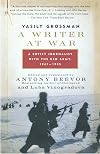
This book is one of the best accounts of the Soviet front out there. It is fascinating (although I may be biased, I do love accounts focusing on the actual people on the ground). It is fantastically edited in an attempt to tell a complete story. The raw quotes hit deep and hard, they are exquisite. I highly recommend it, if you won't read anything else about the USSR during this time period, at least read this.
This is the book that introduced me to Vasily Grossman, and I am now determined to show more read all his novels. His writing style is gripping, but so are his observations. I enjoyed how he focused on the specific everyday person. It is refreshing, compared to many other war time books that focus on the commandants and officers or war strategies.
On a personal note, this book changed my outlook on life in general and the USSR. It was a gripping read but heavy, I got through it slowly, I annotated, this was all I could talk about for months. I genuinely believe this is one of those books I will carry with me wherever I move and reread often. show less
This is the book that introduced me to Vasily Grossman, and I am now determined to show more read all his novels. His writing style is gripping, but so are his observations. I enjoyed how he focused on the specific everyday person. It is refreshing, compared to many other war time books that focus on the commandants and officers or war strategies.
On a personal note, this book changed my outlook on life in general and the USSR. It was a gripping read but heavy, I got through it slowly, I annotated, this was all I could talk about for months. I genuinely believe this is one of those books I will carry with me wherever I move and reread often. show less
Lists
War Literature (1)
Caucasus (1)
Jewish Books (1)
Europe (1)
Awards


You May Also Like


Associated Authors
Statistics
- Works
- 71
- Also by
- 8
- Members
- 8,716
- Popularity
- #2,744
- Rating
- 4.2
- Reviews
- 232
- ISBNs
- 359
- Languages
- 26
- Favorited
- 46

