
Aleksandr Solzhenitsyn (1918–2008)
Author of One Day in the Life of Ivan Denisovich
About the Author
Aleksandr Solzhenitsyn was born on December 11, 1918 in Kislovodsk in the northern Caucusus Mountains. He received a degree in physics and math from Rostov University in 1941. He served in the Russian army during World War II but was arrested in 1945 for writing a letter criticizing Stalin. He show more spent the next decade in prisons and labor camps and, later, exile, before being allowed to return to central Russia, where he worked as a high school science teacher. His first novel, One Day in the Life of Ivan Denisovich, was published in 1962. In 1970, he was awarded the Nobel Prize for Literature. In 1974, he was arrested for treason and exiled following the publication of The Gulag Archipelago. He moved to Switzerland and later the U. S. where he continued to write fiction and history. When the Soviet Union collapsed, he returned to his homeland. His other works include The First Circle and The Cancer Ward. He died due to a heart ailment on August 3, 2008 at the age of 89. (Bowker Author Biography) show less
Image credit: https://en.wikipedia.org/wiki/Aleksandr_Solzhenitsyn
Series
Works by Aleksandr Solzhenitsyn
The Gulag Archipelago 1918-1956 Abridged: An Experiment in Literary Investigation (1985) 2,876 copies, 32 reviews
A World Split Apart: Commencement Address Delivered at Harvard University, June 8, 1978 (1978) 110 copies, 1 review
The Russian Question at the End of the Twentieth Century: Toward the End of the Twentieth Century (1994) 82 copies, 1 review
Solzhenitsyn at Harvard : the address, twelve early responses, and six later reflections (1980) 65 copies, 1 review
We Have Ceased to See the Purpose: Essential Speeches of Aleksandr Solzhenitsyn (The Center for Ethics and Culture Solzhenitsyn Series) (2025) 25 copies
One Day in the Life of Ivan Denisovich / An Incident at Krechetovka Station / Matryona's House (1973) 24 copies
April 1917: The Red Wheel, Node IV, Book 1 (The Center for Ethics and Culture Solzhenitsyn Series) (2025) 17 copies
One Day in the Life of Ivan Denisovich / For the Good of the Cause / Matryona's House / An Incident at Krechetovka Station (1978) 15 copies
The Novels of Alexander Solzhenitsyn (Cancer Ward, August 1914, The First Circle, One Day in the Life of Ivan Denisovitch) (1974) 13 copies
The Gulag Archipelago, Volume II, Section I: The Destructive-Labor Camps; The Soul and Barbed Wire (1989) 9 copies
Rare LENIN IN ZURICH by Solzhenitsyn - 1st/1st HCDJ Farrar 1976 - fine [Hardcover] unknown (1976) 8 copies
Solzjenitsyn autobiografie, brieven, beschouwingen, interviews, kritieken, nobelprijsrede en een essay (1973) 8 copies
Dialogo con il futuro 7 copies
Oeuvres complètes, tome 2 : Le Pavillon des cancereux - Une journée d'Ivan Denissovitch et autres récits (1982) 6 copies
Soljenitsyne accuse 5 copies
Il mestiere dello scrittore 5 copies
Solzenicyn il Credente 5 copies
Tutto il teatro 5 copies
Kontinent 4 copies
Ricostruire l'uomo 4 copies
Live Not By Lies 4 copies
The Gulag Archipelago 3 copies
America, We Beg You to Interfere 2 copies
Två berättelser 2 copies
Maestros de la literatura universal. Tomo IX: Rusia, 2/ Tolstoi: Sonata a Kreutzer; Gorki: Caminando por el mundo; Bulgakov: Los huevos fatales; Bábel: Caballería roja;… — Contributor — 2 copies
Arcipelago Gulag 1918 2 copies
The Gulag Archipelago, Volume II, Section II: The Destructive-Labor Camps; The Soul and Barbed Wire (1989) 2 copies
Arcipelago Gulag 1 copy
Arcipelago Gulag 1 copy
AUGUST 1914 1 copy
Красное колесо 1 copy
Рассказы и Крохотки 1 copy
Arquipľago de Gulag 1 copy
Gulagarkipelet 2 1 copy
L'archipel du goulag . 1918-1956 : essai d'investigation littéraire, première et deuxième parties (1973) 1 copy
Solzenicyn Aleksandr 1 copy
AUGUST 1914 1 copy
Archipelag GUŁag. Tom 2 1 copy
Solženicyn Alexandr 1 copy
Miniatures en prosa 1 copy
Soljenitsin 1 copy
Le pavillon des cancereux 1 copy
Sochineniya [Works] 1 copy
The Gulag Archipelago 1 copy
The First Circle 1 copy
Stolypin i Tsar' 1 copy
Сочинения 1 copy
Малое собрание сочинений 1 copy
O carvalho e o bezerro 1 copy
Kankerpaviljoen 1 copy
El primer círculo Tomo II 1 copy
El primer círculo Tomo I 1 copy
Archipelag GUŁag. Tom 3 1 copy
Syöpäosasto. 2. osa 1 copy
Agosto 1914 1 copy
Vatra i mravi 1 copy
Priče 1 copy
Matryona's House / An Incident at Krechetovka Station / For the Good of the Cause / Zakhar-the-Pouch (1987) 1 copy
URSS 50 Anos Depois 1 copy
Arquipélago Gulag 1 copy
Documentary Record 1 copy
Apricot Jam [short story] 1 copy
TheGulagArchipelago 1 copy
El caso Solyenitsyn 1 copy
Poems and Extracts 1 copy
The Escapists 1 copy
Rasskazy (Short Stories) including One Day in the Life of Ivan Denisovich. (Russian Edition) (2002) 1 copy
Zen and the Art of Faking It 1 copy
Cancer Ward Part Two 1 copy
Krebsstation Buch 2 1 copy
Uma palavra de verdade... 1 copy
Pabellon del cancer 1 copy
A.I. Solzhenitsyn. Entre el autoritarismo y la explotación seguido de Una candela bajo el viento 1 copy
The Voice of Freedom 1 copy
The Gulag Archipelago, 1918-1956. an experiment in literary investigation, I-II / Vol. 1 (2020) 1 copy
Short stories v. 1,2 1 copy
200 Years Together 1 copy
Alexander Solzhenitsyn Collection 3 Books Set (Cancer Ward, The Gulag Archipelago, One Day in the Life of Ivan Denisovich) (2020) 1 copy
The Right Hand 1 copy
Cuentos en miniatura 1 copy
The Works of Solzhenitsyn 1 copy
El suicidio de Occidente 1 copy
Meistererzählungen 1 copy
Una candela al vento 1 copy
Syöpäosasto. [1. osa] 1 copy
Ve vyšším zájmu 1 copy
L' Erreur De l'Occident 1 copy
Syöpäosasto. 1. osa 1 copy
Sy©œp©Þosasto. 2. osa 1 copy
Victory Celebrations / Prisoners / Candle in the Wind / The Tanks Know the Truth / The Republic of Labor / The Parasite (1986) 1 copy
oeuvres (tome 5) 1 copy
Août Quatorze - Tome II 1 copy
Le Chemin Des Forçats 1 copy
August 1914 1 copy
1974 1 copy
Krebsstation Roman / Alexander Solschenizin. Mit e. Vorw. von Heinrich Böll. [Aus d. Russ. von Christiane Auras u.a.] (1970) 1 copy
Рассказы 1 copy
Associated Works
Tagged
Common Knowledge
- Legal name
- Солженицын, Александр Исаевич
- Other names
- Solzhenitsyn, Aleksandr Isayevich
Solzhenitsyn, Alexander I.
Солженѝцин, Алекса̀ндър Иса̀евич
Солженицин, Александър
Солжењицин, Александар
Солженицин, Александар Исаевич (show all 74)
Солженицин, Александар
Салжані́цын, Алякса́ндр Іса́евіч
Салжані́цын, Алякса́ндр
Σολζενίτσιν, Αλεξάντρ Ισάγεβιτς
Σολζενίτσιν, Αλεξάντρ
ソルジェニーツィン アレクサンドル
솔제니친 알렉산드르
索尔仁尼琴 亚历山大
索爾仁尼琴 亞歷山大
אלכסנדר ,סולז'ניצין
ألكسندر ,سولجنيتسين
آلکساندر ,سولژنیتسین
الیکزینڈر ,سلزینسٹائن
Սոլժենիցին, Ալեքսանդր
სოლჟენიცინი, ალექსანდრე
सोल्शेनीत्सिन, अलेक्सान्द्र
সলজেনিৎসিন, আলেক্সান্দ্র্
ಸೊಲ್ಜೆನಿತ್ಸಿನ್ಅ, ಲೆಕ್ಸಾಂಡರ್
സോൾഷെനിറ്റ്സിൻ, അലക്സാണ്ടർ
சோல்செனிட்சின், அலெக்சாண்டர்
Solschenizyn, Alexander Issajewitsch
Solschenizyn, Alexander
Solzhenitsyn, Aleksandr Isáyevich
Soljenítsin, Alexander Issaiévich
Soljenítsin, Alexander
Solženicyn, Alexandr Isajevič
Solženicyn, Alexandr
Solzjenitsyn, Aleksandr Isajevitsj
Solzjenitsyn, Aleksandr
Soljenitsyne, Alexandre Issaïevitch
Soljenitsyne, Alexandre
Soljénitsyne, Alexandre Issaïevitch
Soljénitsyne, Alexandre
Solzjenitsyn, Aleksandr Isajevitj
Solzjenitsyn, Aleksandr Isajevitsj
Solženitsyn, Aleksandr Isajevitš
Solženitsyn, Aleksandr
Solsjenitsyn, Aleksandr Isajevitj
Solsjenitsyn, Aleksandr
Soljenitsin, Aleksandr İsayeviç
Soljenitsin, Aleksandr
Solženicyn, Alexandr Isajevič
Solženicyn, Alexandr
Solzhenítsyn, Aleksandr Ísajevítsj
Solzhenítsyn, Aleksandr
Solženitsõn, Aleksandr Issajevitš
Solženitsõn, Aleksandr
Sołżenicyn, Aleksandr Isajewicz
Sołżenicyn, Aleksandr
Soljenițîn, Aleksandr Isaievici
Soljenițîn, Aleksandr
Solženjicin, Aleksandar Isajevič
Solženjicin, Aleksandar
Szolzsenyicin, Alekszandr Iszajevics
Szolzsenyicin, Alekszandr
Solzhenitsin, Aleksandr Isaievitx
Solzhenitsin, Aleksandr
Soljenitsın, Aleksandr İsayeviç
Soljenitsın, Aleksandr
Soljenitsin, Aleksandr Issàievitx
Solĵenicin, Aleksandr Isajeviĉ
Solĵenicin, Aleksandr
Sollzhenicin, Aleksandër Isajeviç
Sollzhenicin, Aleksandër
Solžeņicins, Aleksandrs
Solženicynas, Aleksandras
Solženicin, Aleksander Isajevič
Solženicin, Aleksander - Birthdate
- 1918-12-11
- Date of death
- 2008-08-03
- Gender
- male
- Education
- Rostov State University (mathematics)
Moscow Institute of Philosophy, Literature, and History - Occupations
- novelist
teacher
historian - Organizations
- Soviet Army (WWII)
- Awards and honors
- Nobel Prize (Literature, 1970)
American Academy of Arts and Letters (Foreign Honorary, Literature, 1969)
Templeton Prize (1983)
Royal Society of Literature (Honorary Fellow) - Nationality
- Russia
stateless (1974-1990) - Birthplace
- Kislovodsk, Soviet Union
- Places of residence
- Moscow, Russia
Palo Alto, California, USA
Cavendish, Vermont, USA - Place of death
- Moscow, Russia
- Burial location
- The Donskoi Monastery, Moscow, Russia
- Map Location
- Russia
Members
Discussions
The Gulag Archipelago in Fine Press Forum (June 2024)
Solzhenitsyn 1918 - 2008 in Fans of Russian authors (October 2021)
Group Read, July 2019: The First Circle in 1001 Books to read before you die (July 2019)
Group Read, December 2016: The First Circle in 1001 Books to read before you die (January 2017)
The Gulag Archipelago by Sozhenitsyn in Fans of Russian authors (September 2010)
Best Translation of Gulag Archipelago in Fans of Russian authors (June 2008)
Best Translation of Gulag Archipelago in Fans of Russian authors (June 2008)
Solzhenitsyn in Fans of Russian authors (August 2007)
Reviews
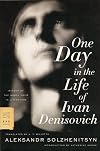
What is it about summer that always makes me want to re-read the historical novels and memoirs that took over my life during the crammed summer session at UVIC of 2009? I’ve largely forgotten most of the 20th century Russian history that we covered and you couldn’t pay me to remember what my final papers were about for that course, but Ivan Denisovich’s day (of a life) in a Russian prison camp (gulag) has always stuck with me. Solzhenitsyn himself spent time in these prisons for his show more seditionary writing and this novel, while fictional, helped shed light on the political and social climate of Russia during the author’s lifetime. His prose is sparse, almost apersonal, as he describes the minutiae of Denisovich’s day from dawn to dusk, with the essential quest for scamming more food, the prisoner’s need for his work to have meaning, and the inner workings of camp politics looming as predominant themes. For all its simplicity, the story is somehow still engaging as we see ourselves walking the day in the prisoner’s shoes through a largely barren, but still lived, landscape. Do we sense a flicker of hope that he will one day be freed, a sense of warm camaraderie with his fellow work gang, a small satisfaction in a brick structure well-built by ingenuity and everyman-skill? Possibly. Solzhenitsyn has played his audience well in this missive, which on the surface seems like an exploration of monotony, but when imagined as a continuity for the protagonist we can see how the small details and choices made can change a day entirely. One day, indeed. show less

The story takes place in the men's cancer ward of a hospital in a city in Soviet Central Asia. The patients in Ward 13 all suffer from cancer, but differ in age, personality, nationality, and social class (as if such a thing could be possible in the Soviet "classless" society!). We are first introduced to Pavel Rusanov, a Communist Party functionary, who enters the hospital because of a rapidly-growing neck tumor.
"The hard lump of his tumor--unexpected, meaningless and quite without use--had show more dragged him in like a fish on a hook and flung him onto this iron bed--a narrow, mean bed, with creaking springs and an apology for a mattress."(p 10)
Solzhenitzyn himself was released from a labor camp in early 1953, just before Stalin's death, and was exiled to a village in Kazakhstan. While incarcerated, he had been operated on for a tumor, but was not told the diagnosis. He subsequently developed a recurrence, received radiotherapy in Tashkent, and recovered.
The narrative places its focus on the central character of Oleg Kostoglotov, a young man who has recently been discharged from a penal camp and is now "eternally" exiled to this particular province. Only two weeks earlier, he was admitted to the ward in grave condition from an unspecified tumor, but he has responded rapidly to radiation therapy. Among the doctors are Zoya, a medical student; Vera Gangart, a young radiologist; and Lyudmila Dontsova, the chief of radiation therapy.
Rusanov and Kostoglotov respond to therapy and are eventually discharged; other patients remain in the ward, get worse, or are sent home to die. In the end Kostoglotov boards a train to the site of his "eternal" exile: "The long awaited happy life had come, it had come! But Oleg somehow did not recognize it."
In The Cancer Ward Solzhenitzyn transforms his own experiences into a multifaceted tale about Soviet society during the period of hope and liberalization after Stalin's death. While Cancer, of course, is an obvious metaphor for the totalitarian state there is also a penetrating look at mid-century Soviet medicine and medical ethics.
“But substantial X-ray treatment is impossible without transfusion!” “Then don’t give it! Why do you assume you have the right to decide for someone else? Don’t you agree it’s a terrifying right, one that rarely leads to good? You should be careful. No one’s entitled to it, not even doctors.” “But doctors are entitled to that right—doctors above all,” exclaimed Dontsova with deep conviction. By now she was really angry. “Without that right there’d be no such thing as medicine!”
Of course, the paternalism evident here (e.g. lack of truth-telling and informed consent) was also characteristic of medicine in other countries in the 1950's and remains an important concern in professional ethics.
The novel also explores the personal qualities and motivation of physicians, and the issue of intimate relationships between doctors and patients. The most incisive aspects of the book are its insight into human nature and the realism of its characters. show less
"The hard lump of his tumor--unexpected, meaningless and quite without use--had show more dragged him in like a fish on a hook and flung him onto this iron bed--a narrow, mean bed, with creaking springs and an apology for a mattress."(p 10)
Solzhenitzyn himself was released from a labor camp in early 1953, just before Stalin's death, and was exiled to a village in Kazakhstan. While incarcerated, he had been operated on for a tumor, but was not told the diagnosis. He subsequently developed a recurrence, received radiotherapy in Tashkent, and recovered.
The narrative places its focus on the central character of Oleg Kostoglotov, a young man who has recently been discharged from a penal camp and is now "eternally" exiled to this particular province. Only two weeks earlier, he was admitted to the ward in grave condition from an unspecified tumor, but he has responded rapidly to radiation therapy. Among the doctors are Zoya, a medical student; Vera Gangart, a young radiologist; and Lyudmila Dontsova, the chief of radiation therapy.
Rusanov and Kostoglotov respond to therapy and are eventually discharged; other patients remain in the ward, get worse, or are sent home to die. In the end Kostoglotov boards a train to the site of his "eternal" exile: "The long awaited happy life had come, it had come! But Oleg somehow did not recognize it."
In The Cancer Ward Solzhenitzyn transforms his own experiences into a multifaceted tale about Soviet society during the period of hope and liberalization after Stalin's death. While Cancer, of course, is an obvious metaphor for the totalitarian state there is also a penetrating look at mid-century Soviet medicine and medical ethics.
“But substantial X-ray treatment is impossible without transfusion!” “Then don’t give it! Why do you assume you have the right to decide for someone else? Don’t you agree it’s a terrifying right, one that rarely leads to good? You should be careful. No one’s entitled to it, not even doctors.” “But doctors are entitled to that right—doctors above all,” exclaimed Dontsova with deep conviction. By now she was really angry. “Without that right there’d be no such thing as medicine!”
Of course, the paternalism evident here (e.g. lack of truth-telling and informed consent) was also characteristic of medicine in other countries in the 1950's and remains an important concern in professional ethics.
The novel also explores the personal qualities and motivation of physicians, and the issue of intimate relationships between doctors and patients. The most incisive aspects of the book are its insight into human nature and the realism of its characters. show less

"Almost a happy day."--Ivan Deisovich Shokhov
There is no doubt that the Siberian gulags, implemented under Stalin who, it has been estimated, killed 7 million of his own people, were absolute horrors. But in this novel, depicting just one day, no one dies. They are merely grossly mistreated while serving ten and twenty-five year sentences for minor, sometimes illogical infractions. For example, men were sent to the gulag after surviving a Nazi camp. They were sent to the gulag because they show more had spent time around "foreigners" in those camps and thus could not be trusted. (There's Stalin's famous paranoia for you.) Whatever the infraction, the prisoners at the end of their sentences, if they lived to see that day, will either be exiled, have more years tacked on, or they will be dead. None will ever go home again and they know it.
This day, a day in 1951, nothing extraordinarily horrific happens: the camp's 400 men are merely under-clothed, under-fed. Like all the days before and the days after, they spend this day freezing, working, and hungry. And being counted.
What I found discombobulating was how I reacted to the story. It was awful, God yes, but it didn't invoke tears or major fear. There are men easily given to violence in the camp but this day no one is grossly assaulted. Tragedies are mentioned in passing without hyper focus or sting, told off-screen, so to speak.
Rather, the day is spent by the main character, Ivan Denisovich Shukhov, being careful, being wily. He has figured out how to survive one more day, and this day with tiny additions of luxury: another 6 ounces of bread, an extra bowl of thin cabbage soup, and a cigarette.
In my reading journal, I even made a list from his thoughts of survival which I titled, "Rules for Surviving the Gulag," which included:
"...you never put your feet near the flame if you're wearing boots," "...never be conspicuous. The main thing was never to be seen by a camp guard on your own, only in a group..." and "When you work for the knowing you gave them quality; when you worked for a fool you simply gave him eyewash."
Dozens of small things like those meant the difference between living another day or starting your spiral toward terrible misery and then inevitably, terrible death. No one can save you.
This novel--based on Solzhenitsyn's own years in labor camps--made a big impact in the Soviet Union and in the world when it was published in 1962, approved by Nikita Khrushchev, Stalin now dead and no hero of Khrushchev's. It was the first time the Stalin Terrors were openly acknowledged. A couple of years later the novel became banned again after Khrushchev was ousted in 1964, but the cat was out of the bag. Solzhenitsyn continued secretly writing and publishing outside of the USSR. In 1970, Solzhenitsyn was award the Nobel Peace Prize, which gave him a whole new set of political headaches, and exile.
Very complicated, all that.
That makes me wonder if that is why the novel seemed to pull its punches.
Or was there some other subversive message from Solzhenitsyn? Was it a message to the Soviet government about its short-sightedness toward its own valuable resources? (Ivan Denisovich Shukhov was a kulak, one of the thousands of peasants who had their lands taken from them and made into collectives). Was the message that the true strength of the Union was the hard working and skilled people, a major resource they stupidly abused and murdered by the millions?
In the Afterword, Eric Bogosian writes, "The individual cannot detach himself from the matrix of his society." In this case, it was the societal matrix of the USSR and equally the matrix of the gulag.
P.S. Hey 2024, the good guys don't create thousands of interment camps. show less
There is no doubt that the Siberian gulags, implemented under Stalin who, it has been estimated, killed 7 million of his own people, were absolute horrors. But in this novel, depicting just one day, no one dies. They are merely grossly mistreated while serving ten and twenty-five year sentences for minor, sometimes illogical infractions. For example, men were sent to the gulag after surviving a Nazi camp. They were sent to the gulag because they show more had spent time around "foreigners" in those camps and thus could not be trusted. (There's Stalin's famous paranoia for you.) Whatever the infraction, the prisoners at the end of their sentences, if they lived to see that day, will either be exiled, have more years tacked on, or they will be dead. None will ever go home again and they know it.
This day, a day in 1951, nothing extraordinarily horrific happens: the camp's 400 men are merely under-clothed, under-fed. Like all the days before and the days after, they spend this day freezing, working, and hungry. And being counted.
What I found discombobulating was how I reacted to the story. It was awful, God yes, but it didn't invoke tears or major fear. There are men easily given to violence in the camp but this day no one is grossly assaulted. Tragedies are mentioned in passing without hyper focus or sting, told off-screen, so to speak.
Rather, the day is spent by the main character, Ivan Denisovich Shukhov, being careful, being wily. He has figured out how to survive one more day, and this day with tiny additions of luxury: another 6 ounces of bread, an extra bowl of thin cabbage soup, and a cigarette.
In my reading journal, I even made a list from his thoughts of survival which I titled, "Rules for Surviving the Gulag," which included:
"...you never put your feet near the flame if you're wearing boots," "...never be conspicuous. The main thing was never to be seen by a camp guard on your own, only in a group..." and "When you work for the knowing you gave them quality; when you worked for a fool you simply gave him eyewash."
Dozens of small things like those meant the difference between living another day or starting your spiral toward terrible misery and then inevitably, terrible death. No one can save you.
This novel--based on Solzhenitsyn's own years in labor camps--made a big impact in the Soviet Union and in the world when it was published in 1962, approved by Nikita Khrushchev, Stalin now dead and no hero of Khrushchev's. It was the first time the Stalin Terrors were openly acknowledged. A couple of years later the novel became banned again after Khrushchev was ousted in 1964, but the cat was out of the bag. Solzhenitsyn continued secretly writing and publishing outside of the USSR. In 1970, Solzhenitsyn was award the Nobel Peace Prize, which gave him a whole new set of political headaches, and exile.
Very complicated, all that.
That makes me wonder if that is why the novel seemed to pull its punches.
Or was there some other subversive message from Solzhenitsyn? Was it a message to the Soviet government about its short-sightedness toward its own valuable resources? (Ivan Denisovich Shukhov was a kulak, one of the thousands of peasants who had their lands taken from them and made into collectives). Was the message that the true strength of the Union was the hard working and skilled people, a major resource they stupidly abused and murdered by the millions?
In the Afterword, Eric Bogosian writes, "The individual cannot detach himself from the matrix of his society." In this case, it was the societal matrix of the USSR and equally the matrix of the gulag.
P.S. Hey 2024, the good guys don't create thousands of interment camps. show less
First published in 1962, this was the first book that openly talked about life in the Soviet gulag system. The story is very simple, it follows a single day in the life of a former Russian solider, Ivan Denisovich Shukhov, now serving 10 years hard labour in Siberia after being falsely accused of treason because he was an escaped German POW.
The authorities claimed that "he’d returned from captivity to carry out a mission for German intelligence. What sort of mission neither Shukhov nor show more the interrogator could say…. Shukhov had it all figured out. If he didn’t sign he’d be shot. If he signed he’d still get a chance to live. So he signed."
The thing about this book that really struck me was that nothing really happens and is almost devoid of any emotions. Shukhov is counting the days down to his supposed release date with no idea as to whether or not it will actually happen yet shows almost no discontentment at all. He just goes through the motions of his day, the same day he has had thousands of times before. In fact, he feels almost serenely fortunate at the end of it because he'd managed to get hold of some extra food and smuggle a piece of scrap metal back into camp that he will be able to fashion into a tool with which earn extra rations in the future. However, he also realises that tomorrow the daily struggle to survive will resume.
“The belly is a demon. It doesn’t remember how well you treated it yesterday; it’ll cry out for more tomorrow.”
Solzhenitsyn writes from personal experience, he spent eight years in the gulag. The simplicity of this tale makes it a remarkable piece of powerful writing that shines a spotlight on an important piece of social history as well as being a history maker in itself. As such it deserves to be regarded as a classic. show less
The authorities claimed that "he’d returned from captivity to carry out a mission for German intelligence. What sort of mission neither Shukhov nor show more the interrogator could say…. Shukhov had it all figured out. If he didn’t sign he’d be shot. If he signed he’d still get a chance to live. So he signed."
The thing about this book that really struck me was that nothing really happens and is almost devoid of any emotions. Shukhov is counting the days down to his supposed release date with no idea as to whether or not it will actually happen yet shows almost no discontentment at all. He just goes through the motions of his day, the same day he has had thousands of times before. In fact, he feels almost serenely fortunate at the end of it because he'd managed to get hold of some extra food and smuggle a piece of scrap metal back into camp that he will be able to fashion into a tool with which earn extra rations in the future. However, he also realises that tomorrow the daily struggle to survive will resume.
“The belly is a demon. It doesn’t remember how well you treated it yesterday; it’ll cry out for more tomorrow.”
Solzhenitsyn writes from personal experience, he spent eight years in the gulag. The simplicity of this tale makes it a remarkable piece of powerful writing that shines a spotlight on an important piece of social history as well as being a history maker in itself. As such it deserves to be regarded as a classic. show less
Lists
All Things Russia (10)
Read This Next (1)
Wishlist (1)
. (1)
1950s (1)
1960s (1)
THE WAR ROOM (1)
AP Lit (1)
Favourite Books (2)
. (2)
Unread books (3)
Writers at Risk (3)
Five star books (2)
1970s (1)
One Day (1)
Winter Books (1)
Folio Society (1)
Europe (1)
Short and Sweet (1)
Read (1)
Awards


You May Also Like


Associated Authors
Statistics
- Works
- 359
- Also by
- 9
- Members
- 44,660
- Popularity
- #366
- Rating
- 4.1
- Reviews
- 539
- ISBNs
- 1,156
- Languages
- 27
- Favorited
- 109


