
Mikhail Sholokhov (1905–1984)
Author of And Quiet Flows the Don
About the Author
For decades a pillar of the Soviet literary establishment, Sholokhov owes his stature to And Quiet Flows the Don (1928--40), a four-volume epic of the life and fate of the Don Cossacks in the Revolution and civil war. Although himself a party member, Sholokhov depicts fairly impartially both sides show more in the conflict between the Reds and the Whites and shows how his hero, Grigory Melekhov, is driven by background and fate from one camp to the other. This realistic novel captures the exotic Cossack milieu superbly, and the whole works on a scale unseen since Tolstoy's War and Peace. Among Sholokhov's later works, Virgin Soil Upturned (1932--60), which deals with the collectivization of agriculture, deserves particular mention; the first volume is far more direct and honest than the much-later second volume. Over the years, Sholokhov's authorship of And Quiet Flows the Don has been questioned, most recently by Solzhenitsyn, but Sholokhov has had strong defenders in both the Soviet Union and the West. His political stance accounts for part of the anger directed against him. Extremely conservative, Sholokhov made vicious attacks on dissidents and the West and, aside from his concern for environmental issues, was a devoted follower of the party line. Sholokhov was awarded the Nobel Prize for Literature in 1965. (Bowker Author Biography) show less
Disambiguation Notice:
(yid) VIAF:94750009
Series
Works by Mikhail Sholokhov
One Man's Destiny: And Other Stories, Articles and Sketches 1923-1963 (Abacus Bks.) (1984) 40 copies
Sông Đông Êm Đềm (tập 1) 4 copies
And Quiet Flows the Dawn (vol. 2-4) 3 copies
Ny jord / B.3 3 copies
Le don paisible, 3 tomes 3 copies
Kertomuksia 3 copies
Lygn streymir Don – fyrra bindi 2 copies
Selected tales from the Don 2 copies
Sturm über der Steppe 2 copies
Inimese saatus : [jutustus] 2 copies
Új barázdát szánt az eke 2 copies
Fortellinger fra Don 2 copies
El Don apacible 2 (Spanish Edition) 2 copies
Los Premios Nobel de literatura (X) 2 copies
Zorany Ugór 2 copies
Maestros de la literatura universal. Tomo IX: Rusia, 2/ Tolstoi: Sonata a Kreutzer; Gorki: Caminando por el mundo; Bulgakov: Los huevos fatales; Bábel: Caballería roja;… — Contributor — 2 copies
Seeds of Tomorrow 2 copies
Ülesküntud uudismaa 2 copies
Aron raivaajat. Toinen kirja 2 copies
Cuentos del don 1 copy
El Don apacible. Vol. 2 1 copy
" Po velenii͡u dushi". 1 copy
Tihi Don III 1 copy
Terra dissodata. Romanzo 1 copy
İnsanın Yazgısı 1 copy
Človekova usoda 1 copy
Tihi Don 1 1 copy
Tihi Don 2 1 copy
Tihi Don 3 1 copy
Tihi Don 4 1 copy
Ihmiskohtalo 1 copy
Sinja stepa 1 copy
Ny jord, bind 1-3 1 copy
Lygn streymir Don - I 1 copy
Lygn streymir Don - II 1 copy
El don apacible 3 1 copy
Cuentos 1 copy
Tih Don II 1 copy
DON SANTHAMAAYOZHUKUNU 1 copy
EL DON APACIBLE TOMO IV 1 copy
EL DON aPaCIBLE TOMO II 1 copy
EL DON aPaCIBLe TOMO III 1 copy
El Don apacible Volumen I 1 copy
El Don apacible Volumen II 1 copy
El Don apacible Volumen III 1 copy
El Don apacible Volumen IV 1 copy
T. I. EL DON APACIBLE 1 copy
Pamant destelenit 1 copy
Том 6 1 copy
Том 7 1 copy
Том 8 1 copy
Тихий Дон. Том 2. 1 copy
Тихий Дон. Том 1. 1 copy
fuego en el don 1 copy
EL DON ARRASADO 1 copy
El Don apacible I 1 copy
El Don apacible II 1 copy
Il puledro 1 copy
El don de plàcides aigües 1 copy
Tierras roturadas I 1 copy
Собрание сочинений в 8 томах 1 copy
Il placido Don - 2voll. 1 copy
Tichý Don. [Díl] 1-2 1 copy
Tichý Don. [Díl] 3-4 1 copy
Frühe Erzählungen 1 copy
Terre vergini 1 copy
Stromer 1 copy
El don apacible III 1 copy
El don apacible I 1 copy
El don apacible II 1 copy
El don apacible IV 1 copy
Ein Schicksal. Mit Illustrationen v. Kuprijanow, Krylow, Sokolow. Deutsch v. Juri Elperin. Buchschmuck: J. Kopilow. (1965) 1 copy
Cichy Don tom 3-4 1 copy
Cichy Don tom 1-2 1 copy
Pripovijetke I 1 copy
Tihi Don III 1 copy
Uzorana ledina I 1 copy
Uzorana ledina II 1 copy
DURGUN DON 1 copy
Donul Liniștit 1 copy
Steinbeck, Seferis, Scholochow 3 Ernte am Don : Nobelpreis 1965 UdSSR / Michail A. Scholochow 1 copy
Stilla flyter Don. D. 5 1 copy
Selected tales from the Don 1 copy
And Quiet Flows the Don v1 1 copy
And Quiet Flows the Don v2 1 copy
And Quiet Flows the Don v3 1 copy
And Quiet Flows the Don v4 1 copy
Số phận con người 1 copy
Terras desbravadas - Tomo I 1 copy
Três Histórias de Guerra 1 copy
нахалёнок 1 copy
Csendes Don III. 1 copy
Csendes Don IV. 1 copy
Csendes Don I. 1 copy
Stories 1 copy
By Mikhail Aleksandrovich Sholokhov Virgin Soil Upturned (Modern Classics) (New edition) [Paperback] (1977) 1 copy
Campos roturados 1 copy
Early Stories 1 copy
Csendes Don 1 copy
Don Hikayeleri 1 copy
And Quiet Flows the Don 1 copy
Morreram pela Pátria 1 copy
الدون الهادئ #2 1 copy
قصص 1 copy
Quiet Flows The Don Vol I 1 copy
Quiet Flows The Don Vol II 1 copy
Jo Desh Ke Liye Lade 1 copy
Insan Ka Nasiba 1 copy
El Don apacible, Tomo I 1 copy
The Science of Hatred 1 copy
Il placido Don, Vol 1 1 copy
Tihi Don II 1 copy
Keeris 1 copy
Varss 1 copy
Racconti del Don 1 copy
Rozrušená země 1 copy
Il placido Don. Vol. I 1 copy
Il placido Don. Vol. II 1 copy
Il placido Don. Vol. III 1 copy
Il placido Don. Vol. IV 1 copy
Stilla flyter Don. D. 3 1 copy
En manns skjebne 1 copy
Tykusis Donas. I tomas 1 copy
Тихий Дон : Роман : В 4 кн 1 copy
Tikhij Don Tom 2 / Tihiy Don: Roman v 2-h tomah. Tom 1 (In Russian) — Author — 1 copy
Stilla flyter Don D. 1 1 copy
Stilla flyter Don D. 2 1 copy
Stilla flyter Don D. 3 1 copy
Stilla flyter Don D. 5 1 copy
The Science of Hatred 1 copy
1965 1 copy
Tussen wit en rood 1 copy
Ett människöde 1 copy
El Don Apacible . 3 1 copy
Novellen 1 copy
Sie kämpften für die Heimat Roman Schule des Hasses Ein Menschenschicksal Erzählungen Bibliothek des Sieges (1980) 1 copy
Le Don Paisible, Tome 1 1 copy
Sie kämpften für die Heimat 1 copy
Short Stories 1 copy
Neuland unterm Flug 1 copy
Der stille Don die Zarenzeit 1 copy
Associated Works
The Best of Both Worlds: An Anthology of Stories for All Ages (1968) — Contributor — 25 copies, 1 review
Tagged
Common Knowledge
- Canonical name
- Sjolochov, Michail
- Legal name
- Шо́лохов, Михаи́л Алекса́ндрович
Sholokhov, Mikhail Aleksandrovich - Birthdate
- 1905-05-24
- Date of death
- 1984-02-21
- Gender
- male
- Occupations
- novelist
- Organizations
- Supreme Soviet
Union of Soviet Writers - Awards and honors
- Nobel Prize, 1965
Lenin Prize, 1960
Stalin Prize, 1941 - Nationality
- Russia
- Birthplace
- Veshenskaya, Russian Empire
- Places of residence
- Veshenskaya, Russia
Moscow, Soviet Union - Place of death
- Veshenskaya, USSR
- Map Location
- Russia
Members
Reviews
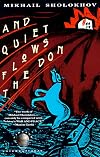
This tome was written in 1928 in the Soviet Union, and, together with its sequel ‘The Don Flows Home to the Sea’ (1939), earned Mikhail Sholokhov the Nobel Prize. Sholokhov grew up in the Don region of Southern Russia, and in this book illustrated the culture of the Cossacks there before WWI, during it, and afterwards, during the revolution and civil war. It’s historical fiction on a grand scale, and well worth reading.
Beware, however, that Sholokhov is explicit in describing the show more horrors of war, and despite my initial suspicion that he may have been doing so to explain why Revolution was justified under pressure from Soviet editors, he shows violence and injustice perpetrated by all sides – the Germans, White Russians, Bolsheviks, and Cossack separatists. In the fight for control of Russia, each side’s view is expressed, and no faction emerges ‘pure’. The book reminded me of Michael Bulgakov’s ‘White Guard’, just set in the Don region of Southern Russia, instead of Kiev.
In this case, what’s at stake is the Cossack way of life. As they waver in their support for any particular side, it’s clear that mostly what they want is for the 3-4 year war to end so that they can return home, and for things to remain as they were. As the Whites may continue the war, or ask them to do things like protect St. Petersburg when their hearts weren’t in it, and as the Reds may take their land in the end and distribute it to the workers or peasants, it’s also clear that independence was what they really needed, and deserved. The book ends with brutal executions of Red officers and soldiers, with a foreboding warning that this would not be the end of it, and indeed, aside from what Sholokhov may say in the sequel which I haven’t gotten to yet, history teaches us of Stalin’s ‘decossackization’ and genocide.
I think the book is best in the first two sections, ‘Peace, and ‘War’; the ones that follow (‘Revolution’ and ‘Civil War’) are good, but as the fighting was a bit pell-mell with shifting sides and allegiances, while he describes historical reality, he defocuses a bit from the initial main characters. He is great at describing the inevitable attraction of men and women, and while he couldn’t be explicit in the sex and shameless adultery that followed, he was explicit in the horrible violence women endured. A brutal and hair-raising example of this was the gang rape of a young kitchen-maid by soldiers that ends ‘Peace’.
In showing Aksinia cheating on Stepan, then later cheating on Gregor, compelled to follow her human nature despite the destructive consequences and beatings she’ll endure, Sholokhov seems to be drawing a parallel to human nature to (as if by gravity!) fight for power and to wage war. He never lectures, letting actions speak for themselves, but seems to say, or perhaps illustrate, that we simply can’t help ourselves. show less
Beware, however, that Sholokhov is explicit in describing the show more horrors of war, and despite my initial suspicion that he may have been doing so to explain why Revolution was justified under pressure from Soviet editors, he shows violence and injustice perpetrated by all sides – the Germans, White Russians, Bolsheviks, and Cossack separatists. In the fight for control of Russia, each side’s view is expressed, and no faction emerges ‘pure’. The book reminded me of Michael Bulgakov’s ‘White Guard’, just set in the Don region of Southern Russia, instead of Kiev.
In this case, what’s at stake is the Cossack way of life. As they waver in their support for any particular side, it’s clear that mostly what they want is for the 3-4 year war to end so that they can return home, and for things to remain as they were. As the Whites may continue the war, or ask them to do things like protect St. Petersburg when their hearts weren’t in it, and as the Reds may take their land in the end and distribute it to the workers or peasants, it’s also clear that independence was what they really needed, and deserved. The book ends with brutal executions of Red officers and soldiers, with a foreboding warning that this would not be the end of it, and indeed, aside from what Sholokhov may say in the sequel which I haven’t gotten to yet, history teaches us of Stalin’s ‘decossackization’ and genocide.
I think the book is best in the first two sections, ‘Peace, and ‘War’; the ones that follow (‘Revolution’ and ‘Civil War’) are good, but as the fighting was a bit pell-mell with shifting sides and allegiances, while he describes historical reality, he defocuses a bit from the initial main characters. He is great at describing the inevitable attraction of men and women, and while he couldn’t be explicit in the sex and shameless adultery that followed, he was explicit in the horrible violence women endured. A brutal and hair-raising example of this was the gang rape of a young kitchen-maid by soldiers that ends ‘Peace’.
In showing Aksinia cheating on Stepan, then later cheating on Gregor, compelled to follow her human nature despite the destructive consequences and beatings she’ll endure, Sholokhov seems to be drawing a parallel to human nature to (as if by gravity!) fight for power and to wage war. He never lectures, letting actions speak for themselves, but seems to say, or perhaps illustrate, that we simply can’t help ourselves. show less

Egy csokor novella a Csendes Don vidékéről: kozák faluközösségek, nyomor, éhezés, és persze a polgárháború. Ami Solohov keze alatt nem annyira osztályharcnak, mint inkább generációk közti küzdelemnek tűnik, apák és fiúk válnak halásos ellenségekké (miközben az anyák könnyáztatta arccal figyelik őket*), és olyan bűnöket követnek el egymás ellen, amelyekre nem ad feloldozást egyetlen földi igazság sem. A családi kapcsolatokat szétfeszítő új rend show more megjelenése emeli ezeket a novellákat eposzi magasságokba, így lesz egy Ignat vagy Misa vagy Aljosa olyan irodalmi ikonok leszármazottja, mint Antigoné és Kreón, vagy épp Luke Skywalker és Darth Vader**.
Van egy ellentmondás számomra a szöveg üzenete és minősége között, ami miatt nem tudom objektíven csillagozni ezt könyvet. Egyrészt ugye vitathatatlan, hogy Solohov első osztályú író – tömör és brutális, szenvedélyt és szenvedést egyaránt elemi erővel ábrázol, ám nincs híján a humorérzéknek sem. És ami külön csoda: tulajdonképpen tájleírások nélkül képes úgy megfesteni az orosz pusztát, hogy az ember már-már érzi a talpa alatt. Ám sajnos ezeket a képességeket arra használja, hogy legitimálja a szovjethatalom tetteit. Ebben a világban a legtöbb dolog fekete és fehér, a vörösök jók, a fehérek rosszak (tehát a vörösök fehérek, a fehérek meg feketék… öhm… vagy hogy is van ez…), és mindez olyan lángolóan van papírra vetve, hogy kedvem támadna rögvest felpattanni egy páncélvonatra az olvasztár haverjaimmal, és halomra lőni az összes raccsoló bojárt. Mert sajnos Solohov ennyire jól csinálja, amit. És hát ha már egy író korrumpálódik, legalább legyen rossz író. Akkor áll helyre a világ rendje.
* Úgy fest, a tradicionális orosz faluközösségben is ez volt a nők egyetlen funkciója – a könnyáztatta arccal figyelés. Gyorsan megjegyzem, Solohov egyik novellája (komikumba ágyazva) bemutatja azt a küzdelmet is, amit a nőtársadalom az ebből a sztereotípiából való kikeveredésért vív.
** Mondjuk az ő leszármazottjuk mégsem lehet, kronológiai okokból. Akkor legyen inkább az ükapjuk. show less
Van egy ellentmondás számomra a szöveg üzenete és minősége között, ami miatt nem tudom objektíven csillagozni ezt könyvet. Egyrészt ugye vitathatatlan, hogy Solohov első osztályú író – tömör és brutális, szenvedélyt és szenvedést egyaránt elemi erővel ábrázol, ám nincs híján a humorérzéknek sem. És ami külön csoda: tulajdonképpen tájleírások nélkül képes úgy megfesteni az orosz pusztát, hogy az ember már-már érzi a talpa alatt. Ám sajnos ezeket a képességeket arra használja, hogy legitimálja a szovjethatalom tetteit. Ebben a világban a legtöbb dolog fekete és fehér, a vörösök jók, a fehérek rosszak (tehát a vörösök fehérek, a fehérek meg feketék… öhm… vagy hogy is van ez…), és mindez olyan lángolóan van papírra vetve, hogy kedvem támadna rögvest felpattanni egy páncélvonatra az olvasztár haverjaimmal, és halomra lőni az összes raccsoló bojárt. Mert sajnos Solohov ennyire jól csinálja, amit. És hát ha már egy író korrumpálódik, legalább legyen rossz író. Akkor áll helyre a világ rendje.
* Úgy fest, a tradicionális orosz faluközösségben is ez volt a nők egyetlen funkciója – a könnyáztatta arccal figyelés. Gyorsan megjegyzem, Solohov egyik novellája (komikumba ágyazva) bemutatja azt a küzdelmet is, amit a nőtársadalom az ebből a sztereotípiából való kikeveredésért vív.
** Mondjuk az ő leszármazottjuk mégsem lehet, kronológiai okokból. Akkor legyen inkább az ükapjuk. show less

There are so many versions of this book on Goodreads because this book has been reprinted so many times. It's one of those classics, like War and Peace, that endures. It is a multi-volume epic, and aside from its intimidating size, how is an American reader supposed to choose an edition? Many of the editions I've come across claim to be abridged, and the unabridged novel series goes under varying titles. It's all rather confusing. Giving up after a while of browsing, I finally read the show more Signet Classics edition, at just over 500 pages. I'm not worried about how "abridged" it is, because the content of those 500 pages was brimming, bursting at the seams with human endeavor, war set-pieces, nature meditations, tragic and poetic elegance, intense action and a narrative which flowed like a river.
The author was in love with the Don river, one would assume from its presence in all of his titles, but people take center stage in his epic. In fact, the author was concerned with portraying the mountains, fields, farms, and battlegrounds with equal facility - but these reflections are nothing without their inhabitants. The Cossacks who people this landscape are as well-rounded, flawed and "human" as many of the characters from Tolstoy. If I had to pinpoint another author who could compare to Sholokhov, it would have to be Tolstoy. Except there are some fundamental differences. Sholokhov had to stop his education in high school, and worked many years on his 4-volume novel of the Don, which he eventually serialized in a major publication after much hemming and hawing on the part of publishers. After the novel's merit was recognized universally, it became a bestseller, was condemned by the Soviet authorities, who wanted to cut it down to safer proportions, until it finally won the author a Nobel Prize.
Like Tolstoy's novels, you will find too many characters to count here. It takes place during the Bolshevik Revolution, mainly out in the fray, against the breathtaking backdrop of the goose-sprinkled countrysides, the cow-studded farms, the poor and downtrodden villages, and always, like a subdued meta-protagonist, the Don river flows through it all, connecting the people to the land and the history to the land. There are many memorable deaths, cinematic triumphs, and intimate familial spats. It possesses a balanced pace and a jam-packed cast of everyday men and women, lost in the harrying tempest of war, and swept up in the history unfolding before their eyes.
The only issue may be that the complexity of the political climate and many historical details may be lost on some contemporary readers. I won't pretend I remember every last tripartite Russian name and the intricate conflicts of their idiosyncratic domestic and professional bonds. But digging a little deeper will likely reward you, if you're astute. This is not War and Peace Lite. This is another beast of equal scope and length, equally challenging, fun, and a fundamentally important work of world literature. show less
The author was in love with the Don river, one would assume from its presence in all of his titles, but people take center stage in his epic. In fact, the author was concerned with portraying the mountains, fields, farms, and battlegrounds with equal facility - but these reflections are nothing without their inhabitants. The Cossacks who people this landscape are as well-rounded, flawed and "human" as many of the characters from Tolstoy. If I had to pinpoint another author who could compare to Sholokhov, it would have to be Tolstoy. Except there are some fundamental differences. Sholokhov had to stop his education in high school, and worked many years on his 4-volume novel of the Don, which he eventually serialized in a major publication after much hemming and hawing on the part of publishers. After the novel's merit was recognized universally, it became a bestseller, was condemned by the Soviet authorities, who wanted to cut it down to safer proportions, until it finally won the author a Nobel Prize.
Like Tolstoy's novels, you will find too many characters to count here. It takes place during the Bolshevik Revolution, mainly out in the fray, against the breathtaking backdrop of the goose-sprinkled countrysides, the cow-studded farms, the poor and downtrodden villages, and always, like a subdued meta-protagonist, the Don river flows through it all, connecting the people to the land and the history to the land. There are many memorable deaths, cinematic triumphs, and intimate familial spats. It possesses a balanced pace and a jam-packed cast of everyday men and women, lost in the harrying tempest of war, and swept up in the history unfolding before their eyes.
The only issue may be that the complexity of the political climate and many historical details may be lost on some contemporary readers. I won't pretend I remember every last tripartite Russian name and the intricate conflicts of their idiosyncratic domestic and professional bonds. But digging a little deeper will likely reward you, if you're astute. This is not War and Peace Lite. This is another beast of equal scope and length, equally challenging, fun, and a fundamentally important work of world literature. show less
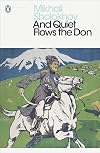
What to say, epic sprawling saga of peace, war, revolution and civil war as it affects the Don Cossacks. Initially focuses on Gregor Melekhov and his family, in particular his relationship with Aksinia, the wife of a neighbour. But once war erupts the story fragments accordingly, characters are swept along and strands left untied. The most romantic is the account of machine-gunner Bunchek and his partner Anna. It is surprisingly even-handed in showing atrocities from all sides, heroes and show more villains are not spelt out. Through it all the Don flows, there is a constant yearning for place, and a recognition that even though nature continues, humanity is being tipped on its head. show less
Lists
Awards


You May Also Like


Associated Authors
Statistics
- Works
- 291
- Also by
- 8
- Members
- 3,849
- Popularity
- #6,583
- Rating
- 4.0
- Reviews
- 53
- ISBNs
- 256
- Languages
- 17
- Favorited
- 9


