
Maxim Gorky (1868–1936)
Author of The Mother
About the Author
Alexei Maximovich Peshkov, better known as Maxim (Maksim) Gorky, was born on March 28th, 1968. Until the recent collapse of the Soviet state, Gorky was officially viewed as the greatest Russian writer of the twentieth century---an evaluation far above the true measure of his nevertheless show more considerable talent. Proclaimed the founder of socialist realism, he significantly influenced many Soviet writers, as well as others in Europe and in the developing world, and his works were for decades part of the Soviet school curriculum. His formal education was minimal. From the age of 11, he fended for himself with a variety of jobs. Self-taught, he published his first story, "Makar Chudra," in 1892. His first collection, Sketches and Stories (1898), is a romantic celebration of society's strong outcasts---the hobos and the drifters---and helped to popularize such literary protagonists. Foma Gordeyev (1899), Gorky's first novel, depicts generational conflict within the Russian bourgeoisie. A popular public figure on the left, Gorky was often in trouble with the tsarist government. During the 1900s, he was the central figure in the Znanie publishing house, which produced realist prose with a social conscience. Some of his own works were extremely successful. The play The Lower Depths (1902), set in a poorhouse and a strong indictment of social injustice, was not only a staple of Soviet theater but also influential in the United States. Eugene O'Neill's The Iceman Cometh was influenced by it. The propagandistic, extraordinarily influential novel Mother (1906) presents an iconic working-class woman who is transformed into a saint of the Revolution; its optimism in the ultimate triumph of the cause made it a prototype of socialist-realist fiction. During the years prior to 1917, Gorky published a number of autobiographical stories: All Over Russia (1912--18) (also Through Russia) and his memoirs; My Childhood (1913--14), My Apprenticeship (1915--16), and My Universities (1923). This trilogy shows his art at its best and includes some very lively reminiscences of such writers as Tolstoy and Chekhov. Although a Bolshevik party member since 1905, Gorky strongly criticized the new regime after the October Revolution: His collected articles from 1917-18, Untimely Thoughts, remained unpublished in the Soviet Union until recently. A cultural activist, he helped to save the lives of many writers, artists, and scholars during the cold and hungry years of the civil war. In 1921 he left Russia for Italy but returned permanently a decade later, recognized as the grand old man of Soviet literature. He then worked for Stalin's economic policies and presided over the institutionalization of socialist realism. At his death, he left unfinished a major novel of considerable interest, The Life of Klim Samgin, which he had been working on since 1925. (Bowker Author Biography) show less
Image credit: 1906 photograph (LoC Prints and Photographs, LC-USZ62-100472)
Series
Works by Maxim Gorky
Autobiography of Maxim Gorky: My Childhood; In the World; My Universities (2013) 186 copies, 3 reviews
Untimely Thoughts: Essays on Revolution, Culture, and the Bolsheviks, 1917-1918 (1968) 63 copies, 1 review
IHMISEN SYNTY 11 copies
Soviet Writers' Congress 1934: The debate on socialist realism and modernism in the Soviet Union (1977) 8 copies
Gorky Plays: 2: The Zykovs; Egor Bulychov; Vassa Zheleznova (The Mother); The Last Ones (World Classics) (2003) 8 copies, 1 review
Pequenos burgueses; Mãe 6 copies
Gyermekkorom 5 copies
Other Fires 5 copies
VARJENKA 5 copies
I vagabondi 4 copies
Incendio — Author — 4 copies
Chelkash 4 copies
La Angustia 3 copies
The last plays of Maxim Gorki; 3 copies
Reminiscences of Leonid Andreyev 3 copies
Макар Чудра и другие рассказы 3 copies
Vladimir Iliitch Lénine 3 copies
Onder de levenden : verhalen 3 copies
Zulüm 3 copies
ADOLESHENTI 3 copies
Il ghiaccio si muove 3 copies
Erzählungen, Skizzen, Erinnerungen 3 copies
Reminiscences of my youth, 3 copies
Servidão de Amor 3 copies
Pepe : jutustus 3 copies
Valittuja : novelleja ja runoja 3 copies
VALITUT TEOKSET 2 3 copies
Muinasjutud Itaaliast 3 copies
A Collection of Short Stories by Gorky (Russian-Chinese With CD Attached) 高尔基短篇小说选 Избранные Рассказы М. Горького (2006) 3 copies
Varenka Olessova 3 copies
On guard for the Soviet Union 2 copies
Móðirin - síðari hluti 2 copies
"Foma, kauppiaan poika" 2 copies
Ἡ ζωή μου 2 copies
Streik in Neapel 2 copies
Trije ljudje 2 copies
Os Mais Brilhantes Contos de Gorki 2 copies
Ein Sommer Roman 2 copies
Рассказы 2 copies
Piccoli borghesi 2 copies
Boredom (in Step Right Up - KNAEBEL) 2 copies
O espião 2 copies
PROVOKATÖREN OCH ANDRA NOVELLER 2 copies
Maestros de la literatura universal. Tomo IX: Rusia, 2/ Tolstoi: Sonata a Kreutzer; Gorki: Caminando por el mundo; Bulgakov: Los huevos fatales; Bábel: Caballería roja;… — Contributor — 2 copies
Voragem 2 copies
Os Degenerados 2 copies
Móðirin 2 copies
Valitut teokset 3 2 copies
VALITUT TEOKSET 4 2 copies
Gesammelte Schriften 2 copies
كيف تعلمت الكتابة 2 copies
Vagabundo Original 2 copies
Halki Venäjän 2 copies
The Mother 2 copies
Lr̆e@r̄ 2 copies
La vita e' una sciocchezza: Romanzo 2 copies
Ilya's childhood and Children 2 copies
Urspårade 2 copies
Рассказы. Пьесы. Мать 2 copies
Erlebnisse und Begegnungen 2 copies
L'oro del Volga 2 copies
Klim Samghin 2 copies
Artomonovs - del 1 2 copies
Boless 2 copies
A mulher dos olhos azuis 2 copies
Por el mundo 2 copies
האוניברסיטאות שלי 2 copies
Contos 2 copies
Pequenos Burgueses 2 copies
Kain und Artem 2 copies
Urspårade med flera berättelser 2 copies
Jutustusi : 1892-1896 2 copies
Los veraneantes 2 copies
EL PATRONO. ARIEL UNIVERSAL 8 2 copies
Kiel mi lernis 2 copies
A MESTER 2 copies
Der Spitzel. Roman 2 copies
Inimeste seas : romaan 2 copies
Näidendid : 1901-1906 2 copies
Die Holzflösser und andere Erzählungen (Maxim Gorki Gesammelte Werke in Einzelausgaben, 1) (1926) 2 copies
Zigenare 2 copies
La nueva infantesa 2 copies
Песня о Соколе 2 copies
Mes debuts d'ecrivain 1 copy
Como aprendi a escrever 1 copy
Autores rusos contemporaneos 1 copy
Oeuvres 1 copy
In the Steppes 1 copy
Maxime Gorki. Vie de Klim Samguine. II Klim l'étudiant : . Traduit du russe par M. Dumesnil de Gramont (1935) 1 copy, 1 review
Vagabundo filosófico 1 copy
Jakow Bogomolow. 1 copy
O espi♯ao 1 copy
O Vagabundo Filósofo 1 copy
Sommergäste. Szenen: Gorki, Maxim – Deutsch-Lektüre, Deutsche Klassiker der Literatur – 14559 (Reclams Universal-Bibliothek) (2024) 1 copy
ganhando o meu pão 1 copy
Cuentos rusos 1 copy
Contes 1 copy
Relatos. Pacckazbi 1 copy
Narraciones indómitas 1 copy
Os vagabundos 1 copy
The Khan and His Son 1 copy
O espiô 1 copy
මිනිසුන් අතර 1 copy
Was Jewsejka erlebte 1 copy
OBRAS INMORTALES 1 copy
Short stories and sketches 1 copy
Der Sohn einer Nonne 1 copy
حياتي 1 copy
Jutustusi : 1907-1909 1 copy
Valitud jutustused 1 copy
Põhjas : näidend 4 vaatuses 1 copy
Tarbetu inimese elu : romaan 1 copy
Jutustusi : 1896-1900 1 copy
Põhjas : näidend 1 copy
Jutustusi : 1909-1912 1 copy
Jutustusi : 1912-1923 1 copy
Os Degenerados 1 copy
A velha Izerguil 1 copy
MICHA 1 copy
Barbara Olessova 1 copy
Barndom och vandringsår I 1 copy
Счастье (Russian Edition) 1 copy
Mother 1 copy
Рассказы, 1892-1925 1 copy
Un incidente 1 copy
ENTREVISTAS 1 copy
SOBRE LA LITERATURA 1 copy
Racconti 1 copy
Aai 1 copy
TEEN PEEDI 1 copy
Doi vagabonzi 1 copy
Bárbara Olessova - Cuentos 1 copy
Teatro Completo, Tomo I 1 copy
Teatro Completo, Tomo IV 1 copy
GOR La madre 1 copy
Stikhotvoreniia 1 copy
Избранные произведения В 3 т 1 copy
ইতালির রূপকথা 1 copy
В Америке 1 copy
Рассказы и сказки 1 copy
Tomas Gordeiev 1 copy
আমার ছেলেবেলা 1 copy
পৃথিবীর পাঠশালায় 1 copy
বুড়ো 1 copy
Maailmalla 1 copy
Kulkuri 1 copy
Äiti 1 copy
Artamonovien tarina 1 copy
Vakooja 1 copy
"Ihmisen synty, kertomuksia" 1 copy
Dostigaiev e altri 1 copy
Сказки ; Рассказы 1 copy
Мать : Дело Артамоновых 1 copy
Sögur frá Sovétríkjunum 1 copy
Malva 1 copy
NENA 1 copy
Matka 1 copy
VEPRA TË ZGJEDHURA 1 copy
NJËZET E GJASHTË DHE NJË 1 copy
Narraciones y cuentos 1 copy
legendy i opowiadania 1 copy
Ema 1 copy
Bolondoska Ivanuska 1 copy
Cuentos / 1 1 copy
Baśnie włoskie 1 copy
Jak uczyłem się 1 copy
Obras completas 1 copy
Le passeggiate del diavolo 1 copy
Neizdannaíà perepiska s Bogdanovym, Leninym, Stalinym, Zinov§evym, Kamenevym, Korolenko (1998) 1 copy
Four Soviet plays 1 copy
Pʹesy 1 copy
Selected works 1 copy
Η φλογερή καρδιά του Ντάνκο 1 copy
Maxim Gorky Plays 1 copy
Gorky 1 copy
Selected stories 1 copy
Διηγήματα και παραμύθια 1 copy
1905 1 copy
Páginas Autobiográficas 1 copy
Páginas de un desconocido 1 copy
El cinismo 1 copy
Sem Sol, Albergue Nocturno 1 copy
O ESPIÃO 1 copy
Moscú 1984 1 copy
Varvara 1 copy
Las sectas 1 copy
A Confissão de Matvéi 1 copy
El gorrioncito # 01123 1 copy
Los bajos fondos 1 copy
Tempos Passados 1 copy
Narraciones y cuentos 1 copy
Obras Estelares 1 copy
Bērnība 1 copy
Самовар (Russian Edition) 1 copy
Raštai: T. 1-20 1 copy
Детство 1 copy
В людях 1 copy
Дело Артамоновых 1 copy
Избранное 1 copy
Детство. М. Горький 1 copy
Рассказы; Повести; Пьесы 1 copy
Мать 1 copy
Gorkij M. Detstvo (VCH) 1 copy
Lenin : a biographical essay 1 copy
Maksim Gorki 1 copy
Οι Αρταμανοφ 1 copy
WE TEEN 1 copy
Sahityik Sansmaran 1 copy
Janta Ke Bich 1 copy
தாய் (Tamil Edition) 1 copy
Collected works VIII 1 copy
Les cafards 1 copy
Дело Артамоновых; Рассказы 1 copy
Žmonėse 1 copy
Карамора 1 copy
Abenteuer meiner Jugend 1 copy
Onder Vreemden 1 copy
OPERE -9: 1910-1917 Racconti sull'Italia. Un grande amore. Tre giorni. Un caso della vita di Makar. 1 copy
OPERE 13: 1921-1924 Il tempo di Korolenko. Il danno della filosofia. Primo amore. Note di diario. 1 copy
Artamonovs verk. B.1 1 copy
Fortellinger. B.4 1 copy
Klim Samghin Opere XVIII 1 copy
Scritti filosofici e sociali 1 copy
Kinder der Sonne - Programm 1 copy
Σελίδες εκ της επαναστάσεως 1 copy
Klim Samghin Opere XVII 1 copy
Klim Samghin Opere XVI 1 copy
Come vidi l'america 1 copy
Nelle carceri russe 1 copy
Giovinezza tormentata 1 copy
Fra la gente 1 copy
Considerazioni inattuali 1 copy
Artamonovs verk. B.2 1 copy
Fortellinger. B.1 1 copy
Erzählungen 1 copy
En Køb̜mandsslægts historie 1 copy
Pekař Semjonov 1 copy
Briefe. Eine Auswahl 1 copy
Racconti del Volga 1 copy
Tra la Gente 1 copy
Ut i verden / B.2 1 copy
Fortellinger b.3 1 copy
Fortellinger b.2 1 copy
Skrifter Ut i verden b. 2 1 copy
Skrifter 1 Barndom 1 copy
Letters 1 copy
Due ritratti del Kaiser 1 copy
Drei Dramen 1 copy
Natthärbärget 1 copy
O anagnostis / Ο αναγνώστης 1 copy
I decaduti 1 copy
Malwa. Novelle 1 copy
තිදෙනා 1 copy
Chuni Hui Rachnayen, 2 (Budhiya Izergil, Chelkash, Baaz Ka Geet, Lev Tolstoy, Tutati Kadiyan) 1 copy
Veh Teen 1 copy
Mera Bachpan 1 copy
Jeevan Ki Rahon Par 1 copy
A Confession 1 copy
[Maa'n] ماں 1 copy
ආර්තමොනොව්ලාගේ කතාව 1 copy
පොමා ගොර්දෙයෙව් 1 copy
අම්මා 1 copy
نذير العاصفة 1 copy
Albergue nocturno 1 copy
Chhalana 1 copy
رجال ونساء 1 copy
קלים סאמגין : רומאן 1 copy
מבחר סיפורי גורקי 1 copy
Εκλεκτά Έργα 1 copy
MAAN 1 copy
Nuoruuteni yliopistot 1 copy
Οι πρώην άνθρωποι 1 copy
ΔΙΗΓΗΜΑΤΑ 1 copy
Os Vagabundos / II 1 copy
أرض الضياع 1 copy
මක්සිම් ගෝර්කි ළමා විය 1 copy
Tra le macerie di Messina 1 copy
Ocherki i vospominanija 1 copy
Een natuurkind 1 copy
Upprop till kulturvärlden 1 copy
Elbeszélések : 1895-1896 1 copy
Naynter yanuar 1 copy
The Nightingale (Condensed) 1 copy
Dray naye skitsen 1 copy
Nyár 1 copy
Színművek : 1901-1906 1 copy
The Works of Maxim Gorky 1 copy
The Nightingale 1 copy
The Confession - Translated from the Russian and with an Introduction By Rose Strunsky (1916) 1 copy
La Mère; Mother 1 copy
فوما جوردييف 1 copy
الجاسوس قصة رجل وجوده كعدمه 1 copy
الأصدقاء الثلاثة 1 copy
الام 1 copy
Three Men 1 copy
Tales from Gorky 1 copy
The Confession 1 copy
Ï ðåñáóôéêüò 1 copy
اعتراف أين الله 1 copy
Judenmassakre 1 copy
Fortellinger III 1 copy
Pemogokan Indonesian 1 copy
Dongeng dari Sayap Kiri 1 copy
Fortellinger I 1 copy
Fortellinger II 1 copy
Fortellinger IV 1 copy
طفولتي 1 copy
Slaven 1 copy
Prithibir Pathshalay 1 copy
Henkilökuvia 1 copy
Obras inmortales 1 copy
Prithibir Pothe 1 copy
Dela, Knjiga XXVII (Drame) 1 copy
Jutustused 1 copy
The Zykovs 1 copy
Mother 1 Матъ 1 母亲 1 1 copy
La Angustia - El Lector 1 copy
Mit Liv - IV. Vandringer 1 copy
Frühe Dramen 1 copy
Maxim Gorki-Bystander. 1 copy
Dramen Band 1 1 copy
Dramen Band 2 1 copy
Hjá vandalausum 1 copy
Yirmialtı Adam ve Bir Kız 1 copy
MAA -1 1 copy
Romane 1 copy
De jonge stormvogel 1 copy
Literaire portretten 1 copy
Konowalow. Großvater Archip 1 copy
Mother Мать 母亲 3 1 copy
Ausgewählte Werke I.-II. 1 copy
Ausgewählte Werke III.-V. 1 copy
Wśród ludzi 1 copy
Das Opfer der Langweile 1 copy
Městečko Okurov Léto 1 copy
Literary portraits 1 copy
a mãe 1 copy
Tolstoj 1 copy
Noterelle 1 copy
Il burlone 1 copy
Rasskazy, tom 1 1 copy
Podnik Artamonových 1 copy
Ausgewählte Erzählungen IV 1 copy
Z MOJHO DENNÍKA 1 copy
PODNIK ARTAMONOVOVCOV 1 copy
ŽIVOT NEPOTREBNÉHO ČLOVEKA 1 copy
TRI POÉMY 1 copy
POVIEDKY 1 copy
Delo Artamonovych 1 copy
5. Im Gram 1 copy
Der Barfüssler. Tascelkasch 1 copy
Inasévek 1 copy
A mester regény 1 copy
Az Artamonovok regény 1 copy
O AMERICE 1 copy
ŽIVOT KLIMA SAMGINA I. 1 copy
Páginas de un descontento 1 copy
Plays. The Lower Depths, Summer Folk, Enemies, Yegor Bulychov and Others, Vassa Zheleznova (1975) 1 copy
כתבים 1 copy
YIRMI ALTI ADAM VE BIR KIZ 1 copy
Çelkaş 1 copy
Põhjas 1 copy
Fra Stepperne 1 copy
ŽIVOT KLIMA SAMGINA II. 1 copy
I tre e altri racconti 1 copy
ŽIVOT KLIMA SAMGINA III. 1 copy
ŽIVOT KLIMA SAMGINA IV. 1 copy
El gorrioncito 1 copy
RASSKAZY = KERTOMUKSIA 1 copy
Kirjad kolleegidele 1 copy
W Ameryce 1 copy
Trojica 1 copy
U tamnici 1 copy
Mother Мать 母亲 4 1 copy
Drame 1 copy
Pripovjetke 1910-1915 1 copy
Ο Σοσιαλιστικός Ρεαλισμός 1 copy
Beste Van Gorki, Het 1 copy
Associated Works
Anton Chekhov's Short Stories [Norton Critical Edition, 1st ed.] (1979) — Contributor — 691 copies, 8 reviews
75 Short Masterpieces: Stories from the World's Literature (1961) — Contributor — 319 copies, 2 reviews
The Portable Nineteenth-Century Russian Reader (1993) — Author, some editions — 223 copies, 1 review
The Graphic Canon, Vol. 3: From Heart of Darkness to Hemingway to Infinite Jest (2013) — Contributor — 162 copies, 1 review
Writing New York: A Literary Anthology (Expanded 10th-Anniversary Edition) (2008) — Contributor — 102 copies, 1 review
Drama in the modern world: plays and essays (1964) — Contributor, some editions — 82 copies, 1 review
Anthology of Russian Literature in the Soviet Period from Gorki to Pasternak (1960) — Contributor — 69 copies
Lovers & Other Monsters: A Collection of Amorous Tales of Fantasy, Old and New (1993) — Contributor — 64 copies, 1 review
A Very Russian Christmas: The Greatest Russian Holiday Stories of All Time (2016) — Contributor — 47 copies, 1 review
Out of the Best Books: An Anthology of Literature, Vol. 1: The Individual and Human Values (1964) — Contributor — 40 copies
Oogst Der Tijden. keur uit de werken van schrijvers en dichters aller volken en eeuwen (1940) — Contributor — 12 copies
The Lower Depths [1936 Jean Renoir film] / The Lower Depths [1957 Akira Kurosawa film] (1936) — Original play — 11 copies
The Masterpiece Library of Short Stories Vol. XIII: Russian Etc. — Contributor — 9 copies
Novellin parhaita 5 copies
Meesters der vertelkunst : zevenendertig verhalen uit de moderne wereldliteratuur (1975) — Contributor — 2 copies
On the Art and Craft of Writing — Contributor — 1 copy
Tagged
Common Knowledge
- Canonical name
- Gorky, Maxim
- Legal name
- Peshkov, Aleksei Maksimovich
- Other names
- Khlamida, Jehudiel
Gorky, Maxsim - Birthdate
- 1868-03-28
- Date of death
- 1936-06-18
- Gender
- male
- Occupations
- writer
political activist - Organizations
- Bolshevik Party
- Awards and honors
- Honorary Academician of Literature (annulled by the Tsar)
- Relationships
- Budberg, Moura (lover)
- Nationality
- Russia
- Birthplace
- Nizhny Novgorod, Russian Empire
- Places of residence
- Capri, Italy
Adirondack Mountains, USA
St. Petersburg, Russia
Moscow, Russia
Sorrento, Italy - Place of death
- Gorki Leninskiye, Moscow Oblast, Soviet Union
Members
Reviews
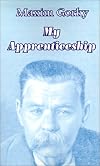
This review is for the entire trilogy 'My Childhood', 'My Apprenticeship', and 'My Universities'
When one thinks about Russian classical literature, two names invariably pop up: Dostoevsky and Tolstoy. Often somebody would mention Chekhov in the same breath, some would rightly point out that Pushkin deserves his place on the pedestal, others would insist that Turgenev should be put side-by-side with his two most recognized contemporaries.
Ever since I read 'My Childhood' by Maxim Gorky, the show more first part of his autobiographic trilogy, the trio of Russian giants was firmly established for me : Dostoevsky, Gorky, Tolstoy - in that order.
The first sentence of this book sets the tone:
"Father lay on the floor, by the window of a small, darkened room, dressed in white, and looking terribly long. His feet were bare and his toes were strangely splayed out. His gentle fingers, now peacefully resting on his chest, were also distorted, and the black discs of copper coins firmly sealed his once shining eyes. His kind face had darkened and its nastily bared teeth frightened me"
I did not misspeak - this is one sentence in Russian, fittingly broken up by Ronald Wilks in his English translation (which is supposed to be quite good).
Already after reading this you realize that you are in for something unusual. The book never lets up, it holds you firmly in its grip, you are bound to remember some passages long after the book is closed and put away.
The pen name of the author - Gorky - translates from Russian as 'bitter' and you will get to taste the bitterness when you read this trilogy. Deaths are scattered around the pages, they are noted and recounted in a matter-of-fact voice of a child as regular, commonplace events. But it is not all doom and gloom, the darkness is followed by light and some of the most memorable passages are filled with tenderness and joy.
“For sadness and gladness live within us side by side, almost inseparable; the one succeeding the other with an elusive, inappreciable swiftness.”
“In recalling my childhood I like to picture myself as a beehive to which various simple obscure people brought the honey of their knowledge and thoughts on life, generously enriching my character with their own experience. Often this honey was dirty and bitter, but every scrap of knowledge was honey all the same.”
It is these "simple obscure people" that light the pages of the book. Uneducated, uncouth, rough and often violent these people from the end of the 19th century Russia come alive in short but precise descriptions of the writer at the height of his powers. It is rare to find character sketches so economically executed and yet so complete.
The main two characters are of course grandmother and grandfather of the little Alexei, seemingly representing two opposing forces shaping up his life, leaving the traces of warmth and the scars of anger behind. At the age of fourteen Alexei has to quit his grandparents' home to earn his living.
The second book is translated as 'My Apprenticeship' or 'In the World' and here the voice of a teenager, hardened beyond his years, picks up where the voice of a child left off. Dissatisfied with what he sees around him Alexei aims to break free from this monotonous existence and finds his release in books, in words. He sees education as the only way out.
The third book 'My Universities', probably the weakest of the three, was written seven years later. Alexei meets with students, idealists with a revolutionary agenda. However, he is disillusioned, having lived through the torture of his young years he no longer believes in the inherent goodness of people. There is less hope and more bitterness in this book, probably reflecting the writer's state of mind while in exile. The book ends with Alexei leaving on an aimless journey on foot across Russia that would last for five years.
Gorky was initially extremely critical of the Soviets and personally of Lenin. Gorky eventually returned from his exile in Italy to Soviet Russia and seemingly accepted the ideology of the regime. He was most likely killed by Stalin's thugs. show less
When one thinks about Russian classical literature, two names invariably pop up: Dostoevsky and Tolstoy. Often somebody would mention Chekhov in the same breath, some would rightly point out that Pushkin deserves his place on the pedestal, others would insist that Turgenev should be put side-by-side with his two most recognized contemporaries.
Ever since I read 'My Childhood' by Maxim Gorky, the show more first part of his autobiographic trilogy, the trio of Russian giants was firmly established for me : Dostoevsky, Gorky, Tolstoy - in that order.
The first sentence of this book sets the tone:
"Father lay on the floor, by the window of a small, darkened room, dressed in white, and looking terribly long. His feet were bare and his toes were strangely splayed out. His gentle fingers, now peacefully resting on his chest, were also distorted, and the black discs of copper coins firmly sealed his once shining eyes. His kind face had darkened and its nastily bared teeth frightened me"
I did not misspeak - this is one sentence in Russian, fittingly broken up by Ronald Wilks in his English translation (which is supposed to be quite good).
Already after reading this you realize that you are in for something unusual. The book never lets up, it holds you firmly in its grip, you are bound to remember some passages long after the book is closed and put away.
The pen name of the author - Gorky - translates from Russian as 'bitter' and you will get to taste the bitterness when you read this trilogy. Deaths are scattered around the pages, they are noted and recounted in a matter-of-fact voice of a child as regular, commonplace events. But it is not all doom and gloom, the darkness is followed by light and some of the most memorable passages are filled with tenderness and joy.
“For sadness and gladness live within us side by side, almost inseparable; the one succeeding the other with an elusive, inappreciable swiftness.”
“In recalling my childhood I like to picture myself as a beehive to which various simple obscure people brought the honey of their knowledge and thoughts on life, generously enriching my character with their own experience. Often this honey was dirty and bitter, but every scrap of knowledge was honey all the same.”
It is these "simple obscure people" that light the pages of the book. Uneducated, uncouth, rough and often violent these people from the end of the 19th century Russia come alive in short but precise descriptions of the writer at the height of his powers. It is rare to find character sketches so economically executed and yet so complete.
The main two characters are of course grandmother and grandfather of the little Alexei, seemingly representing two opposing forces shaping up his life, leaving the traces of warmth and the scars of anger behind. At the age of fourteen Alexei has to quit his grandparents' home to earn his living.
The second book is translated as 'My Apprenticeship' or 'In the World' and here the voice of a teenager, hardened beyond his years, picks up where the voice of a child left off. Dissatisfied with what he sees around him Alexei aims to break free from this monotonous existence and finds his release in books, in words. He sees education as the only way out.
The third book 'My Universities', probably the weakest of the three, was written seven years later. Alexei meets with students, idealists with a revolutionary agenda. However, he is disillusioned, having lived through the torture of his young years he no longer believes in the inherent goodness of people. There is less hope and more bitterness in this book, probably reflecting the writer's state of mind while in exile. The book ends with Alexei leaving on an aimless journey on foot across Russia that would last for five years.
Gorky was initially extremely critical of the Soviets and personally of Lenin. Gorky eventually returned from his exile in Italy to Soviet Russia and seemingly accepted the ideology of the regime. He was most likely killed by Stalin's thugs. show less

'My Childhood' by Maxim Gorky was published 60 years after Tolstoy's 'Childhood' and they make fascinating companion pieces. It is not Tolstoy's gentille, educated society, where money is only hinted at as a source of both pride and shame -- it is the coarse, hardscrabble world of the trade and lower classes. Children are not protected, but beaten to within an inch of their life as a matter of course. Drunkenness is expected and greed, prejudice and envy are commonplace.
Gorky knew this show more world well, and his memoirs (his protagonist uses Gorky's real name) are both agonizing and lyrical. His descriptions of place and characters are so deftly drawn that one feels as if he had included pictures in the book. Gorky manages to show us the love he felt for his grandmother, a gifted storyteller, but also towards his grandfather, a brutal and miserly man, who nevertheless taught Alexei to read, and supported his family as best he could, for as long as he could.
A wonderful and terrifying book. Highly recommended. show less
Gorky knew this show more world well, and his memoirs (his protagonist uses Gorky's real name) are both agonizing and lyrical. His descriptions of place and characters are so deftly drawn that one feels as if he had included pictures in the book. Gorky manages to show us the love he felt for his grandmother, a gifted storyteller, but also towards his grandfather, a brutal and miserly man, who nevertheless taught Alexei to read, and supported his family as best he could, for as long as he could.
A wonderful and terrifying book. Highly recommended. show less
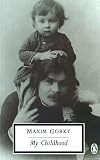
This review is for the entire trilogy 'My Childhood', 'My Apprenticeship', and 'My Universities'
When one thinks about Russian classical literature, two names invariably pop up: Dostoevsky and Tolstoy. Often somebody would mention Chekhov in the same breath, some would rightly point out that Pushkin deserves his place on the pedestal, others would insist that Turgenev should be put side-by-side with his two most recognized contemporaries.
Ever since I read 'My Childhood' by Maxim Gorky, the show more first part of his autobiographic trilogy, the trio of Russian giants was firmly established for me : Dostoevsky, Gorky, Tolstoy - in that order.
The first sentence of this book sets the tone:
"Father lay on the floor, by the window of a small, darkened room, dressed in white, and looking terribly long. His feet were bare and his toes were strangely splayed out. His gentle fingers, now peacefully resting on his chest, were also distorted, and the black discs of copper coins firmly sealed his once shining eyes. His kind face had darkened and its nastily bared teeth frightened me"
I did not misspeak - this is one sentence in Russian, fittingly broken up by Ronald Wilks in his English translation (which is supposed to be quite good).
Already after reading this you realize that you are in for something unusual. The book never lets up, it holds you firmly in its grip, you are bound to remember some passages long after the book is closed and put away.
The pen name of the author - Gorky - translates from Russian as 'bitter' and you will get to taste the bitterness when you read this trilogy. Deaths are scattered around the pages, they are noted and recounted in a matter-of-fact voice of a child as regular, commonplace events. But it is not all doom and gloom, the darkness is followed by light and some of the most memorable passages are filled with tenderness and joy.
“For sadness and gladness live within us side by side, almost inseparable; the one succeeding the other with an elusive, inappreciable swiftness.”
“In recalling my childhood I like to picture myself as a beehive to which various simple obscure people brought the honey of their knowledge and thoughts on life, generously enriching my character with their own experience. Often this honey was dirty and bitter, but every scrap of knowledge was honey all the same.”
It is these "simple obscure people" that light the pages of the book. Uneducated, uncouth, rough and often violent these people from the end of the 19th century Russia come alive in short but precise descriptions of the writer at the height of his powers. It is rare to find character sketches so economically executed and yet so complete.
The main two characters are of course grandmother and grandfather of the little Alexei, seemingly representing two opposing forces shaping up his life, leaving the traces of warmth and the scars of anger behind. At the age of fourteen Alexei has to quit his grandparents' home to earn his living.
The second book is translated as 'My Apprenticeship' or 'In the World' and here the voice of a teenager, hardened beyond his years, picks up where the voice of a child left off. Dissatisfied with what he sees around him Alexei aims to break free from this monotonous existence and finds his release in books, in words. He sees education as the only way out.
The third book 'My Universities', probably the weakest of the three, was written seven years after the first two. Alexei meets with students, idealists with a revolutionary agenda. However, he is disillusioned, having lived through the torture of his young years he no longer believes in the inherent goodness of people. There is less hope and more bitterness in this book, probably reflecting the writer's state of mind while in exile. The book ends with Alexei leaving on an aimless journey on foot across Russia that would last for five years.
Gorky was initially extremely critical of the Soviets and personally of Lenin. He eventually returned from his exile in Italy to Soviet Russia and seemingly accepted the ideology of the regime. He was most likely killed by Stalin's thugs. show less
When one thinks about Russian classical literature, two names invariably pop up: Dostoevsky and Tolstoy. Often somebody would mention Chekhov in the same breath, some would rightly point out that Pushkin deserves his place on the pedestal, others would insist that Turgenev should be put side-by-side with his two most recognized contemporaries.
Ever since I read 'My Childhood' by Maxim Gorky, the show more first part of his autobiographic trilogy, the trio of Russian giants was firmly established for me : Dostoevsky, Gorky, Tolstoy - in that order.
The first sentence of this book sets the tone:
"Father lay on the floor, by the window of a small, darkened room, dressed in white, and looking terribly long. His feet were bare and his toes were strangely splayed out. His gentle fingers, now peacefully resting on his chest, were also distorted, and the black discs of copper coins firmly sealed his once shining eyes. His kind face had darkened and its nastily bared teeth frightened me"
I did not misspeak - this is one sentence in Russian, fittingly broken up by Ronald Wilks in his English translation (which is supposed to be quite good).
Already after reading this you realize that you are in for something unusual. The book never lets up, it holds you firmly in its grip, you are bound to remember some passages long after the book is closed and put away.
The pen name of the author - Gorky - translates from Russian as 'bitter' and you will get to taste the bitterness when you read this trilogy. Deaths are scattered around the pages, they are noted and recounted in a matter-of-fact voice of a child as regular, commonplace events. But it is not all doom and gloom, the darkness is followed by light and some of the most memorable passages are filled with tenderness and joy.
“For sadness and gladness live within us side by side, almost inseparable; the one succeeding the other with an elusive, inappreciable swiftness.”
“In recalling my childhood I like to picture myself as a beehive to which various simple obscure people brought the honey of their knowledge and thoughts on life, generously enriching my character with their own experience. Often this honey was dirty and bitter, but every scrap of knowledge was honey all the same.”
It is these "simple obscure people" that light the pages of the book. Uneducated, uncouth, rough and often violent these people from the end of the 19th century Russia come alive in short but precise descriptions of the writer at the height of his powers. It is rare to find character sketches so economically executed and yet so complete.
The main two characters are of course grandmother and grandfather of the little Alexei, seemingly representing two opposing forces shaping up his life, leaving the traces of warmth and the scars of anger behind. At the age of fourteen Alexei has to quit his grandparents' home to earn his living.
The second book is translated as 'My Apprenticeship' or 'In the World' and here the voice of a teenager, hardened beyond his years, picks up where the voice of a child left off. Dissatisfied with what he sees around him Alexei aims to break free from this monotonous existence and finds his release in books, in words. He sees education as the only way out.
The third book 'My Universities', probably the weakest of the three, was written seven years after the first two. Alexei meets with students, idealists with a revolutionary agenda. However, he is disillusioned, having lived through the torture of his young years he no longer believes in the inherent goodness of people. There is less hope and more bitterness in this book, probably reflecting the writer's state of mind while in exile. The book ends with Alexei leaving on an aimless journey on foot across Russia that would last for five years.
Gorky was initially extremely critical of the Soviets and personally of Lenin. He eventually returned from his exile in Italy to Soviet Russia and seemingly accepted the ideology of the regime. He was most likely killed by Stalin's thugs. show less
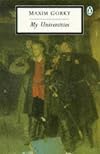
This review is for the entire trilogy 'My Childhood', 'My Apprenticeship', and 'My Universities'
When one thinks about Russian classical literature, two names invariably pop up: Dostoevsky and Tolstoy. Often somebody would mention Chekhov in the same breath, some would rightly point out that Pushkin deserves his place on the pedestal, others would insist that Turgenev should be put side-by-side with his two most recognized contemporaries.
Ever since I read 'My Childhood' by Maxim Gorky, the show more first part of his autobiographic trilogy, the trio of Russian giants was firmly established for me : Dostoevsky, Gorky, Tolstoy - in that order.
The first sentence of this book sets the tone:
"Father lay on the floor, by the window of a small, darkened room, dressed in white, and looking terribly long. His feet were bare and his toes were strangely splayed out. His gentle fingers, now peacefully resting on his chest, were also distorted, and the black discs of copper coins firmly sealed his once shining eyes. His kind face had darkened and its nastily bared teeth frightened me"
I did not misspeak - this is one sentence in Russian, fittingly broken up by Ronald Wilks in his English translation (which is supposed to be quite good).
Already after reading this you realize that you are in for something unusual. The book never lets up, it holds you firmly in its grip, you are bound to remember some passages long after the book is closed and put away.
The pen name of the author - Gorky - translates from Russian as 'bitter' and you will get to taste the bitterness when you read this trilogy. Deaths are scattered around the pages, they are noted and recounted in a matter-of-fact voice of a child as regular, commonplace events. But it is not all doom and gloom, the darkness is followed by light and some of the most memorable passages are filled with tenderness and joy.
“For sadness and gladness live within us side by side, almost inseparable; the one succeeding the other with an elusive, inappreciable swiftness.”
“In recalling my childhood I like to picture myself as a beehive to which various simple obscure people brought the honey of their knowledge and thoughts on life, generously enriching my character with their own experience. Often this honey was dirty and bitter, but every scrap of knowledge was honey all the same.”
It is these "simple obscure people" that light the pages of the book. Uneducated, uncouth, rough and often violent these people from the end of the 19th century Russia come alive in short but precise descriptions of the writer at the height of his powers. It is rare to find character sketches so economically executed and yet so complete.
The main two characters are of course grandmother and grandfather of the little Alexei, seemingly representing two opposing forces shaping up his life, leaving the traces of warmth and the scars of anger behind. At the age of fourteen Alexei has to quit his grandparents' home to earn his living.
The second book is translated as 'My Apprenticeship' or 'In the World' and here the voice of a teenager, hardened beyond his years, picks up where the voice of a child left off. Dissatisfied with what he sees around him Alexei aims to break free from this monotonous existence and finds his release in books, in words. He sees education as the only way out.
The third book 'My Universities', probably the weakest of the three, was written seven years later. Alexei meets with students, idealists with a revolutionary agenda. However, he is disillusioned, having lived through the torture of his young years he no longer believes in the inherent goodness of people. There is less hope and more bitterness in this book, probably reflecting the writer's state of mind while in exile. The book ends with Alexei leaving on an aimless journey on foot across Russia that would last for five years.
Gorky was initially extremely critical of the Soviets and personally of Lenin. Gorky eventually returned from his exile in Italy to Soviet Russia and seemingly accepted the ideology of the regime. He was most likely killed by Stalin's thugs. show less
When one thinks about Russian classical literature, two names invariably pop up: Dostoevsky and Tolstoy. Often somebody would mention Chekhov in the same breath, some would rightly point out that Pushkin deserves his place on the pedestal, others would insist that Turgenev should be put side-by-side with his two most recognized contemporaries.
Ever since I read 'My Childhood' by Maxim Gorky, the show more first part of his autobiographic trilogy, the trio of Russian giants was firmly established for me : Dostoevsky, Gorky, Tolstoy - in that order.
The first sentence of this book sets the tone:
"Father lay on the floor, by the window of a small, darkened room, dressed in white, and looking terribly long. His feet were bare and his toes were strangely splayed out. His gentle fingers, now peacefully resting on his chest, were also distorted, and the black discs of copper coins firmly sealed his once shining eyes. His kind face had darkened and its nastily bared teeth frightened me"
I did not misspeak - this is one sentence in Russian, fittingly broken up by Ronald Wilks in his English translation (which is supposed to be quite good).
Already after reading this you realize that you are in for something unusual. The book never lets up, it holds you firmly in its grip, you are bound to remember some passages long after the book is closed and put away.
The pen name of the author - Gorky - translates from Russian as 'bitter' and you will get to taste the bitterness when you read this trilogy. Deaths are scattered around the pages, they are noted and recounted in a matter-of-fact voice of a child as regular, commonplace events. But it is not all doom and gloom, the darkness is followed by light and some of the most memorable passages are filled with tenderness and joy.
“For sadness and gladness live within us side by side, almost inseparable; the one succeeding the other with an elusive, inappreciable swiftness.”
“In recalling my childhood I like to picture myself as a beehive to which various simple obscure people brought the honey of their knowledge and thoughts on life, generously enriching my character with their own experience. Often this honey was dirty and bitter, but every scrap of knowledge was honey all the same.”
It is these "simple obscure people" that light the pages of the book. Uneducated, uncouth, rough and often violent these people from the end of the 19th century Russia come alive in short but precise descriptions of the writer at the height of his powers. It is rare to find character sketches so economically executed and yet so complete.
The main two characters are of course grandmother and grandfather of the little Alexei, seemingly representing two opposing forces shaping up his life, leaving the traces of warmth and the scars of anger behind. At the age of fourteen Alexei has to quit his grandparents' home to earn his living.
The second book is translated as 'My Apprenticeship' or 'In the World' and here the voice of a teenager, hardened beyond his years, picks up where the voice of a child left off. Dissatisfied with what he sees around him Alexei aims to break free from this monotonous existence and finds his release in books, in words. He sees education as the only way out.
The third book 'My Universities', probably the weakest of the three, was written seven years later. Alexei meets with students, idealists with a revolutionary agenda. However, he is disillusioned, having lived through the torture of his young years he no longer believes in the inherent goodness of people. There is less hope and more bitterness in this book, probably reflecting the writer's state of mind while in exile. The book ends with Alexei leaving on an aimless journey on foot across Russia that would last for five years.
Gorky was initially extremely critical of the Soviets and personally of Lenin. Gorky eventually returned from his exile in Italy to Soviet Russia and seemingly accepted the ideology of the regime. He was most likely killed by Stalin's thugs. show less
Lists
20230107 (1)
Favourite Books (1)
Awards


You May Also Like


Associated Authors
Statistics
- Works
- 930
- Also by
- 58
- Members
- 8,253
- Popularity
- #2,926
- Rating
- 3.9
- Reviews
- 149
- ISBNs
- 1,068
- Languages
- 32
- Favorited
- 16


