
Eugenia Ginzburg (1904–1977)
Author of Into the Whirlwind
About the Author
Series
Works by Eugenia Ginzburg
Associated Works
Tagged
Common Knowledge
- Legal name
- Ginzburg, Evgenia Semyonovna
- Birthdate
- 1904-12-20
- Date of death
- 1977-05-25
- Gender
- female
- Education
- Kazan State University
- Occupations
- teacher
journalist
memoirist - Relationships
- Aksyonov, Vasily (son)
Walter, Anton (husband) - Short biography
- Evgenia Ginzburg was educated at Kazan State University. She married three times, first to Dmitriy Fedorov, a doctor; second to Pavel Aksyonov, the mayor of Kazan; and third to Anton Walter, a German-Russian doctor. She was appointed professor of history at Kazan State University in 1934 and was a Communist Party activist. Ginzburg was caught up in the Stalinist purges and was sent to labor camps in Siberia, where she spent 18 years (1937–1955) before being released and allowed to return to Moscow. She's best known for her two-volume autobiography and memoir of the camps, Journey Into the Whirlwind (1967) and Within the Whirlwind (1981).
- Nationality
- Russia
USSR - Birthplace
- Moscow, Russian Empire
- Places of residence
- Kazan, Russia
Moscow, Russia
Kolyma Region, Soviet Union
Magadan, Soviet Union - Place of death
- Moscow, Russia, USSR
- Associated Place (for map)
- Russian Federation
Members
Reviews

Eugenia Ginzburg was an academic who was caught up in Stalin's purges. This book is her memoir of the time of her accusation, trial and first few years in prison, at first near to Moscow (and in solitary confinement) and then by prison train to a labour camp in the Russian Far East. What happens to her is horrific - even more so because as I was reading this book, I somehow simultaneously felt incomprehension and recognition. Incomprehension that people could treat other people in this way - show more it wasn't just a brutal system, it was made up of a long chain of personal encounters, with an accuser, an interrogator, a prison guard. And recognition because the stories were so familiar: this is the first book I have read about Stalin's purges but I have read a lot about the Cultural Revolution, and many elements of the story are the same; and other elements are recognisable from films, or books about other periods of history. The description of her accusation and trial really made me think that Kafka was prescient - or perhaps not, perhaps even in Henry VIII's time the same exchanges were taking place between purging apparatchiks and their randomly chosen victims.
It is remarkable that Eugenia Ginzburg stayed sane through her experiences, never mind finding enough detachment to write this book, which is never self-pitying and manages to find the irony in the most desperate situations. For example, one thread is the difficult relationships in prison between the committed Communists such as Ginzburg and her contemporaries, and the earlier rounds of political prisoners, the Mensheviks and so on. At one point, one of the women in the cell - a Social Revolutionary - runs out of cigarettes and Ginzburg offers her one. She taps out a message to the regional committee secretary, incarcerated in the next cell:
"There's a woman Communist here who has offered me cigarettes. Should I accept?" Mukhina inquired whether the Communist belonged to the opposition. Derkovskaya asked me, passed on my reply - and Mukhina tapped categorically: "No". The cigarettes lay on the table between us. During the night I heard Derkovskaya sighing deeply. Though thin as a rake, she would much sooner have done without bread.
As you can see from this story, Ginzburg is good at highlighting the details which throw light on the bigger picture. In the prison train, for instance, the women are given one small cup of dirty water per day, and friendships could be broken if someone jogged another's cup, spilling a few drops. When one woman's cup got broken because the train stopped abruptly, the guard refused to give her a new one. Another example is that the Communist women turn to the earlier generations of political prisoners to explain the system and what is coming next - but sometimes their experiences are out-of-date. The same Derkovskaya from the cigarette story tells Ginzburg that she will be allowed to see her children before she is deported - but that does not happen. Derkovskaya had spoken out of her experience of Tsarist prisons. There was no room nowadays for 'rotten liberalism' or 'pseudo-humanitarianism'. show less
It is remarkable that Eugenia Ginzburg stayed sane through her experiences, never mind finding enough detachment to write this book, which is never self-pitying and manages to find the irony in the most desperate situations. For example, one thread is the difficult relationships in prison between the committed Communists such as Ginzburg and her contemporaries, and the earlier rounds of political prisoners, the Mensheviks and so on. At one point, one of the women in the cell - a Social Revolutionary - runs out of cigarettes and Ginzburg offers her one. She taps out a message to the regional committee secretary, incarcerated in the next cell:
"There's a woman Communist here who has offered me cigarettes. Should I accept?" Mukhina inquired whether the Communist belonged to the opposition. Derkovskaya asked me, passed on my reply - and Mukhina tapped categorically: "No". The cigarettes lay on the table between us. During the night I heard Derkovskaya sighing deeply. Though thin as a rake, she would much sooner have done without bread.
As you can see from this story, Ginzburg is good at highlighting the details which throw light on the bigger picture. In the prison train, for instance, the women are given one small cup of dirty water per day, and friendships could be broken if someone jogged another's cup, spilling a few drops. When one woman's cup got broken because the train stopped abruptly, the guard refused to give her a new one. Another example is that the Communist women turn to the earlier generations of political prisoners to explain the system and what is coming next - but sometimes their experiences are out-of-date. The same Derkovskaya from the cigarette story tells Ginzburg that she will be allowed to see her children before she is deported - but that does not happen. Derkovskaya had spoken out of her experience of Tsarist prisons. There was no room nowadays for 'rotten liberalism' or 'pseudo-humanitarianism'. show less

"Крутой маршрут" - это первое документальное произведение о сталинских лагерях, написанное женщиной. Драматическое повествование о восемнадцати годах тюрем, лагерей и ссылок потрясает своей беспощадной правдивостью и вызывает глубочайшее уважение к силе show more человеческого духа, который не сломили страшные испытания. "Много разных чувств терзало меня за эти годы. Но основным, ведущим было чувство изумления. Неужели такое мыслимо? Неужели это всё всерьез? Пожалуй, именно это изумление и помогло выйти живой. Я оказалась не только жертвой, но и наблюдателем". Евгения Гинзбург show less
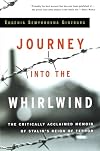
This is a memoir of Ginzburg's life as a loyal Communist, and then her arrest, interrogation, and transport to the Siberian gulag during Stalin's reign of terror. She tells us her story without a hint of self-pity, yet she conveys the immensity of the tragedy that has overcome her, her family and friends, and all those she comes into contact with during her journey.
I read Gulag, Anne Applebaum's excellent history of the gulag last year, which in part was structured by considering separately show more each aspect of the process, i.e. the arrest, the interrogations, the transports, etc. I was struck by how closely Ginzburg's experiences matched those described in general by Applebaum. Ginzburg's memoir, however, conveys these events as unique and personal, and so all the more tragic.
I'll be reading the sequel, which focuses on her time in the gulag rather than her journey to the gulag, as soon as I can get my hands on it. This is a book everyone should read. show less
I read Gulag, Anne Applebaum's excellent history of the gulag last year, which in part was structured by considering separately show more each aspect of the process, i.e. the arrest, the interrogations, the transports, etc. I was struck by how closely Ginzburg's experiences matched those described in general by Applebaum. Ginzburg's memoir, however, conveys these events as unique and personal, and so all the more tragic.
I'll be reading the sequel, which focuses on her time in the gulag rather than her journey to the gulag, as soon as I can get my hands on it. This is a book everyone should read. show less
Journey into the whirlwind recounts the story of active member of the communist Party for many years, Eugenia Semonovna Ginzburg, who was arrested like many of her fellow citizens during Stalin's reign of terror on trumped up charges of being a Trotskyist terrorist counter-revolutionary and sentenced to prison. This book recounts her many years spent in prison and labour camps.
This is a insightful story and sometimes while reading this book you may sometimes think " This has to be show more exaggerated somewhat as it could not possibly have happened to this extent" but the sad fact is, it did happen to millions of people and these are the sort of books that reminds us that;
“Cruelty, like every other vice, requires no motive outside of itself; it only requires opportunity.”
George Eliot
This book give a good insight into the prison system of the time and to arrests of ordinary people during Stalin's reign of terror.
A difficult book to rate, I did find it lacked the emotion I had expected from a memoir of this nature and I found the story ended rather abruptly. show less
This is a insightful story and sometimes while reading this book you may sometimes think " This has to be show more exaggerated somewhat as it could not possibly have happened to this extent" but the sad fact is, it did happen to millions of people and these are the sort of books that reminds us that;
“Cruelty, like every other vice, requires no motive outside of itself; it only requires opportunity.”
George Eliot
This book give a good insight into the prison system of the time and to arrests of ordinary people during Stalin's reign of terror.
A difficult book to rate, I did find it lacked the emotion I had expected from a memoir of this nature and I found the story ended rather abruptly. show less
Lists
Awards


You May Also Like


Associated Authors
Statistics
- Works
- 7
- Also by
- 2
- Members
- 1,076
- Popularity
- #23,895
- Rating
- 4.1
- Reviews
- 20
- ISBNs
- 40
- Languages
- 7