
Vladimir Sorokin
Author of Day of the Oprichnik
About the Author
Image credit: Elke Wetzig, 2006-03-13
Series
Works by Vladimir Sorokin
Голубое сало 1 copy
Путь бро 1 copy
Das Kapital 1 copy
Az örökség 1 copy
Настя 1 copy
Metelica 1 copy
I det heliga Rysslands tjnst 1 copy
Очередь 1 copy
Associated Works
The Girl From the Metropol Hotel: Growing Up in Communist Russia (2006) — Contributor — 168 copies, 8 reviews
The Wall in My Head: Words and Images from the Fall of the Iron Curtain (2009) — Contributor — 57 copies, 4 reviews
Read Russia!: An Anthology of New Voices — Contributor — 15 copies
Tagged
Common Knowledge
- Legal name
- Sorokin, Vladimir Georgievich
Сорокин, Владимир Георгиевич - Birthdate
- 1955-08-07
- Gender
- male
- Education
- Gubkin Institute of Oil and Gas
- Occupations
- writer
dramatist - Organizations
- Deutsche Akademie für Sprache und Dichtung
- Awards and honors
- Man Booker International Prize Finalist (2013)
- Nationality
- Russia
- Birthplace
- Bykovo, Moscow Oblast, USSR
- Places of residence
- Moscow, Russia
- Associated Place (for map)
- Russia
Members
Reviews
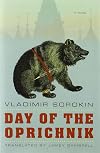
Rating: 4.5* of five
The Publisher Says: Moscow, 2028. A cold, snowy morning.
Andrei Danilovich Komiaga is fast asleep. A scream, a moan, and a death rattle slowly pull him out of his drunken stupor—but wait, that’s just his ring tone. And so begins another day in the life of an oprichnik, one of the czar’s most trusted courtiers—and one of the country’s most feared men.
Welcome to the new New Russia, where futuristic technology and the draconian codes of Ivan the Terrible are in show more perfect synergy. Corporal punishment is back, as is a divine monarch, but these days everyone gets information from high-tech news bubbles, and the elite get high on hallucinogenic, genetically modified fish.
Over the course of one day, Andrei Komiaga will bear witness to—and participate in—brutal executions; extravagant parties; meetings with ballerinas, soothsayers, and even the czarina. He will rape and pillage, and he will be moved to tears by the sweetly sung songs of his homeland. He will consume an arsenal of drugs and denounce threats to his great nation’s morals. And he will fall in love—perhaps even with a number of his colleagues.
Vladimir Sorokin, the man described by Keith Gessen (in The New York Review of Books) as “[the] only real prose writer, and resident genius” of late-Soviet fiction, has imagined a near future both too disturbing to contemplate and too realistic to dismiss. But like all of his best work, Sorokin’s new novel explodes with invention and dark humor. A startling, relentless portrait of a troubled and troubling empire, Day of the Oprichnik is at once a richly imagined vision of the future and a razor-sharp diagnosis of a country in crisis.
I RECEIVED A DRC FROM THE PUBLISHER. THANK YOU.
My Review: From the vantage point of late 2025, a post-Putin neo-medieval Russia in 2028 sounds...oddly optimistic...as well as wrong. From 2005's standpoint it probably seemed more likely; even though nothing in this book could be called hopeful, it was probably sounding good to Sorokin just not to have Little Vladdy Pu-Pu on the tsar's throne.
Predictions always miss something. Usually they're too optimistic, too hopeful, and weird to say that's the problem with this bleak prediction-fest. *waves at Little Vladdy Pu-Pu on his throne* I'm not entirely convinced the religious fervor of the Oprichnia, as revived from the days of Ivan the Terrible (an epithet with multiple valences in English, all of them applicable to the bearer then...and by extension now), is not active in 2025 let alone 2028.
With his characteristic OTT revulsion-inducing behaviors foregrounded, this book is automatically beyond the pale of all too many squeamish readers. I would say "try to get past it" but honestly...don't. One is meant to be revolted and put off by it, much as the 1972 John Waters shocker Pink Flamingos is not meant to titillate but shock and offend (fifty-plus years on, it still does). The world Author Sorokin posits is intended to be just as appalling and revolting, to disgust you and repel you! The entire reason to hold a dark mirror of satire up is to draw attention to the wrongness and cruelty of the world being posited. By no means is it accidental that so much of it is grimly familiar. The theocratic angle is the one not quite fully rolled out by our allegedly separate government. Just wait.
This edition was published in 2011, and it is only more relevant and more horripilating in 2025's world of ICEstapo and wholesale social upheaval caused and inflamed by the most powerful in our country. show less
The Publisher Says: Moscow, 2028. A cold, snowy morning.
Andrei Danilovich Komiaga is fast asleep. A scream, a moan, and a death rattle slowly pull him out of his drunken stupor—but wait, that’s just his ring tone. And so begins another day in the life of an oprichnik, one of the czar’s most trusted courtiers—and one of the country’s most feared men.
Welcome to the new New Russia, where futuristic technology and the draconian codes of Ivan the Terrible are in show more perfect synergy. Corporal punishment is back, as is a divine monarch, but these days everyone gets information from high-tech news bubbles, and the elite get high on hallucinogenic, genetically modified fish.
Over the course of one day, Andrei Komiaga will bear witness to—and participate in—brutal executions; extravagant parties; meetings with ballerinas, soothsayers, and even the czarina. He will rape and pillage, and he will be moved to tears by the sweetly sung songs of his homeland. He will consume an arsenal of drugs and denounce threats to his great nation’s morals. And he will fall in love—perhaps even with a number of his colleagues.
Vladimir Sorokin, the man described by Keith Gessen (in The New York Review of Books) as “[the] only real prose writer, and resident genius” of late-Soviet fiction, has imagined a near future both too disturbing to contemplate and too realistic to dismiss. But like all of his best work, Sorokin’s new novel explodes with invention and dark humor. A startling, relentless portrait of a troubled and troubling empire, Day of the Oprichnik is at once a richly imagined vision of the future and a razor-sharp diagnosis of a country in crisis.
I RECEIVED A DRC FROM THE PUBLISHER. THANK YOU.
My Review: From the vantage point of late 2025, a post-Putin neo-medieval Russia in 2028 sounds...oddly optimistic...as well as wrong. From 2005's standpoint it probably seemed more likely; even though nothing in this book could be called hopeful, it was probably sounding good to Sorokin just not to have Little Vladdy Pu-Pu on the tsar's throne.
Predictions always miss something. Usually they're too optimistic, too hopeful, and weird to say that's the problem with this bleak prediction-fest. *waves at Little Vladdy Pu-Pu on his throne* I'm not entirely convinced the religious fervor of the Oprichnia, as revived from the days of Ivan the Terrible (an epithet with multiple valences in English, all of them applicable to the bearer then...and by extension now), is not active in 2025 let alone 2028.
With his characteristic OTT revulsion-inducing behaviors foregrounded, this book is automatically beyond the pale of all too many squeamish readers. I would say "try to get past it" but honestly...don't. One is meant to be revolted and put off by it, much as the 1972 John Waters shocker Pink Flamingos is not meant to titillate but shock and offend (fifty-plus years on, it still does). The world Author Sorokin posits is intended to be just as appalling and revolting, to disgust you and repel you! The entire reason to hold a dark mirror of satire up is to draw attention to the wrongness and cruelty of the world being posited. By no means is it accidental that so much of it is grimly familiar. The theocratic angle is the one not quite fully rolled out by our allegedly separate government. Just wait.
This edition was published in 2011, and it is only more relevant and more horripilating in 2025's world of ICEstapo and wholesale social upheaval caused and inflamed by the most powerful in our country. show less
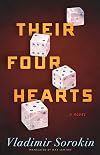
Rating: ?5*? but on what scale....
The Publisher Says: In many respects, Their Four Hearts is a book of endings and final things. Vladimir Sorokin wrote it in the year the Soviet Union collapsed and then didn't write fiction for ten years after completing it—his next book being the infamous Blue Lard (q.v.), which he wrote in 1998. Without exaggerating too much, one might call it the last book of the Russian twentieth century and Blue Lard the first book of the Russian twenty-first century. show more It is a novel about the failure of the Soviet Union, about its metaphysical designs, and about the violence it produced, but presented as God might see it or Bataille might write it.
Their Four Hearts follows the violent and nonsensical missions carried out by a group of four characters who represent Socialist Realist archetypes: Seryozha, a naive and optimistic young boy; Olga, a dedicated female athlete; Shtaube, a wise old man; and Rebrov, a factory worker and a Stakhanovite embodying Soviet manhood. However, the degradation inflicted upon them is hardly a Socialist Realist trope. Are the acts of violence they carry out a more realistic vision of what the Soviet Union forced its "heroes" to live out? A corporealization and desacralization of self-sacrificing acts of Soviet heroism? How the Soviet Union truly looked if you were to strip away the ideological infrastructure? As we see in the long monologues Shtaube performs for his companions—some of which are scatological nonsense and some of which are accurate reproductions of Soviet language—Sorokin is interested in burrowing down to the libidinal impulses that fuel a totalitarian system and forcing the reader to take part in them in a way that isn't entirely devoid of aesthetic pleasure.
As presented alongside Greg Klassen's brilliant charcoal illustrations, which have been compared to the work of Bruno Schulz by Alexander Genis and the work of Ralph Steadman as filtered through Francis Bacon by several gallerists, this angular work of fiction becomes a scatological storybook-world that the reader is dared to immerse themselves in.
I RECEIVED A DRC FROM THE PUBLISHER VIA EDELWEISS+. THANK YOU.
My Review: Before I begin, let me say:
→H↔E↔E↔D↔T↔H↔E↔C↔O↔N↔T↔E↔N↔T↔W↔A↔R↔N↔I↔N↔G←
If you need a content warning for gore, body horror, transgressive...anything...horseman, pass by. This is Sorokin, of Blue Lard fame, playing Literature's organ with the unsettling pedal fully depressed and the weird stop pulled all the way out. Comme d'habitude, then.
So, the audience now being self-winnowed, I'm going to tell you as little as I can about the transgressions and more about why I care enough to suggest you read this tooth-ripped bloody gobbet shoved in a sweaty gym sock of a book. Because you still can, that's why. This is a litmus test for collapse. If you read it and are not repulsed fairly often, you're probably on the barricades now. If you read this and think, "oh my gawd how'd he geta away with THAT?!" twice a chapter, you're marching somewhere, and shitposting about the 2025ness of it all, and postcarding the hell out of red districts. Everyone else, the "this is repulsive!" to the "this should be banned!" folk, why are you even here? It is not safe for you to be reading anything here when you're under curfew. Off to The New York Times, now, quick as you like, no hands outside the windows!
Like Blue Lard, like Moderan, like everything Burroughs or Dennis Cooper ever wrote, this weird, janky, slightly collapsing edifice of artifice requires you to participate. Very few things in the content-consuming 2025 we live in *require* you to participate to make them work. Sorokin's works aren't simple, even simplistic, slickly made entertainments, they are viscera of story hoicked out of places you didn't think there was spare narrative flesh. There wasn't spare narrative flesh. Vital organs of awareness and complicity and oblivious cruelty are wrenched out and held up before your dumbfounded gaze...and the chapter-opening art adds to that impact.
Sound unappealing? It's not here to appeal to you, it's here to make you reach inside yourself and find the pieces...they're only going to be pieces, I don't think inchoate monstruous sadists read my blog...of these characters in crises they did not make, or try to make better in any way. It is in all of us to look away, to accept pretty surfaces on ugly things, ugly selves. That response is not possible while reading
Their Four Hearts.
And that's the point of reading it. I think it could do you a power of good between retches. show less
The Publisher Says: In many respects, Their Four Hearts is a book of endings and final things. Vladimir Sorokin wrote it in the year the Soviet Union collapsed and then didn't write fiction for ten years after completing it—his next book being the infamous Blue Lard (q.v.), which he wrote in 1998. Without exaggerating too much, one might call it the last book of the Russian twentieth century and Blue Lard the first book of the Russian twenty-first century. show more It is a novel about the failure of the Soviet Union, about its metaphysical designs, and about the violence it produced, but presented as God might see it or Bataille might write it.
Their Four Hearts follows the violent and nonsensical missions carried out by a group of four characters who represent Socialist Realist archetypes: Seryozha, a naive and optimistic young boy; Olga, a dedicated female athlete; Shtaube, a wise old man; and Rebrov, a factory worker and a Stakhanovite embodying Soviet manhood. However, the degradation inflicted upon them is hardly a Socialist Realist trope. Are the acts of violence they carry out a more realistic vision of what the Soviet Union forced its "heroes" to live out? A corporealization and desacralization of self-sacrificing acts of Soviet heroism? How the Soviet Union truly looked if you were to strip away the ideological infrastructure? As we see in the long monologues Shtaube performs for his companions—some of which are scatological nonsense and some of which are accurate reproductions of Soviet language—Sorokin is interested in burrowing down to the libidinal impulses that fuel a totalitarian system and forcing the reader to take part in them in a way that isn't entirely devoid of aesthetic pleasure.
As presented alongside Greg Klassen's brilliant charcoal illustrations, which have been compared to the work of Bruno Schulz by Alexander Genis and the work of Ralph Steadman as filtered through Francis Bacon by several gallerists, this angular work of fiction becomes a scatological storybook-world that the reader is dared to immerse themselves in.
I RECEIVED A DRC FROM THE PUBLISHER VIA EDELWEISS+. THANK YOU.
My Review: Before I begin, let me say:
→H↔E↔E↔D↔T↔H↔E↔C↔O↔N↔T↔E↔N↔T↔W↔A↔R↔N↔I↔N↔G←
If you need a content warning for gore, body horror, transgressive...anything...horseman, pass by. This is Sorokin, of Blue Lard fame, playing Literature's organ with the unsettling pedal fully depressed and the weird stop pulled all the way out. Comme d'habitude, then.
So, the audience now being self-winnowed, I'm going to tell you as little as I can about the transgressions and more about why I care enough to suggest you read this tooth-ripped bloody gobbet shoved in a sweaty gym sock of a book. Because you still can, that's why. This is a litmus test for collapse. If you read it and are not repulsed fairly often, you're probably on the barricades now. If you read this and think, "oh my gawd how'd he geta away with THAT?!" twice a chapter, you're marching somewhere, and shitposting about the 2025ness of it all, and postcarding the hell out of red districts. Everyone else, the "this is repulsive!" to the "this should be banned!" folk, why are you even here? It is not safe for you to be reading anything here when you're under curfew. Off to The New York Times, now, quick as you like, no hands outside the windows!
Like Blue Lard, like Moderan, like everything Burroughs or Dennis Cooper ever wrote, this weird, janky, slightly collapsing edifice of artifice requires you to participate. Very few things in the content-consuming 2025 we live in *require* you to participate to make them work. Sorokin's works aren't simple, even simplistic, slickly made entertainments, they are viscera of story hoicked out of places you didn't think there was spare narrative flesh. There wasn't spare narrative flesh. Vital organs of awareness and complicity and oblivious cruelty are wrenched out and held up before your dumbfounded gaze...and the chapter-opening art adds to that impact.
Sound unappealing? It's not here to appeal to you, it's here to make you reach inside yourself and find the pieces...they're only going to be pieces, I don't think inchoate monstruous sadists read my blog...of these characters in crises they did not make, or try to make better in any way. It is in all of us to look away, to accept pretty surfaces on ugly things, ugly selves. That response is not possible while reading
Their Four Hearts.
And that's the point of reading it. I think it could do you a power of good between retches. show less

Rating: 4.5* of five
The Publisher Says: The Russian master's most infamous novel, a dystopian fever dream about cloning, alternative histories, and world domination.
Vladimir Sorokin’s Blue Lard is the most iconic and iconoclastic Russian novel of the last forty years. Thanks in part to its depiction of Stalin and Khrushchev having sex, which inspired a Putinist youth group to throw shredded copies of the author’s books into an enormous toilet erected in front of Moscow’s Bolshoi show more Theater, Blue Lard is the novel that tore Sorokin out of the Moscow Conceptualist underground and into the headlines.
The book begins in a futuristic laboratory where genetic scientists speak in a Joycean dialect of Russian mixed with Chinese—peppered with ample neologisms—and work to clone famous Russian writers, who are then made to produce texts in the style of their forebears. The goal of this “script-process” is not the texts themselves, but the blue lard that collects in the small of their backs as they write.
This substance is to be used to power reactors on the moon—that is, until a sect of devout nationalists breaks in to steal the blue lard, planning to send it back in time to an alternate version of the Soviet Union, one that exists on the margins of a Europe conquered by a long-haired Hitler with the ability to shoot electricity from his hands. What will come of this blue lard? Who will finally make use of its mysterious powers?
Blue Lard is a stylistically acrobatic book, translated by Max Lawton into an English idiom just as bizarre as the Russian original. Evoking both Pulp Fiction and the masterpieces of Marquis de Sade, Sorokin’s novel is a brutal, heady trip that annihilates all of its twentieth- (and twenty-first-) century competition in the Russian canon—and that annihilates Russia itself in a resounding act of heavy-metal dissidence.
I RECEIVED A DRC FROM THE PUBLISHER VIA EDELWEISS+. THANK YOU.
My Review: Unquestionably the weirdest NYRB book I have yet read...and the second-weirdest alternate history book I have read this century.
It requires serious effort to engage with the first third or so of the book, as you are in medias res without even the usual linguistic snowpoles showing you where the obstacles are. You are, as is so often the case in Life, in a strange place with strange people you do not know or even understand as they have conversations around you.
After that point, there is a shift in the linguistic register that brings us closer to normal conversational tones. Not normal-normal, mind you, though closer. (There is a partial Glossary at the end for the desperately confused.) Claude Simon’s nouveau roman novels, there is a difficult beginning that requires you to make an investment of concentration. We have left the normie-world of relatable plots, ordinary characters you could meet at the supermarket, sentences that start and finish in the same paragraph, and other such bourgeois fripperies. This is not a read that rewards being treated as a novel. This is writing that needs to be experienced and absorbed for itself not its meanings.
Sorokin, like so many truly inventive folk, is a natural iconoclast. At twenty-five, in 1980, he was baptized into the Russian Orthodox Church, at that time still under Communist-Party suspicion. The nature of iconoclasm is always to resist, so in this era of Church/state rapprochement, he opposes Putin’s war against Ukraine. It is not as though his work work was ever popular with the regime, what with Hitler raping Stalin’s daughter, Stalin and Khruschev sexing it up (ewww!), and a variety of body-horror tropes, that Little Vladdy Pu-Pu just could not ever be on board with. This, among other not-socialist-realist flourishes, will mean no invite-to-dinner from the Kremlin. Now, being good little bourgeois decoders, we too like our novels to Mean Something, like socialist realist work...but that is not on offer here.
Sorokin does not Make Sense, he makes you think about how a story is more than just the beginning-middle-end structure we are ingrained to expect. He offers not one kind of Sense, but multiple ways to experience words and ideas forming into stories. This, and the transgressive nature of the words and ideas he does present us, makes a lot...A LOT...of people really, really angry. This being a feature of the Sorokin brand. I do not get the point of their outrage and negativity being performed. Giving the man the thing he tried to get from you? The point of that is...?
A read that demands effort, does it an awful lot of the time, and allows you to decide for yourself if it means anything at all.
Like Life itself, it makes you the Author’s apprentice. You can decide if that is your jam, but I am here to say that it is a read very much worth my time and effort and could be for you as well. Remember how mad it made the Russian overlord. Buy it to be ornery, to oppose the banning/forbidding/controlling ethos that increasingly envelops the information-delivery world.
I bet lots of y’all end up liking it. show less
The Publisher Says: The Russian master's most infamous novel, a dystopian fever dream about cloning, alternative histories, and world domination.
Vladimir Sorokin’s Blue Lard is the most iconic and iconoclastic Russian novel of the last forty years. Thanks in part to its depiction of Stalin and Khrushchev having sex, which inspired a Putinist youth group to throw shredded copies of the author’s books into an enormous toilet erected in front of Moscow’s Bolshoi show more Theater, Blue Lard is the novel that tore Sorokin out of the Moscow Conceptualist underground and into the headlines.
The book begins in a futuristic laboratory where genetic scientists speak in a Joycean dialect of Russian mixed with Chinese—peppered with ample neologisms—and work to clone famous Russian writers, who are then made to produce texts in the style of their forebears. The goal of this “script-process” is not the texts themselves, but the blue lard that collects in the small of their backs as they write.
This substance is to be used to power reactors on the moon—that is, until a sect of devout nationalists breaks in to steal the blue lard, planning to send it back in time to an alternate version of the Soviet Union, one that exists on the margins of a Europe conquered by a long-haired Hitler with the ability to shoot electricity from his hands. What will come of this blue lard? Who will finally make use of its mysterious powers?
Blue Lard is a stylistically acrobatic book, translated by Max Lawton into an English idiom just as bizarre as the Russian original. Evoking both Pulp Fiction and the masterpieces of Marquis de Sade, Sorokin’s novel is a brutal, heady trip that annihilates all of its twentieth- (and twenty-first-) century competition in the Russian canon—and that annihilates Russia itself in a resounding act of heavy-metal dissidence.
I RECEIVED A DRC FROM THE PUBLISHER VIA EDELWEISS+. THANK YOU.
My Review: Unquestionably the weirdest NYRB book I have yet read...and the second-weirdest alternate history book I have read this century.
It requires serious effort to engage with the first third or so of the book, as you are in medias res without even the usual linguistic snowpoles showing you where the obstacles are. You are, as is so often the case in Life, in a strange place with strange people you do not know or even understand as they have conversations around you.
After that point, there is a shift in the linguistic register that brings us closer to normal conversational tones. Not normal-normal, mind you, though closer. (There is a partial Glossary at the end for the desperately confused.) Claude Simon’s nouveau roman novels, there is a difficult beginning that requires you to make an investment of concentration. We have left the normie-world of relatable plots, ordinary characters you could meet at the supermarket, sentences that start and finish in the same paragraph, and other such bourgeois fripperies. This is not a read that rewards being treated as a novel. This is writing that needs to be experienced and absorbed for itself not its meanings.
Sorokin, like so many truly inventive folk, is a natural iconoclast. At twenty-five, in 1980, he was baptized into the Russian Orthodox Church, at that time still under Communist-Party suspicion. The nature of iconoclasm is always to resist, so in this era of Church/state rapprochement, he opposes Putin’s war against Ukraine. It is not as though his work work was ever popular with the regime, what with Hitler raping Stalin’s daughter, Stalin and Khruschev sexing it up (ewww!), and a variety of body-horror tropes, that Little Vladdy Pu-Pu just could not ever be on board with. This, among other not-socialist-realist flourishes, will mean no invite-to-dinner from the Kremlin. Now, being good little bourgeois decoders, we too like our novels to Mean Something, like socialist realist work...but that is not on offer here.
Sorokin does not Make Sense, he makes you think about how a story is more than just the beginning-middle-end structure we are ingrained to expect. He offers not one kind of Sense, but multiple ways to experience words and ideas forming into stories. This, and the transgressive nature of the words and ideas he does present us, makes a lot...A LOT...of people really, really angry. This being a feature of the Sorokin brand. I do not get the point of their outrage and negativity being performed. Giving the man the thing he tried to get from you? The point of that is...?
A read that demands effort, does it an awful lot of the time, and allows you to decide for yourself if it means anything at all.
Like Life itself, it makes you the Author’s apprentice. You can decide if that is your jam, but I am here to say that it is a read very much worth my time and effort and could be for you as well. Remember how mad it made the Russian overlord. Buy it to be ornery, to oppose the banning/forbidding/controlling ethos that increasingly envelops the information-delivery world.
I bet lots of y’all end up liking it. show less

A nívós agylavinák ravaszdi orosz nagymestere, Szorokin újra elkalauzol minket a Tellúriából megismert alternatív jövőbe*. A nagy „szalafita tavasz” után járunk, Európa épp újjáépült (már amelyik része, ugye) a muzulmán fundamentalisták elleni véres háborúból**, de azért akad, ami megváltozott: a jó öreg monarchiák a maguk patriarchális nagyuraival ismét megjelentek a kontinensen, de békében együtt élnek a legmodernebb high-tech kütyükkel, például show more az agyba ültethető okos bolhácskákkal, akik helyettünk elintézik a repülőjegyek foglalását, és mintegy mellékesen minimum ötvennel megdobják az IQ-nkat. Jó, hát nem olcsó mulatság egy ilyen bolhácska, de hát kinek mennyi pénze van, annyit ér, ahogy azt mondták volt néppárti politikusok. Ebben a szebb jövőben papír alapú könyveket már a kutya sem olvas, és igazi kuriózumnak számítanak, mert ritkák, mint a szumátrai orrszarvú – és épp ritkaságuknak köszönhetően gigantikus (és illegális) üzletág épült rájuk: a book&grill. A jövő Jamie Oliverjei és Gordon Ramsey-jei ugyanis azzal keresik dögre magukat (és vállalnak közben nem kis veszélyt), hogy első kiadású Dosztojevszkij-köteteken sütik meg az ínyenc vendégek számára a márnasztéket – nyam, nyam, az finom lehet. És én erről többet nem is mondanék.
A Tellúriához képest a Manaraga lényegesen kevésbé patchwork-szerű, hogy azt ne mondjam, kifejezetten konvencionális próza, ami meglehetősen lineárisan halad A pontból B pontba. Formailag legalábbis. Tartalmában ugyanis a Szorokintól megszokott filozofikus őrület, ahol akár még az is előfordulhat, hogy egy mamut elénekli nekünk a „Love me tender”-t. Bár a Tellúria hagymázas-szétesett világa engem személy szerint jobban tarkón csapott, de talán épp ezért ajánlható a Manaraga azoknak, akik azért valamivel kevésbé pszichedelikussal kezdenék a Szorokinnal való ismerkedést.
* Úgy látszik, Szorokin ilyen lazán összekapcsolódó trilógiákban gondolkodik. Aminek ezek szerint ez a második része. Várom a harmadikat.
** Most ez a véres civilizációs háború a XXI. század vezérparanoiája, hasonlatosan ahhoz, ahogy az 50-es éveké a nukleáris apokalipszis volt. show less
A Tellúriához képest a Manaraga lényegesen kevésbé patchwork-szerű, hogy azt ne mondjam, kifejezetten konvencionális próza, ami meglehetősen lineárisan halad A pontból B pontba. Formailag legalábbis. Tartalmában ugyanis a Szorokintól megszokott filozofikus őrület, ahol akár még az is előfordulhat, hogy egy mamut elénekli nekünk a „Love me tender”-t. Bár a Tellúria hagymázas-szétesett világa engem személy szerint jobban tarkón csapott, de talán épp ezért ajánlható a Manaraga azoknak, akik azért valamivel kevésbé pszichedelikussal kezdenék a Szorokinnal való ismerkedést.
* Úgy látszik, Szorokin ilyen lazán összekapcsolódó trilógiákban gondolkodik. Aminek ezek szerint ez a második része. Várom a harmadikat.
** Most ez a véres civilizációs háború a XXI. század vezérparanoiája, hasonlatosan ahhoz, ahogy az 50-es éveké a nukleáris apokalipszis volt. show less
Lists
Awards


You May Also Like


Associated Authors
Statistics
- Works
- 67
- Also by
- 7
- Members
- 3,019
- Popularity
- #8,456
- Rating
- 3.5
- Reviews
- 118
- ISBNs
- 266
- Languages
- 25
- Favorited
- 10