
Heinrich von Kleist (1777–1811)
Author of Michael Kohlhaas
About the Author
Image credit: From Wikipedia
Series
Works by Heinrich von Kleist
Die Verlobung in St. Domingo / Das Bettelweib von Locarno / Der Findling (1983) — Author — 68 copies
The Marquise of O-- ; The earthquake in Chile ; The foundling. (1807) — Author — 61 copies, 2 reviews
Das Erdbeben in Chili ; Das Bettelweib von Locarno ; Die heilige Cäcilie ; Uber das Marionettentheater und andere Prosastücke (1974) 49 copies
EinFach Deutsch : Textausgaben : Heinrich von Kleist : Die Marquise von O ..., Das Erdbeben in Chili und weitere Texte (2009) — Text — 11 copies
EinFach Deutsch : Textausgaben : Heinrich von Kleist : Prinz Friedrich von Homburg (2009) — Text — 11 copies
Suhrkamp BasisBibliothek : Kleist : Das Erdbeben in Chili + Die Marquise von O... + Die Verlobung in St. Domingo (2009) — Text — 10 copies
dtv-Gesamtausgabe. Bd. 1. Gedichte : [Dramen]?[T. 1.] Die Familie Schroffenstein. Die Familie Thierrez. Die Familie Ghon (1981) 9 copies, 1 review
Dramen dritter Teil 8 copies
Kleists Werke. Bd. 2. Robert Guiskard, Der zerbrochne Krug, Amphitryon, Penthesilea, Prinz Friedrich von Homburg (1965) 7 copies
Sämtliche Werke und Briefe in 4 Bänden: Band 1: Dramen 1802-1807. Familie Schroffenstein / Robert Guiskard / Der zerbrochne Krug / Amphitryon (1991) 6 copies
Das Erdbeben in Chili. Textausgabe mit Kommentar und Materialien: Reclam XL - Text und Kontext (2019) 5 copies
Sämtliche Werke und Briefe: Sämtliche Werke und Briefe, 4 Bde., Ln, Bd.2, Dramen 1808-1811: Penthesilea. Das Käthchen (1987) — Author — 5 copies
H. v. Kleists Werke 2. Band 5 copies
Fiançailles à Saint-Domingue, suivi de "L'Enfant trouvé" (édition bilingue allemand-français) (2001) — Author — 5 copies
La marquesa de O... y otros cuentos (El libro de bolsillo - Literatura) (Spanish Edition) (2005) 5 copies
I racconti 5 copies
שלוש נובלות 5 copies
Racconti 4 copies
Werke und Briefe (Briefe) 4 copies
Vom Kohlhaas haben Nachkommen gelebt, Erzählungen, Anekdoten, Anekdoten-Bearbeitungen, Reclam Band 40, (1972) 4 copies
Los románticos alemanes — Contributor — 4 copies
Berliner Abendblätter 4 copies
Sur le théâtre de marionnettes ;: Suivi de De l'élaboration progressive des pensées dans le discours (1989) — Author — 3 copies
EinFach Deutsch : Textausgaben : Heinrich von Kleist : Der zerbrochne Krug [1st edition] (2001) — Text — 3 copies
Ausgewählte Werke. Band IV: Über das Marionettentheater und andere Schriften. Auswahl. u. Einf. von Walter Flemmer (1964) 3 copies
Драмы ; Новеллы 3 copies
Briefe 1805 - 1811, Lebensdaten 2 copies
Διηγήματα 2 copies
Marķīze fon O : noveles un stāsti 2 copies
Kleine Prosa 2 copies
Düello Bütün Öyküler (ciltli) 2 copies
Heinrich v. Kleists Werke 2 copies
Novellen der Leidenschaft 2 copies
Heinrich von Kleist. Novellen: Rolf Boysen liest Die Marquise von O...., Michael Kohlhaas und viele weitere Erzählungen und Anekdoten (2011) 2 copies
The Marquise of O and Other Works: The Earthquake in Chile, The Foundling and Michael Kohlhaas 2 copies
Tri majstro-noveloj 2 copies
Die marquise von O: Die Dichtung und ihre Quellen, mit einem Begleitwort (German Edition) (1922) 2 copies
Sämtliche Werke Bd. 3 Erzählungen 2 copies
H. v. Kleists Werke 2 copies
Kleists Werke Vierter Band / Meyers Klassiker (Gedichte / Kl. Schriften / Lesarten 1-4) (1905) — Author — 1 copy
Dramen, Dritter Teil, Das Käthchen von Heilbron, Die hermannsschlacht, Prinz Friedrich vom Homborg 1 copy
Some Essays 1 copy
Kleist Saemtliche Werke 1 copy
Novelas 1 copy
4 Νουβέλες 1 copy
Berliner Ausgabe H. v. Kleist Band I/4 - Amphitryon (incl. Berliner Kleist-Blätter 4) (1991) — Author — 1 copy
Mikael Kohlhaas 1 copy
La cruche cassée... : [Villeneuve-d'Ascq, la Rose des Vents, Scène nationale, 16 janvier 1996] (1996) 1 copy
Le Prince De Hombourg — Author — 1 copy
Новеллы 1 copy
Mikkjáll frá Kolbeinsbrú 1 copy
Uber das Marionettentheater 1 copy
PT2378 .M6 Michael Kohlhaas 1 copy
Sämtliche Werke 1 copy
Werke 2. Gedichte und Dramen 1 copy
Próza 1 copy
An Stelle einer Einleitung 1 copy
Sämtliche Erzählungen 1 copy
Ein Lesebuch für unsere Zeit 1 copy
Ein Lesebuch fr unsere Zeit 1 copy
אל בני דורי : כתבים קצרים 1 copy
Dramy. Novelly. 1 copy
Mihael Kolhas 1 copy
Sämtliche Werke, Brandenburger Ausgabe, Bd.IV/ 3: Briefe 3: September 1807 - 21. November 1811 1 copy
Reclam Textausgabe + Lektüreschlüssel : Heinrich von Kleist : Das Erdbeben in Chili (2012) — Text — 1 copy
Hamburger Lesehefte plus Königs Materialien : Heinrich von Kleist : Die Marquise von O... (2020) — Text — 1 copy
Stories 1 copy
İFRİTLE MÜCADELE 1 copy
Az eltört korsó Amphitryon 1 copy
Ansichten von Wôrzburg 1 copy
Erz_hlungen 1 copy
Избранное. 1 copy
Kleists Werke Erster Band / Meyers Klassiker (Schroffenstein / Guisk. / Amphitryon / Krug) (1905) — Author — 1 copy
Ausgewählte Werke in drei Bänden. Band I. Die Hermannsschlacht - Prinz Friedrich von Homburg - Erzählungen I. (1980) 1 copy
Gedichte 1 copy
Cuentos 1 copy
Michael Kohlhaas: La mendiante de Locarno: Sainte Cécile ou La puissance de la musique: Le duel: nouvelles (1991) 1 copy
Sämtliche Werke Dritter Band. Die Hermannsschlacht. Prinz Friedrich von Homburg. Robert Guiskard 1 copy
Heinrichs von Kleist Briefe an Seine Schwester Ulrike (Classic Reprint) (German Edition) (2017) 1 copy
Listy 1 copy
Über das Marionettentheater / Briefe / Kleine Schriften / Anekdoten / Der Findling / Die Marquise von O. (1990) 1 copy
Jugendbriefe 1 copy
Heinrich von Kleist: Erzählungen. (dtv Gesamtausgabe 4) — Author — 1 copy
Gespenstergeschichten - II. Folge (Das Bettelweib von Locarno / Der Sargmacher / Der Fremde / Merkwürdige Gespenste (1982) 1 copy
Záhadný nesmrtelný 1 copy
Heinrich von Kleist. Betrachtungen über den Weltlauf. - Schriften zur Ästhetik und Philosophie. (1958) 1 copy
Antologia 1 copy
Brandenburger Ausgabe H. v. Kleist Band II/6 - Der Zweikampf (incl. Brandenburger Kleist-Blätter 7) (1994) — Author — 1 copy
Kleists Werke Zweiter Band / Meyers Klassiker (Penthesilea / Käthchen / Hermannsschl.) (1905) — Author — 1 copy
Sämtlche Werke und Briefe I 1 copy
4 νουβέλες 1 copy
Kleists Werke Erster Band: Ges. Werke 1 (Das Käthchen von Heilbronn / Der zerbrochene Krug / Prinz Friedrich von Homburg / Die Hermannsschlacht) — Author — 1 copy
Werke in 3 Bänden 1 copy
Die Verlobung in St. Domingo. Textausgabe mit Kommentar und Materialien: Reclam XL - Text und Kontext (2017) 1 copy
Der zerbrochne Krug. Textausgabe mit Kommentar und Materialien: Reclam XL - Text und Kontext (2022) 1 copy
Heinrich von Kleists Werke in sechs Teilen. Herausgegeben von Wilhelm Waetzoldt. Drei Bände (komplett). (1920) 1 copy
Erzaehlubngen 1 copy
I racconti 1 copy
Werke und Briefe. Die Familie Schroffenstein, Robert Guiskard, Der zerbrochene Krug, Amphitryon 1 copy
Werke und Briefe. Briefe 1 copy
Kleist And Hoffmann Texts 1 copy
La Marquise d'O. ; Le Tremblement de terre du Chili ; Les Fiancés Saint-Domingue ; La Mendiante de Locarno ; L'Enfant trouvé ; Saint Cécile ; Le Duel (1808) — Author — 1 copy
Associated Works
75 Short Masterpieces: Stories from the World's Literature (1961) — Contributor — 319 copies, 2 reviews
Tales of the German Imagination from the Brothers Grimm to Ingeborg Bachmann (Penguin Classics) (2012) — Contributor — 78 copies, 2 reviews
Deutschland erzählt. Von Johann Wolfgang von Goethe bis Ludwig Tieck (1970) — Contributor — 26 copies
Classical German drama : Lessing : Nathan the wise + Goethe : Egmont + Schiller : Mary Stuart + Kleist : The Prince of Homburg + Büchner : Danton's Death (1779) — Playwright — 24 copies
Oogst Der Tijden. keur uit de werken van schrijvers en dichters aller volken en eeuwen (1940) — Contributor — 12 copies
Deutsche Novellen von Tieck bis Hauptmann — Contributor — 8 copies
Uit het leven van een nietsnut en andere verhalen — Contributor — 5 copies
Novellin parhaita 5 copies
Great European short novels — Contributor — 4 copies
Tales from the German, Comprising specimens from the most celebrated authors (1844) — Contributor — 4 copies
Czarny pająk : opowieści niesamowite z literatury niemieckojęzycznej (1988) — Contributor — 3 copies
Fiction and fantasy of German romance; selections from the German romantic authors, 1790-1830 — Contributor — 3 copies
Neue Wege der Erzählung (Erzählungen Erster Band) — Contributor — 1 copy
Lebensgut — Ein deutsches Lesebuch für Mädchen — 5. Teil (9. Schuljahr) — Contributor — 1 copy
Die Romantik in Deutschland — Featured Artist — 1 copy
Kleist-Jahrbuch 1984 — Featured Artist — 1 copy
Kleist-Jahrbuch 1985 — Featured Artist — 1 copy
Tagged
Common Knowledge
- Canonical name
- von Kleist, Heinrich
- Legal name
- Kleist, Bernd Heinrich Wilhelm von
- Birthdate
- 1777-10-18
- Date of death
- 1811-11-21
- Gender
- male
- Education
- Viadrina University
- Occupations
- soldier
poet
dramatist
novelist
short story writer
journalist - Relationships
- Vogel, Henriette (muse)
von Kleist, Marie (sister) - Cause of death
- suicide
- Nationality
- Kingdom of Prussia
- Birthplace
- Frankfurt an der Oder, Margraviate of Brandenburg, Kingdom of Prussia
- Places of residence
- Frankfurt an der Oder, Germany
Berlin, Germany - Place of death
- Kleiner Wannsee, Brandenburg, Kingdom of Prussia
- Burial location
- Ehrengrab, Bismarckstraße 2-4, Berlin-Wannsee, Deutschland
- Map Location
- Germany
Members
Reviews
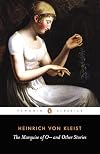
Irreligious, perverse, and shocking even to this day. Von Kleist's discontent with the social structures of his time—most especially the church, the law, and the vagaries of community life—makes his tales perhaps more politically rich than his contemporary Hoffmann, although both are equally skillful in plumbing the depths of the human psyche when it comes to matters of love, survival, family, and even gender.
Von Kleist's style is very proto-modernist: his paragraphs run on for pages show more with no apparent reason for when they begin and when they end; his pacing is subjectively approached rather than objectively obsessed; and he often begins his stories by telling his reader the endings.
Absurdism runs rampant through these pieces. The title story involves a widowed Marquise who takes out an advertisement in the newspaper, searching for the man who apparently—although she has no memory of this—impregnated her. This kind of illogical and paradoxical situation is at the heart of most of von Kleist's work: "The Earthquake in Chile" turns an exiled pair of lovers into heroic figures in an apocalyptic setting ruled by no seeming authority; however, von Kleist seems to suggest that the imposing orders of the church and the law are so pervasive in their hold on mankind that mankind wreaks the same violence if left with no punitive action from high above.
This is also the case in "Michael Kohlhaas" where the protagonist takes the law into his own hands after repeated attempts to bring legal action against a man who is terrorizing the community. This kind of Kafkaesque critique of the law is also carried out to the extreme limits of surrealism, rendering reality as nightmarish in much the same way Kafka would do later. Of the shorter pieces collected here, "The Foundling" is the strongest and seems to speak to the same examination of reality versus fantasy in Hoffmann's "The Sandman." However, it is in the longer tales that von Kleist is able to enlarge his canvas and allow his oddly distorted syntax and phrasing to loop in and out of sense and nonsense most elegantly. show less
Von Kleist's style is very proto-modernist: his paragraphs run on for pages show more with no apparent reason for when they begin and when they end; his pacing is subjectively approached rather than objectively obsessed; and he often begins his stories by telling his reader the endings.
Absurdism runs rampant through these pieces. The title story involves a widowed Marquise who takes out an advertisement in the newspaper, searching for the man who apparently—although she has no memory of this—impregnated her. This kind of illogical and paradoxical situation is at the heart of most of von Kleist's work: "The Earthquake in Chile" turns an exiled pair of lovers into heroic figures in an apocalyptic setting ruled by no seeming authority; however, von Kleist seems to suggest that the imposing orders of the church and the law are so pervasive in their hold on mankind that mankind wreaks the same violence if left with no punitive action from high above.
This is also the case in "Michael Kohlhaas" where the protagonist takes the law into his own hands after repeated attempts to bring legal action against a man who is terrorizing the community. This kind of Kafkaesque critique of the law is also carried out to the extreme limits of surrealism, rendering reality as nightmarish in much the same way Kafka would do later. Of the shorter pieces collected here, "The Foundling" is the strongest and seems to speak to the same examination of reality versus fantasy in Hoffmann's "The Sandman." However, it is in the longer tales that von Kleist is able to enlarge his canvas and allow his oddly distorted syntax and phrasing to loop in and out of sense and nonsense most elegantly. show less

Every time I get riled up about the many ways our current justice system is a farce, I will have to remind myself that this ridiculousness was once considered justice and reassure myself about how far we've come after all.
A story of murder, deceit, and intrigue set in the fourteenth century. All about who has the power of being believed, and how God works in the world. Remember the kind of logic that said if you attempted to drown a witch and she didn't die, it must be because she was a show more witch and Satan was protecting her, but if she did die, whoops -- must have been innocent? This is a little less terrible, but still amazing.
The story itself is well told though, and if you aren't rooting for poor Littegarde throughout, well, let's just say I have concerns for your soul. show less
A story of murder, deceit, and intrigue set in the fourteenth century. All about who has the power of being believed, and how God works in the world. Remember the kind of logic that said if you attempted to drown a witch and she didn't die, it must be because she was a show more witch and Satan was protecting her, but if she did die, whoops -- must have been innocent? This is a little less terrible, but still amazing.
The story itself is well told though, and if you aren't rooting for poor Littegarde throughout, well, let's just say I have concerns for your soul. show less

Despite being an 1810 recasting of a historical German personage into an avenging folk-hero, Heinrich von Kleist's novella Michael Kohlhaas is surprisingly modern. The story goes like this: [spoilers] Kohlhaas, a horse-trader, is taking his wares to market when he is stopped by a newly-erected toll booth. Taken unawares and unable to pay the toll, he leaves two of his black horses behind as collateral in the care of the land's owner. Upon returning from market, he finds the horses in show more extremely poor condition and the groom he left behind to care for them has been badly beaten and driven off the land. Kohlhaas' attempts at redress through the legal system are frustrated by the machinations of bureaucracy and more readily by the political connections of the landowner who has wronged him. Ignored by the system, and the attempts at redress leading directly to the death of his wife, Kohlhaas embarks on a violent insurrection in the land, sacking the castles of those who harbour the now-fugitive landowner and drawing up a manifesto demanding the airing of his grievances against the landowner in court and the return of his horses to their prior condition. More violence and political machinations later, and with Kohlhaas viewed as both a hero to the common people and as a dangerous incendiary to the rulers, Kohlhaas' lawsuit is heard. The court finds in his favour, with the horses returned to him in their prior condition, but he is sentenced to death for all the violence that he has incited to get the case heard. [end spoilers]
The reason the story is enduringly modern is because it poses an eternal question: At what price justice? Faced with injustice – whether through corruption or privilege – and when the system fails the individual, how far does the individual go in search of redress? Not only does this strike an emotional chord with the reader (who loves an underdog), concerning as it does an honest man denied recourse to the law, but it also asks fundamental questions about the fabric of society: whether it is working for everyone or just for a privileged few, and what those who find themselves disadvantaged can do about it. It evokes the intolerability of the suppressed voice, of the honest, dues-paying man who, when the time comes, finds his society wanting: "Nothing caused him greater dissatisfaction with the government he had dealings with than the semblance of justice it displayed, while all the time dishonouring the amnesty it granted him." (pg. 88). Particularly after the year we've just had, with President Trump finding decisive votes in the so-called 'flyover states' and the established classes in Britain trying to reverse or water down the EU referendum result, the question is both timely and enduring. Cleverly, von Kleist doesn't try to preach any answers, and only poses the Gordian knot of society and the individual for us to wrestle with.
In fact, with this libertarian angst which permeates the tale, it was no wonder that the story was adapted into a Western film, 1999's The Jack Bull (the only wonder is why the film is not widely fêted – it is excellent). With knowledge of the film and the story's end already known to me (I hesitated to include the spoiler alert at the start of this review, because I think it unnecessary for a tale like this), I couldn't help but compare the two, and The Jack Bull comes out on top. To start with, Kohlhaas has some traits that are unpalatable to modern ears, not least that he is quicker to violence than the film's protagonist, and his killing of women and children somewhat compromises the no-right-answers approach von Kleist is going for. But if not the violence of the man, than at least his sensibilities are for our time.
The book is also inferior in other ways, not least how it tells the story. The prose is rather functional: it often reads like a summary rather than a complete story spun with good pace and consideration for the reader's entertainment. I did wonder whether this was a translation issue (I read a 1967 Blackie edition translated into English by James Kirkup) but the style seems too deliberate and indelible to the tone of the story. I have no doubt this is how von Kleist wrote it, and I do wonder whether I would have liked Michael Kohlhaas as much had I not already watched (and loved) The Jack Bull so many times over the years. Unlike the streamlined and cohesive film, the book doesn't adequately explain how Kohlhaas increased his forces, nor how he proved to be so adept at insurrectionary warfare. Much of the backstory and qualifying detail is glossed over: like I said, at times it reads like a summary. It also goes off the rails a bit towards the end, devolving into a boring sequence of bureaucratic manoeuvres before ending with a silly focus on magic gypsies and prophecies. Kohlhaas' lawsuit against the man who mistreated his horses becomes almost an afterthought.
This is a shame, because the story itself, even imperfectly told, is an arresting one. It is profound and thought-provoking and noble and tragic all at once. It speaks to that eternal abrasiveness between the rights of the individual and the wellbeing of the society as a whole – questions that are increasingly being asked in western democracies rejecting the economic inequality of globalization at the voting booth. Whilst the system usually rights itself in the end, it is changed by individuals, whose actions are not only necessary for the moral rightness of their specific causes but also for the general benefit of their society in the long-run, having expended themselves in ironing out the kinks in that society as it ploughs onwards. And for those elites who shrug off the common man as insignificant or 'deplorable' or that they 'didn't know what they were voting for', whilst blindly feathering their own nests, they should read in the story of Michael Kohlhaas the power of the honest man who has his voice suppressed:
"You can bring me to the scaffold, but I am able to harm you, and I will." (pg. 108). show less
The reason the story is enduringly modern is because it poses an eternal question: At what price justice? Faced with injustice – whether through corruption or privilege – and when the system fails the individual, how far does the individual go in search of redress? Not only does this strike an emotional chord with the reader (who loves an underdog), concerning as it does an honest man denied recourse to the law, but it also asks fundamental questions about the fabric of society: whether it is working for everyone or just for a privileged few, and what those who find themselves disadvantaged can do about it. It evokes the intolerability of the suppressed voice, of the honest, dues-paying man who, when the time comes, finds his society wanting: "Nothing caused him greater dissatisfaction with the government he had dealings with than the semblance of justice it displayed, while all the time dishonouring the amnesty it granted him." (pg. 88). Particularly after the year we've just had, with President Trump finding decisive votes in the so-called 'flyover states' and the established classes in Britain trying to reverse or water down the EU referendum result, the question is both timely and enduring. Cleverly, von Kleist doesn't try to preach any answers, and only poses the Gordian knot of society and the individual for us to wrestle with.
In fact, with this libertarian angst which permeates the tale, it was no wonder that the story was adapted into a Western film, 1999's The Jack Bull (the only wonder is why the film is not widely fêted – it is excellent). With knowledge of the film and the story's end already known to me (I hesitated to include the spoiler alert at the start of this review, because I think it unnecessary for a tale like this), I couldn't help but compare the two, and The Jack Bull comes out on top. To start with, Kohlhaas has some traits that are unpalatable to modern ears, not least that he is quicker to violence than the film's protagonist, and his killing of women and children somewhat compromises the no-right-answers approach von Kleist is going for. But if not the violence of the man, than at least his sensibilities are for our time.
The book is also inferior in other ways, not least how it tells the story. The prose is rather functional: it often reads like a summary rather than a complete story spun with good pace and consideration for the reader's entertainment. I did wonder whether this was a translation issue (I read a 1967 Blackie edition translated into English by James Kirkup) but the style seems too deliberate and indelible to the tone of the story. I have no doubt this is how von Kleist wrote it, and I do wonder whether I would have liked Michael Kohlhaas as much had I not already watched (and loved) The Jack Bull so many times over the years. Unlike the streamlined and cohesive film, the book doesn't adequately explain how Kohlhaas increased his forces, nor how he proved to be so adept at insurrectionary warfare. Much of the backstory and qualifying detail is glossed over: like I said, at times it reads like a summary. It also goes off the rails a bit towards the end, devolving into a boring sequence of bureaucratic manoeuvres before ending with a silly focus on magic gypsies and prophecies. Kohlhaas' lawsuit against the man who mistreated his horses becomes almost an afterthought.
This is a shame, because the story itself, even imperfectly told, is an arresting one. It is profound and thought-provoking and noble and tragic all at once. It speaks to that eternal abrasiveness between the rights of the individual and the wellbeing of the society as a whole – questions that are increasingly being asked in western democracies rejecting the economic inequality of globalization at the voting booth. Whilst the system usually rights itself in the end, it is changed by individuals, whose actions are not only necessary for the moral rightness of their specific causes but also for the general benefit of their society in the long-run, having expended themselves in ironing out the kinks in that society as it ploughs onwards. And for those elites who shrug off the common man as insignificant or 'deplorable' or that they 'didn't know what they were voting for', whilst blindly feathering their own nests, they should read in the story of Michael Kohlhaas the power of the honest man who has his voice suppressed:
"You can bring me to the scaffold, but I am able to harm you, and I will." (pg. 108). show less

The Hesperus edition brings together three wonderful stories by Kleist: "The Marquise of O-," "The Earthquake in Chile," and "The Foundling." Here there is a very dark vision of human society: the parents who banish their daughter because she has somehow become pregnant; lovers who are sentenced to prison and death and then are saved by the earthquake only to be murdered by a mob driven to religious frenzy; and a grown orphan who out of spite, and revenge for a perceived insult, ruins the show more lives of his foster parents. Only "The Marquise of O-" offers a "happy ending", which seems to be a result of its comical, at times even farcical elements. The culprit in all these tales is over-strict morality or religious hypocrisy, supported by society and the church; the failings and lapses of individual humans can be forgiven "in consideration of the fragile nature of the world" ("The Marquise of O-"). The translation by Richard Stokes is very fluid. My only objection was his decision to translate "Bigotterie" in "The Foundling" as "bigotry" (one of the orphan Nicolo's failings); Kleist was surely using this word in a sense lost to its English cognate, to mean religious hypocrisy. show less
Lists
Awards


You May Also Like


Associated Authors
Statistics
- Works
- 442
- Also by
- 55
- Members
- 6,426
- Popularity
- #3,829
- Rating
- 3.7
- Reviews
- 90
- ISBNs
- 686
- Languages
- 24
- Favorited
- 31