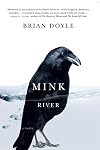
Some truly beautiful and emotive moments, some compelling depictions of what can best be described (even if one isn't a Catholic) as grace in action, but overall it does get a bit twee and descends into flat-out bourgeois mysticism where its depictions of the societal ills that its characters experience is concerned. Imagine having one of your indigenous characters mouth the platitude that "people have pretty much always been the same." Seriously? And yet, much of it still moved me, even to tears, and I'm not easily moved.
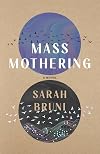
Much contemporary US fiction seems as insular and unconcerned with the world beyond our borders as does our culture at large. It's truly heartening to read a credible and strongly crafted work that presents a larger reality - yet in an intimate and poetic way. The style and organization of the narrative are themselves an homage to the way some of the best writers from the "2/3rds World" have presented stories of oppression and resilience in the face of it. There are a couple of misfires - the title, I think, is one. And for a novel that purposely limits character exposition in other respects, the Rosa Zapo character has to carry a bit too much symbolic weight and the frame story in which she emerges comes to seem unnecessarily contrived. But overall this is a work to appreciate deeply for its insight, substance and level of craft.
 This review was written for LibraryThing Early Reviewers.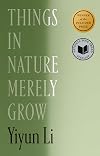
A uniquely horrific chronicle of loss that is also a presentation of the lived experience of an existentialist philosophy that is almost pure. Which made me reflect on how thoroughly the social aspect of our existence has been compromised in modernity (this may even be the reason existentialism emerged as a school of thought) - when family and society are toxic, as Li's were, when the once-supremely tight and communitarian web of human relationships is reduced to a few dispersed friendships and professional ties, and the vast web of the living world to a home garden, when the spiritual dimension is non-existent, the individual is left alone to bear the untenable burden of a kind of life that tosses all our ancient evolutionary strengths away. That this utter isolation and defeat of the soul should engender madness, even generational madness, seems profoundly sad but perfectly comprehensible.
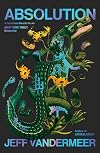
A serious bummer for me - this prequel takes the focus and concerns of the volume I liked least in the Southern Reach Trilogy - Authority - and spends all its time with them. Note to authors of speculative fiction (and other genres): If characterization isn't your strong suit, why on earth try to double down on it? The dehumanization and marginalization of the human world was the great theme of the SRT - while the a-human world of Area X was so vividly being brought to life. So it made perfect sense that the human characters were mostly ciphers. And the horrific elements here seem much more isolated and gratuitous because they don't emerge out of that marvelously unique and evolving ecosystem, but are just grafted on (because, eco-horror, so...) This volume is getting raves, but to me it's a "reach" that exceeded its author's grasp. I'm sorry it'll be the last word on Area X.
Also, sorry again, but in what universe can any government agency afford to send 25 biologists on a mission to release four alligators? (Even if it's a false flag operation with another purpose entirely.) I'd like my fantastical premises to be at least somewhat coherent, thank you.
Also, sorry again, but in what universe can any government agency afford to send 25 biologists on a mission to release four alligators? (Even if it's a false flag operation with another purpose entirely.) I'd like my fantastical premises to be at least somewhat coherent, thank you.
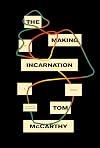
Shades of Thomas Pynchon - literally. This reads almost like an AI generated amalgam of Pynchonian stock characters, plot/subplots and overarching theme of modernity as the mechanized, capital-amped System in hyperdrive, driving humanity to the wall, while its quest for total knowledge, total understanding and thus total control is forever frustrated, lost in aporia, entropy, glitches, mise en abime, black boxes (or their absence). It's more muted (and shorter!) than Pynchon's classic works, without all the kinky sex and extended slapstick sequences. But very much in that vein. Fortunately, it's a vein that can still be mined to some effect, and there are some nice gestures towards significance in it, amid the relentless flood of proper nouns, engineering jargon, parenthetical asides and overused italics. You have to appreciate the amount of technical research that goes into creating a work like this, anyway.
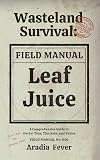
What a cute concept, but it really should be a physical book to be consistent with its post-apocalyptic, brokedown world frame (e-books will, of course, disappear like vapor in a real, permanent loss of civilization). It's got legitimate herbalist knowledge and easy-to-follow recipes - so many! Most of the ingredients are not difficult to grow or acquire. So - it's useful!
Additional storytelling about the wasteland world would have been good - maybe more of the fun "testimonials" by survivors, or "found" journal entries, or a monologue of some kind describing daily life, to put a bit more flesh on the bones of the concept. But overall I give it a scrawny, grimy, irradiated thumb up. As John Michael Greer, the ultimate commentator for the post-civilization blogosphere has said: "Collapse now, and avoid the rush!"
Additional storytelling about the wasteland world would have been good - maybe more of the fun "testimonials" by survivors, or "found" journal entries, or a monologue of some kind describing daily life, to put a bit more flesh on the bones of the concept. But overall I give it a scrawny, grimy, irradiated thumb up. As John Michael Greer, the ultimate commentator for the post-civilization blogosphere has said: "Collapse now, and avoid the rush!"
This review was written for LibraryThing Early Reviewers.
While heartfelt and well-intentioned, and compelling in some of its details, this memoir calling itself a novel suffers from a too-tight focus on the narrator and his family (their conversations, clothes, food, all pretty much what you'd expect), while the backdrop against which their relentless tragedies take place almost completely disappears. I got drawn back in every time Brooklyn showed up as a place I could see, hear and smell, and I appreciated the references to events of the day, and particularly Eon's inclusion of key songs and concerts as emotional and temporal markers. I wish there'd been more of that. Strangely absent from the historical references and yet key to any description of that time and place: the 1980s racial incidents that set the boroughs on fire: Howard Beach, Bensonhurst, the Central Park 5.
This review was written for LibraryThing Early Reviewers.
An out and out fantasy, but an appealing one in some ways. More engaging and less irritating than other KSR works I've tried. It's an actual novel of ideas! That isn't boring! That deserves some respect.
How to Grow and Use Gourmet & Medicinal Mushrooms: A Mushroom Field Guide with Step-by-Step Instructions and Images for Mushroom Identification, Cultivation, Usage and Recipes (DIY Mushroom) by Stephen Fleming
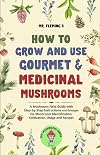
First off, this e-book needed copy editing and proofing before being sent out for review. Some mushrooms are wrongly attributed in images early on in the book, and there are multiple proofing errors and instances of clumsy, ungrammatical phrasing.
I also did not appreciate being forced to agree to review the book on Amazon, a predatory company to which I do not wish to contribute free content. Nor did I appreciate being given a tight deadline by the publisher, since this is a voluntary situation and I'm not being compensated in any way.
That said, the book is comprehensive and detailed, with much useful information for anyone who loves mushrooms and is considering growing and preparing them at home. If the publisher had done a better job of preparing the e-copies, it would have gotten a better review from me. I won't solicit further e-books from Library Thing after this experience.
I also did not appreciate being forced to agree to review the book on Amazon, a predatory company to which I do not wish to contribute free content. Nor did I appreciate being given a tight deadline by the publisher, since this is a voluntary situation and I'm not being compensated in any way.
That said, the book is comprehensive and detailed, with much useful information for anyone who loves mushrooms and is considering growing and preparing them at home. If the publisher had done a better job of preparing the e-copies, it would have gotten a better review from me. I won't solicit further e-books from Library Thing after this experience.
This review was written for LibraryThing Early Reviewers.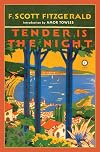
"Like most women, she wanted to be told what she should feel..."
Didn't wear well in the 1930s. Doesn't wear well now.
Didn't wear well in the 1930s. Doesn't wear well now.
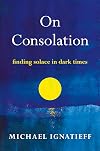
This is not a work of rigorous scholarship but a personal take on the literature of consolation in the West and the lives of some of its creators. It is an imaginative attempt to find in those lives the elements that led to the production of enduring texts on this theme. Ignatieff is perceptive enough about the times we live in to see how all these prior attempts, whether religious or secular, from St. Paul to Marx, are inadequate to address our contemporary malaise. In fact, he notes their highly qualified nature even for some of men who articulated them.
His approach is "old school," not based in any type of critical theory, and thus will not please anyone who requires such an approach to textual scholarship. Every claim, of course, is contestable, and one almost wishes he had personalized his approach further and openly admitted the act of imagination involved in presenting the writers' lives as he does. Personally, I would have found an anthology approach, with more extended segments of the primary texts and shorter biographical musings more valuable.
The most moving and revelatory section I found, was the one about Cicely Saunders, the initiator of the modern hospice care system. Here was consolation in its most practical, material form. After millennia of men in the West trying with limited success to console themselves about the evils of society and the pain in their own lives by positing of way of being, a system of thought, a transcendent power, a theory of human show more evolution, etc., Saunders focused attention on the immediate physical and psychological needs of the most disposable of all persons - the dying. Perhaps it is true that a society can be judged by how it deals with death; if so her efforts demonstrate a greater heroism than those of doctors who simply wish to keep bodies alive at all costs, or political or military leaders who win wars by consigning millions of people to deaths without dignity or comfort.
In the end, I found little consolation "On Consolation." A catalogue of horrors that shows no sign of ending, Western civilization appears functionally irredeemable to me through the lens of these texts. But compassionate care for the dying, which is not limited to a single culture or tradition, offers at least the knowledge that consolation for the most irremediable of situations is available, and it needs no textual explication, just the willingness to act. show less
His approach is "old school," not based in any type of critical theory, and thus will not please anyone who requires such an approach to textual scholarship. Every claim, of course, is contestable, and one almost wishes he had personalized his approach further and openly admitted the act of imagination involved in presenting the writers' lives as he does. Personally, I would have found an anthology approach, with more extended segments of the primary texts and shorter biographical musings more valuable.
The most moving and revelatory section I found, was the one about Cicely Saunders, the initiator of the modern hospice care system. Here was consolation in its most practical, material form. After millennia of men in the West trying with limited success to console themselves about the evils of society and the pain in their own lives by positing of way of being, a system of thought, a transcendent power, a theory of human show more evolution, etc., Saunders focused attention on the immediate physical and psychological needs of the most disposable of all persons - the dying. Perhaps it is true that a society can be judged by how it deals with death; if so her efforts demonstrate a greater heroism than those of doctors who simply wish to keep bodies alive at all costs, or political or military leaders who win wars by consigning millions of people to deaths without dignity or comfort.
In the end, I found little consolation "On Consolation." A catalogue of horrors that shows no sign of ending, Western civilization appears functionally irredeemable to me through the lens of these texts. But compassionate care for the dying, which is not limited to a single culture or tradition, offers at least the knowledge that consolation for the most irremediable of situations is available, and it needs no textual explication, just the willingness to act. show less
This review was written for LibraryThing Early Reviewers.The Wonder of Birds: What They Tell Us About Ourselves, the World, and a Better Future by Jim Robbins
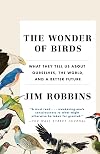
Gave up. It's all about people, not birds.
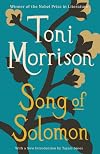
Plot-driven, character-driven, held by history and underlain by myth, with a full command of the possibilities of the written from - at its best, as here, a novel is all these things in creative tension. This is a masterwork. It's been a long time since I have been able to say say that about any novel I've read, particularly any novel written in the last fifty years.
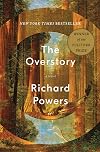
Kudos to Richard Powers for answering Amitav Ghosh's challenge in The Great Derangement (whether or not he knew it existed when he wrote this novel) and taking on in fiction the biggest issue of our time: humanity's destruction of the biosphere. He is now credited with writing a seminal work in the new genre of eco-fiction. That said, it's unfortunate The Overstory is not a better book.
The garrulous narrative style, with its sole reliance on the present tense (what IS it with that trend in contemporary fiction? it's obnoxious and pointless; it adds nothing to long-form works while taking away their gravitas), is overwrought and the dialogue is hopelessly flat and hokey. As are all of the central characters, with the exception of Patricia Westerford, whose portrayal is at least somewhat compelling, because she convincingly embodies a scientific romance with the living world, what E.O. Wilson called "biophilia." The novel is also to be commended for taking radical activism seriously as a subject for fiction, even if the POV is a bit clunky because it is that of a liberal academic and not a witness or fellow traveler.
It is in the depiction of trees and forests and their magnificent and complex life-sustaining operations that the work excels, and where its prose is at its best. It almost makes you wish Powers could have done away with his cardboard cutout human characters altogether and told his saga entirely from the point of view of a sentient forest.
As Tolstoy took on show more war, and yet humanity has not ceased from waging it, so we can't hope that this breakthrough novel, or even a much better work of "cli-fi" that may come along, will halt our scorched earth path toward our own extinction. Yet the resolution of The Overstory is cathartic, because it suggests that the biosphere is unbeatable, and unlike humanity, it has all the time in the world to revive, regenerate and recreate itself. show less
The garrulous narrative style, with its sole reliance on the present tense (what IS it with that trend in contemporary fiction? it's obnoxious and pointless; it adds nothing to long-form works while taking away their gravitas), is overwrought and the dialogue is hopelessly flat and hokey. As are all of the central characters, with the exception of Patricia Westerford, whose portrayal is at least somewhat compelling, because she convincingly embodies a scientific romance with the living world, what E.O. Wilson called "biophilia." The novel is also to be commended for taking radical activism seriously as a subject for fiction, even if the POV is a bit clunky because it is that of a liberal academic and not a witness or fellow traveler.
It is in the depiction of trees and forests and their magnificent and complex life-sustaining operations that the work excels, and where its prose is at its best. It almost makes you wish Powers could have done away with his cardboard cutout human characters altogether and told his saga entirely from the point of view of a sentient forest.
As Tolstoy took on show more war, and yet humanity has not ceased from waging it, so we can't hope that this breakthrough novel, or even a much better work of "cli-fi" that may come along, will halt our scorched earth path toward our own extinction. Yet the resolution of The Overstory is cathartic, because it suggests that the biosphere is unbeatable, and unlike humanity, it has all the time in the world to revive, regenerate and recreate itself. show less
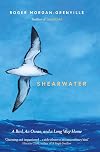
A very worthy addition to the great tradition of British naturalist memoir (a tradition I know exists not through wide reading on my part, but because the few authors I have read in this genre always cite other classics of British naturalism as inspiration in their books). Morgan-Grenville depicts his obsession with shearwaters in way that always makes room for a reader who doesn't share that obsession but takes the journey all the way because it is so pleasurably and unpretentiously described. And also because the author succeeds in linking this one bird's astounding life cycle to the life of other seabirds, birds in general, ecosystems, human environments and individual human lives - so what you learn is unique and universal at the same time.
In a time of existential crisis for the biosphere, it is also a work that testifies to the power of survival and regeneration. Inspirational.
In a time of existential crisis for the biosphere, it is also a work that testifies to the power of survival and regeneration. Inspirational.
This review was written for LibraryThing Early Reviewers.The Philosopher’s Touch: Sartre, Nietzsche, and Barthes at the Piano (European Perspectives: A Series in Social Thought and Cultural Criticism) by François Noudelmann
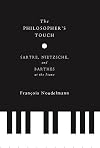
A refreshing intellectual palate-cleanser, about how three great European thinkers escaped the discontents of a life of the mind through a physical relationship with music. In prose that is academic without being dull or obscurantist, Noudelmann, a piano player himself, traces how each man's relationship to the piano informed, acted as a counterpoint to, refuge from (or all of the above) his contributions to the world of ideas.
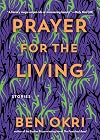
Ben Okri's The Famished Road is a masterpiece. This collection of short pieces feels a bit like bits of pie crust trimmed from a larger, more substantial pie; many of the tales feel more like notebook sketches than fully thought-out stories or even fables (an exception is his deft and thought-provoking homage to Cervantes, "Don Ki-Otah and the Ambiguity of Reading"). Okri can't quite compete here with the modern masters of the short form, especially in the category where he best fits: elaborations of the dream/nightmare world a la Kafka, or the reality-bending mind journeys of Borges. Italo Calvino also comes to mind. Still, Okri holds his own and his lesser work still offers rewards. But perhaps the best gift of this collection will be to entice more readers to visit or revisit The Famished Road.
This review was written for LibraryThing Early Reviewers.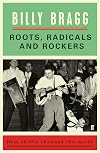
Excellent, comprehensive, exhaustive without being exhausting. A seminal period in the history of British popular music dusted off and made to shine by Billy Bragg's great book.
This review was written for LibraryThing Early Reviewers.
The anti-blackness undid it for me.
Interesting only for the author's walking "journey to the end of night" through Europe and the Middle East. Otherwise, just another dreary, overlong (if competently written) memoir of American (white) family dysfunction. Enough, already. Why Americans are so bad at family, and the ways they are bad at it that may be specific to the norms of this nation, would be a psycho-social history worth writing. But we don't need any more case histories, imho.
Yuck. Pretentious bourgeois fiction at its tripey-ist. Its popularity probably makes it some kind of indicator of the state of the contemporary middle class psyche and intellect - which is a truly depressing thought. Two points for a cute premise somewhat deftly executed, if utterly squandered here.
Dystopian cyberpulp (cli-fi division) with a more diverse cast. Some neat elements, like human-animal bonding, but not much new insight.
The racism undoes it. But "ania, apia, alia" are concepts worth keeping. So is the idea, however remote, that civilization is possible without "[forcing] differentiation and specialization." (p 821)
Mainly of interest to me for who it influenced: William Morris, who appreciated Jefferies' love of nature but didn't see why a post-civilization Medievalist agrarian society couldn't be a happy place if you just took away exploitation, systemic violence and oppression, and Jeff Vandermeer, who must have loved the creepy horrorscape of a destroyed London reverted to pestilent, corpse-filled swamp, since his Area X is an analogue, if on a much broader canvas.
Dreary prose, befitting its form: a series of diplomatic communiques. Drearier conceptually, with the exception of an early "Shaggy God story," as a friend called it, mostly a history of the cataclysmic 20th century in bureaucrat-speak, now quite bland and dated. Such is the 20th century liberal's worldview; Thomas Mann doesn't really hold up either. The idea that Shikasta is a battleground for a good vs. evil war of energies by another planetary system is okay. A lot more fun could have been had with that.
I know Doris Lessing has done better. Was it The Four-Gated City?
I know Doris Lessing has done better. Was it The Four-Gated City?
I can sometimes enjoying watching cerebral melodramas with English middle class characters on film or television, but it seems I no longer have the patience for them in novel form, so it's too late for me to enjoy Iris Murdoch. The milieu she describes with such care seems so utterly marginal today. Give me the fantastical, or give me at least some characters who have known war, or what it is like to go hungry - because that's the only way to capture the world as I experience it now.

Fun, but trivial, not top-notch Spark. Gave up and read ahead.
Noir isn't a dark enough color for some of these stories, all well-worth the time. Some translations are stronger than than others, some stories explore deeper themes than crime and personal revenge and others don't, but overall it's a great collection. I'd also like to shout-out that women, not always considered full members of the noir authors' club, are well-represented here and produce some of the most bone-chilling work. I look forward to checking out more of this series from my favorite cities around the world.
This review was written for LibraryThing Early Reviewers.
Read third in an inadvertent series of early 20th century European pessimists/misanthropists of prose, after Pessoa's The Book of Disquiet, EM Cioran's A Short History of Decay.
Pessoa is light years beyond the other two, imho, and I didn't find that Franzen's labored attempt to make Kraus relevant to the 21st century was very successful, although I did appreciate (again) what a remarkable hive of cultural activity Vienna must have been from the late 19th century to the Anschluss. Kraus' final poem is the best thing in the book. There is really nothing more to say when a civilization turns monstrous.
Pessoa is light years beyond the other two, imho, and I didn't find that Franzen's labored attempt to make Kraus relevant to the 21st century was very successful, although I did appreciate (again) what a remarkable hive of cultural activity Vienna must have been from the late 19th century to the Anschluss. Kraus' final poem is the best thing in the book. There is really nothing more to say when a civilization turns monstrous.
I guess I will quip, since no one else has, that a post-structuralist is someone who tries to take the "human" out of the humanities, and thus isn't left with much. While it's a pleasure to read E.P. Thompson, it's a melancholy one. Structuralism and post-structuralism overran academics in capitalist societies like a scourge for the next 30 years after the titular essay was written, all the while actually existing socialism was decaying and collapsing under relentless assault from without and within. So Thompson's humane faith in the historical process as something which is open-ended, evolving and made consciously by actual human beings is like hearing a voice speaking from the grave.