
Lynne Sharon Schwartz
Author of Ruined by Reading: A Life in Books
About the Author
Writer Lynne Sharon Schwartz was born and raised in Brooklyn, New York. She received a B. A. from Barnard College, an M. A. from Bryn Mawr, and started work on a Ph.D. at New York University. She chronicled her love of reading and the meaning it has had upon her life in a book called Ruined by show more Reading. She has published around twenty books including Rough Strife, which was nominated for a National Book Award and Leaving Brooklyn, which was nominated for the Pen/Faulkner Award for Fiction. She has also written for children in such books as The Four Questions, explaining the traditions of Passover. She is also an Italian translator and her translations include A Place to Live and Other Selected Essays by Natalia Ginzburg and Smoke over Birkenau by Liana Millu. (Bowker Author Biography) show less
Works by Lynne Sharon Schwartz
Associated Works
The Yellow Wallpaper and Other Writings {Bantam Classics} (1989) — Introduction, some editions — 567 copies, 7 reviews
Growing Up Ethnic in America: Contemporary Fiction About Learning to Be American (1999) — Contributor — 120 copies
A Place to Live: and other selected essays of (2002) — Translator, some editions — 61 copies, 1 review
Rediscoveries II: Important Writers Select Their Favorite Works of Neglected Fiction (1988) — Contributor — 31 copies, 1 review
Tagged
Common Knowledge
- Other names
- Sharon, Lynne (birth name)
- Birthdate
- 1939-03-19
- Gender
- female
- Education
- Barnard College (BA|1959)
Bryn Mawr College (MA|1961)
New York University - Occupations
- writer
translator
children's book author
poet
literary critic
memoirist (show all 10)
essayist
novelist
short story writer
book reviewer - Relationships
- Schwartz, Harry (husband)
Schwartz, Rachel (daughter)
Schwartz, Miranda (daughter) - Short biography
- Married to Harry Schwartz, with two daughters Rachel and Miranda.
- Nationality
- USA
- Birthplace
- New York, New York, USA
- Places of residence
- Brooklyn, New York, USA
New York, New York, USA - Associated Place (for map)
- New York, USA
Members
Reviews
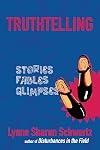
I’m a little embarrassed to say that even though I enjoyed and was impressed by Lynne Sharon Schwartz’s Leaving Brooklyn when I read it back in June 1992, Truthtelling: Stories, Fables, Glimpses is only the second thing of hers I’ve read. Schwartz is, after all, the author of twenty-seven books, some of which (including Leaving Brooklyn) have been finalists for major awards such as the National Book Award and the PEN Faulkner Award. How such a fine writer could have completely slipped show more off my radar screen is beyond me.
Truthtelling is a collection of 25 short stories between three and twenty-something pages long. The title story itself, “Truthtelling,” was nominated for the Pushcart Prize Award, and many of the other stories have been published previously in prestigious collections such as Best American Short Stories 2005 and O. Henry Prize Stories 2015. The collected stories are about ordinary men and women facing up to life the best way they know how as they encounter the kind of problems that are familiar to all of us. As the book’s subtitle suggests, the stories offer the reader intimate glimpses into the lives — and minds — of twenty-five characters not so different from the rest of us.
There is a story about an elderly couple that has finally reached the age when each deems it safe to confess past sins to the other, one about a man who’s ex-wife figures out the perfect way to make him hurt as much as she does, and another about a woman who betrays the kindness of a stranger on a whim. There are stories about writers, singers, and even one about a concert pianist’s page-turner. Some of the stories are about people whose minds are not functioning quite right, placing them in unique and sometimes embarrassing predicaments. But all the stories are about what it means to be human, and how difficult the struggle can be at times for all of us.
Among my personal favorites is “Am I A Thief,” a story about an almost accidental theft (of a surprising object) inside a darkened movie theater and how the “thief” justifies the strange encounter to herself. Another is one of the longer stories in the collection, a story called “But I Digress…” in which a woman sitting at her father’s deathbed thinks about her father’s life and how his family’s experiences shaped her into who she is. My favorite of them all is also one of the saddest in the collection, a story called “Career Choice” in which a young woman decides that, because of her lack of job skills, there is only one choice open to her: marry an elderly rich man and hope to cash in before too many years go by.
Bottom Line: Lynne Sharon Schwartz is a brilliant storyteller, and Truthtelling is filled with the kind of stories that will have readers thinking — and talking — about them long after they put the book down. If you are a short story fan, this is one collection you should not miss.
Review Copy provided by Publisher show less
Truthtelling is a collection of 25 short stories between three and twenty-something pages long. The title story itself, “Truthtelling,” was nominated for the Pushcart Prize Award, and many of the other stories have been published previously in prestigious collections such as Best American Short Stories 2005 and O. Henry Prize Stories 2015. The collected stories are about ordinary men and women facing up to life the best way they know how as they encounter the kind of problems that are familiar to all of us. As the book’s subtitle suggests, the stories offer the reader intimate glimpses into the lives — and minds — of twenty-five characters not so different from the rest of us.
There is a story about an elderly couple that has finally reached the age when each deems it safe to confess past sins to the other, one about a man who’s ex-wife figures out the perfect way to make him hurt as much as she does, and another about a woman who betrays the kindness of a stranger on a whim. There are stories about writers, singers, and even one about a concert pianist’s page-turner. Some of the stories are about people whose minds are not functioning quite right, placing them in unique and sometimes embarrassing predicaments. But all the stories are about what it means to be human, and how difficult the struggle can be at times for all of us.
Among my personal favorites is “Am I A Thief,” a story about an almost accidental theft (of a surprising object) inside a darkened movie theater and how the “thief” justifies the strange encounter to herself. Another is one of the longer stories in the collection, a story called “But I Digress…” in which a woman sitting at her father’s deathbed thinks about her father’s life and how his family’s experiences shaped her into who she is. My favorite of them all is also one of the saddest in the collection, a story called “Career Choice” in which a young woman decides that, because of her lack of job skills, there is only one choice open to her: marry an elderly rich man and hope to cash in before too many years go by.
Bottom Line: Lynne Sharon Schwartz is a brilliant storyteller, and Truthtelling is filled with the kind of stories that will have readers thinking — and talking — about them long after they put the book down. If you are a short story fan, this is one collection you should not miss.
Review Copy provided by Publisher show less
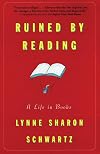
"To read more is a handicap. It is better to keep your own mind free and to not let the thinking of others interfere with your own free thinking."
This unlikely quote from one Mr. Cha sets Lynne Schwartz thinking about her own experience reading. The delightful short book - almost an extended essay - that follows traces her reading life from impressing her father's friends with her ability to read the newspaper at a young age through college where she's introduced to the canon. Schwartz show more reflects on her reading experiences in a way that will resonate with many readers: "There is nothing to match the affinity of people who were defined and nourished by the same book, who shared a fantasy life." Well, even if you don't share the same mental library as she does, you'll probably enjoy ruminating on the topics that she tackles, from movie adaptations to a more inclusive canon to whether one should read serendipitously or use a list. You may not agree with her takes, but that's the fun of reading, isn't it? show less
This unlikely quote from one Mr. Cha sets Lynne Schwartz thinking about her own experience reading. The delightful short book - almost an extended essay - that follows traces her reading life from impressing her father's friends with her ability to read the newspaper at a young age through college where she's introduced to the canon. Schwartz show more reflects on her reading experiences in a way that will resonate with many readers: "There is nothing to match the affinity of people who were defined and nourished by the same book, who shared a fantasy life." Well, even if you don't share the same mental library as she does, you'll probably enjoy ruminating on the topics that she tackles, from movie adaptations to a more inclusive canon to whether one should read serendipitously or use a list. You may not agree with her takes, but that's the fun of reading, isn't it? show less
Truthtelling, Lynne Sharon Schwartz, author.
Having read this author previously, I anticipated enjoying the book, and I was not disappointed. Wasting few words, each story gets to the point and presents the reader with something to think about. Even the most serious of topics contains a light hand, with occasional levity, a technique I believe the author has mastered. As a reader, I looked forward to reading each one. They all inspired me to think about human nature, the world today and the show more world to come.
I did not rush through this book because I enjoyed reading a few stories at a time and savored them, while thinking about what point the author meant to make. Sometimes the point eluded me, sometimes, I thought I disagreed with the point made, and at other times, a light bulb went off in my head and awakened a memory of a moment in my own life. Each of the characters was unique and identifiable, but a combination of all made a complete study of a human being's approach to the whole totality of life.
Filled with emotional appeal, the stories confront ordinary people, exposing their ordinary experiences and their ordinary dilemmas. The dreams and nightmares of these everyday characters, plucked from the streets of “everyman’s” community, are explored deftly by the author. Their simple daily lives and thoughts come to life. Their approach is simplistic and symbolic of the often flawed reasoning of human beings to justify their actions.
The stories deal with a variety of subjects such as: ambition, marriage, parenting, conflicts, history, climate, the future, heartache, work, and occasionally even joy. The message is indirect as everyday life with its small details, is laid bare and scrutinized, with all the warts and foibles of humans marching across the page. What do we do when we encounter a stranger, how do we react to perceived danger, how do we cope with loneliness, how do we deal with the death of a loved one, how do we deal with a recalcitrant child, how do we deal with danger for ourselves and others, how do we repay a stranger's kindness, how do we avoid judgment and responsibility in our own lives? Do we rise to the occasion and do the honorable thing or behave shamefully? Do we always choose the easy way out and escape into a cocoon of safety? Why do we lie when faced with troubling questions? These stories raised these and many other questions for me to ponder, which is why I so enjoyed each one. They were written simply, but they were not mindless. Each short story will encourage the reader to grow and reflect on their own behavior, on their own cynicism and its opposite, optimism.
The stories are never heavy-handed. The interjection of a light touch of mockery and/or humor, here and there, provides them with appeal as each imperfect human being finds ways to explain away, and live with, their own flaws of character. The stories deal subtly with life in all of its costumes: current day political issues, mental illness, annoying neighbors, historic tragedies, etc. As each unique character comes to life, the reader bears witness to their individual approaches to the demands that face them. One character is suddenly burnt out and takes to her bed, neglecting all the things she had found important in her life and finds a new perspective. Another character wonders if he should speak to a stranger. One discovers her preference for a certain food, while another deals with her response to a kind stranger's helping hand. The reader begins to think about how choices are made. Do we sometimes make decisions by actually not making a decision, letting so much time go by that a decision is no longer necessary or possible?
The author examines the idea of honesty and honor in each story, using unique examples to highlight the way our approach to truth influences our decisions, our relationships, our jobs, our interactions with strangers and our own conscience efforts to live our lives without too much chaos. Are we capable of duplicity, betrayal, heroism, kindness? We many not have answers at the end, but we certainly will have given it thought. show less
Having read this author previously, I anticipated enjoying the book, and I was not disappointed. Wasting few words, each story gets to the point and presents the reader with something to think about. Even the most serious of topics contains a light hand, with occasional levity, a technique I believe the author has mastered. As a reader, I looked forward to reading each one. They all inspired me to think about human nature, the world today and the show more world to come.
I did not rush through this book because I enjoyed reading a few stories at a time and savored them, while thinking about what point the author meant to make. Sometimes the point eluded me, sometimes, I thought I disagreed with the point made, and at other times, a light bulb went off in my head and awakened a memory of a moment in my own life. Each of the characters was unique and identifiable, but a combination of all made a complete study of a human being's approach to the whole totality of life.
Filled with emotional appeal, the stories confront ordinary people, exposing their ordinary experiences and their ordinary dilemmas. The dreams and nightmares of these everyday characters, plucked from the streets of “everyman’s” community, are explored deftly by the author. Their simple daily lives and thoughts come to life. Their approach is simplistic and symbolic of the often flawed reasoning of human beings to justify their actions.
The stories deal with a variety of subjects such as: ambition, marriage, parenting, conflicts, history, climate, the future, heartache, work, and occasionally even joy. The message is indirect as everyday life with its small details, is laid bare and scrutinized, with all the warts and foibles of humans marching across the page. What do we do when we encounter a stranger, how do we react to perceived danger, how do we cope with loneliness, how do we deal with the death of a loved one, how do we deal with a recalcitrant child, how do we deal with danger for ourselves and others, how do we repay a stranger's kindness, how do we avoid judgment and responsibility in our own lives? Do we rise to the occasion and do the honorable thing or behave shamefully? Do we always choose the easy way out and escape into a cocoon of safety? Why do we lie when faced with troubling questions? These stories raised these and many other questions for me to ponder, which is why I so enjoyed each one. They were written simply, but they were not mindless. Each short story will encourage the reader to grow and reflect on their own behavior, on their own cynicism and its opposite, optimism.
The stories are never heavy-handed. The interjection of a light touch of mockery and/or humor, here and there, provides them with appeal as each imperfect human being finds ways to explain away, and live with, their own flaws of character. The stories deal subtly with life in all of its costumes: current day political issues, mental illness, annoying neighbors, historic tragedies, etc. As each unique character comes to life, the reader bears witness to their individual approaches to the demands that face them. One character is suddenly burnt out and takes to her bed, neglecting all the things she had found important in her life and finds a new perspective. Another character wonders if he should speak to a stranger. One discovers her preference for a certain food, while another deals with her response to a kind stranger's helping hand. The reader begins to think about how choices are made. Do we sometimes make decisions by actually not making a decision, letting so much time go by that a decision is no longer necessary or possible?
The author examines the idea of honesty and honor in each story, using unique examples to highlight the way our approach to truth influences our decisions, our relationships, our jobs, our interactions with strangers and our own conscience efforts to live our lives without too much chaos. Are we capable of duplicity, betrayal, heroism, kindness? We many not have answers at the end, but we certainly will have given it thought. show less
When I this at the Friends of the Library booksale, one of my favorite quotes (from Louisa May Alcott) came to mind, "She is too fond of books, and it has turned her brain."
There were many times the narrative struck close to home -- I too am a book addict, and would be a member of readers anonymous, were there such a group. Some bookish habits and delights the author and I share, while we branch out a bit on others. My parents were also People of the Book, (though I did tire of that refrain show more a bit), and my children learned early on that though I might say no to an impluse buy of Power Rangers or My Little Pony, I would probably never refuse them a book.
Despite our shared love of books, what I liked best about this volume were the glimpses into the world of Brooklyn that my mother and grandmother inhabited. We have our own family stories about iceboxes and the stoops of brownstones. She also brought to mind my earliest memories, mostly centered around reading and books. Maybe someday, I'll write it all up so that others can stumble upon the stories at a booksale, and awaken a loving, lingering walk through memories of People of the Book. show less
There were many times the narrative struck close to home -- I too am a book addict, and would be a member of readers anonymous, were there such a group. Some bookish habits and delights the author and I share, while we branch out a bit on others. My parents were also People of the Book, (though I did tire of that refrain show more a bit), and my children learned early on that though I might say no to an impluse buy of Power Rangers or My Little Pony, I would probably never refuse them a book.
Despite our shared love of books, what I liked best about this volume were the glimpses into the world of Brooklyn that my mother and grandmother inhabited. We have our own family stories about iceboxes and the stoops of brownstones. She also brought to mind my earliest memories, mostly centered around reading and books. Maybe someday, I'll write it all up so that others can stumble upon the stories at a booksale, and awaken a loving, lingering walk through memories of People of the Book. show less
Lists
Awards


You May Also Like


Associated Authors
Statistics
- Works
- 29
- Also by
- 22
- Members
- 2,292
- Popularity
- #11,208
- Rating
- 4.1
- Reviews
- 53
- ISBNs
- 106
- Languages
- 6
- Favorited
- 4
