
Nicholas A. Basbanes
Author of A Gentle Madness: Bibliophiles, Bibliomanes, and the Eternal Passion for Books
About the Author
Nicholas A. Basbanes was literary editor of the Worcester Sunday Telegram from 1978 to 1991, and is a former president of the Friends of the Robert H. Goddard Library of Clark University.
Works by Nicholas A. Basbanes
A Gentle Madness: Bibliophiles, Bibliomanes, and the Eternal Passion for Books (1995) 3,575 copies, 42 reviews
Patience & Fortitude: A Roving Chronicle of Book People, Book Places, and Book Culture (2001) 1,508 copies, 11 reviews
A Splendor of Letters: The Permanence of Books in an Impermanent World (2003) 1,129 copies, 6 reviews
Among the Gently Mad: Perspectives and Strategies for the Book Hunter in the Twenty-first Century (2002) 1,033 copies, 18 reviews
Fit for a Czar 2 copies
Peters bok 1 copy
Deneme Kitabı 1 copy
Deneme 4 Kitabı 1 copy
Associated Works
Booknotes: America's Finest Authors on Reading, Writing, and the Power of Ideas (1997) — Contributor — 458 copies, 5 reviews
The Book That Changed My Life: 71 Remarkable Writers Celebrate the Books That Matter Most to Them (2006) — Contributor — 411 copies, 18 reviews
Rare Books Uncovered: True Stories of Fantastic Finds in Unlikely Places (2018) — Foreword, some editions — 206 copies, 7 reviews
The Critical Mess. Annals of Collecting: 10 — Contributor — 3 copies
Tagged
Common Knowledge
- Canonical name
- Basbanes, Nicholas A.
- Legal name
- Basbanes, Nicholas Andrew
- Birthdate
- 1943-05-25
- Gender
- male
- Education
- Bates College (BA|1965)
Pennsylvania State University (MA|1969) - Occupations
- journalist
author
lecturer - Organizations
- United States Navy (Vietnam)
Worcester Sunday Telegram - Awards and honors
- National Endowment for the Humanities Fellowship
- Relationships
- Basbanes, Constance (wife)
- Short biography
- A native of Lowell, Massachusetts, Nicholas A. Basbanes graduated from Bates College in 1965, received a master of arts degree from Pennsylvania State University in 1968, and served as a naval officer aboard the aircraft carrier Oriskany in the Tonkin Gulf in 1969 and 1970. An award-winning investigative reporter during the early 1970s, Basbanes was literary editor of the Worcester Sunday Telegram from 1978 to 1991, and for eight years after that wrote a nationally syndicated column on books and authors. He is a former president of the Friends of the Robert H. Goddard Library of Clark University, which has established a student book collecting competition in his honor. In addition to his books, Basbanes has written for numerous newspapers, magazines, and journals, The New York Times, Los Angeles Times, The Washington Post, Smithsonian, Civilization , and New England Quarterly among them, and lectures widely on book-related subjects. In 2004, he began writing the "Gently Mad" column for Fine Books & Collections magazine. With his wife, Constance Basbanes, he writes a monthly review of children's books for Literary Features Syndicate, which they established in 1993, and which appears in a dozen newspapers. They are the parents of two daughters, and live in North Grafton, Mass.
- Nationality
- USA
- Birthplace
- Lowell, Massachusetts, USA
- Places of residence
- Lowell, Massachusetts, USA
North Grafton, Massachusetts, USA - Map Location
- Massachusetts, USA
Members
Discussions
Nick Basbanes' library in Other People's Libraries (April 2016)
A Gentle Madness: Bibliophiles, Bibliomanes, and the Eternal Love of Books in Books on Books (July 2013)
Reviews
Patience & Fortitude: A Roving Chronicle of Book People, Book Places, and Book Culture by Nicholas A. Basbanes
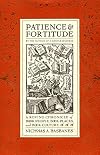
It is fitting, perhaps, that my first review of 2007 is a book I should have read long, long ago. Nicholas Basbanes' Patience and Fortitude is the author's second book after the wonderful A Gentle Madness, and it does not disappoint. Basbanes, as always, covers a significant amount of ground in this volume, but I found it nearly impossible to set this book down even for a moment or two once I started reading.
Taking its name from the pair of stone lions who guard the entrance to the New York show more Public Library's main building, Patience and Fortitude shows through countless examples how those two virtures are essential to the selection, creation and maintenance of great libraries (in any form, although it must be noted that having a little money doesn't hurt either). Basbanes takes his reader on a marvelous tour through the great libraries of the past (Alexandria, Glastonbury, Pergamum) to those of the present day (Harvard, Library of Congress, British Library, etc.) with his characteristic style and wit. Through interviews with book people of all stripes, Basbanes brings the culture of books alive - who can resist the lure of the printed page when it is described by such a master?
The dramatis personae of this book are far too varied and numerous to list, although I found the sections on Barry Moser, Umberto Eco, and the many emigre booksellers who came to North America before and during the second world war most personally intriguing. Basbanes' treatment of the great San Francisco library controversy of the 1990s is focused and fair, and his discussion of the role that technology and digitization will play in the library of the future is among the best I've read. While I read it straight through from cover to cover, the organization of the book is such that you could easily read a section here or there as your interests led (but you'll be sucked in, of that I have little doubt).
As always, I will issue my perennial quibble that the notes are not indicated in the text, although they are excellent and accompany a tremendous bibliography (from which I've just made a list of a number of books that I need to read). But this is another great offering, and one any book-lover should not let sit on the "to be read" shelf any longer.
http://philobiblos.blogspot.com/2007/01/book-review-patience-and-fortitude.html show less
Taking its name from the pair of stone lions who guard the entrance to the New York show more Public Library's main building, Patience and Fortitude shows through countless examples how those two virtures are essential to the selection, creation and maintenance of great libraries (in any form, although it must be noted that having a little money doesn't hurt either). Basbanes takes his reader on a marvelous tour through the great libraries of the past (Alexandria, Glastonbury, Pergamum) to those of the present day (Harvard, Library of Congress, British Library, etc.) with his characteristic style and wit. Through interviews with book people of all stripes, Basbanes brings the culture of books alive - who can resist the lure of the printed page when it is described by such a master?
The dramatis personae of this book are far too varied and numerous to list, although I found the sections on Barry Moser, Umberto Eco, and the many emigre booksellers who came to North America before and during the second world war most personally intriguing. Basbanes' treatment of the great San Francisco library controversy of the 1990s is focused and fair, and his discussion of the role that technology and digitization will play in the library of the future is among the best I've read. While I read it straight through from cover to cover, the organization of the book is such that you could easily read a section here or there as your interests led (but you'll be sucked in, of that I have little doubt).
As always, I will issue my perennial quibble that the notes are not indicated in the text, although they are excellent and accompany a tremendous bibliography (from which I've just made a list of a number of books that I need to read). But this is another great offering, and one any book-lover should not let sit on the "to be read" shelf any longer.
http://philobiblos.blogspot.com/2007/01/book-review-patience-and-fortitude.html show less
A Gentle Madness: Bibliophiles, Bibliomanes, and the Eternal Passion for Books by Nicholas A. Basbanes
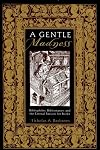
Hi - my name is Dawg, and I'm a biblioholic. I added over 500 books to my library last year; I have rotating orders coming from ThriftBooks so often I can't keep track of them; I'm in a bookstore or thrift store or antique store more times during the week than I am the grocery store; I shift and shove and rotate books onto every horizontal space in the house. Phew, I feel better.
This is a cool book, mostly because I see my own mania in the mania of others in it. Thankfully, I haven't started show more high-wire burglaries of university libraries like one of the main people documented here. Nor have I had to start sneaking books into the house through the window so my wife won't see them, like another document bibliomaniac. There's some dry stretches in the book talking about incunabula and auctions. But there's wonderful stories here, too. Like Charles Blockson - he started collecting books on African American history as a teen because his teacher told him that black people had no history, and ended up with one of the biggest and best such libraries ever assembled.
If you're here for the meeting, get the book.
5 bones!!!!!
Highly Recommended!!!!! show less
This is a cool book, mostly because I see my own mania in the mania of others in it. Thankfully, I haven't started show more high-wire burglaries of university libraries like one of the main people documented here. Nor have I had to start sneaking books into the house through the window so my wife won't see them, like another document bibliomaniac. There's some dry stretches in the book talking about incunabula and auctions. But there's wonderful stories here, too. Like Charles Blockson - he started collecting books on African American history as a teen because his teacher told him that black people had no history, and ended up with one of the biggest and best such libraries ever assembled.
If you're here for the meeting, get the book.
5 bones!!!!!
Highly Recommended!!!!! show less
Among the Gently Mad: Perspectives and Strategies for the Book Hunter in the Twenty-First Century by Nicholas A. Basbanes
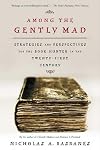
It's difficult to do better than Nicholas Basbanes if you're looking for something to read that is all but steeped in a love for the book. His knowledge of the field of book collecting is surpassed only by his exceeding readable style.
The present contribution is intended more specifically to the novice book collector, both to inspire and to counsel. Myself, I'm more of what he refers to as a book accumulator than anything approaching a true collector, so I can't say much of it had a personal show more relevance. But I love looking in on those who have a different relationship with the printed artefact and I do, and finding it in such delightfully consumable form is a rare treat. show less
The present contribution is intended more specifically to the novice book collector, both to inspire and to counsel. Myself, I'm more of what he refers to as a book accumulator than anything approaching a true collector, so I can't say much of it had a personal show more relevance. But I love looking in on those who have a different relationship with the printed artefact and I do, and finding it in such delightfully consumable form is a rare treat. show less
A Gentle Madness: Bibliophiles, Bibliomanes, and the Eternal Passion for Books by Nicholas A. Basbanes
Nicholas Basbanes' first "book about books", A Gentle Madness, has been on my "to read" list for ages and I've finally tackled it (finishing the last third or so sitting on the roof of my apartment enjoying a wonderfully cool August afternoon). With a journalist's knack for a good story and a bibliophile's recognition of and respect for good books, Basbanes has created a massive yet fascinating compilation of book collectors through the centuries, accurately describing the important role show more private collectors have played in the transmission and preservation of cultural treasures.
From Samuel Pepys to Thomas Phillipps to John Larroquette and uber-thief Stephen Blumberg (and far beyond), Basbanes captures the essence of book collecting, whether done legitimately through the auction house (ah, to have been a fly on the wall at some of the great sales he documents!) or dealers ... or illegitimately through deceit and thievery (see Blumberg).
This is a must-read for any book-lover who has not yet had the pleasure - and Basbanes' excellent twenty-page bibliography is an excellent starting point for the "books on books" shelf you've been meaning to put together.
http://philobiblos.blogspot.com/2006/08/book-review-gentle-madness.html show less
From Samuel Pepys to Thomas Phillipps to John Larroquette and uber-thief Stephen Blumberg (and far beyond), Basbanes captures the essence of book collecting, whether done legitimately through the auction house (ah, to have been a fly on the wall at some of the great sales he documents!) or dealers ... or illegitimately through deceit and thievery (see Blumberg).
This is a must-read for any book-lover who has not yet had the pleasure - and Basbanes' excellent twenty-page bibliography is an excellent starting point for the "books on books" shelf you've been meaning to put together.
http://philobiblos.blogspot.com/2006/08/book-review-gentle-madness.html show less
Lists
Awards


You May Also Like


Associated Authors
Statistics
- Works
- 20
- Also by
- 6
- Members
- 9,049
- Popularity
- #2,656
- Rating
- 4.0
- Reviews
- 102
- ISBNs
- 41
- Languages
- 4
- Favorited
- 65

