

Matthew Battles
Author of Library: An Unquiet History
About the Author
Matthew Battles is a fellow at the Berkman Center of Harvard University, where he is associate director of metaLAB, a research group exploring the bounds of networked culture.
Image credit: Harvard University Gazette
Works by Matthew Battles
Associated Works
Significant Objects: 100 Extraordinary Stories about Ordinary Things (2012) — Contributor — 64 copies, 1 review
Tagged
Common Knowledge
- Canonical name
- Battles, Matthew
- Legal name
- Battles, Matthew Richard
- Birthdate
- 1968
- Gender
- male
- Education
- Boston University (MA | 1996)
University of Chicago (AB | 1992) - Occupations
- editor
interdisciplinary researcher - Organizations
- Harvard University
- Nationality
- USA
- Places of residence
- Jamaica Plain, Massachusetts, USA
- Associated Place (for map)
- Massachusetts, USA
Members
Reviews
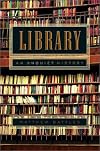
As I approach the end of my two and a half year path through library school, I find myself reflecting back a bit on just what it is I'm doing. There's an unspoken battle going on in libraries today, a battle over where the future lies. In one class, my professor says that libraries will no longer have books in them within ten years. In another, a professor who says books - that is, the codex - will be with us for years and years to come. Such battles have raged before, of course, with show more progress always being the victor. After all, when is the last time you came across an illuminated manuscript in your trip down to your local public library? Battles was a rare books librarian at Harvard when he wrote this book, and yet despite his obvious love for the book as a physical object, I would have to assume that he would smile knowing that information - and the knowledge that can come with it - will be freer and more accessible than ever before. I think that's what librarians, as a profession, want. This book is a fine introductory text, and love letter, to the last moments of libraries as they were, and as such, is a fitting book to read as I try to go out into the library of today, and hope that I can keep in mind how it all came to be. show less

When I started reading ‘Library: An Unquiet History’, my enjoyment suffered from compulsively comparing it to another book on the same topic. [b:The Library at Night|2452483|The Library at Night|Alberto Manguel|https://images.gr-assets.com/books/1328826506s/2452483.jpg|2459677] remains one of my favourite books of all time and a little voice in my head wouldn’t stop commenting, “This author is no Alberto Manguel”. Certainly, I didn’t get the same sense of profound and spiritual show more library-love from this book as Manguel’s, nor did I feel quite the same kinship. Nonetheless, this book covers ground that [b:The Library at Night|2452483|The Library at Night|Alberto Manguel|https://images.gr-assets.com/books/1328826506s/2452483.jpg|2459677] did not and the two take different but equally valid approaches to the history of libraries.
I began to enjoy this book properly when it taught me fascinating things I’d not previously known (which shut up the little voice of comparison). To pick out a few, I hadn’t heard of Jonathan Swift’s ‘Battle of the Books’ and its mockery of ancient vs modern literary endeavours. Nor did I know of Antonio Panizzi, an exiled Italian who transformed the British Library with, inter alia, a ground-breaking cataloguing system and a new reading room, now the centrepiece of the British Museum. I also learned about the agenda behind Dewey’s transformative library innovations, of which his classification system was only one.
The highlight of the book for me, though, was chapter 6, ‘Knowledge on Fire’. Although upsetting, it gave a very powerful overview of book-burning across the ages. Unlike other such accounts I’ve read, it concentrated on the twentieth century. The burning of Louvrain Library during the First and then Second World Wars was a horrifying example I’d never heard of before. I also hadn’t realised that the famous Nazi book-burnings in 1933 were not master-minded by Goebbels. Instead, he encouraged them delightedly once a pro-Nazi student group began the bonfires. I also hadn’t realised that the Nazis kept lists of forbidden books but did not make them public, so the population at large destroyed many of their own books in case they were suspect. This chapter also covers the Bosnian war of the 1990s and the destruction of libraries that took place then, as part of the genocide.
In a way, I think reading ‘Library: An Unquiet History’ reminded me of a useful lesson - no one book is definitive and that is a major reason for libraries to exist. Having read an absolutely fantastic history of libraries in the past is no reason not to read further books on that topic. Even if they aren’t as sublime, they can still provide you with fascinating new knowledge and perspectives. show less
I began to enjoy this book properly when it taught me fascinating things I’d not previously known (which shut up the little voice of comparison). To pick out a few, I hadn’t heard of Jonathan Swift’s ‘Battle of the Books’ and its mockery of ancient vs modern literary endeavours. Nor did I know of Antonio Panizzi, an exiled Italian who transformed the British Library with, inter alia, a ground-breaking cataloguing system and a new reading room, now the centrepiece of the British Museum. I also learned about the agenda behind Dewey’s transformative library innovations, of which his classification system was only one.
The highlight of the book for me, though, was chapter 6, ‘Knowledge on Fire’. Although upsetting, it gave a very powerful overview of book-burning across the ages. Unlike other such accounts I’ve read, it concentrated on the twentieth century. The burning of Louvrain Library during the First and then Second World Wars was a horrifying example I’d never heard of before. I also hadn’t realised that the famous Nazi book-burnings in 1933 were not master-minded by Goebbels. Instead, he encouraged them delightedly once a pro-Nazi student group began the bonfires. I also hadn’t realised that the Nazis kept lists of forbidden books but did not make them public, so the population at large destroyed many of their own books in case they were suspect. This chapter also covers the Bosnian war of the 1990s and the destruction of libraries that took place then, as part of the genocide.
In a way, I think reading ‘Library: An Unquiet History’ reminded me of a useful lesson - no one book is definitive and that is a major reason for libraries to exist. Having read an absolutely fantastic history of libraries in the past is no reason not to read further books on that topic. Even if they aren’t as sublime, they can still provide you with fascinating new knowledge and perspectives. show less

From the author of The Library: An Unquiet History comes the wonderful collection of eleven short stories to be found in The Sovereignties of Invention (Red Lemonade, 2012). Matthew Battles' crisp prose is a pleasure to read, and he uses it to build a series of fantastic (and fantastical) scenes that demand to be savored. I forced myself to read just one story at a sitting, so that I didn't tear through the book too fast.
Dogs in trees, ugly unicorns, soul-sucking machines, mysterious show more manuscripts, even very dangerous Wikipedia edit-wars are the stuff of Battles' stories. But what he does with them is always unexpected and always a joy to experience.
I feel like this is one of those books i will come back to often, to read stories from again and again. show less
Dogs in trees, ugly unicorns, soul-sucking machines, mysterious show more manuscripts, even very dangerous Wikipedia edit-wars are the stuff of Battles' stories. But what he does with them is always unexpected and always a joy to experience.
I feel like this is one of those books i will come back to often, to read stories from again and again. show less
A short work, that is less a straight history, but more musings on the library through the ages. Written by a librarian at Widener, it dares to venture into the quiet of the stacks and discover the turmoil that is captured there. Battles discusses how libraries have been at the center of wars both literal and figurative, places where knowledge is secreted and entombed or efficiently spread. Destroying libraries as a means of destroying culture. And the Battle of the Books over what should be show more placed in the library in the first place: only the best books or the universal library? A fascinating account of the places I love most.
“Like most readers, Kazin believes that the stuff he wants has been lost here, forgotten, discarded – that the library is a genezia that offers up its secrets only to the most indefatigable scholars. Of course, someone acquired these yellowing, fading materials; of course, someone retrieved them from the shelves and will return them when the reader is finished. But in the library these assistants hide behind the curtains; the library becomes a stage with a mirror for a backdrop that reflects only the reader and obscures the multifarious origins of the books.” (p. 202)
“The centralization and consolidation of libraries serves the convenience of scholars and princes alike. But great libraries are problematic in times of war, disaster, or decay, for their fate becomes the fate of the literatures they contain. Much of what comes down to us from antiquity survived because it was held in small private libraries tucked away in obscure backwaters of the ancient world, where it was more likely to escape the notice of zealots as well as princes. show less
“Like most readers, Kazin believes that the stuff he wants has been lost here, forgotten, discarded – that the library is a genezia that offers up its secrets only to the most indefatigable scholars. Of course, someone acquired these yellowing, fading materials; of course, someone retrieved them from the shelves and will return them when the reader is finished. But in the library these assistants hide behind the curtains; the library becomes a stage with a mirror for a backdrop that reflects only the reader and obscures the multifarious origins of the books.” (p. 202)
“The centralization and consolidation of libraries serves the convenience of scholars and princes alike. But great libraries are problematic in times of war, disaster, or decay, for their fate becomes the fate of the literatures they contain. Much of what comes down to us from antiquity survived because it was held in small private libraries tucked away in obscure backwaters of the ancient world, where it was more likely to escape the notice of zealots as well as princes. show less
Lists
Awards


You May Also Like


Associated Authors
Statistics
- Works
- 7
- Also by
- 2
- Members
- 2,701
- Popularity
- #9,508
- Rating
- 3.5
- Reviews
- 60
- ISBNs
- 29
- Languages
- 3
- Favorited
- 1