
Henry Petroski (1942–2023)
Author of The Book on the Bookshelf
About the Author
Henry Petroski is an American engineer with wide-ranging historical and sociocultural interests. He earned a Ph.D. in theoretical and applied mechanics from the University of Illinois at Urbana-Champaign in 1968, and became Aleksandar S. Vesic professor and chair of the Department of Civil and show more Environmental Engineering at Duke University. Petroski teaches traditional engineering subjects, as well as courses for nonengineering students, that place the field in a broad social context. One of the major themes that transcends his technical and nontechnical publications is the role of failure and its contribution to successful design. This is the central theme in his study To Engineer Is Human: The Role of Failure in Successful Design, which is accessible to both engineers and general readers. This theme is also incorporated into Petroski's The Pencil: A History of Design and Circumstance (1990), which relates the history of the pencil to broader sociocultural themes. The theme is expanded further, illustrating the relationship of engineering to our everyday life in The Evolution of Useful Things (1992). Petroski's most recent book, Design Paradigms: Case Histories of Error and Judgment in Engineering, is planned for publication in 1994. After that, he will begin a study of the complex interrelationships between engineering and culture. Widely recognized and supported by both the technical and humanities communities, Petroski's work has effectively conveyed the richness and essence of engineering in its societal context for the general reader. (Bowker Author Biography) show less
Image credit: United States Department of Energy
Works by Henry Petroski
The Essential Engineer: Why Science Alone Will Not Solve Our Global Problems (2010) 165 copies, 3 reviews
The House with Sixteen Handmade Doors: A Tale of Architectural Choice and Craftsmanship (2014) 75 copies, 3 reviews
Refractions: Taking Time 1 copy
The Book on The Book Shelf 1 copy
Associated Works
Seeing Further: The Story of Science, Discovery, and the Genius of the Royal Society (2010) — Contributor — 1,155 copies, 19 reviews
Design Disasters: Great Designers, Fabulous Failure, and Lessons Learned (2008) — Contributor — 26 copies
Tagged
Common Knowledge
- Canonical name
- Petroski, Henry
- Birthdate
- 1942-02-06
- Date of death
- 2023-06-14
- Gender
- male
- Education
- Manhattan College (BSME | 1963)
University of Illinois, Urbana-Champaign (MS | 1964 | Ph.D | 1968) - Occupations
- professor
historian
civil engineer - Organizations
- Duke University
University of Texas at Austin
Argonne National Laboratory - Awards and honors
- American Society of Civil Engineers (Fellow|1996 | Distinguished Member|2008)
Fellow, American Academy of Arts and Sciences (2003)
American Philosophical Society (2008)
National Academy of Engineering (1997)
John P. McGovern Award for Science (2014)
Fellow, The Institution of Engineers of Ireland (2000) - Relationships
- Petroski, Catherine (wife)
- Cause of death
- cancer
- Nationality
- USA
- Birthplace
- Brooklyn, New York, USA
- Places of residence
- Arrowsic, Maine, USA
Durham, North Carolina, USA
New York, New York, USA - Place of death
- Durham, North Carolina, USA
- Map Location
- New York, USA
Members
Reviews
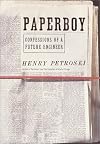
I learned of this book while paging through a coffee table sized book which contained all the bookcover art of an artist named Chip Kidd. I love memoirs, so I followed up on this one, and I'm glad I did. Because although I was never a paperboy, I did grow up in a largely Catholic neighborhood in about the same era that Henry Petroski did. He grew up in a Long Island suburb, while I was a small-town Midwest boy. But the experiences were comparable - the catholic education. Mine stopped after show more 9th grade when I went to public school, but Petroski's continued through high school. Truthfully, though, we were quite different. I was a dreamy kind of kid drawn more toward books and literature, while Henry, growing up in a house nearly devoid of books, was more interested in math and the sciences and was of a more analytic bent than I ever was. He liked to know how things were put together and how they worked, what made things run - that budding engineer in him. It was only later on, in high school that he became more aware of books and the worlds they could open to him. His scientific, analytical mindset is clearly reflected in the way he writes. Every process he describes is broken down into its particular steps; every object into its various parts. There's almost an obsessive turn in this minute attention to detail in Petroski's writing. But it was his descriptions of his parents, his aunt and uncle, and his relationship with his younger brother that intrigued me the most, as well as his stories of experimenting with smoking and drinking with his friends as he got into his teens. You got the impression that Henry wasn't really rebelling; he was just trying things on, in much the same way he experimented with modifying his bicycle or dismantling his mother's electric fry pan to find out what made the light come on. Because the overriding impression one is left with after reading Paperboy, is that Henry Petroski was basically a "good boy," that all that Catholic indoctrination "took," so to speak. And although he talks of earning average grades and being a rather indifferent student, you also get clear glimpses of a very intelligent and inquisitive mind and intellect. And you get to know a "good man" in reading this detailed story of an adolescence. Oh yeah, and you also get perhaps the most detailed and extended look at the life (four years) of a dedicated "paperboy" that you're ever likely to encounter in modern literature. I think I was a bit puzzled about why there wasn't much in here about girls, but then I realized he went to an all-boys high school. Poor guy. But no matter. I enjoyed Henry's story immensely. I felt almost like we went to different schools together. show less
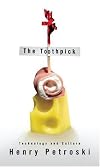
“The close study of anything as both an object and as an idea is potentially intellectually rewarding and revealing about the technology and culture in which it is embedded.” So says Henry Petroski, and he knows whereof he speaks.
Petroski, a professor of history at Duke University and the Aleksander S. Vesic Professor of Civil Engineering, has made quite a side career for himself as a popularizer of what many would regard as ‘the mundane.’ In previous books outlining the history of show more the pencil, the bookshelf, and multiple other devices that most people never give a second thought to, Petroski has sought to reveal the “hidden and frequently overlooked relationships among the people and things of the world.”
Thus, for his fourteenth book, Petroski undertakes a meticulously researched assessment of one of the simplest manufactured artifacts in existence. The Toothpick: Technology and Culture places the examined object within the context of the evolution of civilization, with always-intriguing results.
The toothpick, as a device, has existed in one form or another since mankind’s first meal. A simple apparatus has long been sought as a tasteful alternative to our body’s natural pick; “whenever we proceed to drag the tongue across and thrust it between our teeth at a repast’s tenacious residue, we reveal our mission by the bulge moving around our lips and cheeks like a mole beneath the lawn.”
As Petroski notes, there is no one single starting point for such a tool. Examining the fossil record of our ancestors, grooves in skeletal teeth reveal that twigs, rocks, and grass are the historical antecedents to the now-ubiquitous smooth wooden utensil we are familiar with.
The modern pick, in its mass-produced form, is typically attributed to Charles Forster, an American businessman “who recognized the potential for ultimately large profits in small, trivial things such as toothpicks sold by and for the millions.” As Petroski digs deeper, we see that by following the progression of the toothpick, with its cultural nuances and technological advancements, we are following the development of civilization.
All this would be for naught if Petroski treated his subject with the dry reverence of a scholarly treatise. Luckily, like contemporaries such as Mark Kurlansky (Cod) and Simon Winchester (The Professor and the Madman), Petroski has the narrative skills to match his mania for research. While Petroski does not brandish the storytelling prowess of his peers, his passion and fascination more than make up for a unexceptional and slightly unwieldy framework.
Adding spice is the bizarre arcana that crops up surrounding “the oldest habit,” ranging from George Washington’s rules of civility, “the one hundredth maxim of which cautioned against using a knife or fork to remove stuck food,” to the ancient Chinese and Romans, who carried toothpicks as a vital part of their daily jewelry.
The famed Bowie knife is sometimes known, depending on the area, as the Arkansas, Louisiana, or Texas Toothpick. Poetry has been written as to its uses and flaws, and the number of people who have perished from toothpick-related mishaps (including, possibly, U.S. President Warren G. Harding) is surprisingly high.
“People are by nature adaptive, creative, and inventive, capable of taking anything far beyond its stated and intended purpose…Given a lever, they will move the earth. Given a toothpick, they will turn it into a universal tool.” Henry Petroski believes this, and The Toothpick is proof positive that not only can the toothpick be a tool with many uses, it can also be the source of a marvelous book. show less
Petroski, a professor of history at Duke University and the Aleksander S. Vesic Professor of Civil Engineering, has made quite a side career for himself as a popularizer of what many would regard as ‘the mundane.’ In previous books outlining the history of show more the pencil, the bookshelf, and multiple other devices that most people never give a second thought to, Petroski has sought to reveal the “hidden and frequently overlooked relationships among the people and things of the world.”
Thus, for his fourteenth book, Petroski undertakes a meticulously researched assessment of one of the simplest manufactured artifacts in existence. The Toothpick: Technology and Culture places the examined object within the context of the evolution of civilization, with always-intriguing results.
The toothpick, as a device, has existed in one form or another since mankind’s first meal. A simple apparatus has long been sought as a tasteful alternative to our body’s natural pick; “whenever we proceed to drag the tongue across and thrust it between our teeth at a repast’s tenacious residue, we reveal our mission by the bulge moving around our lips and cheeks like a mole beneath the lawn.”
As Petroski notes, there is no one single starting point for such a tool. Examining the fossil record of our ancestors, grooves in skeletal teeth reveal that twigs, rocks, and grass are the historical antecedents to the now-ubiquitous smooth wooden utensil we are familiar with.
The modern pick, in its mass-produced form, is typically attributed to Charles Forster, an American businessman “who recognized the potential for ultimately large profits in small, trivial things such as toothpicks sold by and for the millions.” As Petroski digs deeper, we see that by following the progression of the toothpick, with its cultural nuances and technological advancements, we are following the development of civilization.
All this would be for naught if Petroski treated his subject with the dry reverence of a scholarly treatise. Luckily, like contemporaries such as Mark Kurlansky (Cod) and Simon Winchester (The Professor and the Madman), Petroski has the narrative skills to match his mania for research. While Petroski does not brandish the storytelling prowess of his peers, his passion and fascination more than make up for a unexceptional and slightly unwieldy framework.
Adding spice is the bizarre arcana that crops up surrounding “the oldest habit,” ranging from George Washington’s rules of civility, “the one hundredth maxim of which cautioned against using a knife or fork to remove stuck food,” to the ancient Chinese and Romans, who carried toothpicks as a vital part of their daily jewelry.
The famed Bowie knife is sometimes known, depending on the area, as the Arkansas, Louisiana, or Texas Toothpick. Poetry has been written as to its uses and flaws, and the number of people who have perished from toothpick-related mishaps (including, possibly, U.S. President Warren G. Harding) is surprisingly high.
“People are by nature adaptive, creative, and inventive, capable of taking anything far beyond its stated and intended purpose…Given a lever, they will move the earth. Given a toothpick, they will turn it into a universal tool.” Henry Petroski believes this, and The Toothpick is proof positive that not only can the toothpick be a tool with many uses, it can also be the source of a marvelous book. show less

Petroski doing what he does best, explaining practical engineering to outsiders. In this case the linking theme of his essays is the role of failure in structural design — both in terms of what we can learn for the future from failed structures and in terms of how engineers use their knowledge of how structures can fail to design new structures that will be safe in use. There are digressions into the metallurgy of fatigue cracking, the most common mechanism for failure in metal structures, show more there are case studies of some of the best-known failures (Tacoma Narrows bridge, Comet, Kansas City Hyatt Regency, etc.) and of at least one innovative design that avoided structural failure by rigorous testing during construction, Paxton’s Crystal Palace. He also goes into the risks of the shift from slide-rule engineering to computer modelling, where engineers can find themselves dealing with structures so complex that it isn’t possible to do sensible plausibility checks on what the computer model reports.
Nothing very profound, but fun and with some quite interesting background, and probably well worth a read if you are contemplating a step into the engineering world of the 1980s. show less
Nothing very profound, but fun and with some quite interesting background, and probably well worth a read if you are contemplating a step into the engineering world of the 1980s. show less

Petroski takes the history of an everyday tool as a case-study in what engineers actually do in the real world. Some artisan in the sixteenth century noticed the useful properties of Borrowdale graphite and various other people, in multiple steps and by analogy with existing writing tools, found a convenient way to hold thin sticks of this natural material in protective wooden sleeves. Later advances in the design were driven by numerous factors including geopolitical restrictions on the show more supply of the raw materials (cedar and pure graphite), exhaustion of natural resources, shifts from cottage-industry to industrial manufacture, foreign competition, and much more. The people involved in the story of the pencil (Petroski treats them as engineers because of the way they were working, but of course few of them would have been qualified engineers in the modern sense of the term) were never on some ideal trajectory towards the perfect pencil, they were solving specific, local problems to enable them to produce something that was good enough to sell for more than what it cost to make. In the ideal case, marginally better or marginally cheaper than what the competitors were making.
It’s an interesting idea, and it brings out some useful insights into the way technology works, and quite a few interesting little anecdotes as well — I enjoyed learning about Henry David Thoreau’s day-job in his father’s pencil firm, for instance — but I didn’t enjoy this as much as I have some of Petroski‘s more recent books about engineering. He makes it all a little bit too slow and ponderous here, and he seems to be far too convinced that American-style free market capitalism is the way to solve all the world’s problems. show less
It’s an interesting idea, and it brings out some useful insights into the way technology works, and quite a few interesting little anecdotes as well — I enjoyed learning about Henry David Thoreau’s day-job in his father’s pencil firm, for instance — but I didn’t enjoy this as much as I have some of Petroski‘s more recent books about engineering. He makes it all a little bit too slow and ponderous here, and he seems to be far too convinced that American-style free market capitalism is the way to solve all the world’s problems. show less
Lists
Awards


You May Also Like


Associated Authors
Statistics
- Works
- 24
- Also by
- 2
- Members
- 9,759
- Popularity
- #2,446
- Rating
- 3.6
- Reviews
- 138
- ISBNs
- 106
- Languages
- 10
- Favorited
- 20
