
Witold Rybczynski
Author of Home; a Short History of an Idea
About the Author
Witold Rybczynski is an architect and emeritus professor of urbanism at the University of Pennsylvania.
Image credit: Isak Tiner
Works by Witold Rybczynski
A Clearing In The Distance: Frederick Law Olmsted and America in the 19th Century (1999) 771 copies, 8 reviews
Last Harvest: From Cornfield to New Town: Real Estate Development from George Washington to the Builders of the Twenty-First Century, and Why We Live in Houses Anyway (2007) 237 copies, 4 reviews
Stop the Five Gallon Flush! A Survey of Alternative Waste Disposal Systems (1975) 5 copies, 1 review
L'architecture en Jeux = Buildings in Boxes: Architectural Toys from the CCA (1990) — Author — 4 copies
Low-Cost Technology Options for Sanitation: A State-Of-The-Art Review and Annotated Bibliography (IDRC) (1978) 3 copies
Taking measure of Palladio 1 copy
Associated Works
For the Love of Books: 115 Celebrated Writers on the Books They Love Most (1999) — Contributor — 480 copies, 4 reviews
This Is My Best: Great Writers Share Their Favorite Work (2004) — Contributor — 175 copies, 3 reviews
Tagged
Common Knowledge
- Canonical name
- Rybczynski, Witold
- Legal name
- Rybczynski, Witold Marian
- Birthdate
- 1943-03-01
- Gender
- male
- Education
- McGill University (BArch|1966)
McGill University (MArch|1973) - Occupations
- architect
university professor
architecture critic - Organizations
- University of Pennsylvania
Slate
McGill University
Moshe Safdie & Associates - Awards and honors
- Honorary Doctorate (University of Pennsylvania ∙ MA ∙ 1993)
Honorary Doctorate (McGill University ∙ Doc.Sc. ∙ 2002)
Vincent Scully Award (2007)
Seaside Prize (2007)
Honorary Fellow, American Institute of Architects
J. Anthony Lukas Book Prize (2000) - Relationships
- Hallam, Shirley (wife)
- Nationality
- USA
Canada
UK (birth) - Birthplace
- Edinburgh, Scotland, UK
- Places of residence
- Edinburgh, Scotland, UK
Surrey, England, UK
Montréal, Québec, Canada
Philadelphia, Pennsylvania, USA - Associated Place (for map)
- UK
Members
Reviews
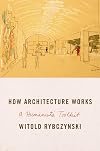
With its retro cover design, slightly ponderous professorial tone, and the startling use of the word "humanist" in the subtitle, it's hard to tell whether this book is a sophisticated and ironic self-parody or a passive-aggressive conservative attack on the last sixty or seventy years of academic thought in the humanities. Probably something in between the two. Anyway, it's ostensibly an attempt to demonstrate that anyone can build an intellectual structure for the critical analysis of show more architecture just using the basic tools they already have lying around in their own sheds, with no need to invoke any philosophers or theoreticians at all. DIY for the brain!
Rybczynski looks at a series of key topics to break down the problems architects have to tackle into manageable chunks: the "idea" of the building, its relation to its neighbours, the topography of the site, the building's plan, structure, skin, and detailing, with plenty of reference to examples in each case. And once he's lulled us into a sense of comfortable humanist security with those, he nudges us on into the trickier areas of "style" and "taste". Ideologically suspect it may be, but Rybczynski obviously knows his stuff, and his comments on the choices the architects have made in each case are clear and perceptive.
One thing that particularly struck me is that the book deals only with "Western canon" architecture: high-profile buildings (museums, concert halls, corporate headquarters) designed by people we've read about in the Sunday papers. I would have expected Rybczynski to discuss the reasoning for that - even in literature, the idea of a canon is something that is contentious and can't be taken for granted, and I have to wonder how far it makes sense to talk about individual "authorship" at all in a discipline as complex as the design and construction of large buildings. But he seems to take the Great Men/Great Buildings thing for granted. He does make a few little digs at the more absurd manifestations of the vanity of the great and famous, but never for a moment questions the notion that architecture should be defined by the works of an elite within the profession.
So, definitely useful and interesting, but perhaps a bit limited. Obviously I'm not going to be able to get away with reading just one book about the subject... show less
Rybczynski looks at a series of key topics to break down the problems architects have to tackle into manageable chunks: the "idea" of the building, its relation to its neighbours, the topography of the site, the building's plan, structure, skin, and detailing, with plenty of reference to examples in each case. And once he's lulled us into a sense of comfortable humanist security with those, he nudges us on into the trickier areas of "style" and "taste". Ideologically suspect it may be, but Rybczynski obviously knows his stuff, and his comments on the choices the architects have made in each case are clear and perceptive.
One thing that particularly struck me is that the book deals only with "Western canon" architecture: high-profile buildings (museums, concert halls, corporate headquarters) designed by people we've read about in the Sunday papers. I would have expected Rybczynski to discuss the reasoning for that - even in literature, the idea of a canon is something that is contentious and can't be taken for granted, and I have to wonder how far it makes sense to talk about individual "authorship" at all in a discipline as complex as the design and construction of large buildings. But he seems to take the Great Men/Great Buildings thing for granted. He does make a few little digs at the more absurd manifestations of the vanity of the great and famous, but never for a moment questions the notion that architecture should be defined by the works of an elite within the profession.
So, definitely useful and interesting, but perhaps a bit limited. Obviously I'm not going to be able to get away with reading just one book about the subject... show less
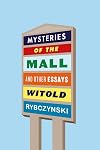
A collection of essays about architecture and related topics. Which, alas, I think I turned out to mostly not be the right reader for. I was most interested in the kinds of essays that appeared early in the book, touching on ways in which architecture, city planning, etc. affect our culture and ordinary people's experience of public spaces. These include the title essay, about mall food court design, some discussion of the failures of public housing, a brief look at the nature of suburban show more sprawl, and other such topics. But a lot of those essays felt rather slight, and many turned out to be very dated. (This collection was published in 2015, but the contents go back as far as the 1990s.)
The meatiest of the essays, I think, mostly involved the designs of particular buildings and the careers of particular architects, and these were of a lot less interest to me, to the point where I often found myself starting to skim without even quite meaning to. I admit that this seems a bit unfair to Rybczynski's writing, which is very clear and accessible, but there we are.
Well, there were at least some pieces that I definitely enjoyed. I was, for instance, very interested in the one about how cities have gone from being the places people wanted to get away from when traveling to being tourist destinations in their own right. And I was surprised by how effective I found the one that was basically an extended love letter to New York's Central Park; it made me feel very fond of the place even though I've never actually been there, and that's not something any other writer has quite succeeded at. I was also very amused by the carefully restrained snark he levels at things like the desire for every big new building to be special and gimmicky and "iconic."
Rating: This was enough of a mixed bag for me that I have to give it a 3.5/5 at most. I feel kind of bad about that, though. I would bet that people who have more of an interest than I do in the design of concert halls or the career of Frank Lloyd Wright are likely to get a lot more out of it than I did. show less
The meatiest of the essays, I think, mostly involved the designs of particular buildings and the careers of particular architects, and these were of a lot less interest to me, to the point where I often found myself starting to skim without even quite meaning to. I admit that this seems a bit unfair to Rybczynski's writing, which is very clear and accessible, but there we are.
Well, there were at least some pieces that I definitely enjoyed. I was, for instance, very interested in the one about how cities have gone from being the places people wanted to get away from when traveling to being tourist destinations in their own right. And I was surprised by how effective I found the one that was basically an extended love letter to New York's Central Park; it made me feel very fond of the place even though I've never actually been there, and that's not something any other writer has quite succeeded at. I was also very amused by the carefully restrained snark he levels at things like the desire for every big new building to be special and gimmicky and "iconic."
Rating: This was enough of a mixed bag for me that I have to give it a 3.5/5 at most. I feel kind of bad about that, though. I would bet that people who have more of an interest than I do in the design of concert halls or the career of Frank Lloyd Wright are likely to get a lot more out of it than I did. show less

This could have been a very interesting book, and there's some very good stuff in the last four chapters or so, but Rybczynski's over-enthusiastic pitch to his publisher seems to have trapped him into writing several chapters about the early history of domesticity that he didn't really have enough material for when it came down to it. As for the opening chapter, an obviously-recycled magazine article about Ralph Lauren that has little to do with the rest of the book, the less said the show more better...
Where it starts getting interesting is when Rybczynski gets to the 19th century and discusses how style, technology and user requirements competed to influence people's expectations of how homes should be designed and built. Architects and designers don't come out of this story very well, and Rybczynski's real heroes this time seem to be the pioneers of "domestic engineering" (later called "home economics"), people like Catherine Beecher and Christine Frederick, who encouraged American women to take control of their own workplaces and insist that houses be arranged in practical, efficient ways. That was something completely new to me, which looks as though it might be interesting to follow up further.
Rybczynski argues quite forcefully that "comfort" is the element that is most important in measuring the success of any environment designed for people, and condemns "style" as a harmful influence that leads us to overlook important usability questions. Austere modernism comes out of the equation worse than retro-styles, interestingly: he argues that 18th-century furniture designers were better at ergonomics than their modern counterparts because they worked by gradual improvement of established designs, whilst 20th-century fashions force the designer to produce something ground-breakingly different every time. He also comes out strongly against de-cluttered interiors - a kitchen is a workshop where tools should be within reach; a bathroom without anywhere to leave your soap is just silly - so it's pretty obvious that no-one has paid much attention to this book in the last thirty years... show less
Where it starts getting interesting is when Rybczynski gets to the 19th century and discusses how style, technology and user requirements competed to influence people's expectations of how homes should be designed and built. Architects and designers don't come out of this story very well, and Rybczynski's real heroes this time seem to be the pioneers of "domestic engineering" (later called "home economics"), people like Catherine Beecher and Christine Frederick, who encouraged American women to take control of their own workplaces and insist that houses be arranged in practical, efficient ways. That was something completely new to me, which looks as though it might be interesting to follow up further.
Rybczynski argues quite forcefully that "comfort" is the element that is most important in measuring the success of any environment designed for people, and condemns "style" as a harmful influence that leads us to overlook important usability questions. Austere modernism comes out of the equation worse than retro-styles, interestingly: he argues that 18th-century furniture designers were better at ergonomics than their modern counterparts because they worked by gradual improvement of established designs, whilst 20th-century fashions force the designer to produce something ground-breakingly different every time. He also comes out strongly against de-cluttered interiors - a kitchen is a workshop where tools should be within reach; a bathroom without anywhere to leave your soap is just silly - so it's pretty obvious that no-one has paid much attention to this book in the last thirty years... show less

The design language distilled from classical architecture by Andrea Palladio during the construction of around thirty country houses in the sixteenth-century Veneto is possibly the most recognisable and widely copied style anywhere: nothing says “important public building” or “grand private residence” like a columned portico on a symmetrical facade, and practically every town in the western world must have at least one or two buildings that draw on Palladian ideas, whether they are show more banks, churches, courthouses or manor houses.
This book is less a detailed biography of Palladio than a look at how he worked from the point of view of a practicing architect who can try to show us how design decisions might have been determined by site constraints and the evolving relationship between the architect and his clients. Rybczynski, empathising Palladio’s starting-point as a builder and stonemason, sees him less as a theorist and more as someone adapting the language of classical architecture to suit the demands of the time and place he was working in, and he suggests that it was just this flexibility that enabled Palladio’s ideas to travel so easily to 17th century Britain (via Inigo Jones) and the 18th century US (via Thomas Jefferson).
An interesting approach, with what look like some useful lessons in how to look at buildings. show less
This book is less a detailed biography of Palladio than a look at how he worked from the point of view of a practicing architect who can try to show us how design decisions might have been determined by site constraints and the evolving relationship between the architect and his clients. Rybczynski, empathising Palladio’s starting-point as a builder and stonemason, sees him less as a theorist and more as someone adapting the language of classical architecture to suit the demands of the time and place he was working in, and he suggests that it was just this flexibility that enabled Palladio’s ideas to travel so easily to 17th century Britain (via Inigo Jones) and the 18th century US (via Thomas Jefferson).
An interesting approach, with what look like some useful lessons in how to look at buildings. show less
Lists
Awards


You May Also Like


Associated Authors
Statistics
- Works
- 31
- Also by
- 4
- Members
- 6,229
- Popularity
- #3,936
- Rating
- 3.7
- Reviews
- 83
- ISBNs
- 120
- Languages
- 10
- Favorited
- 9