
Jane Jacobs (1916–2006)
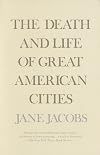
Author of The Death and Life of Great American Cities
About the Author
Jane Jacobs lives in Toronto. (Publisher Provided) Author and community activist Jane Jacobs was born in Scranton, Pennsylvania on May 4, 1916. She spent two years at Columbia University in the School of General Studies. She was interrogated by the U.S. government over her loyality to the country show more on March 25, 1952 and was arrested during a demonstration against the Vietnam War on April 10, 1968. She also helped defeat a plan, proposed by the New York City park commissioner Robert Moses, to build an expressway through Washington Square in the early 1960s. She moved to Toronto in 1969 partially because of her objection to the Vietnam War. She became a Canadian citizen in 1974. Her most influential book, The Death and Life of Great American Cities, is a critique of 1950's urban renewal policies which, according to her, destroyed communities and created isolated, unnatural urban spaces. She received numerous honors including a lifetime achievement award from the National Building Foundation in 2000 and was appointed to the Order of Canada in 1996. In 1997, the Jane Jacobs prize was created by the City of Toronto at the Jane Jacobs: Ideas That Matter conference. She died on April 25, 2006 at the age of 89. (Bowker Author Biography) show less
Works by Jane Jacobs
Systems of Survival: A Dialogue on the Moral Foundations of Commerce and Politics (1992) 392 copies, 8 reviews
Cities and Weath of Nations 1 copy
Associated Works
The Innocents Abroad; or, The New Pilgrim's Progress (1869) — Introduction, some editions — 4,370 copies, 60 reviews
A Schoolteacher in Old Alaska: The Story of Hannah Breece (1997) — Editor, some editions — 302 copies, 8 reviews
Did You Ever See a Dream Walking? American Conservative Thought in the Twentieth Century (1970) — Contributor — 86 copies
At Grandmother's Table: Women Write about Food, Life and the Enduring Bond between Grandmothers and Granddaughters (2000) — Contributor — 57 copies, 3 reviews
Tagged
Common Knowledge
- Canonical name
- Jacobs, Jane
- Legal name
- Butzner, Jane Isabel (birth)
- Birthdate
- 1916-05-04
- Date of death
- 2006-04-25
- Gender
- female
- Education
- Columbia University
- Occupations
- journalist
activist
author
editor
urban planner - Organizations
- Architectural Forum
Office of War Information - Awards and honors
- Vincent Scully Award (2000)
Order of Canada (Officer, 1996)
Order of Ontario (2000)
American Sociological Association, Outstanding Lifetime Contribution award (2002) - Relationships
- Breece, Hannah (great-aunt)
Butzner, John D., Jr. (brother) - Short biography
- Jane Jacobs, a journalist and writer, successfully led grassroots opposition to a massive urban renewal project in the 1950s and 1960s that would have destroyed several residential neighborhoods in lower Manhattan. She endured scorn from establishment figures because of her lack of formal training as an urban planner, and moved to Canada in 1968. There she continued her work and writing on urbanism, economies and social issues. Her most influential book was The Death and Life of Great American Cities, published in 1961.
- Cause of death
- stroke
- Nationality
- USA (birth)
Canada - Birthplace
- Scranton, Pennsylvania, USA
- Places of residence
- New York, New York, USA
Toronto, Ontario, Canada
Scranton, Pennsylvania, USA - Place of death
- Toronto, Ontario, Canada
- Associated Place (for map)
- USA
Members
Reviews
This book took a while to get going and maybe could be edited down to something much shorter without detriment. Much of the first third to half seemed to me insubstantial musings on a romantic view of village life to replace urban realities, rather like parts of Work and its discontents. The last third really pulled together some of the threads and raised some very interesting points of view and even subjects beyond city planning. It seems from reading other reviews that many are reading show more this to read more of Robert Moses. He is mentioned here and there and NYC is a typical reference point, but Moses is only a cameo as he approached city planning like a self-indulging despot or circus animal trained and Jacobs is coming across more like a Dian Fossey, trying to appreciate and understand these mysterious, complex creatures.
One approach to an area of complexity is in the chapter "Gradual money and cataclysmic money "
I have long thought the American love affair with the automobile he led to city planned that ultimately requires the car, shackled to its very impetus. I recall on Detroit local news and interview with an unfortunate crime victim. She as asked how best she could be helped and she uttered words to the effect that she needed "a car, to live." There is truth in this as we have placed this expensive tool of conveyance as a gateway to full participation in modern city life. Jacobs does a much deeper dive into the topic over a chapter and ties this to the homogenizing effects of zone-based planning:
While most of the book is finds exemplars in Jacobs' NYC and in the UK for some reason, a Fort Worth, Texas case examines a deeper dive into the positive feedback effect, like destructive mechanical resonance, of automobiles and cities:
What really struck me the most was the meta-scientific theories of Warren Weaver. This line of thinking has similarities to chaos theory, extreme sensitivity to initial conditions, and strange attractors. (I need to read some of his works!)
One approach to an area of complexity is in the chapter "Gradual money and cataclysmic money "
It is so easy to blame the decay of cities on traffic migrants ... or the whimsies of the middle class. The decay ... of cities goes deeper and is more complicated. It goes right down to what we think we want, and to our ignorance about how cities work. The forms in which money is used for city building-or withheld from use-are powerful instruments of city decline to day. The forms in which money is used must be converted instruments of regeneration from instruments buying violent cataclysms to instruments buying continual, gradual, complex and gentler change.
I have long thought the American love affair with the automobile he led to city planned that ultimately requires the car, shackled to its very impetus. I recall on Detroit local news and interview with an unfortunate crime victim. She as asked how best she could be helped and she uttered words to the effect that she needed "a car, to live." There is truth in this as we have placed this expensive tool of conveyance as a gateway to full participation in modern city life. Jacobs does a much deeper dive into the topic over a chapter and ties this to the homogenizing effects of zone-based planning:
But when such districts are purposely “renewed to bring back the middle class,” or if they are the objects of conservation, to retain a population that has not yet deserted, the need to provide very extensive car accommodations immediately becomes a chief and overriding consideration. The existing deadness and thinness of use are thereby reinforced.
The Great Blight of Dullness is allied with the blight of traffic congestion.
The more territory, planned or unplanned, which is dull, the greater becomes the pressure of traffic on lively districts. People who have to use automobiles to use their dull home territory in a city, or to get out of it, are not merely capricious when they take the cars to a destination where the cars are unnecessary, destructive and a nuisance to their own drivers.
Territories exhibiting the Great Blight of Dullness need to be supplied with whatever conditions they lack for generating diversity. This is their basic need, regardless of traffic. But it is an aim which becomes impossible to further, if accommodations for huge numbers of cars get first consideration, and other city uses get the leftovers. A strategy of erosion by automobiles is thus not only destructive to such city intensity as already exists; it also conflicts with nurturing new or additional intensity of use where that is needed.
...
Thus does erosion, little by little, subtract reasons for using an eroded district, and at the same time make it less lively, less convenient, less compact, less safe, for those who continue to have reason to use it. The more concentrated and genuinely urban an area, the greater the contrast between the smallness of what is delivered and the significance of what is lost by the process of erosion.
If vehicular traffic in cities represented some fixed quantity of need, then the action of providing for it would produce a satisfying and fulfilling reaction. Something, at least, would be solved. But because the need for more vehicles grows with the palliatives, the solution keeps receding
While most of the book is finds exemplars in Jacobs' NYC and in the UK for some reason, a Fort Worth, Texas case examines a deeper dive into the positive feedback effect, like destructive mechanical resonance, of automobiles and cities:
A striking statement of the positive feedback traffic process—or part of it—was worked out by Victor Gruen in 1955, in connection with his Fort Worth plan. Gruen, in order to understand the size of problem he had in hand, began by calculating the potential business that Fort Worth’s currently underdeveloped and stagnating—but traffic-jammed—downtown ought to be doing by 1970, based on its projected population and trading area. He then translated this quantity of economic activity into numbers of users, including workers, shoppers and visitors for other purposes. Then, using the ratio of vehicles per downtown users current in Fort Worth, he translated the putative future users into numbers of vehicles. He then calculated how much street space would be required to accommodate the numbers of these vehicles apt to be on the streets at any one time.
He got an outlandish figure of roadbed needed: sixteen million square feet, not including parking. This is in comparison with the five million square feet of roadbed the underdeveloped downtown now possesses.
But the instant Gruen had calculated his sixteen million square feet, the figure was already out of date and much too small. To obtain that much roadbed space, the downtown would have to spread out physically to an enormous extent. A given quantity of economic uses would thereby be spread relatively thin. To use its different elements, people would have to depend much less on walking and much more on driving. This would further increase the need for still more street space, or else there would be a terrible mess of congestion. Differing uses, necessarily strung out in such relatively loose fashion, would be so far from one another that it would become necessary to duplicate parking spaces themselves, because uses bringing people at different hours would not be sufficiently compact for much staggered use of the same accommodations.*2 This would mean spreading the downtown even thinner, in turn requiring still more use of cars, traveling greater absolute distances internally. Very early in the process, public transportation would be thoroughly inefficient, from both the customer’s and the operator’s point of view. In short, there would be no coherent downtown, but a great, thin smear, incapable of generating the metropolitan facilities, diversity and choices theoretically possible for the population and economy concerned.
As Gruen pointed out here, the more space that is provided cars in cities, the greater becomes the need for use of cars, and hence for still more space for them.
What really struck me the most was the meta-scientific theories of Warren Weaver. This line of thinking has similarities to chaos theory, extreme sensitivity to initial conditions, and strange attractors. (I need to read some of his works!)
Dr. Weaver lists three stages of development in the history of scientific thought: (1) ability to deal with problems of simplicity; (2) ability to deal with problems of disorganized complexity; and (3) ability to deal with problems of organized complexity.show less
Problems of simplicity are problems that contain two factors which are directly related to each other in their behavior—two variables—and these problems of simplicity, Dr. Weaver points out, were the first kinds of problems that science learned to attack:Speaking roughly, one may say that the seventeenth, eighteenth and nineteenth centuries formed the period in which physical science learned how to analyze two-variable problems. During that three hundred years, science developed the experimental and analytical techniques for handling problems in which one quantity—say a gas pressure—depends primarily upon a second quantity—say, the volume of the gas. The essential character of these problems rests in the fact that…the behavior of the first quantity can be described with a useful degree of accuracy by taking into account only its dependence upon the second quantity and by neglecting the minor influence of other factors.
These two-variable problems are essentially simple in structure…and simplicity was a necessary condition for progress at that stage of development of science.
It turned out, moreover, that vast progress could be made in the physical sciences by theories and experiments of this essentially simple character…It was this kind of two-variable science which laid, over the period up to 1900, the foundations for our theories of light, of sound, of heat, and of electricity…which brought us the telephone and the radio, the automobile and the airplane, the phonograph and the moving pictures, the turbine and the Diesel engine and the modern hydroelectric power plant…
It was not until after 1900 that a second method of analyzing problems was developed by the physical sciences.
—
However, by no means all problems could be probed by this method of analysis. The life sciences, such as biology and medicine, could not be, as Dr. Weaver points out. These sciences, too, had been making advances, but on the whole they were still concerned with what Dr. Weaver calls preliminary stages for application of analysis; they were concerned with collection, description, classification, and observation of apparently correlated effects. During this preparatory stage, among the many useful things that were learned was that the life sciences were neither problems of simplicity nor problems of disorganized complexity; they inherently posed still a different kind of problem, a kind of problem for which methods of attack were still very backward as recently as 1932, says Dr. Weaver.
Describing this gap, he writes:One is tempted to oversimplify and say that scientific methodology went from one extreme to the other…and left untouched a great middle region. The importance of this middle region, moreover, does not depend primarily on the fact that the number of variables involved is moderate—large compared to two, but small compared to the number of atoms in a pinch of salt…Much more important than the mere number of variables is the fact that these variables are all interrelated…These problems, as contrasted with the disorganized situations with which statistics can cope, show the essential feature of organization. We will therefore refer to this group of problems as those of organized complexity.
What makes an evening primrose open when it does? Why does salt water fail to satisfy thirst?…What is the description of aging in biochemical terms?…What is a gene, and how does the original genetic constitution of a living organism express itself in the developed characteristics of the adult?…
All these are certainly complex problems. But they are not problems of disorganized complexity, to which statistical methods hold the key. They are all problems which involve dealing simultaneously with a sizable number of factors which are interrelated into an organic whole.
In 1932, when the life sciences were just at the threshold of developing effective analytical methods for handling organized complexity, it was speculated, Dr. Weaver tells us, that if the life sciences could make significant progress in such problems, “then there might be opportunities to extend these new techniques, if only by helpful analogy, into vast areas of the behavioral and social sciences.”
In the quarter-century since that time, the life sciences have indeed made immense and brilliant progress. They have accumulated, with extraordinary swiftness, an extraordinary quantity of hitherto hidden knowledge. They have also acquired vastly improved bodies of theory and procedure—enough to open up great new questions, and to show that only a start has been made on what there is to know.
But this progesss has been possible only because the life sciences were recognized to be problems in organized complexity, and were thought of and attacked in ways suitable to understanding that kind of problem.
The recent progress of the life sciences tells us something tremendously important about other problems of organized complexity. It tells us that problems of this kind can be analyzed—that it is only sensible to regard them as capable of being understood, instead of considering them, as Dr. Weaver puts it, to be “in some dark and foreboding way, irrational.”
Now let us see what this has to do with cities.
Cities happen to be problems in organized complexity, like the life sciences. They present “situations in which a half-dozen or even several dozen quantities are all varying simultaneously and in subtly interconnected ways.” Cities, again like the life sciences, do not exhibit one problem in organized complexity, which if understood explains all. They can be analyzed into many such problems or segments which, as in the case of the life sciences, are also related with one another. The variables are many, but they are not helter-skelter; they are “interrelated into an organic whole.”
...
Because the life sciences and cities happen to pose the same kinds of problems does not mean they are the same problems. The organizations of living protoplasm and the organizations of living people and enterprises cannot go under the same microscopes.
However, the tactics for understanding both are similar in the sense that both depend on the microscopic or detailed view, so to speak, rather than on the less detailed, naked-eye view suitable for viewing problems of simplicity or the remote telescopic view suitable for viewing problems of disorganized complexity.
In the life sciences, organized complexity is handled by identifying a specific factor or quantity—say an enzyme—and then painstakingly learning its intricate relationships and interconnections with other factors or quantities. All this is observed in terms of the behavior (not mere presence) of other specific (not generalized) factors or quantities. To be sure, the techniques of two-variable and disorganized-complexity analysis are used too, but only as subsidiary tactics.*2
In principle, these are much the same tactics as those that have to be used to understand and to help cities. In the case of understanding cities, I think the most important habits of thought are these:
1. To think about processes;
2. To work inductively, reasoning from particulars to the general, rather than the reverse;
3. To seek for “unaverage” clues involving very small quantities, which reveal the way larger and more “average” quantities are operating.
If you have gotten this far in this book, you do not need much explanation of these tactics. However, I shall sum them up, to bring out points otherwise left only as implications.
Why think about processes? Objects in cities—whether they are buildings, streets, parks, districts, landmarks, or anything else—can have radically differing effects, depending upon the circumstances and contexts in which they exist. Thus, for instance, almost nothing useful can be understood or can be done about improving city dwellings if these are considered in the abstract as “housing.” City dwellings—either existing or potential—are specific and particularized buildings always involved in differing, specific processes such as unslumming, slumming, generation of diversity, self-destruction of diversity.
This book has discussed cities, and their components almost entirely in the form of processes, because the subject matter dictates this. For cities, processes are of the essence. Furthermore, once one thinks about city processes, it follows that one must think of catalysts of these processes, and this too is of the essence.
The processes that occur in cities are not arcane, capable of being understood only by experts. They can be understood by almost anybody. Many ordinary people already understand them; they simply have not given these processes names, or considered that by understanding these ordinary arrangements of cause and effect, we can also direct them if we want to.
Why reason inductively? Because to reason, instead, from generalizations ultimately drives us into absurdities—as in the case of the Boston planner who knew (against all the real-life evidence he had) that the North End had to be a slum because the generalizations that make him an expert say it is.

A classic “common-sense” demolition of the orthodoxies of mid-twentieth-century urban planning. Jacobs argues that planners trying to improve city neighbourhoods should abandon their giant master-plans and the quest for theoretical perfection, which have so often resulted in unliveable spaces full of terrible social problems, and instead focus on observing the way residents are actually using the places they live in now, and make small, incremental changes targeted at helping people to show more improve their current surroundings. For her, the essential qualities a neighbourhood needs to survive and function well are high population density, diversity of uses, and the flexibility to respond to changing demands. Those things usually get broken if you bulldoze a neighbourhood and try to rebuild the whole place in one go.
Jacobs’s ideal neighbourhood, where kids play in the street under the watchful eyes of neighbours and local tradespeople and there is a constant coming and going on foot between homes, shops, workplaces, schools, bars and restaurants, is probably rather unrealistic sixty years on, and of course it was only ever meant to apply to inner-city areas — as far as she is concerned, the suburbs are a lost cause anyway. But the arguments she makes against single-use zoning and against inflexible large-scale projects embodying someone’s paternalistic vision of how (other) people should live remain very valid. And there’s a lot of detailed and mostly sensible-sounding advice in the book about things like street layout, rent subsidies, lending policies, how to lay out parks, and much more. show less
Jacobs’s ideal neighbourhood, where kids play in the street under the watchful eyes of neighbours and local tradespeople and there is a constant coming and going on foot between homes, shops, workplaces, schools, bars and restaurants, is probably rather unrealistic sixty years on, and of course it was only ever meant to apply to inner-city areas — as far as she is concerned, the suburbs are a lost cause anyway. But the arguments she makes against single-use zoning and against inflexible large-scale projects embodying someone’s paternalistic vision of how (other) people should live remain very valid. And there’s a lot of detailed and mostly sensible-sounding advice in the book about things like street layout, rent subsidies, lending policies, how to lay out parks, and much more. show less

I first read this in college (Dickinson) in 1963. It is one of the the few books I remember from back then, because it (and a marvellous professor) taught me how to think about and look at cities, or any large community. Jacobs took her position as a cranky antagonist seriously, and this book helped to educate a generation of planners, and just plain thinkers. I still can't look at the old Pan Am building, or whatever it's called now, and not see the destruction of vitality on Park Avenue. show more Well worth reading. show less

It took me a long time to read this book but at no time did I feel like stopping. It's just that I had to take my time to digest all the important messages Jacobs gave in the book and then think about how they applied today.
In 1961 when Jacobs wrote this book she was living in Greenwich Village in New York City and most of what she decided about cities was learned in her own neighbourhood. She was obviously a keen observer and, just as importantly, a good listener. She saw what worked in show more neighbourhoods and districts and cities. Her philosophy for good working neighbourhoods centres on diversity. At page 144 she writes "A mixture of uses, if it is to be sufficiently complex to sustain city safety, public contact, and cross-use, needs an enormous diversity of ingredients. So the first question--and I think by far the most important question--is this: How can cities generate enough mixture among uses--enough diversity--throughout enough of their territories to sustain their own civilization?" She goes on to prescribe four conditions for diversity:
1. The district, and its internal parts, must serve more than one primary function and preferably more than two.
2. Most blocks must be short.
3. The district must mingle buildings that vary in age and condition.
4. There must be a sufficiently dense concentration of people for whatever purpose they may be there.
Sounds pretty simple but this was the first time anyone had ever put these four conditions together. And, I would say, more than 50 years later city planners still haven't learned the lessons of this book. I am hopeful that Winnipeg's downtown is finally coming into a status that combines these 4 conditions since there are far more residential uses than even 10 years ago. Also the addition of the MTS Centre in the heart of downtown brings people into the heart of the city at night and on weekends. show less
In 1961 when Jacobs wrote this book she was living in Greenwich Village in New York City and most of what she decided about cities was learned in her own neighbourhood. She was obviously a keen observer and, just as importantly, a good listener. She saw what worked in show more neighbourhoods and districts and cities. Her philosophy for good working neighbourhoods centres on diversity. At page 144 she writes "A mixture of uses, if it is to be sufficiently complex to sustain city safety, public contact, and cross-use, needs an enormous diversity of ingredients. So the first question--and I think by far the most important question--is this: How can cities generate enough mixture among uses--enough diversity--throughout enough of their territories to sustain their own civilization?" She goes on to prescribe four conditions for diversity:
1. The district, and its internal parts, must serve more than one primary function and preferably more than two.
2. Most blocks must be short.
3. The district must mingle buildings that vary in age and condition.
4. There must be a sufficiently dense concentration of people for whatever purpose they may be there.
Sounds pretty simple but this was the first time anyone had ever put these four conditions together. And, I would say, more than 50 years later city planners still haven't learned the lessons of this book. I am hopeful that Winnipeg's downtown is finally coming into a status that combines these 4 conditions since there are far more residential uses than even 10 years ago. Also the addition of the MTS Centre in the heart of downtown brings people into the heart of the city at night and on weekends. show less
Lists
Awards


You May Also Like


Associated Authors
Statistics
- Works
- 16
- Also by
- 10
- Members
- 7,936
- Popularity
- #3,054
- Rating
- 4.0
- Reviews
- 91
- ISBNs
- 110
- Languages
- 13
- Favorited
- 20
