
Lewis Mumford (1895–1990)
Author of The City in History: Its Origins, Its Transformations, and Its Prospects
About the Author
Lewis Mumford has been referred to as one of the twentieth century's most influential "public intellectuals." A thinker and writer who denied the narrowness of academic speciality, Mumford embraced a cultural analysis that integrated technology, the natural environment, the urban environment, the show more individual, and the community. Although he lacked a formal university degree, Mumford wrote more than 30 books and 1,000 essays and reviews, which established his "organic" analysis of modern culture. His work defined the interdisciplinary studies movement, especially American studies; urban studies and city planning; architectural history; history of technology; and, most important in the present context, the interaction of science, technology, and society. Mumford was the editor of Dial, the most distinguished literary magazine of its era, and in 1920 he served as editor of Sociological Review in London and was strongly influenced by Sir Patrick Geddes, the Scottish botanist, sociologist, and town planner. In 1923, Mumford became a charter member of the Regional Planning Association of America, an experimental group that studied city problems from a regional as well as an ecological point of view. Mumford's well-known principle of "organicism" (the exploration of a cultural complex, where values, technology, individual personality, and the objective environment complement each other and together could build a world of fulfillment and beauty) was discussed in all of his work, spanning a career of nearly 70 years. Mumford's first book, The Story of Utopias (1922), introduces reliance on history to understand the present as well as to plan for the future. His books on architectural history and his works in urban studies established Mumford's reputation as the leading American critic of architecture and city planning. Each book views and analyzes the city, or built environment, in the context of form, function, and purpose within the larger culture. Mumford's books are focused on technology's role in civilization, especially "the machine" and "megatechnics." As a result, they have provided formative direction and structure to science, technology, and society studies and have established Mumford's stature as one of the foremost social critics of the twentieth century. Mumford's most profound and important analysis of technology (and the work that most directly influenced interdisciplinary technology-society studies) is the two-volume The Myth of the Machine:Volume 1, Technics and Human Development (1967), and Volume 2, The Pentagon of Power (1970). It was written following World War II (during which Mumford lost his son) after the deployment of atomic weapons by Russia and the United States, and during the arms race. This major work reflects a noticeable reinterpretation of the role of technology and a deep pessimism regarding "megatechnics," a metaphor Mumford uses for intrusive, all-encompassing systems of control and oppressive order. He views the military-industrial complex (the most horrendous "megamachine") as destroyer of the emotive and organic aspects of life. Mumford argues against the loss of personal autonomy and the organic world by electricity-based computer systems. Mumford died on January 26, 1990. (Bowker Author Biography) show less
Series
Works by Lewis Mumford
The City in History: Its Origins, Its Transformations, and Its Prospects (1961) 1,578 copies, 10 reviews
Roots of Contemporary American Architecture: A Series of Thirty Seven Essays Dating from the Mid-Nineteenth Century to the Present (1950) 110 copies
From The Ground Up: Observations On Contemporary Architecture, Housing, Highway Building, And Civic Design (1956) 86 copies
Interpretations and forecasts: 1922-1972;: Studies in literature, history, biography, technics, and contemporary society (1973) 72 copies
The letters of Lewis Mumford and Frederic J. Osborn: a transatlantic dialogue, 1938-70 (1971) 10 copies
The Van Wyck Brooks-Lewis Mumford letters: The record of a literary friendship, 1921-1963 (1970) 7 copies
Sticks and Stones: A Study of American Architecture and Civilization (2nd) Second Edition (1955) 2 copies
La megamáquina 2 copies
Le pie ton de New York 1 copy
Perspectivas Urbanas 1 copy
Thorstein Veblen 1 copy
Alternatives to the H-bomb 1 copy
The Corruption of Liberalism 1 copy
Makina Efsanesi 1 copy
城市发展史(起源演变与前景)(精)/刘易斯·芒福德文集 1 copy
Associated Works
The Glorious American Essay: One Hundred Essays from Colonial Times to the Present (2020) — Contributor — 119 copies
Patrick Geddes in India — Introduction — 1 copy
Tagged
Common Knowledge
- Canonical name
- Mumford, Lewis
- Legal name
- Mumford, Lewis Charles
- Birthdate
- 1895-10-19
- Date of death
- 1990-01-26
- Gender
- male
- Education
- City College of New York
New School for Social Research
Stuyvesant High School (1912) - Occupations
- historian
sociologist
literary critic
architectural critic - Organizations
- United States Navy (WWI)
The New Yorker - Awards and honors
- National Medal of Arts (1986)
Presidential Medal of Freedom (1964)
Order of the British Empire (Knight Commander, 1975)
Prix mondial Cino Del Duca (1976)
Emerson-Thoreau Medal (1965)
Frank Jewett Mather Award (1963) (show all 11)
National Medal for Literature (1972)
American Academy of Arts and Letters (Literature ∙ 1930)
Leonardo da Vinci Medal (1969)
American Philosophical Society (1941)
American Academy of Arts & Sciences (1947) - Relationships
- Mumford, Sophia (wife)
- Nationality
- USA
- Birthplace
- Flushing, New York, USA
- Places of residence
- Flushing, New York, USA
Amenia, New York, USA - Place of death
- Amenia, New York, USA
- Associated Place (for map)
- New York, USA
Members
Reviews
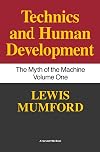
The driving idea for this book can be summed up this way: “we have overlooked the fact that a life without stable containers would fall to pieces” (p. 250). That’s right: containers.
Mumford’s founding premise is that we have collectively developed a mistaken understanding of human development due to an oversight about the archaeological record: things like stone arrowheads, plows, and grindstones are materially durable and have lasted through time. Things like reed baskets, art, show more stories, traditions, and rituals are either materially fragile or immaterial and do not last over time. Hence, we over value the importance of tools because they persist in the archaeological record.
The questions, then, is how do you extrapolate modern human civilization, with our obsessions about organization, efficiency, duty, and industriousness from a chipped stone axe? You can’t, unless you trace a parallel history of containers, by which Mumford means containers like clay pots, wine skins, baskets, etc., but also containers like stories, images, rituals, art, and written language.
Material containers hold things, allowing them to be transported over space. They also preserve things (think about fermentation, curing, preserving) which allows transport over time. The more metaphoric containers like ritual, art, and language are containers of experience, values, and beliefs, which also develop over time. When we add this piece to the historical development of tools, we start to get a better overall picture of the development of civilization.
Importantly, our development of the “technics” of civilization (i.e., technologies, practices, know how) is possible and only sensible when seen as a parallel development of both the technology and tools and an appropriate sociological mindset (e.g., one that values work and efficiency). Containers are vitally important to the development of the sociological mindset. Consider, alone, the connection between religious belief and work ethic. And how does religion persist over time without containers to transport it (e.g., icons, books, rituals, concepts). If we ignore the development of containers, the history of humanity as a tool-wielding species is a lopsided one.
Mumford is meticulous in this first volume (of two) tracing this parallel history. He carefully ties together the development of tools with social organization with the development of values. The scope and depth of research alone merits high stars, but my goodness, this was a tedious read at times. show less
Mumford’s founding premise is that we have collectively developed a mistaken understanding of human development due to an oversight about the archaeological record: things like stone arrowheads, plows, and grindstones are materially durable and have lasted through time. Things like reed baskets, art, show more stories, traditions, and rituals are either materially fragile or immaterial and do not last over time. Hence, we over value the importance of tools because they persist in the archaeological record.
The questions, then, is how do you extrapolate modern human civilization, with our obsessions about organization, efficiency, duty, and industriousness from a chipped stone axe? You can’t, unless you trace a parallel history of containers, by which Mumford means containers like clay pots, wine skins, baskets, etc., but also containers like stories, images, rituals, art, and written language.
Material containers hold things, allowing them to be transported over space. They also preserve things (think about fermentation, curing, preserving) which allows transport over time. The more metaphoric containers like ritual, art, and language are containers of experience, values, and beliefs, which also develop over time. When we add this piece to the historical development of tools, we start to get a better overall picture of the development of civilization.
Importantly, our development of the “technics” of civilization (i.e., technologies, practices, know how) is possible and only sensible when seen as a parallel development of both the technology and tools and an appropriate sociological mindset (e.g., one that values work and efficiency). Containers are vitally important to the development of the sociological mindset. Consider, alone, the connection between religious belief and work ethic. And how does religion persist over time without containers to transport it (e.g., icons, books, rituals, concepts). If we ignore the development of containers, the history of humanity as a tool-wielding species is a lopsided one.
Mumford is meticulous in this first volume (of two) tracing this parallel history. He carefully ties together the development of tools with social organization with the development of values. The scope and depth of research alone merits high stars, but my goodness, this was a tedious read at times. show less
After one false start three or four years ago, I picked this up again early last year. I'll admit, it was pretty rough going for me, but that's largely because the first half of the book doesn't concern the "megamachine"--my main interest in Mumford's thought. His roundabout phrasing structure also makes for reading that sometimes feels something like a maze and can be difficult to settle into. There were still enough significant insights to justify reading it. Some standouts below.
Mumford show more on the historical origin of the problem of death: "The desire for life without limits was part of the general lifting of limits which the first great assemblage of power by means of the megamachine brought about. Human weaknesses, above all the weakness of mortality, were both contested and defied.
"But if the biological inevitability of death and disintegration mock (sic) the infantile fantasy of absolute power, which the human machine promised to actualize, life mocks it even more. The notion of 'eternal life,' with neither conception, growth, fruition, nor decay--an existence as fixed, as sterilized, as loveless, as purposeless, as unchanging as that of a royal mummy--is only death in another form....(T)his assertion of absolute power was a confession of psychological immaturity--a radical failure to understand the natural processes of birth and growth, of maturation and death." (203) Deny that, Ernest Becker!
On the workers of the megamachine: "Each standardized component, below the top level of command, was only part of a man (sic), condemned to work at only part of a job and live only part of a life. Adam Smith's belated analysis of the division of labor, explaining changes that were taking place in the eighteenth century toward a more inflexible and dehumanized system, with greater productive efficiency, illuminates equally the earliest 'industrial revolution.'" (212)
On the burgeoning scientific/capitalist mind and its eventual costs: "These technical premises seemed so simple, their aim so rational, their methods so open to general imitation, that Leonardo never saw the need to put the question we must now ask: Is the intelligence alone, however purified and decontaminated, an adequate agent for doing justice to the needs and purposes of life?" (288) show less
Mumford show more on the historical origin of the problem of death: "The desire for life without limits was part of the general lifting of limits which the first great assemblage of power by means of the megamachine brought about. Human weaknesses, above all the weakness of mortality, were both contested and defied.
"But if the biological inevitability of death and disintegration mock (sic) the infantile fantasy of absolute power, which the human machine promised to actualize, life mocks it even more. The notion of 'eternal life,' with neither conception, growth, fruition, nor decay--an existence as fixed, as sterilized, as loveless, as purposeless, as unchanging as that of a royal mummy--is only death in another form....(T)his assertion of absolute power was a confession of psychological immaturity--a radical failure to understand the natural processes of birth and growth, of maturation and death." (203) Deny that, Ernest Becker!
On the workers of the megamachine: "Each standardized component, below the top level of command, was only part of a man (sic), condemned to work at only part of a job and live only part of a life. Adam Smith's belated analysis of the division of labor, explaining changes that were taking place in the eighteenth century toward a more inflexible and dehumanized system, with greater productive efficiency, illuminates equally the earliest 'industrial revolution.'" (212)
On the burgeoning scientific/capitalist mind and its eventual costs: "These technical premises seemed so simple, their aim so rational, their methods so open to general imitation, that Leonardo never saw the need to put the question we must now ask: Is the intelligence alone, however purified and decontaminated, an adequate agent for doing justice to the needs and purposes of life?" (288) show less
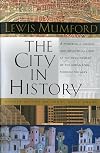
A survey of the roles that urban gatherings have played in Human history. We have enjoyed the city, and of course found great dissatisfaction with it. Mumford's survey gets frequent reprints, and is full of insights. I am sure the 19 year old me was a little out of his depths with these work, but mightily impressed with it.
I was looking for a city-planning book, but he spends most of his time on architectural aesthetics, like complaining about the "contrast of gray concrete and yellow London brick...spoiled by the housewives' passion for pink and blue curtains".
He had some interesting ideas about designing spaces that are protected from motor vehicle traffic (pointing to Rotterdam as a good example), and "mixed neighborhoods, able to sustain more than one urban function and demanding far less vehicular show more transportation". He also had some ideas I didn't like, such as building small "New Towns" outside large cities to draw people away and avoid the need to build tall apartments in the big cities.
With a title like "The Highway and The City" I expected there to be more about transit, zoning, governance, and the like. show less
He had some interesting ideas about designing spaces that are protected from motor vehicle traffic (pointing to Rotterdam as a good example), and "mixed neighborhoods, able to sustain more than one urban function and demanding far less vehicular show more transportation". He also had some ideas I didn't like, such as building small "New Towns" outside large cities to draw people away and avoid the need to build tall apartments in the big cities.
With a title like "The Highway and The City" I expected there to be more about transit, zoning, governance, and the like. show less
Lists
Awards


You May Also Like


Associated Authors
Statistics
- Works
- 93
- Also by
- 15
- Members
- 6,111
- Popularity
- #4,029
- Rating
- 4.0
- Reviews
- 30
- ISBNs
- 203
- Languages
- 15
- Favorited
- 10
