
Jared Diamond
Author of Guns, Germs, and Steel: The Fates of Human Societies
About the Author
Jared Mason Diamond is a physiologist, ecologist, and the author of several popular science books. Born in Boston in 1937, Diamond earned his B.A. at Harvard and his Ph.D. from Cambridge. A distinguished teacher and researcher, Diamond is well-known for the columns he contributes to the widely read show more magazines Natural History and Discover. Diamond's book The Third Chimpanzee: The Evolution and Future of the Human Animal was heralded for its accessibility and for its blending of science and social science. The interdisciplinary Guns, Germs and Steel--Diamond's examination of the relationship between scientific technology and economic disparity--won the 1997 Pulitzer Prize. Diamond has won a McArthur Foundation Fellowship in addition to several smaller awards for his science and writing. (Bowker Author Biography) show less
Works by Jared Diamond
The World Until Yesterday: What Can We Learn from Traditional Societies? (2012) — Author — 2,375 copies, 51 reviews
The Third Chimpanzee for Young People: On the Evolution and Future of the Human Animal (For Young People Series) (2014) 49 copies, 2 reviews
Norse Greenland: A Controlled Experiment in Collapse--A Selection from Collapse (Penguin Tracks) (2012) 8 copies
Third Chimpanzee The 2 copies
The medicine inside the body is analytical (Chinese edidion) Pinyin: ti nei yao wu fen xi (2006) 2 copies
Sex and the Female Agenda 2 copies
Speaking with a Single Tongue 2 copies
Dining With Snakes 1 copy
How to Tame a Wild Plant 1 copy
Writing Right 1 copy
The Return of Cholera 1 copy
How Africa Became Black 1 copy
Building to Code 1 copy
Father's Milk 1 copy
The Evolution of Dragons 1 copy
The Arrow of Disease 1 copy
Turning A Man 1 copy
Race Without Color 1 copy
Empire of Uniformity 1 copy
Playing God at the Zoo 1 copy
Easter's End 1 copy
Reversal of Fortune 1 copy
Why Women Change 1 copy
The Best Way to Sell Sex 1 copy
The Curse of Qwerty 1 copy
Momente decisive 1 copy
Ружья, микробы и сталь. История человеческих сообществ (Эксклюзивная классика) (Russian Edition) 1 copy
Question of Size 1 copy
Catherine the Great 1 copy
Silent Partner (CD) 1 copy
Alone in a Crowded Universe 1 copy
Continental Divides" 1 copy
[Guns, Germs, and Steel: The Fates of Human Societies] [By: Diamond Ph.D., Jared] [July, 2005] (2005) 1 copy
Пушки, вируси и стомана 1 copy
Összeomlás 1 copy
"Easter Islands End" 1 copy
The Red Flag of Optimality 1 copy
Guns 1 copy
Associated Works
What Is Your Dangerous Idea? Today's Leading Thinkers on the Unthinkable (2007) — Contributor — 669 copies, 8 reviews
MHQ: The Quarterly Journal of Military History — Spring 2014 (2014) — Author ""Behind the Lines: When Empires Collapse" — 3 copies
Tagged
Common Knowledge
- Legal name
- Diamond, Jared Mason
- Other names
- Diamond, Jared M.
- Birthdate
- 1937-09-10
- Gender
- male
- Education
- Roxbury Latin School
Harvard University (BA | 1958)
University of Cambridge (PhD | Physiology and Biophysics | 1961) - Occupations
- evolutionary biologist
physiologist
biogeographer
Professor of Physiology
environmentalist
anthropologist (show all 9)
ornithologist
linguist
science writer - Organizations
- University of California, Los Angeles
World Wildlife Fund
The Skeptics Society - Awards and honors
- American Academy of Arts & Sciences (1973)
National Academy of Sciences (1979)
American Philosophical Society (1988)
MacArthur Fellowship (1985)
Elliott Coues Award (1998)
Phi Beta Kappa Science Book Prize (1997) (show all 22)
Lewis Thomas Prize for Writing about Science (2002)
Randi Award (1994)
Zoological Society of San Diego Conservation Medal (1993)
Los Angeles Times Science Book Prize (1992)
Tanner Lecturer (1992)
Archie Carr Medal (1989)
California Book Awards (1998)
Franklin L. Burr Award (1979)
Nathaniel Bowditch Prize (1976)
Kaiser Permanente/Golden Apple Teaching Award (1976)
National Medal of Science (1999)
Kew International Medal (2012)
Lannan Literary Award (1999)
Distinguished Achievement Award (1975)
Distinguished Teaching Award (1972, 1973)
Prize Fellowship (1961) - Relationships
- Cohen, Marie Nabel (wife)
Diamond, Josh (son)
Diamond, Max (son) - Short biography
- Jared Diamond, professor of geography at the University of California at Los Angeles ... began his scientific career in physiology and expanded into evolutionary biology and biogeography. [from Guns, Germs, and Steel (2005)]JARED DIAMOND is Professor of Geography at the University of California, Los Angeles. Until recently he was Professor of Physiology at the UCLA School of Medicine. He is the author of The World Until Yesterday: What Can We Learn from Traditional Societies?; Collapse: How Societies Choose to Fail or Succeed, and the Pulitzer Prize-winning author of the widely acclaimed Guns, Germs, and Steel: the Fates of Human Societies, which also is the winner of Britain's 1998 Rhone-Poulenc Science Book Prize.
Dr. Diamond is also the author of two other trade books: The Third Chimpanzee, which won The Los Angeles Times Book award for the best science book of 1992 and Britain's 1992 Rhone-Poulenc Science Book Prize; and Why is Sex Fun? (ScienceMasters Series).
Dr. Diamond is the recipient of a MacArthur Foundation Fellowship ("Genius Award"); research prizes of the American Physiological Society, National Geographic Society, and Zoological Society of San Diego; and many teaching awards and endowed public lectureships. In addition, he has been elected a member of all three of the leading national scientific/academic honorary societies (National Academy of Sciences, American Academy of Arts and Sciences, American Philosophical Society).
His field experience includes 17 expeditions to New Guinea and neighboring islands, to study ecology and evolution of birds; rediscovery of New Guinea's long-lost goldenfronted bowerbird; other field projects in North America, South America, Africa, Asia, and Australia. As a conservationist he devised a comprehensive plan, almost all of which was subsequently implemented, for Indonesian New Guinea's national park system; numerous field projects for the Indonesian government and World Wildlife Fund; founding member of the board of the Society of Conservation Biology; member of the Board of Directors of World Wildlife Fund/USA.
http://edge.org/memberbio/jared_diamo... - Nationality
- USA
- Birthplace
- Boston, Massachusetts, USA
- Places of residence
- Los Angeles, California, USA
- Map Location
- Massachusetts, USA
Members
Discussions
AUGUST - SPOILERS - Collapse in The Green Dragon (October 2014)
Reviews

* Review in swedish *
Jag började läsa Diamonds bok då jag har ett intellektuellt intresse för samhällen som kollapsar (och så har jag läst hans "Vete, vapen och virus" tidigare också). Och kollapsande samhällen är det gott om i boken. Sex äldre samhällens kollaps och fyra moderna samhällen med allvarliga miljöproblem beskrivs i boken. Just miljöproblem, eller människors hantering av de resurser som finns tillgängliga i naturen, är det genomgående temat i beskrivningen av show more olika samhällen. Diamond hävdar inte att alla samhällen som kollapsat har gjort det av miljöskäl, men han pekar ut ett antal samhällen där det är han tycker det är den rimligaste hypotesen. Han är dock noga med att påpeka vikten av hur samhällen reagerar inför miljöhot. Om samhällen vidtar åtgärder för att bemöta hoten är de i de allra flesta fall överkomliga hot.
Den bästa delen av boken är samlingen kapitel som beskriver gångna tiders kollapser. Det känns som det finns ett gediget forskningsarbete bakom av (i väldigt stora delar) andra än Diamond som han kan sammanfatta och lägga fram i ett sammanhängande narrativ. Och han är väldigt bra på att skriva sådana narrativ. Diamond fastnar inte i detaljer utan lyckas ge beskrivningar av samhällen som gör att en känner att en förstår dem. Hans förklaringar till varför samhällena kollapsade (eller hur Tokugawas Japan och hur samhällen i Nya Guinea lyckades undvika kollaps) verkar rimliga.
Dispositionen kan ifrågasättas lite. Grönland i all ära, men varför samhället där var värt tre kapitel medan alla andra samhällen fick nöja sig med ett är för mig oklart. Det är också noterbart att förutom den kollapsande Maya-samhället och Japan som undvek kollaps är alla samhällen som behandlas väldigt små där folkmängden totalt uppgår till några tusen personer som mest. Jag uppskattar att Diamond inte tar in till exempel Västromerska riket och försöker att få det att passa in i tesen om miljökollaps, men beskrivningarna förlorar lite i relevans. När de samhällen han beskriver är så små som i något fall inte ens 100 personer, så blir det svårare att dra paralleller till vårt idag globala samhälle med biljoner invånare.
Men även om relevansen för idag ibland kan kännas oklar dras jag in i kapitlen och finner det lättläst och väldigt intressant.
Kapitlen om de moderna samhällena är också bra, men inte lika bra. Jag tänker att det beror på att det finns mycket mer information om dagens samhällen vilket gör urvalet svårare. Hans tes om till exempel hur miljöproblem/överbefolkningsproblem var en stor orsak till folkmordet i Rwanda känns inte lika underbyggda som hans diskussion om gångna tiders samhällen. Men med det sagt finns det så klart intressanta delar även i dessa kapitel och jag uppskattade speciellt kapitlet om Australien.
Sen påpekar Diamond helt korrekt att vi inte på samma sätt idag kan förvänta oss samhälleliga kollapser av de slag vi såg till exempel på Påskön då vi idag har en mycket mer integrerad värld. Enskilda samhällen kan tillfälligt sjunka ner/"kollapsa" men det lär komma stöd från omvärlden för att underlätta krisen. Men däremot finns ju idag risken för en global samhälleliga kollaps (som kan sträcka sig över flera decennier).
Den sista delen med sammanfattande slutsatser och vägar framåt för att komma till rätta med dagens (boken gavs ut 2005) miljöproblem är den svagaste och drar ner betyget en stjärna för mig. Men jag uppskattar ändå att Diamond vill dra slutsatser från gångna tiders samhällen för ur vi ska kunna komma till rätta med våra miljöproblem. Men jag finner hans argument rätt tunna ofta.
Sammanfattningsvis en väldigt läsvärd bok om samhällskollapser och miljöproblem. show less
Jag började läsa Diamonds bok då jag har ett intellektuellt intresse för samhällen som kollapsar (och så har jag läst hans "Vete, vapen och virus" tidigare också). Och kollapsande samhällen är det gott om i boken. Sex äldre samhällens kollaps och fyra moderna samhällen med allvarliga miljöproblem beskrivs i boken. Just miljöproblem, eller människors hantering av de resurser som finns tillgängliga i naturen, är det genomgående temat i beskrivningen av show more olika samhällen. Diamond hävdar inte att alla samhällen som kollapsat har gjort det av miljöskäl, men han pekar ut ett antal samhällen där det är han tycker det är den rimligaste hypotesen. Han är dock noga med att påpeka vikten av hur samhällen reagerar inför miljöhot. Om samhällen vidtar åtgärder för att bemöta hoten är de i de allra flesta fall överkomliga hot.
Den bästa delen av boken är samlingen kapitel som beskriver gångna tiders kollapser. Det känns som det finns ett gediget forskningsarbete bakom av (i väldigt stora delar) andra än Diamond som han kan sammanfatta och lägga fram i ett sammanhängande narrativ. Och han är väldigt bra på att skriva sådana narrativ. Diamond fastnar inte i detaljer utan lyckas ge beskrivningar av samhällen som gör att en känner att en förstår dem. Hans förklaringar till varför samhällena kollapsade (eller hur Tokugawas Japan och hur samhällen i Nya Guinea lyckades undvika kollaps) verkar rimliga.
Dispositionen kan ifrågasättas lite. Grönland i all ära, men varför samhället där var värt tre kapitel medan alla andra samhällen fick nöja sig med ett är för mig oklart. Det är också noterbart att förutom den kollapsande Maya-samhället och Japan som undvek kollaps är alla samhällen som behandlas väldigt små där folkmängden totalt uppgår till några tusen personer som mest. Jag uppskattar att Diamond inte tar in till exempel Västromerska riket och försöker att få det att passa in i tesen om miljökollaps, men beskrivningarna förlorar lite i relevans. När de samhällen han beskriver är så små som i något fall inte ens 100 personer, så blir det svårare att dra paralleller till vårt idag globala samhälle med biljoner invånare.
Men även om relevansen för idag ibland kan kännas oklar dras jag in i kapitlen och finner det lättläst och väldigt intressant.
Kapitlen om de moderna samhällena är också bra, men inte lika bra. Jag tänker att det beror på att det finns mycket mer information om dagens samhällen vilket gör urvalet svårare. Hans tes om till exempel hur miljöproblem/överbefolkningsproblem var en stor orsak till folkmordet i Rwanda känns inte lika underbyggda som hans diskussion om gångna tiders samhällen. Men med det sagt finns det så klart intressanta delar även i dessa kapitel och jag uppskattade speciellt kapitlet om Australien.
Sen påpekar Diamond helt korrekt att vi inte på samma sätt idag kan förvänta oss samhälleliga kollapser av de slag vi såg till exempel på Påskön då vi idag har en mycket mer integrerad värld. Enskilda samhällen kan tillfälligt sjunka ner/"kollapsa" men det lär komma stöd från omvärlden för att underlätta krisen. Men däremot finns ju idag risken för en global samhälleliga kollaps (som kan sträcka sig över flera decennier).
Den sista delen med sammanfattande slutsatser och vägar framåt för att komma till rätta med dagens (boken gavs ut 2005) miljöproblem är den svagaste och drar ner betyget en stjärna för mig. Men jag uppskattar ändå att Diamond vill dra slutsatser från gångna tiders samhällen för ur vi ska kunna komma till rätta med våra miljöproblem. Men jag finner hans argument rätt tunna ofta.
Sammanfattningsvis en väldigt läsvärd bok om samhällskollapser och miljöproblem. show less
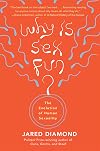
FINALLY! THE ANSWER TO THE QUESTION EVERYONE'S BEEN ASKING!
And the answer is... we don't know. That's also the answer to a lot of related sexual questions from menopause to penis size. Humans are outliers and we don't really have any definitive answers. What we do get however is a hell of a lot of speculation. Now some of this is based solidly in research science, such as the glamorous collecting of monkey piss to try and analyze which monkey is in estrus and when. The remainder is show more unfortunately a lot of "just so" storytelling, using evolutionary theories and sexual selection and a dash of social science findings to create plausible scienc-y sounding narratives for why humans are an outlier. Diamond's books often stumble as they try to answer the big questions on this very same step. One illustration of the problem with this is exemplified in the book as he describes two competing theories for why human females have "hidden" fertile periods and not a gigantic glowing ass. One theory says this is to create defensive monogamous relationships, the other says it's creating a society where everyone's sleeping around which protects women and children as any male could possibly have fathered the kids. Diamond tries to synthesize the view by saying it's a bit of one and a bit of the other. The only real hard science here is a comparative view of other primates and their evolutionary strategies.
It's not so much the evolution of human sexuality as it is "some plausible sounding evolutionary explanatory models that might explain" human sexuality. How satisfying that ends up being depends a bit on what you went into the book wanting and how much you like asking "how do you actually know that". show less
And the answer is... we don't know. That's also the answer to a lot of related sexual questions from menopause to penis size. Humans are outliers and we don't really have any definitive answers. What we do get however is a hell of a lot of speculation. Now some of this is based solidly in research science, such as the glamorous collecting of monkey piss to try and analyze which monkey is in estrus and when. The remainder is show more unfortunately a lot of "just so" storytelling, using evolutionary theories and sexual selection and a dash of social science findings to create plausible scienc-y sounding narratives for why humans are an outlier. Diamond's books often stumble as they try to answer the big questions on this very same step. One illustration of the problem with this is exemplified in the book as he describes two competing theories for why human females have "hidden" fertile periods and not a gigantic glowing ass. One theory says this is to create defensive monogamous relationships, the other says it's creating a society where everyone's sleeping around which protects women and children as any male could possibly have fathered the kids. Diamond tries to synthesize the view by saying it's a bit of one and a bit of the other. The only real hard science here is a comparative view of other primates and their evolutionary strategies.
It's not so much the evolution of human sexuality as it is "some plausible sounding evolutionary explanatory models that might explain" human sexuality. How satisfying that ends up being depends a bit on what you went into the book wanting and how much you like asking "how do you actually know that". show less

Why did Europeans people grabbed the world, exterminating others and/or exploiting them under their rules, and not these other people, scattered across continents and cultures (Indians, Black Africans, Australian Aboriginals...) ever reached Europe to conquer it?
We had a few clues already: their more advanced technologies; their better immune systems when faced with diseases that had easily decimated others; and, also, their political systems, based upon powerful, centralised States, as show more opposed to more scattered -and less organised- tribes of hunter-gatherers in some other areas of the globe. Science, germs, and society -aren't these evidences enough that Europeans (read: White people) were therefore a superior race, that evolution could only favour to put them at the top? Well... No and not at all!
Jumping to such a conclusion (and God knows how it's been done and is still being done among some circles!) would be a fallacy, confusing causes and consequences; a fallacy that Jared Diamond, brilliantly, exposes here by calling as witnesses from geography to prehistory, history, linguistic, genetics, and, yes, even evolutionary biology. And guess at what all of them are pointing to? The environment as a culprit! Or, rather, how differences in environments will help trigger massive disparities in societal evolution... with the impacts we all know upon the history of civilisations, and how they ultimately clashed. It started with agriculture and farming. It will end with 'guns, germs, and steel'.
Obviously, there's more to it than that. Jared Diamond, in fact, also points at how certain societal choices will contribute to filter (so to speak) such civilisations, determining those that won't make it (e.g. due to ecological suicides) or, not take it upon themselves to spread across the world (e.g. because of societal choices trapping them within their own borders).
Embracing a wide array of disciplines, dense, rich, enlightening as usual, the author smashes into tiny pieces the imbecilities that have, for so long, underpinned racism. He, above all, changes our outlook upon history, that it shows to be absolutely inseparable from geography. This is an absolute must-read! show less
We had a few clues already: their more advanced technologies; their better immune systems when faced with diseases that had easily decimated others; and, also, their political systems, based upon powerful, centralised States, as show more opposed to more scattered -and less organised- tribes of hunter-gatherers in some other areas of the globe. Science, germs, and society -aren't these evidences enough that Europeans (read: White people) were therefore a superior race, that evolution could only favour to put them at the top? Well... No and not at all!
Jumping to such a conclusion (and God knows how it's been done and is still being done among some circles!) would be a fallacy, confusing causes and consequences; a fallacy that Jared Diamond, brilliantly, exposes here by calling as witnesses from geography to prehistory, history, linguistic, genetics, and, yes, even evolutionary biology. And guess at what all of them are pointing to? The environment as a culprit! Or, rather, how differences in environments will help trigger massive disparities in societal evolution... with the impacts we all know upon the history of civilisations, and how they ultimately clashed. It started with agriculture and farming. It will end with 'guns, germs, and steel'.
Obviously, there's more to it than that. Jared Diamond, in fact, also points at how certain societal choices will contribute to filter (so to speak) such civilisations, determining those that won't make it (e.g. due to ecological suicides) or, not take it upon themselves to spread across the world (e.g. because of societal choices trapping them within their own borders).
Embracing a wide array of disciplines, dense, rich, enlightening as usual, the author smashes into tiny pieces the imbecilities that have, for so long, underpinned racism. He, above all, changes our outlook upon history, that it shows to be absolutely inseparable from geography. This is an absolute must-read! show less

Diamond posits geography (and the concomitant availability of animals and plants in certain areas, as well as geographic barriers) as the ultimate arbiter of human history. In doing so, he examines what he considers the ultimate historical roots of oppression; here, he explicitly rejects old racist theories that insist on Europeans as intellectually and/or morally superior to any of the peoples they conquered or subsumed. Ambitious in scope and conception, this is a fascinating if *slow* show more read. I feel like I've learned a great deal, particularly in terms of the domestication of plants and animals (squirrels and acorns, who would have thought?), and certainly the chapters where he details the geographic factors that mitigated against the diffusion of ideas and objects provided a lot of food for thought (e.g. the East-West axis of Eurasia as opposed to the North-West axes of Africa and the Americas). However, because the scope is so very large, inevitably there's a huge amount of glossing over of details, and the work therefore certainly sidesteps a lot of the individuality of cultures and peoples. Finally, it's more of a popular history than anything else, with a reading list but no citations, and that always makes me a little uneasy :-). show less
Lists
Climate Change (1)
My wishlist (1)
Reading list (1)
History (1)
Allie's Wishlist (1)
Reading LIst (1)
Favourite Books (1)
Disaster Books (1)
Recreation (1)
Five star books (1)
Big tags (1)
My List (2)
Unread books (2)
Big History (1)
Awards


You May Also Like


Associated Authors
Statistics
- Works
- 83
- Also by
- 10
- Members
- 50,697
- Popularity
- #300
- Rating
- 4.0
- Reviews
- 751
- ISBNs
- 402
- Languages
- 27
- Favorited
- 170


