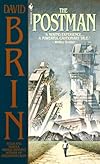
Between this and the movie there's a single good book. Unfortunately, separate, they're a halting story strewn with some interesting ideas. The most compelling part of the book; reinventing civilization through a lie, never blossoms to its potential.

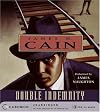
Originally a serial and it shows because the plotting is incredibly fast paced and tightly wound. All the staples of noir are here, but with a slightly unusual resolution. There's just no time for it to get too complex or philosophical about itself which leaves the ending hanging a bit in the air.

This is one of PKDs most well reviewed books and I don't really understand why. As is his usual pitfall, the idea of the novel is better than the novel itself. A progressive breakdown of reality, existence inside a dreamlike state or psi powers, an outside voice of god interacting with the hero, it all mirrors the usual themes and the themes of his Exegesis. The reversing of objects through platonic ideals in time is a neat idea.
But is it actually a good read? Not really.
But is it actually a good read? Not really.
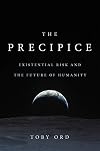
Good overview of issues, and succeeds in reigning in some alarmism in what could easily have been a hopeless alarmist book, where exaggerations are made to elevate the material. Prescient about the dangers of pandemics and gain of function research. Has some good sections on the varying levels of existential risk but could have used more on that subject, as most of these individual parts - climate change, AI, pandemics, nuclear wars, and so on - are better covered in other books.
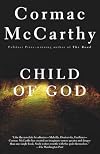
Short and not so sweet tale of a serial killing necrophiliac. As usual it's McCarthy's way with words that keeps you reading, but this doesn't rise above to Blood Meridian heights of transcendent violence, nor to the pit of despair that is The Road. Lester is a pathetic character, and his story - despite the death and necrophilia - feels rather toothless and pointless. In that sense, it's perhaps more true to life.

This is longer than the text itself and suffers from the usual pitfall of trying to put a business spin on a military text, even though the lecturer himself has a military background. Incredibly disappointing since he's clearly got some chops and about a quarter of the material has some useful reflections that are relevant to understanding the text (the discussion on shih for example).
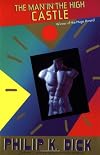
Like much of PKDs work it's an excellent premise that's too rough at the edges to be truly great. Roth's Plot Against America is a better execution of a tangential story, but lacks the PKD staples of being self-referential and reality questioning, as this work is.
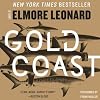
Had me absolutely hooked for the first 2/3rds and then absolutely fell apart toward the end. Great dialogue. Great reader. Just a terrible fizzle of an ending.
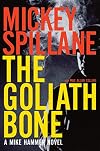
This is the last Mike Hammer novel chronologically, or so it was intended. I read it as my first entry into the series because it was free on audible. Stacy Keach is a wonderful narrator, the story itself is a confused mess of post-9/11 hangups & a farewell to an ageing relic of a bygone era. Interestingly enough I know Spillane from a quote that says he refused to age Hammer up because heroes shouldn't get old. Reading the last first was a mistake.
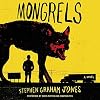
Starts out strong, taking a different tack than most werewolf stories and making them the protagonists (as teased in a book like Wolfen). It's a coming of age story and a pretty obvious parallel to many transient communities lives as perpetual outcasts and newcomers, and that's perhaps the strongest aspect of the book. But where others praise this as a great werewolf story I only saw it as an impediment for a human story obscured by a werewolf theme. As a horror and werewolf book this isn't scary, and there's no larger plot to get invested in either as it's episodic.

Kind of unfocused and it intersects a lot of familiar topics better covered in his other courses. Making of the NT canon is better.
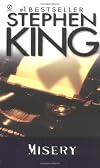
Better than I remember it upon rereading it, and wonderfully typeset in the Folio edition with many sections of broken typewriter manuscript and penciled corrections reproduced. The metanarrative and inside baseball on writing escaped me when I read it in my teens.
Excellent illustrations.
Excellent illustrations.
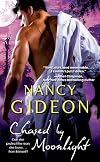
Definitely speedier on re-read. The broken up POVs hints and slivers of information also come together in a way they won't first time through.
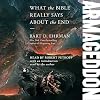
This isn't one of Ehrman's good ones, and it's full of quips and information you will already be familiar with if you've read his previous books, including oft returned to anecdotes about the believers who literally sold the farm thinking the end times were upon them in the 80s.
The imagined audience clearly lies on the believing side as Ehrman talks about interpretations of Revelation and the end times in general and the wrath of the NT God, with references to what believers should consider or how certain interpretations lead to (in his view) strange moral conclusions. Considering Ehrman is (no longer) a believer it's odd to read sentences like "for those of us who choose to follow Jesus".
There's a spectrum along the path of writing toward a secular audience interested in the Bible or theological and historical questions, and writing toward an audience of believing christians and trying to didactically challenge their assumptions - and this book definitely falls further into the latter than any of his previous books.
The imagined audience clearly lies on the believing side as Ehrman talks about interpretations of Revelation and the end times in general and the wrath of the NT God, with references to what believers should consider or how certain interpretations lead to (in his view) strange moral conclusions. Considering Ehrman is (no longer) a believer it's odd to read sentences like "for those of us who choose to follow Jesus".
There's a spectrum along the path of writing toward a secular audience interested in the Bible or theological and historical questions, and writing toward an audience of believing christians and trying to didactically challenge their assumptions - and this book definitely falls further into the latter than any of his previous books.

A simple story of life and death, some magical thinking of youth, and slowly walking down a deer. Some beautiful prose read well by Frank Muller, but lacks a real narrative punch, and instead becomes more slice of life.
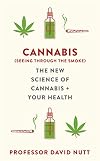
Very good and up to date guide to Cannabis research and legislation with a focus primarily on the UK, but with comparisons with other countries and a short overview of the bigoted origins of its prosecution in the US. Much needed mythbusting regarding the schizophrenia link (old and misleading study, large increase in use not followed by population wide increase in schizophrenia).
Nutt isn't a libertarian absolutist who wants all drugs freed, but uses the multiple government investigation mandates he was spearheading to find actual data on harm from many spectrums, not just direct drug harm but societal consequences and costs. When government regulation indirectly leads to more harm, as in the case with cannabis increasing potency and getting synthetic alternatives popular because of ease of access and not popping drug tests, he points out how one led to the other.
The medicinal and compassionate use arguments for rare diseases like rare seizure conditions will probably be the hardest to deny, but the overall view is one where enforcement has caused more harm than good and a regulated market would be a victory across the board, according to the information in this book.
Nutt isn't a libertarian absolutist who wants all drugs freed, but uses the multiple government investigation mandates he was spearheading to find actual data on harm from many spectrums, not just direct drug harm but societal consequences and costs. When government regulation indirectly leads to more harm, as in the case with cannabis increasing potency and getting synthetic alternatives popular because of ease of access and not popping drug tests, he points out how one led to the other.
The medicinal and compassionate use arguments for rare diseases like rare seizure conditions will probably be the hardest to deny, but the overall view is one where enforcement has caused more harm than good and a regulated market would be a victory across the board, according to the information in this book.
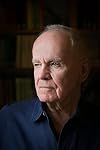
Bought the FS edition and had a new reason to reread this one. It's hard not to compare and contrast with the movie if you're a fan of that one as well; the editing choices made, what was cut, what was swapped around. The bulk of the story is the same, key scenes almost line for line. But some changes make you wonder, like substituting the hitchhiking teenager for a chance encounter with some woman at a motel, swapping a line declaring his integrity for his wife for a suggestion of impropriety - but on the other hand aging up his 19 year old sweetheart for the movie. Chigurh talks more and you get a few looks inside his mind in the book, which makes him less enigmatic than in the movie. Though a longer explanation of his chance driven ethos does little to dull his alien nature. The conversation of him being purely a force of nature is cut short in the book and the movie by his own chance encounter with mortality. Loose ends are wrapped up in the book that might not need tying up, as to what Chigurh ultimately does, the money, and what becomes of the mexican after the shootout.
Really the big change is how much time is given to Bell to philosophize about his views on how times have changed, and reflecting on his own views of meaning and chance, of his past and losing the battle that never was between him and Chigurh.
As always in McCarthy there's some shadow of a discussion about God lurking in the background, and a little ember of hope, in this book through the fire lit show more by Bell's father in his dream. In The Road, the fire that's carried by the boy and his father. A dim light in the big darkness of the universe, something to hold against the incomprehensibleness of evil. show less
Really the big change is how much time is given to Bell to philosophize about his views on how times have changed, and reflecting on his own views of meaning and chance, of his past and losing the battle that never was between him and Chigurh.
As always in McCarthy there's some shadow of a discussion about God lurking in the background, and a little ember of hope, in this book through the fire lit show more by Bell's father in his dream. In The Road, the fire that's carried by the boy and his father. A dim light in the big darkness of the universe, something to hold against the incomprehensibleness of evil. show less

It's an evergreen problem, and very good play; pitting a community's treasured resource against a public health emergency, reason against greed, the many against the few. However, there are clear anti-democratic and elitist lines in this play that it's surprising to see a modern audience skip right past in seeing modern parallels to climate and pollution issues. The play makes several direct appeals to the madness of democracy and the wisdom of the educated elite, that aren't challenged at all in the little post-play interview LA Theatre Works put together to draw parallels to modern issues.
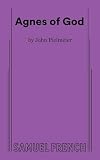
Solid drama that takes a 'murder mystery' involving a newborn and its conception through all the expected and not so expected paces you'd assume of a convent setting. It didn't quite sell the miraculous turn for me, or rather the desperately held denial of the nun, but the human tragedy was extremely well told and acted. The inclusion of hypnotism says a lot about when the play was authored, and it's very dated in the views on psychology - so you have to take it for what seemed plausible in the 70s.
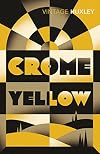
Very much of its time, being incredibly insulting to a certain set of pretentious intellectuals of that era. It's hard to make timeless satire, as what's being satirized fades into the mists of time. There's some pretty prose here, but it's hard to tell if it's part of what's being satirized or not (is the style itself a joke on the people who would like it?).
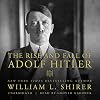
Very good short history of the rise and fall, like it says on the tin. Thins out on detail in the "middle" part of his reign so the title is very true to purpose. Originally written in 1960, just 15 years after the death of Hitler, this short biography doesn't have the benefit of the next decades of further research and hindsight, and so is wrong or mistaken in some of the details, but his account is also critical in establishing some views that have been debated since - notably he's convinced the Reichstag fire was a false flag operation by nazis, rather than an opportunistic move afterwards.
That makes this not only a very good short biography of Hitler that is still mostly accurate, but a notable entry by a writer that's been influential in shaping the post-war views of what happened and how.
That makes this not only a very good short biography of Hitler that is still mostly accurate, but a notable entry by a writer that's been influential in shaping the post-war views of what happened and how.
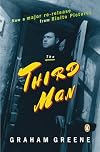
Some good performances elevate this material, but can't compete with the iconic movie.
Well made and acted courtroom drama about Henri Young, which is a real person and a real case that is much less sympathetic than the play (and movie) made him out to be. Like a lot of true crime and "based on a true story" fiction the truth needs to be massaged to be palatable, a murderer made into a perfect victim of the system who's only real crime before Alcatraz was stealing 5 dollars, because telling a story about how bad people can still be brutalized by a bad system is much harder.
Does fiction have an obligation to the truth? Or is anything in service of the better story ok? Questions for another day.
Does fiction have an obligation to the truth? Or is anything in service of the better story ok? Questions for another day.
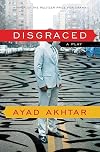
LATW version. A play that puts you in the middle of the most awkward dinner conversation you've ever experienced, with a Pakistani ex-muslim and his artist girlfriend who loves a liberal idea of Islam, together with a jewish coworker who also slept with the wife. The play is challenging enough about the topic to require 15 minutes of a panel of experts being concerned after the conclusion of the play, mostly bringing up a lack of nuances that - if included - would have made the thing a lecture and not a play.
It was refreshing to not have the script so guarded, but let the conflicts about heritage and belief be infected. Everyone's some flavour of asshole in this play, and it doesn't try to offer any easy answers.
It was refreshing to not have the script so guarded, but let the conflicts about heritage and belief be infected. Everyone's some flavour of asshole in this play, and it doesn't try to offer any easy answers.
LATW version. A comedy-drama, slice of life play, with some fantastic performances. The only drawback here is that it's not really about anything in particular. It's a snapshot of a place, a cast of characters, little vignettes of drama and comedy, some resolved some not. Some people love that touch of "reality", but I can't really abide a road that goes nowhere. If you do, you'll enjoy it more than I did. The extra star is for the amazing delivery.
LATW version. A play set during the campaign to save children just before the outbreak of WWII; we follow a girl's journey from her home in Germany to her new family in England. This could easily have been a schmaltzfest, but takes a much stronger turn dealing not only with alienation in a new country, but the abandonment of the old. Eva's reactions aren't the neat drama staples, but the awkward ambiguous ones collected from real life events that inspired the story. Her rejection of her old identity and creation of a new one is set in contrast with her own child's need to find out who she is through uncovering the past - a past Eva's decided to bury. This is a much less popular first and second generation immigrant story.
Good performances.
Good performances.
From Spinning Wheels to Steam and Steel: Understanding the Age of Industrialization by Jennifer J. Popiel

Good overview of industrialization, giving both a context of the agricultural revolution preceding it, the gradual changes to the social and economical systems that increased production unlocks, how the changing work requirements and new technologies starts speeding up urbanization and both causing new social problems as well as providing new solutions. Well balanced and presented up until the last couple of lectures trying to exemplify the rise of new leisure time with baseball, that didn't quite come together.
This is more a nerd sharing his hobby than a scholar's lecture series, but that's not necessarily bad. Drout is clearly very enthusiastic and this lecture series feels very off the cuff and non-technical. That makes it approachable and listenable. The downside is it's meandering and lacks the tight professional presentation of most Modern Scholar offerings.
We do get some insights into the literary criticism of Tolkien, and the strongest case he makes is that a lot of the criticism comes from a non-acceptance of the central premise regarding good and evil - that it's not about complex moral ambiguities, but that there is as much depth in the problem of knowing what the good is, but not knowing if you can do it. That's something that seems to jive very much with Tolkien's character and religious background, and is something done away with by those who seek to emulate him (think GRRMs comments about the tax policy).
Similarly he defends the view of LOTR as a mediated document (revised product of many hands) well, a view I'd never considered.
The pop culture reflections are fun, but less insightful.
We do get some insights into the literary criticism of Tolkien, and the strongest case he makes is that a lot of the criticism comes from a non-acceptance of the central premise regarding good and evil - that it's not about complex moral ambiguities, but that there is as much depth in the problem of knowing what the good is, but not knowing if you can do it. That's something that seems to jive very much with Tolkien's character and religious background, and is something done away with by those who seek to emulate him (think GRRMs comments about the tax policy).
Similarly he defends the view of LOTR as a mediated document (revised product of many hands) well, a view I'd never considered.
The pop culture reflections are fun, but less insightful.
This is begging for a comparison with 12 Angry Men but it's more like 6 crappy jurors. Instead of a confrontation of prejudices leading to a dramatic sea change in the jury, here we enjoy a discourse on race and crime so stalemated it sounds like it could have been made today, but opened in 95, so is now about 30 years old. Nothing has changed. The play presents the same arguments and dilemmas, and reaches no conclusion. A New York school principal has been caught buying drugs - or has he been framed by a corrupt system? Everything in the case revolves around him being black. Is a two tiered legal system the answer to prejudice? Are you obligated to vote your skin colour in court? Who has a right to speak out on these issues? Peppered with some hierarchy squabbles like black woman vs woman with a black boyfriend vs the one from Nebraska vs a hispanic woman who lives in a shitty neighbourhood. Who can draw the trump card when it comes to deep intersectional struggle?
It's well acted, and perhaps this was cutting edge discussion 30 years ago, but it's frankly just depressing realizing the frozen state of this conversation now.
It's well acted, and perhaps this was cutting edge discussion 30 years ago, but it's frankly just depressing realizing the frozen state of this conversation now.