
Stephen R. Graubard (1924–2021)
Author of Presidents: The Transformation of the American Presidency
About the Author
Stephen Graubard is Professor of History Emeritus at Brown University.
Series
Works by Stephen R. Graubard
Command of Office: How War, Secrecy, And Deception Transformed the Presidency, from Theodore Roosevelt to George W. Bush (2004) 80 copies, 1 review
Daedalus, Summer 1976: Edward Gibbon and the Decline and Fall of the Roman Empire (1977) — Editor — 20 copies
Daedalus, Summer 1968: Philosophers and Kings: Studies in Leadership (1970) — Editor — 16 copies, 1 review
Daedalus, Spring 2000: Brazil: The Burden of the Past; The Promise of the Future (2000) — Editor — 6 copies
Daedalus, Spring 2001: Italy: Resilient and Vulnerable: Volume 1: The European Challenge (2001) 4 copies
Daedalus, Fall 1974: American Higher Education: Toward an Uncertain Future, Volume 1 (1974) 3 copies
Rousseau for Our Time 2 copies
Daedalus, Summer 2001: Italy: Resilient and Vulnerable: Volume 2: Politics and Society (2001) 2 copies
Daedalus, Spring 1990: Literacy in America — Editor — 2 copies
Daedalus: The Journal of the American Academy of Arts & Sciences- The Negro American, Vol. 94, No. 4 (Fall, 1965) (1965) 2 copies
Daedalus, Winter 1975: American Higher Education: Toward an Uncertain Future, Volume 2 (1975) 2 copies
Daedalus: The Exit From Communism [Journal of the American Arts and Sciences] Vol. 121, No 2. (Spring 1992) (1992) 2 copies
Daedalus, Summer 1977: Discoveries and Interpretations: Studies in Contemporary Scholarship, Volume I (1977) 2 copies, 1 review
Daedalus: Journal of the American Academy of Arts and Sciences, Summer 1990; Showa: The Japan of Hirohito (Vol. 119, No. 3) (1990) 1 copy
Daedalus, Fall 1977: Discoveries and Interpretations: Studies in Contemporary Scholarship, Volume II 1 copy
A New America? 1 copy
Daedalus, Spring 1975: Wisdom, Revelation, and Doubt: Perspectives on the First Milennium B.C. 1 copy
Daedalus Summer 1976 vol, 105 no. 3 Edward Gibbon The Decline and Fall of the Roman Empire (1976) 1 copy
Daedalus Volume 113 Number 2 1 copy
Daedalus Volume 113 Number 1 1 copy
Daedalus Volume 114 Number 1 1 copy
Daedalus: Journal of the American Academy of Arts and Sciences, Winter 1967: Religion in America (1967) 1 copy
Daedulus, Vol. 119, No. 1, Winter '90 — Editor — 1 copy
Daedalus 1 copy
Associated Works
Daedalus, Winter 1997: American Academic Culture in Transformation: Fifty Years, Four Disciplines (1998) — Editor; Preface — 35 copies, 1 review
Tagged
Common Knowledge
- Legal name
- Graubard, Stephen Richards
- Birthdate
- 1924-12-05
- Date of death
- 2021-05-26
- Gender
- male
- Occupations
- historian
university professor - Organizations
- Brown University
- Nationality
- USA
- Birthplace
- New York, New York, USA
- Associated Place (for map)
- New York, USA
Members
Reviews

1917-1924
What did the Russian Revolution mean for the British Labour Party - and the British labor movement generally - in the period 1917-1924? Mr Graubard here presents a clear and incisive analysis of that problem: how the Bolshevik victory influences the Labour Party's views on foreign policy, particularly with respect to Russian affairs; the story behind the creation of the Communist Party in Great Britain and the Communists' rivalry with the Labour Party; and the Labour Party's show more attitude towards international communism, as reflected in its efforts to lead and organize the noncommunist socialist parties in a new labor and socialist international.
Mr Graubard views these and other questions as aspects of a single large questions: how did the victory of communism in Russia challenge a socialist party unwilling to accept Marxism but conscious of the necessity of coming to some sort of terms with it? He explores the British Labour Party's record in some detail, and, in doing so, explains why, in the realm of foreign affairs, the Labour Party showed a willingness to accept Soviet Russia, while in the domestic sphere its hostility towards the British Communist Party constantly increased. Mr Graubard traces the effects of this ambivalence on British domestic politics. show less
What did the Russian Revolution mean for the British Labour Party - and the British labor movement generally - in the period 1917-1924? Mr Graubard here presents a clear and incisive analysis of that problem: how the Bolshevik victory influences the Labour Party's views on foreign policy, particularly with respect to Russian affairs; the story behind the creation of the Communist Party in Great Britain and the Communists' rivalry with the Labour Party; and the Labour Party's show more attitude towards international communism, as reflected in its efforts to lead and organize the noncommunist socialist parties in a new labor and socialist international.
Mr Graubard views these and other questions as aspects of a single large questions: how did the victory of communism in Russia challenge a socialist party unwilling to accept Marxism but conscious of the necessity of coming to some sort of terms with it? He explores the British Labour Party's record in some detail, and, in doing so, explains why, in the realm of foreign affairs, the Labour Party showed a willingness to accept Soviet Russia, while in the domestic sphere its hostility towards the British Communist Party constantly increased. Mr Graubard traces the effects of this ambivalence on British domestic politics. show less
Command of Office: How War, Secrecy, and Deception Transformed the Presidency, from Theodore Roosevelt to George W. Bush by Stephen Graubard
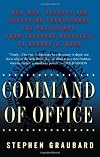
The nature of presidential leadership, and the question of how to judge its quality, is an ever-present issue, particularly in this age of constant media coverage and discussion of the presidency, whether on talk radio, cable news networks, on the Internet. Most of what passes for analysis, in this cacophony, is rapid-fire gut reactions to the latest presidential action.
Stephen Graubard, retired professor of history at Brown University, attempts a more systematic analysis of the modern show more presidency in "Command of Office." This book, which offers chapter-length analyses of each president since Theodore Roosevelt (who is arguably the first modern president), tries to demonstrate the massive power that has flowed into the Executive Branch of the federal government in a century dominated by the perpetual threat, and frequent realization, of war.
The resulting effort demonstrates years of research and study into the 18 presidents (it was published during George W. Bush's presidency). The wealth of material consulted is evident from the lengthy, and heavily annotated, endnotes. This frequently results in a presentation of some of the complex currents of public opinion and bureaucratic advice that shaped key presidential decisions.
However, the book is crippled by Graubard's persistent condescension. At every step, Graubard knows better than the men who held office. And while hindsight is usually considered 20/20, which explains how a scholar could comment with some confidence about many mistakes, "Command of Office" offers a tone that differs from the best history. Oddly, in exploring more than 100 years of presidential decisions, the author never seems to be pleasantly surprised by a decision -- in fact, the insights always seem to point to a gamut of actions that run from slightly better than mediocre to incomprehensible.
There is valuable material and insight in the book, which is what kept me slogging through it, but the tone in which the critique is almost always critical makes it a tiresome experience. show less
Stephen Graubard, retired professor of history at Brown University, attempts a more systematic analysis of the modern show more presidency in "Command of Office." This book, which offers chapter-length analyses of each president since Theodore Roosevelt (who is arguably the first modern president), tries to demonstrate the massive power that has flowed into the Executive Branch of the federal government in a century dominated by the perpetual threat, and frequent realization, of war.
The resulting effort demonstrates years of research and study into the 18 presidents (it was published during George W. Bush's presidency). The wealth of material consulted is evident from the lengthy, and heavily annotated, endnotes. This frequently results in a presentation of some of the complex currents of public opinion and bureaucratic advice that shaped key presidential decisions.
However, the book is crippled by Graubard's persistent condescension. At every step, Graubard knows better than the men who held office. And while hindsight is usually considered 20/20, which explains how a scholar could comment with some confidence about many mistakes, "Command of Office" offers a tone that differs from the best history. Oddly, in exploring more than 100 years of presidential decisions, the author never seems to be pleasantly surprised by a decision -- in fact, the insights always seem to point to a gamut of actions that run from slightly better than mediocre to incomprehensible.
There is valuable material and insight in the book, which is what kept me slogging through it, but the tone in which the critique is almost always critical makes it a tiresome experience. show less
Presidents: The Transformation of the American Presidency from Theodore Roosevelt to George W. Bush by Stephen Graubard
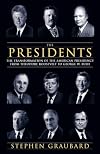
I'm reading this book at the moment, and so far I've found it thorough, interesting and easy to read. It's an overview of the Presidency throughout the 20th century, and yet it manages to retain quite a bit of detail. In style and objective, it's very much like Peter Hennessy's book 'The Prime Minister: The Office And Its Holders Since 1945' (which, incidentally, is superb).
One strange thing: I'm nearly at the end of the Truman chapter now, and I've just noticed that Graubard has skipped show more over August 1945 without even the vaguest mention of America's dropping atomic bombs on Hiroshima and Nagasaki. The word 'Hiroshima' doesn't even appear in the index! The book generally goes into important decisions and relationships in a fair bit of detail, so this glaring omission is pretty staggering. show less
One strange thing: I'm nearly at the end of the Truman chapter now, and I've just noticed that Graubard has skipped show more over August 1945 without even the vaguest mention of America's dropping atomic bombs on Hiroshima and Nagasaki. The word 'Hiroshima' doesn't even appear in the index! The book generally goes into important decisions and relationships in a fair bit of detail, so this glaring omission is pretty staggering. show less
The Presidents: The Transformation of the American Presidency from Theodore Roosevelt to George W. Bush by Stephen Graubard
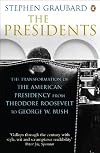
A comprerhensive and well written history of the Presidents of the United States that looks at each man individually and as part of the historic whole. Very interesting to see the men as individuals and to look at the paths that led them to the White house. Graubard effectively makes his case that the primary system has dumbed down the presidency and while the old political machines were corrupt and undemocratic they did elevate some great men to the top office.
You May Also Like


Associated Authors
Statistics
- Works
- 184
- Also by
- 2
- Members
- 962
- Popularity
- #26,759
- Rating
- 3.7
- Reviews
- 36
- ISBNs
- 82
- Languages
- 5