
Henry Kissinger (1923–2023)
Author of Diplomacy
About the Author
Former Secretary of State Henry Kissinger is the recipient of the Nobel Peace Prize, the Presidential Medal of Freedom, and the Medal of Liberty. He is the bestselling author of numerous books, including Years of Renewal and Diplomacy. Dr. Kissinger is currently the chair of Kissinger Associates, show more Inc., an international consulting firm. Born in Germany and a U.S. citizen since 1943, he lives in New York. Henry Kissinger was born in Fuerth, Germany on May 27, 1923. He came to the United States in 1938 and became a United States citizen in 1943. He served in the Army from 1943 to 1946. He graduated summa cum laude from Harvard College in 1950 and received M.A. and Ph.D. degrees from Harvard University in 1952 and 1954. From 1954 until 1969 he was a member of the faculty of Harvard University. He was the United States Secretary of State from September 22, 1973, until January 20, 1977. He also served as Assistant to the President for National Security Affairs from January 20, 1969, until November 3, 1975. He also held positions on the National Bipartisan Commission on Central America, the President's Foreign Intelligence Advisory Board, the Commission on Integrated Long-Term Strategy of the National Security Council and Defense Department, and the Defense Policy Board. He received several awards for his diplomatic work including the Nobel Peace Prize in 1973, the Presidential Medal of Freedom in 1977, and the Medal of Liberty in 1986. He has written numerous books including American Foreign Policy, A World Restored: Metternich, Castlereagh and the Problems of Peace, 1812-22, The White House Years, Years of Upheaval, Diplomacy, Years of Renewal, and On China. In 2014, his book entitled World Order was listed as a New York Times bestseller. He has also published numerous articles on United States foreign policy, international affairs and diplomatic history. He is currently the chairman of Kissinger Associates, Inc., an international consulting firm. (Bowker Author Biography) show less
Series
Works by Henry Kissinger
World Order: Reflections on the Character of Nations and the Course of History (2014) 1,166 copies, 12 reviews
Does America Need a Foreign Policy? : Toward a Diplomacy for the 21st Century (2001) 396 copies, 3 reviews
A World Restored: Metternich, Castlereagh and the Problems of Peace, 1812-1822 (1973) 279 copies, 3 reviews
Ending the Vietnam War: A History of America's Involvement in and Extrication from the Vietnam War (2003) 108 copies
Renewing the Atlantic partnership: report of an independent task force sponsored by the Council on Foreign Relations (2004) 6 copies
שנותי בבית הלבן :א' 3 copies
Sfida all'Occidente 3 copies
Grossmacht Diplomatie 2 copies
The Kissinger Report: NSSM-200 Implications of Worldwide Population Growth for U.S. Security Interests (2019) 2 copies
Henry Kissinger Foreign Policy E-book Boxed Set: Crisis, Does America Need a Foreign Policy?, and Diplomacy (2013) 2 copies
THE WHITE HOUSE YEARS, YEARS IF UPHEAVAL, DIPLOMACY, YEARS OF RENEWAL 4 HARDBACK BOOKS (MEMOIRS) (1979) 2 copies
The Future of U.S.-Chinese Relations: Conflict Is a Choice, Not a Necessity [journal article] 1 copy
The United States Department of State: Americana Fund for Furnishings for Diplomatic Reception Rooms 1 copy
Vodstvo 1 copy
Afirmaciones Públicas. 1 copy
Years of Upheaval - Volume 1 1 copy
Memoiren 1 copy
World Leaders Past & Present 1 copy
Memoiren 1 copy
Associated Works
On the Firing Line: The Public Life of Our Public Figures (1989) — Contributor — 127 copies, 1 review
Presidential Command: Power, Leadership, and the Making of Foreign Policy from Richard Nixon to George W. Bush (2009) — Introduction — 50 copies
You Are Not Forgotten : A Family's Quest for Truth and the Founding of the National League of Families (2008) — Foreword, some editions — 2 copies
Tagged
Common Knowledge
- Legal name
- Kissinger, Henry Alfred
- Other names
- Kissinger, Heinz Alfred (birth name)
- Birthdate
- 1923-05-27
- Date of death
- 2023-11-29
- Gender
- male
- Education
- City College of New York (accounting)
Harvard University (A.B.|1950)
Harvard University (M.A.|1952)
Harvard University (Ph.D.|1954) - Occupations
- U.S. Secretary of State (1973-1977)
United States National Security Advisor (1969-1975)
diplomat
political scientist - Organizations
- Harvard University
U.S. Government
American Political Science Association
American Academy of Arts and Sciences
Council on Foreign Relations
Defense Policy Board (show all 11)
Richard Nixon administration (1969-1974)
Gerald R. Ford Administration (1974-1977)
Richard Nixon's cabinet (1973-1974 | Secretary of State)
Gerald R. Ford's cabinet (1974-1977 | Secretary of State)
United States Army (WWII) - Awards and honors
- Presidential Medal of Freedom (1977)
Order of the British Empire (Knight Commander)
Bronze Star
Order of St Michael and St George (Honorary Knight Commander, 1995) - Nationality
- USA
- Birthplace
- Fürth, Bavaria, Germany
- Places of residence
- Fürth, Bavaria, Germany
London, Middlesex, England, UK
Washington, D.C., USA
New York, New York, USA
Kent, Connecticut, USA - Place of death
- Connecticut, USA (at home)
- Map Location
- USA
Members
Discussions
Leadership — Six Studies in World Strategy — Limited Signed First Edition in Easton Press Collectors (December 2022)
OT : Is this the WORST book design ever? in Folio Society Devotees (April 2022)
Reviews
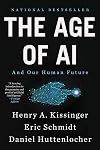
Public fascination with artificial intelligence (AI) has only increased since this book was published in 2021. AI technologies, such as Chat GPT, have entered mainstream society and are being used in everyday business work. Publicly, however, leaders from philosophy, business, and government do not appear yet ready to grapple with the deep human questions involved. For example, when do we defer to AI bots over human agency? Are we ready for AI tools of war – both offensively and show more defensively? How will this affect how we view ourselves as creatures of reason? In this book, Henry Kissinger, a dean at MIT Daniel Huttenlocher, and the CEO of Google Eric Schmidt grapple with similar issues at length.
The depth of thought in this work cannot be contained in a short book review. Needless to say, they cover the foreseeable issues through a historical lens. AI technology seems to portend an epochal transition in human civilization, much like the advent of the printing press. A big distinction is between assistive AI, under human direction, and autonomous AI, which directs us. Also in this realm, the prospect of artificial general intelligence – that is, a sentient computer or android – looms large and frighteningly realistic.
AI can apply to many fields of human activity, like the military, healthcare, business, education, and scientific research. These examples and more are explicitly examined throughout this book. Not all are good, however. The prospect of AI weapons scares me deeply. United States policy is not to develop autonomous weapons, but what about other countries? Is there any plausible way to defend against such war? It seems inevitable that someone is going to try using such a weapon eventually, even if they are a rogue terrorist group. Do we have to go through another World War I to learn our lesson?
This book offers more intelligent questions than firm answers, and that is the authors’ apparent intention. We are at the early stages of mainstream adoption of this technology, and questions abound while certainty is scarce. As such, reading this socially focused book behooves anyone interested in seriously forecasting the repercussions on the world. I develop software for a living, on the micro-level, so a treatment like this on the macro-level is helpful to see coding’s impact down the road. My experience tells me that the issues raised are spot-on, and the treatment is even and balanced. As humans, are we ready for this? No, but reading this book will make a reader more prepared. show less
The depth of thought in this work cannot be contained in a short book review. Needless to say, they cover the foreseeable issues through a historical lens. AI technology seems to portend an epochal transition in human civilization, much like the advent of the printing press. A big distinction is between assistive AI, under human direction, and autonomous AI, which directs us. Also in this realm, the prospect of artificial general intelligence – that is, a sentient computer or android – looms large and frighteningly realistic.
AI can apply to many fields of human activity, like the military, healthcare, business, education, and scientific research. These examples and more are explicitly examined throughout this book. Not all are good, however. The prospect of AI weapons scares me deeply. United States policy is not to develop autonomous weapons, but what about other countries? Is there any plausible way to defend against such war? It seems inevitable that someone is going to try using such a weapon eventually, even if they are a rogue terrorist group. Do we have to go through another World War I to learn our lesson?
This book offers more intelligent questions than firm answers, and that is the authors’ apparent intention. We are at the early stages of mainstream adoption of this technology, and questions abound while certainty is scarce. As such, reading this socially focused book behooves anyone interested in seriously forecasting the repercussions on the world. I develop software for a living, on the micro-level, so a treatment like this on the macro-level is helpful to see coding’s impact down the road. My experience tells me that the issues raised are spot-on, and the treatment is even and balanced. As humans, are we ready for this? No, but reading this book will make a reader more prepared. show less
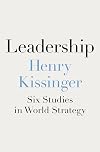
Henry Kissinger has been out of public life for half a century, just teaching and writing. He just turned 99. But when he showed up at Davos and made a few casual remarks about the Ukraine war, those remarks were reported as major news all over the world. So he's still a player.
His new book Leadership consists of case studies of six important twentieth century leaders and how they -- you know - lead. OK.
He begins with Konrad Adenauer, the man who governed a devastated, divided Germany at show more the end of the Second World War. His leadership model is one of humility and patience and roll with the punch. Playing a weak hand with incredible dignity and grace, step by step he brought Germany back into the community of Nations and the community of Europe. (Yes, the Marshall plan helped.) It was a remarkable achievement.
(Kissinger brushes aside the fact that Adenauer appointed many ex-Nazis to his official family. Well, yeah. )
From Adenauer he passes to Charles de Gaulle - from "humility" to "audacity" . De Gaulle escaped to England after the fall of France in World War II and presented himself to Churchill as "The Leader of the Free French". "What Free French", thought Churchill, but he gave him an office and a staff. De Gaulle forced himself on Roosevelt (who detested him) and wound up leading the French nation from the humiliation of capitulation to strong fierce sometimes arrogant bristling independence.
(Algeria? Did someone mention Algeria?)
His long chapter on Richard Nixon is perhaps the hardest to read. Of course when Kissinger discusses Nixon he is also ipso facto discussing his (Kissinger's) own foreign policy strategy and goals. So perhaps he is not the most unbiased reporter. He talks about Nixon's brave opening to Communist China, and his bringing stability to the world with meaningful Arms Limitations Treaties with the Soviet Union. Good stuff and worth remembering. Nixon wasn't all Watergate.
But Kissinger goes on to imply that Watergate was nothing more than dirty politics by the Democrats to wound a great president and blow up his careful long range plan for "Pax Americana" and a century of world Peace. If you buy this, you're probably Henry Kissinger.
There is a wistful chapter on Anwar Sadat and the shuttle diplomacy that produced the detente between Egypt and Israel. This far and no farther, alas. Kissinger is rather dismissive of the Camp David accords, miffed that Jimmy Carter didn't pay enough attention to the Kissinger playbook. Even great men can be small.
There is a fawning chapter on Margaret Thatcher. (K never loses a chance to remind you of their "personal friendship") Thatcher's outsider status allowed her to see clearly that England's economy had changed, and that England's policies would have to change too. She saw the future clearly, and acted. People got hurt.
My favorite chapter is about Singapore and the economic miracle that Lee Kuan Kew and his family created -- changing a poor city state dismissed by China into an innovative technical and economic powerhouse.
(BUT you have to read very carefully to get it that Lee was a "strongman" who brutally repressed political opposition and held high office for three decades! Ok by me, says Doctor K. )
So what is leadership? Humility, audacity, flexibility, ruthlessness, insight, conviction? Remembering the past, but looking to the future. Kissinger's coldly pragmatic Realpolitik had people gritting their teeth fifty years ago. Don't look for idealism and belief here. Kissinger likes results.
For the historian, a footnote. A lot of this has been covered in Kissinger's earlier books. But worth a read.
“ show less
His new book Leadership consists of case studies of six important twentieth century leaders and how they -- you know - lead. OK.
He begins with Konrad Adenauer, the man who governed a devastated, divided Germany at show more the end of the Second World War. His leadership model is one of humility and patience and roll with the punch. Playing a weak hand with incredible dignity and grace, step by step he brought Germany back into the community of Nations and the community of Europe. (Yes, the Marshall plan helped.) It was a remarkable achievement.
(Kissinger brushes aside the fact that Adenauer appointed many ex-Nazis to his official family. Well, yeah. )
From Adenauer he passes to Charles de Gaulle - from "humility" to "audacity" . De Gaulle escaped to England after the fall of France in World War II and presented himself to Churchill as "The Leader of the Free French". "What Free French", thought Churchill, but he gave him an office and a staff. De Gaulle forced himself on Roosevelt (who detested him) and wound up leading the French nation from the humiliation of capitulation to strong fierce sometimes arrogant bristling independence.
(Algeria? Did someone mention Algeria?)
His long chapter on Richard Nixon is perhaps the hardest to read. Of course when Kissinger discusses Nixon he is also ipso facto discussing his (Kissinger's) own foreign policy strategy and goals. So perhaps he is not the most unbiased reporter. He talks about Nixon's brave opening to Communist China, and his bringing stability to the world with meaningful Arms Limitations Treaties with the Soviet Union. Good stuff and worth remembering. Nixon wasn't all Watergate.
But Kissinger goes on to imply that Watergate was nothing more than dirty politics by the Democrats to wound a great president and blow up his careful long range plan for "Pax Americana" and a century of world Peace. If you buy this, you're probably Henry Kissinger.
There is a wistful chapter on Anwar Sadat and the shuttle diplomacy that produced the detente between Egypt and Israel. This far and no farther, alas. Kissinger is rather dismissive of the Camp David accords, miffed that Jimmy Carter didn't pay enough attention to the Kissinger playbook. Even great men can be small.
There is a fawning chapter on Margaret Thatcher. (K never loses a chance to remind you of their "personal friendship") Thatcher's outsider status allowed her to see clearly that England's economy had changed, and that England's policies would have to change too. She saw the future clearly, and acted. People got hurt.
My favorite chapter is about Singapore and the economic miracle that Lee Kuan Kew and his family created -- changing a poor city state dismissed by China into an innovative technical and economic powerhouse.
(BUT you have to read very carefully to get it that Lee was a "strongman" who brutally repressed political opposition and held high office for three decades! Ok by me, says Doctor K. )
So what is leadership? Humility, audacity, flexibility, ruthlessness, insight, conviction? Remembering the past, but looking to the future. Kissinger's coldly pragmatic Realpolitik had people gritting their teeth fifty years ago. Don't look for idealism and belief here. Kissinger likes results.
For the historian, a footnote. A lot of this has been covered in Kissinger's earlier books. But worth a read.
“ show less
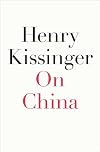
Chinese written history goes back more than 2500 years. Its earliest myths speak of a Yellow Emperor, who does not establish or found the civilization, but rather restores order to an already ancient kingdom. Throughout their long history, the Chinese thought of themselves as the center of the world, the “Middle Kingdom.” The Chinese believe their empire grew not from conquest, but rather by absorption of surrounding barbarian peoples who fervently wished to become Chinese. The Chinese show more persisted in perceiving themselves as innately superior to other ethnicities throughout their long history until much of their country was colonized by Europeans and the Japanese in the 19th century.
Henry Kissinger’s On China begins with a synopsis of that long history because he believes it is necessary in order to understand the path of Chinese diplomacy in the modern world. His account details Chinese diplomacy from the 19th century through the present day, with an emphasis on the period after the founding of the People’s Republic in 1948. He credits modern Chinese leaders from Mao Zedong through Deng Xiaoping through Jiang Zemin with having great patience and an extraordinarily long-term view of world history. Zhou Enlai, Kissinger’s counterpart under Mao, when asked what he thought of the French Revolution, replied that “it was too early to tell.”
An organizing theme in Kissinger’s analysis of relations between China and the West is the contrast between the board games of wei qi and chess. [Wei qi is the game known as “Go” in English.] The Chinese approach, like good strategy in wei qi, requires the avoidance of encirclement. The Western powers historically have sought head-on clashes with clear winners and losers, more like chess. Kissinger uses this analogy to describe Chinese behavior in the Korean War, the Taiwan Strait crises of the 1950’s, and China’s 1962 war with India.
Not renowned for his humility, Kissinger might have subtitled this book “How I personally Saved Western Civilization.” Nevertheless, he is an appropriate chronicler of recent Chinese history since he (along with Richard Nixon, Mao, and Zhou) may have had as much to do with China’s “opening up” to the West as any other human being. The implicit evaluations in his account are somewhat influenced by his personal interactions with the other dramatis personae. For example, Kissinger seems to admire Mao, crediting him with great wisdom despite the fact that his Great Leap Forward and Cultural Revolution resulted in starvation or political persecution for millions of Chinese, in addition to stultifying China’s economy for at least a decade.
Kissinger argues that China, unlike the Soviet Union, has not attempted to expand communism beyond its historical territorial limits. China’s principal strategic problem since the founding of the Peoples’ Republic has been that it is surrounded by unfriendly neighbor states that claim some of the territory historically ruled by China. For example, the Soviet Union sought to control Outer Mongolia despite its ostensible communal bonds of communist ideology. In addition, India and China have long disputed their boundary in the Himalayas, and even fought a short nasty war over its location in 1962. In Kissinger’s view, China’s intervention in the Korean War was not motivated so much by a desire to protect a fraternal communist state as it was a straight forward defense of its own frontier.
Nixon and Kissinger were relatively indifferent to Chinese internal politics, and were able to reach an accommodation with Mao over many international issues because of their mutual distrust of Soviet expansionism. China did not intervene in America’s Vietnam War in any meaningful way because it valued its growing relationship with the United States. In fact, China and Vietnam are historical rivals and even fought a brief war with each other once the United States abandoned the area.
The most difficult issue between the United States and China has been the status of Taiwan, which China views as its own breakaway province. Kissinger and Nixon had to contend with a powerful “China lobby” in the U.S. Congress that favored recognizing the Nationalist government in Taipei over Mao’s government. Nevertheless, Kissinger was able to reach an accommodation with the communists because of their patience and long-term approach to international relations. The temporary “solution” was embodied in the so-called Shanghai Communiqué, whereby the United States recognized that there was only one China, which included both the mainland and Taiwan. For their part, the Chinese communist government was willing to wait (Mao said for “a hundred years”) to settle who was to rule that entire single country. Mao did not renounced the potential use of force to unite the country and tested Western resolve with several probes by artillery shelling two offshore islands controlled by the Nationalists. However, communist forbearance from escalating the violence has made it possible to live in relative peace.
Mao’s successor, Deng Xiaoping, pretty much abandoned the centrally controlled communist economic ideology in favor of a more market-driven model. As a result, China’s economy has made great strides. Deng and his successors, however, have maintained tight control over the political process. China remains a one party state, with all political power residing in the “Party,” even if it remains communist in name only.
Kissinger muses on the tension between the “realist” and “idealist” schools of American foreign policy. Complicating the current relationship between the U.S. and China has been the idealistic movement in U.S. policy to push for the recognition of “human rights” in foreign countries, something that probably never occurred to Kissinger when he was in power. Ever pragmatic, Kissinger recognizes that a realistic approach to policy must be aware of the power of idealistic concepts to influence behavior. The Chinese, on the other hand, highly resent any effort by foreigners to influence the internal affairs of China.
Mutual distrust of the Soviet Union thrust the U.S. and China together. One might expect that the disintegration of the U.S.S.R. would provide the occasion to cease cooperation. In fact, one of the tensest periods in U.S.-China relations occurred in the aftermath of the collapse of the Soviet Union when the Chinese brutally suppressed their own people in the Tiananmen Square riots. Careful diplomacy by George H. W. Bush’s government assured the Chinese that the U.S. would not interfere with China’s internal politics, although it had to make some disparaging remarks to assuage American domestic opinion. Thus, despite the significant differences in perceptions and approaches, the U.S. and China have avoided armed conflict with one another since 1954 and have become highly integrated with each other’s economy.
In the final chapter, Kissinger discusses the difficulty in maintaining peaceful relations with China stemming from the inevitable tension caused by overlapping of national interests of the two nations in East Asia and the Western Pacific. Major challenges to dealing with China in the future will be how much the U.S. attempts to prod the Chinese toward establishing democratic institutions and how aggressively China asserts its new found economic and military power in that area. Kissinger remains cautiously optimistic that competent diplomacy on both sides can avoid serious conflict.
Evaluation: Although one can make fun of Kissinger’s enormous self-confidence, he really knows his stuff. This book is articulate, accurate, probing, and comprehensive. I highly recommend it. show less
Henry Kissinger’s On China begins with a synopsis of that long history because he believes it is necessary in order to understand the path of Chinese diplomacy in the modern world. His account details Chinese diplomacy from the 19th century through the present day, with an emphasis on the period after the founding of the People’s Republic in 1948. He credits modern Chinese leaders from Mao Zedong through Deng Xiaoping through Jiang Zemin with having great patience and an extraordinarily long-term view of world history. Zhou Enlai, Kissinger’s counterpart under Mao, when asked what he thought of the French Revolution, replied that “it was too early to tell.”
An organizing theme in Kissinger’s analysis of relations between China and the West is the contrast between the board games of wei qi and chess. [Wei qi is the game known as “Go” in English.] The Chinese approach, like good strategy in wei qi, requires the avoidance of encirclement. The Western powers historically have sought head-on clashes with clear winners and losers, more like chess. Kissinger uses this analogy to describe Chinese behavior in the Korean War, the Taiwan Strait crises of the 1950’s, and China’s 1962 war with India.
Not renowned for his humility, Kissinger might have subtitled this book “How I personally Saved Western Civilization.” Nevertheless, he is an appropriate chronicler of recent Chinese history since he (along with Richard Nixon, Mao, and Zhou) may have had as much to do with China’s “opening up” to the West as any other human being. The implicit evaluations in his account are somewhat influenced by his personal interactions with the other dramatis personae. For example, Kissinger seems to admire Mao, crediting him with great wisdom despite the fact that his Great Leap Forward and Cultural Revolution resulted in starvation or political persecution for millions of Chinese, in addition to stultifying China’s economy for at least a decade.
Kissinger argues that China, unlike the Soviet Union, has not attempted to expand communism beyond its historical territorial limits. China’s principal strategic problem since the founding of the Peoples’ Republic has been that it is surrounded by unfriendly neighbor states that claim some of the territory historically ruled by China. For example, the Soviet Union sought to control Outer Mongolia despite its ostensible communal bonds of communist ideology. In addition, India and China have long disputed their boundary in the Himalayas, and even fought a short nasty war over its location in 1962. In Kissinger’s view, China’s intervention in the Korean War was not motivated so much by a desire to protect a fraternal communist state as it was a straight forward defense of its own frontier.
Nixon and Kissinger were relatively indifferent to Chinese internal politics, and were able to reach an accommodation with Mao over many international issues because of their mutual distrust of Soviet expansionism. China did not intervene in America’s Vietnam War in any meaningful way because it valued its growing relationship with the United States. In fact, China and Vietnam are historical rivals and even fought a brief war with each other once the United States abandoned the area.
The most difficult issue between the United States and China has been the status of Taiwan, which China views as its own breakaway province. Kissinger and Nixon had to contend with a powerful “China lobby” in the U.S. Congress that favored recognizing the Nationalist government in Taipei over Mao’s government. Nevertheless, Kissinger was able to reach an accommodation with the communists because of their patience and long-term approach to international relations. The temporary “solution” was embodied in the so-called Shanghai Communiqué, whereby the United States recognized that there was only one China, which included both the mainland and Taiwan. For their part, the Chinese communist government was willing to wait (Mao said for “a hundred years”) to settle who was to rule that entire single country. Mao did not renounced the potential use of force to unite the country and tested Western resolve with several probes by artillery shelling two offshore islands controlled by the Nationalists. However, communist forbearance from escalating the violence has made it possible to live in relative peace.
Mao’s successor, Deng Xiaoping, pretty much abandoned the centrally controlled communist economic ideology in favor of a more market-driven model. As a result, China’s economy has made great strides. Deng and his successors, however, have maintained tight control over the political process. China remains a one party state, with all political power residing in the “Party,” even if it remains communist in name only.
Kissinger muses on the tension between the “realist” and “idealist” schools of American foreign policy. Complicating the current relationship between the U.S. and China has been the idealistic movement in U.S. policy to push for the recognition of “human rights” in foreign countries, something that probably never occurred to Kissinger when he was in power. Ever pragmatic, Kissinger recognizes that a realistic approach to policy must be aware of the power of idealistic concepts to influence behavior. The Chinese, on the other hand, highly resent any effort by foreigners to influence the internal affairs of China.
Mutual distrust of the Soviet Union thrust the U.S. and China together. One might expect that the disintegration of the U.S.S.R. would provide the occasion to cease cooperation. In fact, one of the tensest periods in U.S.-China relations occurred in the aftermath of the collapse of the Soviet Union when the Chinese brutally suppressed their own people in the Tiananmen Square riots. Careful diplomacy by George H. W. Bush’s government assured the Chinese that the U.S. would not interfere with China’s internal politics, although it had to make some disparaging remarks to assuage American domestic opinion. Thus, despite the significant differences in perceptions and approaches, the U.S. and China have avoided armed conflict with one another since 1954 and have become highly integrated with each other’s economy.
In the final chapter, Kissinger discusses the difficulty in maintaining peaceful relations with China stemming from the inevitable tension caused by overlapping of national interests of the two nations in East Asia and the Western Pacific. Major challenges to dealing with China in the future will be how much the U.S. attempts to prod the Chinese toward establishing democratic institutions and how aggressively China asserts its new found economic and military power in that area. Kissinger remains cautiously optimistic that competent diplomacy on both sides can avoid serious conflict.
Evaluation: Although one can make fun of Kissinger’s enormous self-confidence, he really knows his stuff. This book is articulate, accurate, probing, and comprehensive. I highly recommend it. show less
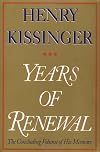
I have to admit, the bastard can write. It's frankly a gift that we have such a clear-sighted and readable account of what went on in the mind of one of the most consequential (for good and for very bad) statesmen of the 20th century. While it didn't make me come out on Kissinger's side, it did bring home that he was very often the voice of reason in a truly scary White House. That the roots of Reagan/Bush-style neoconservatism were already present in the Nixon and Ford administrations is show more very clear in this volume, even if Kissinger doesn't quite address it. show less
Lists
Europe (1)
Awards


You May Also Like


Associated Authors
Statistics
- Works
- 89
- Also by
- 7
- Members
- 9,105
- Popularity
- #2,639
- Rating
- 3.8
- Reviews
- 82
- ISBNs
- 316
- Languages
- 21
- Favorited
- 11


