
John Lewis Gaddis
Author of The Cold War: A New History
About the Author
John Lewis Gaddis is the Robert A. Lovett Professor of Military and Naval History at Yale University
Works by John Lewis Gaddis
Strategies of Containment: A Critical Appraisal of American National Security Policy during the Cold War (1982) — Author — 393 copies, 1 review
The United States and the End of the Cold War: Implications, Reconsiderations, Provocations (1992) 72 copies, 1 review
Războiul rece 2 copies
An American Life 1 copy
Associated Works
Tagged
Common Knowledge
- Canonical name
- Gaddis, John Lewis
- Birthdate
- 1941-04-02
- Gender
- male
- Education
- University of Texas at Austin (PhD|History|1968)
University of Texas at Austin (BA|History|1963) - Occupations
- historian
university professor - Organizations
- Yale University
Contemporary History Institute
Ohio University
Indiana University Southeast
Oxford University
University of Helsinki (show all 7)
Society for Historians of American Foreign Relations - Awards and honors
- National Humanities Medal (2005)
Pulitzer Prize (Biography or Autobiography ∙ 2012)
American History Book Prize (2012)
National Book Critics Circle Award (Biography ∙ 2011)
Harry S. Truman Book Award (2006)
Bancroft Prize (1973) (show all 9)
National Historical Society Prize (1973)
Stuart L. Bernath Prize (1973)
American Academy of Arts and Sciences (fellow) - Nationality
- USA
- Birthplace
- Cotulla, Texas, USA
- Associated Place (for map)
- Texas, USA
Members
Reviews

Menjünk a biztosra, idézzünk két mondatot a wikipédiáról: „A hidegháború sok nemzetközi feszültséggel járó korszak volt 1947 és 1989 között, amelyet a két szuperhatalom, az Amerikai Egyesült Államok és a Szovjetunió közötti folytonos rivalizálás jellemzett. A szó szoros értelmében vett háború nem tört ki a két ország között – a hidegháború a második világháború két nyertes nagyhatalmának ideológiai, kulturális, társadalmi, gazdasági, show more politikai összecsapásából állt.” Gaddis a Szovjetunió összeomlása után, biztos távolból tekint vissza az eseménysorra, nem köti meg gondolkodását – mint oly sokakét azok közül, akik benne nőttek fel -, hogy a hidegháborút állandósult állapotnak látja, az évszakok egymásutániságához hasonlatosnak. Tisztában van a meccs végeredményével: a kommunizmus majdnem olyan totális vereséget szenvedett (ha nem is a hadszíntéren), mint a náci birodalom, ideológiaként minden hitelét elveszítette, Kuba és Észak-Korea kivételével pár holdkóroson kívül senki sem vehette már komolyan. Az oroszok pedig megabirodalomból másodrangú regionális hatalommá zuhantak vissza, ezt a traumát pedig csak most próbálják meg feldolgozni egy Putyin nevezetű medveszelídítő segítségével. (Mindazonáltal ez a Putyin szerintem inkább drog, mint gyógyszer, de erről aligha tudnám meggyőzni a tovarisokat.) Ezzel együtt a szerző óvatos duhaj, nem a hidegháború egészét kívánja megfejteni, megelégszik azzal, hogy a hatvanas évek közepéig kíséri útjukon a történelmi szereplőket.
A szerző Tocqueville-lel nyit, aki már jó kétszáz éve megjósolta, hogy Amerika és Oroszország lesz a világ két meghatározó hatalma, mert bőségesen rendelkezésükre áll terület, ember és nyersanyag egyaránt. Holott már akkor is gyökeresen elütő politikai ideák uralkodtak a két államban: az Egyesült Államok a maga föderális demokráciájával a szabadpiacban és az individualizmusban hitt, az oroszok pedig a cári abszolutizmusban, ami felettébb kompatibilis azzal, ahogy később Sztálin elképzelte a kormányzást. Sokáig úgy tűnt, egyikük sem kívánja beteljesíteni a Torqueville-i jóslatot, az USA bezárkózott, elfordult a „vén Európától”, Oroszország pedig agyaglábakon álló óriásnak bizonyult, amikor megalázó vereséget szenvedett előbb a krími háborúban, majd a japánoktól is. Aztán jött az első világháború, és a helyzet megváltozott. Oroszországban váratlanul hatalomra jutottak a bolsevikok, Amerika pedig hasonlóan kalandos körülmények között a hadviselő felek között találta magát, aminek következtében a háború utáni rendezésben is szerepet kellett vállalnia. Ez az időszak két eszme születése fölött bábáskodott: az egyik ugye Leniné (ezt nem részletezném), a másik pedig Wilson elnöké, aki a nemzet önrendelkezés szószólójaként akarta felforgatni a világot. A két idea egy igen fontos dologban hasonlított: mindketten az egyetemesség igényével léptek fel, az egész világot akarták megváltani – és hát ha két univerzalitásra törekvő eszme találkozik, ott szem nem marad szárazon. Ám ekkor még a nagy összecsapás elhalasztódott, mert a jellegzetes újvilági izolacionalizmus felülkerekedett Wilson magasztos tervein, így az amerikaiak ismét faképnél hagyták Európát. És végső soron a szovjetek is kudarcot vallottak, hisz le kellett mondaniuk a lenini álomról, miszerint az egész földkerekségen elterjesztik a forradalmat. Az utód - Sztálin - megelégedett azzal, hogy (legalábbis ideiglenesen) kizárólag saját alattvalóit vegzálja.
Az, hogy az epic összezördülés végül mégis megtörtént, Hitlernek köszönhető. Az elfuserált kis osztrák ugyanis fogta magát, és lerohanta a Szovjetuniót, ezzel pedig egy addig felettébb simulékony gazdasági partnert kényszerített arra, hogy – akarata ellenére - a jó oldalra álljon. Az óceán túloldalán pedig Roosevelt pontosan átlátta, hogy Hitler a globális rendet – vagyis közvetve az USA elemi biztonsági és gazdasági érdekeit - veszélyezteti, így nem is nagyon tehetett mást, mint hogy Sztálin csapatában játssza le a meccset. A németek végül totális vereséget szenvedtek, az oroszok pedig azon kapták magukat, hogy Európa fele az övék, és hát nagyon nem akaródzott nekik kimenni onnan. Hitler hiányában pedig a nyugatiaknak is rá kellett jönniük, hogy a nácik helyett kaptak egy másik borzalmas szomszédot, aki folyton a mi kukánkba tömködi a szemetét, és az éjszaka közepén nekiáll szaxofonozni, mégpedig szarul. És lőn, máris ott húzódott kontinensünk kellős közepén a Vasfüggöny.
Persze a hidegháború nem csak a mi földrészünkön zajlott. A két domináns hatalom összeakasztotta a bajuszt Ázsiától Latin-Amerikáig mindenhol, és folyamatosan tesztelték a másik elszántságát. Nem csak anyagi vagy katonai támogatást kínáltak fel reménybeli csatlósaiknak, hanem ideológiával is házaltak: az USA a liberális demokráciával, a szovjetek pedig a szocializmussal, ami – antikolonialista mellékzöngéinek köszönhetően – úgy tűnt, kelendő a volt gyarmati országok között*. Volt is hacacáré rendesen, mindkét birodalom felfújta magát, mint a békagyík, és igyekezett rettenthetetlennek mutatkozni, lehetőleg olyan módon, hogy 1.) úgy tűnjön, a másik kezdte a fenyegetőzést 2.) közben ne kelljen tettekkel bizonyítani saját rettenthetetlenségüket.
De miért tudott a hidegháború hideg maradni, hogyan tudták csatározásaikat a perifériákra korlátozni? A válasz egyszerű: az atombomba miatt. Gaddis az egész hidegháború egyik kulcsának a nukleáris fegyverkezést tekinti, ami – nézete szerint – elejét vette az igazi totális háborúnak. Mert ha a két hatalom a hagyományos fegyverzetet fejlesztette volna, akkor óhatatlanul kedvük szottyant volna kipróbálni az erejüket. Ám ők az – olcsóbb – nukleáris arzenál növelésére szavaztak, miközben pontosan tudták (bármit is nyilatkoztak a köznek), hogy még ha meg is nyernének egy globális háborút, közben ők is elképzelhetetlen pusztítást fognak elszenvedni. Ez az atomparadoxon: amikor a felek kölcsönösen olyan erős csapásmérő eszközökkel rendelkeznek, hogy az már eleve kizárja azok használatát. Ennek köszönhető ez a történelmi patthelyzet, amiben a felek ugyan kakaskodnak egymással hol Koreában, hol Kubában, de ha úgy érzik, melegszik a helyzet, inkább meghátrálnak. Ennek viszont az volt az ára, hogy a konfliktus időben elnyúlt, mondhatjuk, a bénító véráldozatot tartósságra cserélték. Elképzelhető, hogy jó csere volt.
Gaddis (többek között) két kérdést tesz fel és válaszol meg:
1.) El lehetett volna kerülni a hidegháborút?
Gaddis szerint nem. Két univerzális eszme ilyen hadi potenciállal egyszerűen nem kerülheti el az összeütközést. Ennek felelőssége megoszlik a felek között, de azért Gaddis Sztálint tekinti inkább hibásnak, egyszerűen mert a bősz zsarnok valami elképesztően paranoiás volt**. Személyes biztonságát összemosta az állam biztonságával, ami végtelenül feszült helyzetet teremtett. Sztálin minden békülékeny gesztust a gyengeség jelének tekintett, egyszerűen képtelen volt felfogni, hogy Roosevelt vagy Eisenhower elnök a saját közvéleményének is felelősséggel tartozik, és engedményeket kell tennie szavazóinak. Amíg élt, lehetetlen volt a tartós megegyezés***.
2.) Megnyerhette volna a Szovjetunió a hidegháborút?
Gaddis szerint megint: nem. Bár a nukleáris patthelyzet egy ideig elfedte, de a kelet-európai forradalmak hamar nyilvánvalóvá tették, hogy a szovjet politikai modell önmagában, erős autoriter nyomás nélkül nem veheti fel a versenyt a fogyasztás vágyára épülő nyugati berendezkedésekkel. Ráadásul Sztálin, de Hruscsov Oroszországa is gazdasági értelemben riasztóan merev volt a nyugathoz képest, ami előrevetítette csúfos bukásukat. Amíg a nyugati demokráciák rugalmasan tudtak reagálni az egymást követő válságokra, addig a szocialisták nem voltak képesek elszakadni a merev tervutasításos gondolkodástól, még akkor sem, amikor nyilvánvalóvá vált, hogy ezzel csak állandósítják a rossz hatásfokú termelést és az ezzel járó permanens hiányt. Igazából nem az a csoda, hogy ’89-ben összeomlott a szovjet blokk, hanem hogy kihúzta odáig.
Remekbeszabott tanulmány, amilyen vaskos, olyan lendületes és összeszedett. Nem csak okosodtam tőle, még élveztem is. Hálás vagyok annak, aki eladta nekem. Nem adom vissza, duplaannyiért se.
* Gaddis mindazonáltal elég meggyőzően bizonyítja, hogy a szocializmus hatása a harmadik világra korlátozott maradt. Az olyan államok, mint Egyiptom, éppúgy kihasználták az oroszokat, mint azok őket, hitegették a Szovjetuniót, de közben csak a fegyvereikre és a pénzükre ácsingóztak. Másfelől az olyan kommunista sikertörténet is, mint amilyen a maoista Kína megszületése volt, a későbbiekben kontraproduktívnak bizonyult, mert „másfajta” kommunista alternatívákat honosított meg, ezzel pedig a Szovjetunió ideológiai riválisává nőtte ki magát.
** Mindent elárul Koba gondolkodásáról, hogy amikor a negyvenes évek elején kémei jelentették, az amerikaiak elkezdték fejleszteni az atombombát, lesöpörte az információt az asztalról, arra hivatkozva, hogy imperialista provokáció. Viszont ahogy jelezték neki, hogy az amerikai tudományos szaklapok egy idő óta nem közölnek az atomkutatással kapcsolatos cikkeket, rögtön ugrott a témára. Jó paranoiásként csak az az információ izgatta, amit nézete szerint el akartak titkolni előle, a nyilvánvalóan logikust, ha nem illett a világképébe, előszeretettel figyelmen kívül hagyta.
*** Hruscsov se volt sokkal jobb. A desztalinizációval reményteljes folyamatot indított el, és alighanem alatta pöttyet könnyebb volt szovjet állampolgárnak lenni, mint Sztálin alatt. De amíg Koba legalább kiszámítható volt, addig Hruscsov jóval labilisabb, érzelemvezéreltebb figurának bizonyult. show less
A szerző Tocqueville-lel nyit, aki már jó kétszáz éve megjósolta, hogy Amerika és Oroszország lesz a világ két meghatározó hatalma, mert bőségesen rendelkezésükre áll terület, ember és nyersanyag egyaránt. Holott már akkor is gyökeresen elütő politikai ideák uralkodtak a két államban: az Egyesült Államok a maga föderális demokráciájával a szabadpiacban és az individualizmusban hitt, az oroszok pedig a cári abszolutizmusban, ami felettébb kompatibilis azzal, ahogy később Sztálin elképzelte a kormányzást. Sokáig úgy tűnt, egyikük sem kívánja beteljesíteni a Torqueville-i jóslatot, az USA bezárkózott, elfordult a „vén Európától”, Oroszország pedig agyaglábakon álló óriásnak bizonyult, amikor megalázó vereséget szenvedett előbb a krími háborúban, majd a japánoktól is. Aztán jött az első világháború, és a helyzet megváltozott. Oroszországban váratlanul hatalomra jutottak a bolsevikok, Amerika pedig hasonlóan kalandos körülmények között a hadviselő felek között találta magát, aminek következtében a háború utáni rendezésben is szerepet kellett vállalnia. Ez az időszak két eszme születése fölött bábáskodott: az egyik ugye Leniné (ezt nem részletezném), a másik pedig Wilson elnöké, aki a nemzet önrendelkezés szószólójaként akarta felforgatni a világot. A két idea egy igen fontos dologban hasonlított: mindketten az egyetemesség igényével léptek fel, az egész világot akarták megváltani – és hát ha két univerzalitásra törekvő eszme találkozik, ott szem nem marad szárazon. Ám ekkor még a nagy összecsapás elhalasztódott, mert a jellegzetes újvilági izolacionalizmus felülkerekedett Wilson magasztos tervein, így az amerikaiak ismét faképnél hagyták Európát. És végső soron a szovjetek is kudarcot vallottak, hisz le kellett mondaniuk a lenini álomról, miszerint az egész földkerekségen elterjesztik a forradalmat. Az utód - Sztálin - megelégedett azzal, hogy (legalábbis ideiglenesen) kizárólag saját alattvalóit vegzálja.
Az, hogy az epic összezördülés végül mégis megtörtént, Hitlernek köszönhető. Az elfuserált kis osztrák ugyanis fogta magát, és lerohanta a Szovjetuniót, ezzel pedig egy addig felettébb simulékony gazdasági partnert kényszerített arra, hogy – akarata ellenére - a jó oldalra álljon. Az óceán túloldalán pedig Roosevelt pontosan átlátta, hogy Hitler a globális rendet – vagyis közvetve az USA elemi biztonsági és gazdasági érdekeit - veszélyezteti, így nem is nagyon tehetett mást, mint hogy Sztálin csapatában játssza le a meccset. A németek végül totális vereséget szenvedtek, az oroszok pedig azon kapták magukat, hogy Európa fele az övék, és hát nagyon nem akaródzott nekik kimenni onnan. Hitler hiányában pedig a nyugatiaknak is rá kellett jönniük, hogy a nácik helyett kaptak egy másik borzalmas szomszédot, aki folyton a mi kukánkba tömködi a szemetét, és az éjszaka közepén nekiáll szaxofonozni, mégpedig szarul. És lőn, máris ott húzódott kontinensünk kellős közepén a Vasfüggöny.
Persze a hidegháború nem csak a mi földrészünkön zajlott. A két domináns hatalom összeakasztotta a bajuszt Ázsiától Latin-Amerikáig mindenhol, és folyamatosan tesztelték a másik elszántságát. Nem csak anyagi vagy katonai támogatást kínáltak fel reménybeli csatlósaiknak, hanem ideológiával is házaltak: az USA a liberális demokráciával, a szovjetek pedig a szocializmussal, ami – antikolonialista mellékzöngéinek köszönhetően – úgy tűnt, kelendő a volt gyarmati országok között*. Volt is hacacáré rendesen, mindkét birodalom felfújta magát, mint a békagyík, és igyekezett rettenthetetlennek mutatkozni, lehetőleg olyan módon, hogy 1.) úgy tűnjön, a másik kezdte a fenyegetőzést 2.) közben ne kelljen tettekkel bizonyítani saját rettenthetetlenségüket.
De miért tudott a hidegháború hideg maradni, hogyan tudták csatározásaikat a perifériákra korlátozni? A válasz egyszerű: az atombomba miatt. Gaddis az egész hidegháború egyik kulcsának a nukleáris fegyverkezést tekinti, ami – nézete szerint – elejét vette az igazi totális háborúnak. Mert ha a két hatalom a hagyományos fegyverzetet fejlesztette volna, akkor óhatatlanul kedvük szottyant volna kipróbálni az erejüket. Ám ők az – olcsóbb – nukleáris arzenál növelésére szavaztak, miközben pontosan tudták (bármit is nyilatkoztak a köznek), hogy még ha meg is nyernének egy globális háborút, közben ők is elképzelhetetlen pusztítást fognak elszenvedni. Ez az atomparadoxon: amikor a felek kölcsönösen olyan erős csapásmérő eszközökkel rendelkeznek, hogy az már eleve kizárja azok használatát. Ennek köszönhető ez a történelmi patthelyzet, amiben a felek ugyan kakaskodnak egymással hol Koreában, hol Kubában, de ha úgy érzik, melegszik a helyzet, inkább meghátrálnak. Ennek viszont az volt az ára, hogy a konfliktus időben elnyúlt, mondhatjuk, a bénító véráldozatot tartósságra cserélték. Elképzelhető, hogy jó csere volt.
Gaddis (többek között) két kérdést tesz fel és válaszol meg:
1.) El lehetett volna kerülni a hidegháborút?
Gaddis szerint nem. Két univerzális eszme ilyen hadi potenciállal egyszerűen nem kerülheti el az összeütközést. Ennek felelőssége megoszlik a felek között, de azért Gaddis Sztálint tekinti inkább hibásnak, egyszerűen mert a bősz zsarnok valami elképesztően paranoiás volt**. Személyes biztonságát összemosta az állam biztonságával, ami végtelenül feszült helyzetet teremtett. Sztálin minden békülékeny gesztust a gyengeség jelének tekintett, egyszerűen képtelen volt felfogni, hogy Roosevelt vagy Eisenhower elnök a saját közvéleményének is felelősséggel tartozik, és engedményeket kell tennie szavazóinak. Amíg élt, lehetetlen volt a tartós megegyezés***.
2.) Megnyerhette volna a Szovjetunió a hidegháborút?
Gaddis szerint megint: nem. Bár a nukleáris patthelyzet egy ideig elfedte, de a kelet-európai forradalmak hamar nyilvánvalóvá tették, hogy a szovjet politikai modell önmagában, erős autoriter nyomás nélkül nem veheti fel a versenyt a fogyasztás vágyára épülő nyugati berendezkedésekkel. Ráadásul Sztálin, de Hruscsov Oroszországa is gazdasági értelemben riasztóan merev volt a nyugathoz képest, ami előrevetítette csúfos bukásukat. Amíg a nyugati demokráciák rugalmasan tudtak reagálni az egymást követő válságokra, addig a szocialisták nem voltak képesek elszakadni a merev tervutasításos gondolkodástól, még akkor sem, amikor nyilvánvalóvá vált, hogy ezzel csak állandósítják a rossz hatásfokú termelést és az ezzel járó permanens hiányt. Igazából nem az a csoda, hogy ’89-ben összeomlott a szovjet blokk, hanem hogy kihúzta odáig.
Remekbeszabott tanulmány, amilyen vaskos, olyan lendületes és összeszedett. Nem csak okosodtam tőle, még élveztem is. Hálás vagyok annak, aki eladta nekem. Nem adom vissza, duplaannyiért se.
* Gaddis mindazonáltal elég meggyőzően bizonyítja, hogy a szocializmus hatása a harmadik világra korlátozott maradt. Az olyan államok, mint Egyiptom, éppúgy kihasználták az oroszokat, mint azok őket, hitegették a Szovjetuniót, de közben csak a fegyvereikre és a pénzükre ácsingóztak. Másfelől az olyan kommunista sikertörténet is, mint amilyen a maoista Kína megszületése volt, a későbbiekben kontraproduktívnak bizonyult, mert „másfajta” kommunista alternatívákat honosított meg, ezzel pedig a Szovjetunió ideológiai riválisává nőtte ki magát.
** Mindent elárul Koba gondolkodásáról, hogy amikor a negyvenes évek elején kémei jelentették, az amerikaiak elkezdték fejleszteni az atombombát, lesöpörte az információt az asztalról, arra hivatkozva, hogy imperialista provokáció. Viszont ahogy jelezték neki, hogy az amerikai tudományos szaklapok egy idő óta nem közölnek az atomkutatással kapcsolatos cikkeket, rögtön ugrott a témára. Jó paranoiásként csak az az információ izgatta, amit nézete szerint el akartak titkolni előle, a nyilvánvalóan logikust, ha nem illett a világképébe, előszeretettel figyelmen kívül hagyta.
*** Hruscsov se volt sokkal jobb. A desztalinizációval reményteljes folyamatot indított el, és alighanem alatta pöttyet könnyebb volt szovjet állampolgárnak lenni, mint Sztálin alatt. De amíg Koba legalább kiszámítható volt, addig Hruscsov jóval labilisabb, érzelemvezéreltebb figurának bizonyult. show less
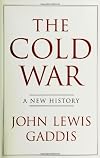
The rivalry of the “official” Cold War may have ended with the dissolution of the Soviet Union in December, 1991, but John Lewis Gaddis still has an ax to grind. In his mind, the USSR was never anything but The Evil Empire, and the U.S. never had anything but good intentions. And the most important factor in striking down that Evil was none other than that alleged towering paragon of strategy and tactics, Ronald Reagan.
The Cold War: A New History provides an excellent example of the show more ideological biases of a historian creating a skewed misrepresentation of the facts about an era in order to conform with biased perceptions. This so-called “new history” is full of sweeping generalizations, unwarranted conclusions, and dubious assertions that scream out bias at every turn. I’m just going to point out a few that irritated me more than the rest.
Gaddis is an unabashed Reagan idolizer, although he himself is the only "authority" he can come up with to footnote when he bestows lavish praises upon Reagan. His thesis is that it was Ronald Reagan, more than anyone or any event, who was responsible for the collapse of the Soviet Union and end of the Cold War. In support of this dubious allegation, Gaddis asserts: “Reagan was as skillful a politician as the nation had seen for many years, and one of its sharpest grand strategists ever.” In a sentence worthy of Animal Farm, Gaddis declares about Reagan, “His strength lay in his ability to see beyond complexity to simplicity.”
Almost all other accounts tell a different story. Reagan’s biographer Lou Cannon wrote that Reagan came to the White House “notoriously ill-informed about foreign affairs” and that Bill Clark, his second national security advisor, found that he could only teach Reagan about issues by showing him movies.
Robert McFarlane (quoted by Pulitzer Prize winning historian Richard Rhodes, in Arsenals of Folly) explained that the fundamentalist Reagan derived his commitment to strategic defense “primarily from his belief that Armageddon was approaching.” McFarlane went on:
"He sees himself as a romantic, heroic figure who believes in the power of a hero to overcome even Armageddon. I think it may come from Hollywood.” Frank Carlucci, one of Reagan’s five national security advisers, confirmed that Reagan was guided in his decision-making by the belief that, as Reagan said in 1971, “Everything is in place for the battle of Armageddon and the second coming of Christ.”
Without the Bible (or a script) around as a guide, however, Reagan was in trouble. When he met with Gorbachev, he read from a pocket set of color-coded cue cards he carried, full of clichés. As Rhodes reported, Gorbachev was appalled at Reagan’s index cards with their vapid maxims and his initial unwillingness to engage Gorbachev directly, recalling ‘the blank, uncomprehending eyes of the president, who mumbled banalities from a piece of paper.’”
Rhodes tells about the time Reagan dropped his cue cards, and was literally unable to continue with the meeting after that.
But let’s go back to the beginning, when the seeds for the Cold War were just getting planted. Gaddis traces the intellectual underpinnings of the Cold War, which followed World War II, to the visions of both Wilson and Lenin at the end of World War I.
To me, the most egregious misrepresentation in the book is the portrait Gaddis paints of Woodrow Wilson, one of the most reprehensible presidents in our American pantheon. Wilson, yet another president guided by his understanding of the Bible (this characteristic seems to elevate the decision-making process of a president in Gaddis’s estimation), is made out by Gaddis to be democracy’s champion. Wilson, Gaddis explains, saw a world that could be made better by capitalism, and Lenin saw one that could be improved by socialism. So far, so good. But then Gaddis continues that although both ideologies were meant to offer hope, one of them (socialism) depended upon the creation of fear, while the other "had no need to do so. Therein lay the basic ideological asymmetry of the Cold War.”
Writing this about Wilson is just pure, unadulterated garbage. Wilson is the president who, as World War I began, put into force a 200,000 member American Protective League, who reported to the Justice Department’s new internal security agency headed by J. Edgar Hoover, and whose mission was to spy on neighbors and coworkers for “loyalty.” Another force, the “Minute Men,” ultimately exceeding over 100,000 in number, gave patriotic speeches before meetings, movies, and shows. George Creel, named by Wilson to head the Minute Men, told his workers that "fear was an important element to be bred in the civilian population" (my emphasis). Creel’s organization also advised citizens to spy on one another and “If you find a disloyal person in your search, give his name to the Department of Justice in Washington and tell them where to find him.”
Wilson’s government arrested union men for “disloyalty,” and put socialist presidential candidate Eugene Debs in prison for ten years for “opposing the war.” Wisconsin Congressman Victor Berger, the first Socialist elected to Congress, was sentenced to twenty years under the Wilson-initiated Espionage Act for doing the same. [The Espionage Act of June, 1917, made it a crime to “convey false reports or false statements with intent to interfere with the operation or success of the military or naval forces of the United States or to promote the success of its enemies when the United States is at war, to cause or attempt to cause insubordination, disloyalty, mutiny, refusal of duty, in the military or naval forces of the United States, or to willfully obstruct the recruiting or enlistment service of the United States.” The violator of this Act could be fined $10,000 and sentenced to twenty years in prison. In May 1918, Congress at Wilson’s request increased the government’s power to control opinion with the Sedition Act, which basically was a set of amendments to the Espionage Act. It added to the list of punishable crimes anyone who used “disloyal, scurrilous, profane or abusive language” about the U.S. government, the armed forces, the flag, or the Constitution. The Sedition Act was repealed on December 13, 1920, but the Espionage Act is still in force.]
It is also true that Wilson’s devotion to hope and liberty only extended to the “superior” white race. His response to seeing the racist movie “Birth of a Nation” is indicative of his attitude. ("The Birth of A Nation," the highest grossing film of the silent film era, portrays black men (played by white actors in blackface) as unintelligent and sexually aggressive towards white women, and shows the Ku Klux Klan as a heroic force.) Reportedly Wilson said, “My only regret is that it is all so terribly true.” When the NAACP tried to have the movie banned, Wilson’s endorsement was used to promote the film for months, before political pressure caused him to dissociate himself from it. But Wilson of course is also the one who allowed his Cabinet leaders to extend segregation throughout the federal bureaucracy, telling black leaders that it would reduce friction and therefore “It is as far as possible from being a movement against the Negroes. I sincerely believe it to be in their interest.” (For more on Wilson, see The Illusion of Victory: America in World War I by Thomas Fleming).
Racism is also absent from Gaddis’s very brief coverage of the McCarthy Era during the Cold War, when Wisconsin Senator Joseph McCarthy led a witch hunt against American citizens, and in particular those who had “leftist” sympathies. During the McCarthy era (lasting roughly from the late 1940s to the late 1950s), thousands of Americans were accused of being Communists or communist sympathizers and became the subject of aggressive investigations and questioning before government or private-industry panels, committees and agencies. In spite of inconclusive or questionable evidence, many people suffered loss of employment, destruction of their careers, and even imprisonment. Some committed suicide. Among those who lost their jobs was the brilliant J. Robert Oppenheimer, who helped develop the atomic bomb in World War II. His opposition to its continued use and to the development of the hydrogen bomb was seen as “proof” of his disloyalty.
It also happened that many prominent blacks during this time were determined to have leftist sympathies, since vocalizing objections to the treatment of blacks in America was also considered disloyal. Among those attacked were Paul Robeson, Langston Hughes, Lena Horne, and W.E.B. DuBois.
This horrible period in American history merits a whole one and one half paragraphs in this book, with Gaddis’s summarizing it by commenting: “with the onset of McCarthyism in the United States and with irrefutable evidence that espionage had taken place on both sides of the Atlantic….” In other words, it wasn’t so bad, and anyway, McCarthy was right.
The entire orientation of this book is that the U.S. was a largely innocent force of good in the world, and the USSR wanted nothing more than to sabotage the American way of life. But the so-called American way of life was (1) only open to whites; (2) only free to the extent the government decided to allow it at any one time; and (3) characterized by organizations dedicated to spying and sabotage that were every bit as nefarious as those operating in the Soviet Union.
George Kennan, whose 1946 analysis of the Soviet Union became the basis for U.S. Cold War strategy, stated that he “believed that the American focus on the Russian military threat was a misguided American projection onto Russia of a danger that would confer legitimacy on the continued existence of the immense military establishment that the formerly isolationist United States had built up during the war.” (“Wise Men Against the Grain,” William Pfaff, NYReview of Books, June 9, 2011)
Years after the fact, “tidbits” get admitted, such as:
The overthrow of the democratically elected but leftist Iranian Prime Minister Mossadegh in the 1950’s [this mission led by none other than Kermit Roosevelt, Jr., grandson of Theodore, and the blowback for which included the taking of American hostages in 1979];
Operation Northwoods, a 1962 plan drafted by the Joint Chiefs of Staff, calling for terrorist attacks on Americans secretly committed by the U.S. but blamed on the Cubans to justify an attack on Cuba;
The CIA-backed ouster of the democratically elected leftist President Allende of Chile in 1973;
CIA-backed Contra invasions in Nicaragua directed by Reagan in the 1980’s; [In 1984 the CIA mined three Nicaraguan harbors. When Nicaragua took this action to the World Court, which an $18 billion judgment was rendered against the U.S. In response, the U.S. refused to recognize the Court's jurisdiction in the case.]
One could go on and on.
None of these episodes are explored by Gaddis. His recital of Cold War crimes is almost exclusively limited to those committed by the USSR.
Gaddis continues his biased reporting into the modern era. He devotes considerable verbiage to the multiple crises in the early 1960’s, attributing blame on Krushchev for bringing us to the brink of nuclear war. Yet Frederick Kempe, in his convincing analysis of John F. Kennedy’s contributions to the Cold War (Berlin 1961), concludes that "Kennedy’s indecisiveness in the early states of the [Berlin wall] crisis produced the wall itself, an exponential increase in East-West tension, and, in the half-century that followed, other fateful consequences that included the Cuban missile crisis…”
Yes, it was Krushchev who sent the missiles to Cuba. But Krushchev also needed to restore his prestige after Kennedy approved The Bay of Pigs Invasion. The Bay of Pigs Invasion was an unsuccessful invasion of Cuba by a CIA-trained force of Cuban exiles, with support and encouragement from the US government, in an attempt to overthrow the Cuban government of Fidel Castro. The invasion was launched in April 1961, less than three months after John F. Kennedy assumed the presidency in the United States. (Nixon proposed it, Eisenhower planned it, and Kennedy approved it.)
Gaddis, however, claims that all the blame should be laid on the door of Krushchev; it was he who did not think things through, and “allowed his ideological romanticism to overrun whatever capacity he had for strategic analysis.” [Sounds to me like an analysis of The Bay of Pigs invasion….] “He was like a petulant child,” Gaddis asserts, and claims that Khrushchev got some of what he wanted “as children sometimes do.” There was no suggestion whatsoever that the fault was Kennedy’s blunders rather than Krushchev’s tantrums.
(Gaddis claims that the Cuban missile crisis is “universally regarded now as the closest the world came, during the second half of the 20th century, to a third world war…” This is patently untrue, however, and represents yet another attempt by Gaddis to put the onus for irrationally risky behavior on the Soviets. In 1983, a nine-day NATO military exercise designated ABLE ARCHER 83 came closer. The drill turned out to be different from previous ones, and a bit too realistic. Robert Gates is among those who observes that the KGB was convinced American forces had begun a countdown to nuclear war. The Soviets took a number of steps to enhance their military readiness short of mobilization. Afterwards, Reagan was “surprised and shocked that the Soviets had taken his years of militant rhetoric and his massive arms buildup seriously.” (Gates, Robert M., From the Shadows: The Ultimate Insider’s Story of Five Presidents and How They Won the Cold War, 1996, and Rhodes, Arsenals of Folly.) As British author Fred Inglis points out (The Cruel Peace: Everyday Life and the Cold War):
"The foreign policy of the Reagan years turned out to be an unappetizing mixture of grudging hypercaution at the arms limitation negotiating tables, reckless and unendearing braggartry in front of the microphones, and minor acts of war that combined bullying and cowardice in about equal proportions.”
As for Gorbachev, whose brilliance and vision is noted by other historians, Gaddis is condescending, charging that U.S. Secretary of State Shultz had to “educate” Gorbachev on economics. (Here he footnotes Shultz’s self-serving memoirs.) Gaddis even goes so far as to aver that when Gorbechev made a dramatic speech, he was “borrowing a trick from Reagan.” Good grief! And finally, he holds that Gorbachev, who was was awarded the Nobel Peace Prize in 1990 for his role in ending the Cold War, “was never a leader in the manner of Vaclav Havel, John Paul II, Deng Xiaoping, Margaret Thatcher, Ronald Reagan, Lech Walesa – even Boris Yeltsin.” Boris YELTSIN? Come on! As Neil MacFarlane, professor of international relations at Oxford says of Yeltsin, “his record of governance is pretty mixed, and the government was substantially weakened during his time.” It was also Yeltsin who failed to control the growing political influence of wealthy oligarchs who still wield inordinate power in Russia. After Yeltsin’s death, the Economist reported that:
"Mr Yeltsin's great rival, Mikhail Gorbachev, reflected the mood of most Russians when, amid the polite tributes and saccharine television montages, he alluded to the dead man's “serious mistakes”. Mr Yeltsin's had been a “tragic fate”, said Mr Gorbachev. Even before he left office, a majority of Russians, from Kaliningrad to Kamchatka, despised him, partly on account of the raging inflation, unpaid salaries and oligarchic larceny of his rule, but even more for the shame many thought he brought on Russia through his clownish drunkenness.”
It is apparent that for Gaddis to elevate the role of Gorbachev, even over Yeltsin, would be to diminish the role of Reagan, a path the author wants to avoid. In Rhodes’s history of the Cold War, however, Gorbachev is the incontrovertible hero of the situation.
Gaddis begins and ends his book with a discussion of the nature of war, as part of his eventual argument that the Cold War changed that nature forever. He cites Thucydides who predicted that there would always be a propensity for violence, “human nature being what it is.” Gaddis draws the ridiculous conclusion, however, that because of the success of the political game strategy Mutual Assured Destruction (or MAD), “Contrary to the lesson Thucydides drew from the greatest war of his time, human nature did change – and the shock of Hiroshima and Nagasaki began the process by which it did so.” WTF? MAD is a strategy that in fact is based on the inevitability of violence, that posits that only by each side holding a gun to each other’s head simultaneously (and assuming participation by rational actors), would that violence be deterred. Note: the violence is deterred by a rational calculation of odds. There is no change in propensity! The relentless continuation of wars and skirmishes since the Cold War make manifest the utter absurdity of Gaddis’s argument.
Gaddis has two main conclusions about the Cold War in general. One is that the Cold War is “the point at which military strength, a defining characteristic of ‘power’ itself for the past five centuries, ceased to be that.” Gosh, that’s not what the military-industrial complex thinks. I wonder if Raytheon, Boeing, Northrup Grumman, General Dynamics, and so on have heard the news…. The second is that the Cold War “disproved Marx’s indictment of capitalism as elevating greed above all else.” I’m glad to hear that. All those CEOs making millions and the bankers taking advantage of the poor’s desire for housing in order to ensure their own enrichment are just aberrations. Thank heavens!
Evaluation: Beware of books claiming to be history books! This one doesn’t meet the most basic criteria of objective reporting of the facts. show less
The Cold War: A New History provides an excellent example of the show more ideological biases of a historian creating a skewed misrepresentation of the facts about an era in order to conform with biased perceptions. This so-called “new history” is full of sweeping generalizations, unwarranted conclusions, and dubious assertions that scream out bias at every turn. I’m just going to point out a few that irritated me more than the rest.
Gaddis is an unabashed Reagan idolizer, although he himself is the only "authority" he can come up with to footnote when he bestows lavish praises upon Reagan. His thesis is that it was Ronald Reagan, more than anyone or any event, who was responsible for the collapse of the Soviet Union and end of the Cold War. In support of this dubious allegation, Gaddis asserts: “Reagan was as skillful a politician as the nation had seen for many years, and one of its sharpest grand strategists ever.” In a sentence worthy of Animal Farm, Gaddis declares about Reagan, “His strength lay in his ability to see beyond complexity to simplicity.”
Almost all other accounts tell a different story. Reagan’s biographer Lou Cannon wrote that Reagan came to the White House “notoriously ill-informed about foreign affairs” and that Bill Clark, his second national security advisor, found that he could only teach Reagan about issues by showing him movies.
Robert McFarlane (quoted by Pulitzer Prize winning historian Richard Rhodes, in Arsenals of Folly) explained that the fundamentalist Reagan derived his commitment to strategic defense “primarily from his belief that Armageddon was approaching.” McFarlane went on:
"He sees himself as a romantic, heroic figure who believes in the power of a hero to overcome even Armageddon. I think it may come from Hollywood.” Frank Carlucci, one of Reagan’s five national security advisers, confirmed that Reagan was guided in his decision-making by the belief that, as Reagan said in 1971, “Everything is in place for the battle of Armageddon and the second coming of Christ.”
Without the Bible (or a script) around as a guide, however, Reagan was in trouble. When he met with Gorbachev, he read from a pocket set of color-coded cue cards he carried, full of clichés. As Rhodes reported, Gorbachev was appalled at Reagan’s index cards with their vapid maxims and his initial unwillingness to engage Gorbachev directly, recalling ‘the blank, uncomprehending eyes of the president, who mumbled banalities from a piece of paper.’”
Rhodes tells about the time Reagan dropped his cue cards, and was literally unable to continue with the meeting after that.
But let’s go back to the beginning, when the seeds for the Cold War were just getting planted. Gaddis traces the intellectual underpinnings of the Cold War, which followed World War II, to the visions of both Wilson and Lenin at the end of World War I.
To me, the most egregious misrepresentation in the book is the portrait Gaddis paints of Woodrow Wilson, one of the most reprehensible presidents in our American pantheon. Wilson, yet another president guided by his understanding of the Bible (this characteristic seems to elevate the decision-making process of a president in Gaddis’s estimation), is made out by Gaddis to be democracy’s champion. Wilson, Gaddis explains, saw a world that could be made better by capitalism, and Lenin saw one that could be improved by socialism. So far, so good. But then Gaddis continues that although both ideologies were meant to offer hope, one of them (socialism) depended upon the creation of fear, while the other "had no need to do so. Therein lay the basic ideological asymmetry of the Cold War.”
Writing this about Wilson is just pure, unadulterated garbage. Wilson is the president who, as World War I began, put into force a 200,000 member American Protective League, who reported to the Justice Department’s new internal security agency headed by J. Edgar Hoover, and whose mission was to spy on neighbors and coworkers for “loyalty.” Another force, the “Minute Men,” ultimately exceeding over 100,000 in number, gave patriotic speeches before meetings, movies, and shows. George Creel, named by Wilson to head the Minute Men, told his workers that "fear was an important element to be bred in the civilian population" (my emphasis). Creel’s organization also advised citizens to spy on one another and “If you find a disloyal person in your search, give his name to the Department of Justice in Washington and tell them where to find him.”
Wilson’s government arrested union men for “disloyalty,” and put socialist presidential candidate Eugene Debs in prison for ten years for “opposing the war.” Wisconsin Congressman Victor Berger, the first Socialist elected to Congress, was sentenced to twenty years under the Wilson-initiated Espionage Act for doing the same. [The Espionage Act of June, 1917, made it a crime to “convey false reports or false statements with intent to interfere with the operation or success of the military or naval forces of the United States or to promote the success of its enemies when the United States is at war, to cause or attempt to cause insubordination, disloyalty, mutiny, refusal of duty, in the military or naval forces of the United States, or to willfully obstruct the recruiting or enlistment service of the United States.” The violator of this Act could be fined $10,000 and sentenced to twenty years in prison. In May 1918, Congress at Wilson’s request increased the government’s power to control opinion with the Sedition Act, which basically was a set of amendments to the Espionage Act. It added to the list of punishable crimes anyone who used “disloyal, scurrilous, profane or abusive language” about the U.S. government, the armed forces, the flag, or the Constitution. The Sedition Act was repealed on December 13, 1920, but the Espionage Act is still in force.]
It is also true that Wilson’s devotion to hope and liberty only extended to the “superior” white race. His response to seeing the racist movie “Birth of a Nation” is indicative of his attitude. ("The Birth of A Nation," the highest grossing film of the silent film era, portrays black men (played by white actors in blackface) as unintelligent and sexually aggressive towards white women, and shows the Ku Klux Klan as a heroic force.) Reportedly Wilson said, “My only regret is that it is all so terribly true.” When the NAACP tried to have the movie banned, Wilson’s endorsement was used to promote the film for months, before political pressure caused him to dissociate himself from it. But Wilson of course is also the one who allowed his Cabinet leaders to extend segregation throughout the federal bureaucracy, telling black leaders that it would reduce friction and therefore “It is as far as possible from being a movement against the Negroes. I sincerely believe it to be in their interest.” (For more on Wilson, see The Illusion of Victory: America in World War I by Thomas Fleming).
Racism is also absent from Gaddis’s very brief coverage of the McCarthy Era during the Cold War, when Wisconsin Senator Joseph McCarthy led a witch hunt against American citizens, and in particular those who had “leftist” sympathies. During the McCarthy era (lasting roughly from the late 1940s to the late 1950s), thousands of Americans were accused of being Communists or communist sympathizers and became the subject of aggressive investigations and questioning before government or private-industry panels, committees and agencies. In spite of inconclusive or questionable evidence, many people suffered loss of employment, destruction of their careers, and even imprisonment. Some committed suicide. Among those who lost their jobs was the brilliant J. Robert Oppenheimer, who helped develop the atomic bomb in World War II. His opposition to its continued use and to the development of the hydrogen bomb was seen as “proof” of his disloyalty.
It also happened that many prominent blacks during this time were determined to have leftist sympathies, since vocalizing objections to the treatment of blacks in America was also considered disloyal. Among those attacked were Paul Robeson, Langston Hughes, Lena Horne, and W.E.B. DuBois.
This horrible period in American history merits a whole one and one half paragraphs in this book, with Gaddis’s summarizing it by commenting: “with the onset of McCarthyism in the United States and with irrefutable evidence that espionage had taken place on both sides of the Atlantic….” In other words, it wasn’t so bad, and anyway, McCarthy was right.
The entire orientation of this book is that the U.S. was a largely innocent force of good in the world, and the USSR wanted nothing more than to sabotage the American way of life. But the so-called American way of life was (1) only open to whites; (2) only free to the extent the government decided to allow it at any one time; and (3) characterized by organizations dedicated to spying and sabotage that were every bit as nefarious as those operating in the Soviet Union.
George Kennan, whose 1946 analysis of the Soviet Union became the basis for U.S. Cold War strategy, stated that he “believed that the American focus on the Russian military threat was a misguided American projection onto Russia of a danger that would confer legitimacy on the continued existence of the immense military establishment that the formerly isolationist United States had built up during the war.” (“Wise Men Against the Grain,” William Pfaff, NYReview of Books, June 9, 2011)
Years after the fact, “tidbits” get admitted, such as:
One could go on and on.
None of these episodes are explored by Gaddis. His recital of Cold War crimes is almost exclusively limited to those committed by the USSR.
Gaddis continues his biased reporting into the modern era. He devotes considerable verbiage to the multiple crises in the early 1960’s, attributing blame on Krushchev for bringing us to the brink of nuclear war. Yet Frederick Kempe, in his convincing analysis of John F. Kennedy’s contributions to the Cold War (Berlin 1961), concludes that "Kennedy’s indecisiveness in the early states of the [Berlin wall] crisis produced the wall itself, an exponential increase in East-West tension, and, in the half-century that followed, other fateful consequences that included the Cuban missile crisis…”
Yes, it was Krushchev who sent the missiles to Cuba. But Krushchev also needed to restore his prestige after Kennedy approved The Bay of Pigs Invasion. The Bay of Pigs Invasion was an unsuccessful invasion of Cuba by a CIA-trained force of Cuban exiles, with support and encouragement from the US government, in an attempt to overthrow the Cuban government of Fidel Castro. The invasion was launched in April 1961, less than three months after John F. Kennedy assumed the presidency in the United States. (Nixon proposed it, Eisenhower planned it, and Kennedy approved it.)
Gaddis, however, claims that all the blame should be laid on the door of Krushchev; it was he who did not think things through, and “allowed his ideological romanticism to overrun whatever capacity he had for strategic analysis.” [Sounds to me like an analysis of The Bay of Pigs invasion….] “He was like a petulant child,” Gaddis asserts, and claims that Khrushchev got some of what he wanted “as children sometimes do.” There was no suggestion whatsoever that the fault was Kennedy’s blunders rather than Krushchev’s tantrums.
(Gaddis claims that the Cuban missile crisis is “universally regarded now as the closest the world came, during the second half of the 20th century, to a third world war…” This is patently untrue, however, and represents yet another attempt by Gaddis to put the onus for irrationally risky behavior on the Soviets. In 1983, a nine-day NATO military exercise designated ABLE ARCHER 83 came closer. The drill turned out to be different from previous ones, and a bit too realistic. Robert Gates is among those who observes that the KGB was convinced American forces had begun a countdown to nuclear war. The Soviets took a number of steps to enhance their military readiness short of mobilization. Afterwards, Reagan was “surprised and shocked that the Soviets had taken his years of militant rhetoric and his massive arms buildup seriously.” (Gates, Robert M., From the Shadows: The Ultimate Insider’s Story of Five Presidents and How They Won the Cold War, 1996, and Rhodes, Arsenals of Folly.) As British author Fred Inglis points out (The Cruel Peace: Everyday Life and the Cold War):
"The foreign policy of the Reagan years turned out to be an unappetizing mixture of grudging hypercaution at the arms limitation negotiating tables, reckless and unendearing braggartry in front of the microphones, and minor acts of war that combined bullying and cowardice in about equal proportions.”
As for Gorbachev, whose brilliance and vision is noted by other historians, Gaddis is condescending, charging that U.S. Secretary of State Shultz had to “educate” Gorbachev on economics. (Here he footnotes Shultz’s self-serving memoirs.) Gaddis even goes so far as to aver that when Gorbechev made a dramatic speech, he was “borrowing a trick from Reagan.” Good grief! And finally, he holds that Gorbachev, who was was awarded the Nobel Peace Prize in 1990 for his role in ending the Cold War, “was never a leader in the manner of Vaclav Havel, John Paul II, Deng Xiaoping, Margaret Thatcher, Ronald Reagan, Lech Walesa – even Boris Yeltsin.” Boris YELTSIN? Come on! As Neil MacFarlane, professor of international relations at Oxford says of Yeltsin, “his record of governance is pretty mixed, and the government was substantially weakened during his time.” It was also Yeltsin who failed to control the growing political influence of wealthy oligarchs who still wield inordinate power in Russia. After Yeltsin’s death, the Economist reported that:
"Mr Yeltsin's great rival, Mikhail Gorbachev, reflected the mood of most Russians when, amid the polite tributes and saccharine television montages, he alluded to the dead man's “serious mistakes”. Mr Yeltsin's had been a “tragic fate”, said Mr Gorbachev. Even before he left office, a majority of Russians, from Kaliningrad to Kamchatka, despised him, partly on account of the raging inflation, unpaid salaries and oligarchic larceny of his rule, but even more for the shame many thought he brought on Russia through his clownish drunkenness.”
It is apparent that for Gaddis to elevate the role of Gorbachev, even over Yeltsin, would be to diminish the role of Reagan, a path the author wants to avoid. In Rhodes’s history of the Cold War, however, Gorbachev is the incontrovertible hero of the situation.
Gaddis begins and ends his book with a discussion of the nature of war, as part of his eventual argument that the Cold War changed that nature forever. He cites Thucydides who predicted that there would always be a propensity for violence, “human nature being what it is.” Gaddis draws the ridiculous conclusion, however, that because of the success of the political game strategy Mutual Assured Destruction (or MAD), “Contrary to the lesson Thucydides drew from the greatest war of his time, human nature did change – and the shock of Hiroshima and Nagasaki began the process by which it did so.” WTF? MAD is a strategy that in fact is based on the inevitability of violence, that posits that only by each side holding a gun to each other’s head simultaneously (and assuming participation by rational actors), would that violence be deterred. Note: the violence is deterred by a rational calculation of odds. There is no change in propensity! The relentless continuation of wars and skirmishes since the Cold War make manifest the utter absurdity of Gaddis’s argument.
Gaddis has two main conclusions about the Cold War in general. One is that the Cold War is “the point at which military strength, a defining characteristic of ‘power’ itself for the past five centuries, ceased to be that.” Gosh, that’s not what the military-industrial complex thinks. I wonder if Raytheon, Boeing, Northrup Grumman, General Dynamics, and so on have heard the news…. The second is that the Cold War “disproved Marx’s indictment of capitalism as elevating greed above all else.” I’m glad to hear that. All those CEOs making millions and the bankers taking advantage of the poor’s desire for housing in order to ensure their own enrichment are just aberrations. Thank heavens!
Evaluation: Beware of books claiming to be history books! This one doesn’t meet the most basic criteria of objective reporting of the facts. show less
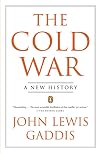
Well written, concise, typical American summary of the cold war by a Harvard professor. This biased review of key events in the cold war makes for good reading if you are a political scientist, who likes his history written around the big male actors (presidents, generals) with no attention paid to the (wo)men in the street, and if you prefer the use of reified, unambiguous perceptions of political systems and ideologies over the messy reality that you experience yourself on a daily basis. show more
Typical American is a holy belief in the Constitution with a capital C, that claims that ‘all men are equal’. This false claim serves as a key motive for Americans to play the role of global policeman that promotes ‘freedom and independence of all’. Never mind the injuns, negroes, women and all residents of non-Western countries in the South that feature only as fluff – background context to the real stage where the Western and Eastern Powers play the game of diplomacy and MAD (Mutual Assured Destruction). Finally, Gaddis is a real ‘free market’ supremist who believes in the holy trinity of private property, efficient markets and trickle down that ‘could be trusted to advance everyone’s interests’. This false belief does not explain how 1% of the world population ended up owning over 50% of everything there is to own on planet Earth, a process which was in full swing during the course of the cold war, leaving that same planet under threat of immediate destruction without the occurrence of single nuclear war.
Having said that, there is some real nuggets inside this gem of a book. Truman’s push for UN consent to fight the war in South Korea in the 1950s did a lot to foster international diplomacy and the role of the UN in that. Nixon and Kissinger’s exploitation of the independent role of communist China for the sake of seeking a lid on the nuclear arms race and wresting an opening for Human Rights based protests in the communist block was brilliant, resulting in the Helsinki agreement and SALT I. This provides an alternative view on Nixon’s presidency, which is otherwise overshadowed by Watergate and dodgy lies on the home front, ultimately forcing him out of office (to the surprise of his international counterparts, who considered the snooping on political opponents as a minor transgression that strong rulers habitually engage in).
The unexpected end of the cold war is also well written, with key roles accorded to Reagan, Gorbachev and pope John Paul. Key roles were played by a simmering peat fire of frustration in Eastern European countries, with Hungary opening up first, Gorbachev shaken by real doubts due to the fall-out of the Chernobyl nuclear disaster, and other countries following swiftly and imaginatively, culminating in the year of huge change in 1989. Bush senior was completely out of depths and Gorbachev refused to play the card of violent suppression – the result being that for once the world stage of diplomacy followed the wake of events unfolding on the ground. show less
Typical American is a holy belief in the Constitution with a capital C, that claims that ‘all men are equal’. This false claim serves as a key motive for Americans to play the role of global policeman that promotes ‘freedom and independence of all’. Never mind the injuns, negroes, women and all residents of non-Western countries in the South that feature only as fluff – background context to the real stage where the Western and Eastern Powers play the game of diplomacy and MAD (Mutual Assured Destruction). Finally, Gaddis is a real ‘free market’ supremist who believes in the holy trinity of private property, efficient markets and trickle down that ‘could be trusted to advance everyone’s interests’. This false belief does not explain how 1% of the world population ended up owning over 50% of everything there is to own on planet Earth, a process which was in full swing during the course of the cold war, leaving that same planet under threat of immediate destruction without the occurrence of single nuclear war.
Having said that, there is some real nuggets inside this gem of a book. Truman’s push for UN consent to fight the war in South Korea in the 1950s did a lot to foster international diplomacy and the role of the UN in that. Nixon and Kissinger’s exploitation of the independent role of communist China for the sake of seeking a lid on the nuclear arms race and wresting an opening for Human Rights based protests in the communist block was brilliant, resulting in the Helsinki agreement and SALT I. This provides an alternative view on Nixon’s presidency, which is otherwise overshadowed by Watergate and dodgy lies on the home front, ultimately forcing him out of office (to the surprise of his international counterparts, who considered the snooping on political opponents as a minor transgression that strong rulers habitually engage in).
The unexpected end of the cold war is also well written, with key roles accorded to Reagan, Gorbachev and pope John Paul. Key roles were played by a simmering peat fire of frustration in Eastern European countries, with Hungary opening up first, Gorbachev shaken by real doubts due to the fall-out of the Chernobyl nuclear disaster, and other countries following swiftly and imaginatively, culminating in the year of huge change in 1989. Bush senior was completely out of depths and Gorbachev refused to play the card of violent suppression – the result being that for once the world stage of diplomacy followed the wake of events unfolding on the ground. show less
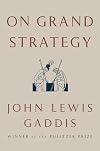
This book really disappointed me. I expected a discussion of, well, strategy. Instead, this was more of a self-help book with historical examples. Those historical examples were largely context-light, presented as simplistic archetypes of styles of thinking. (Gaddis particularly loves the device of pitting two historical figures against each other as opposing archetypes.) A reader wouldn't come away from this book with any deeper understanding of military strategy, international relations or show more politics. You could get some insight about how to think better about challenges in your own life, but I don't think it's particularly good at that, too. Mostly it's just a simplified collection of historical examples shoe-horned into the old metaphor of foxes and hedgehogs — the one where the fox knows many things and the hedgehog knows one big thing. (Gaddis argues for an optimal third way halfway in between, or maybe a little closer to the fox than the hedgehog.) It's a fun metaphor but doesn't really hold up at book length.
Others who enjoy self-improvement books more, or aren't as immersed in history as I am, might like this more. (If someone wants to buy my copy for $5 or $10, you're welcome to it!) show less
Others who enjoy self-improvement books more, or aren't as immersed in history as I am, might like this more. (If someone wants to buy my copy for $5 or $10, you're welcome to it!) show less
Lists
Awards


You May Also Like


Associated Authors
Statistics
- Works
- 22
- Also by
- 2
- Members
- 5,400
- Popularity
- #4,618
- Rating
- 3.9
- Reviews
- 72
- ISBNs
- 119
- Languages
- 17
- Favorited
- 5

