
Vladislav Zubok
Author of Collapse: The Fall of the Soviet Union
About the Author
Vladislav M. Zubok is associate professor of history at Temple University
Works by Vladislav Zubok
A Failed Empire: The Soviet Union in the Cold War from Stalin to Gorbachev (2007) 212 copies, 8 reviews
Căderea: Colapsul Uniunii Sovietice 2 copies
Associated Works
Tagged
Common Knowledge
- Canonical name
- Zubok, Vladislav
- Legal name
- Zubok, Vladislav Martinovich
Зубок, Владислав Мартинович - Other names
- Zubok, V. M. (Vladislav Martinovich) (LC form of name)
Zubok, Wladislaw - Birthdate
- 1958-04-16
- Gender
- male
- Education
- Moscow State University (MA|History|1980)
Institute for the U.S. and Canada Studies, Academy of Sciences, Moscow, Russia (PhD) - Occupations
- historian
Professor of International History - Organizations
- Temple University (Associate Professor of History)
Foreign Policy Research Institute (senior fellow)
London School of Economics - Relationships
- Pleshakov, Constantine (co-author)
- Nationality
- Russia
- Places of residence
- Moscow, Russia, USSR
USA
England, UK
Members
Reviews
A Failed Empire: The Soviet Union in the Cold War from Stalin to Gorbachev (The New Cold War History) by Vladislav M. Zubok
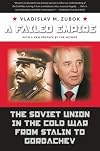
While not quite as groundbreaking as I had hoped (it might have helped if I had read it closer to the date of publication) this is still a very good survey of how the Soviet Union's leadership saw their place in the world post-1945 and the stresses induced by retaining a commitment to Communist ideology while at the same time embracing the mentality "...that the Soviet Union should and could be a global empire." Perhaps the single biggest problem in all this is that Stalin's purges reduced show more the Soviet elite to a collection of men that had been trained to be assistants to the "boss," not supple strategists capable of adaptability. With a little more flexibility over time perhaps by the time you got those sorts of thinkers (Gorbachev and the people around him) there might still be a Soviet Union, instead of a debased Russia with no mission beyond disruption of the international system on the cheap. I personally found the sections involving Brezhnev to be most interesting, as even if he remained mostly locked in the confines of the Soviet official conventional wisdom you can legitimately call him a statesman. show less
A Failed Empire: The Soviet Union in the Cold War from Stalin to Gorbachev (New Cold War History) by Vladislav M. Zubok
"A Failed Empire" is a valuable addition to our understanding of Soviet history and the complexities of state collapse. The book is solid in exploring the internal contradictions and external pressures that undermined the Soviet system. Zubok draws upon recently declassified Politburo records, ciphered telegrams, diaries, and taped conversations to offer a fresh and nuanced understanding of the Cold War. The book expertly analyzes economic stagnation, political paralysis, national conflicts, show more and ideological fatigue as key internal challenges that weakened the legitimacy and coherence of the Soviet state and provide a more balanced account of the Cold War. It is a must-read for anyone interested in gaining insight into the Soviet perspective during this pivotal era. Review AI-assisted. show less
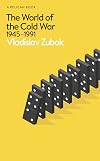
In Vitaly Mansky’s wistful 2020 documentary Gorbachev. Heaven, which depicts the last months of the former Soviet leader’s life, Vladimir Putin plays the role of a ghost. While Gorbachev responds to Mansky’s questions about the current Russian leader in typically evasive and capricious fashion, Putin’s image lurks constantly in the background, an almost constant fixture on television screens in Gorbachev’s house and elsewhere.
Gorbachev’s refusal to condemn Putin hid a strained show more relationship between the two. As political figures, they could not be more different. Perhaps more than any other historian (with the exception perhaps of his biographer, William Taubman) Vladislav Zubok has contributed to an image of Gorbachev as a hopeless idealist. In his new history of the Cold War, Zubok, working on the assumption that power corrupts, remarks that ‘it remains an enigma why it did not corrupt Gorbachev enough’. Putin, however, has been described by his former political adviser Gleb Pavlovsky as someone who sees ideology as secondary to power, who thought that the fault of the Soviet Union was trying to build a fairer society rather than ‘making more money than the capitalists’.
Despite these differences, Gorbachev and Putin’s stories are closely linked. Putin’s political life has been defined by the Cold War. His experience of the conflict’s collapse defines his worldview. As a KGB agent in Dresden, he was shocked by Moscow’s failure to prevent the collapse of the East German state. He later recalled his disbelief that Moscow was ‘silent’ in response to calls for help in the face of a growing protest movement. It is easy to read Putin’s revanchism as a direct response to the collapse of the Soviet empire, as well as Russia’s subsequent fall into chaos in the 1990s. Without Gorbachev there is no Putin.
Read the rest of the review at https://www.historytoday.com/archive/review/world-cold-war-1945-1991-vladislav-z...
George Bodie is Lecturer in History at Goldsmiths, University of London. show less
Gorbachev’s refusal to condemn Putin hid a strained show more relationship between the two. As political figures, they could not be more different. Perhaps more than any other historian (with the exception perhaps of his biographer, William Taubman) Vladislav Zubok has contributed to an image of Gorbachev as a hopeless idealist. In his new history of the Cold War, Zubok, working on the assumption that power corrupts, remarks that ‘it remains an enigma why it did not corrupt Gorbachev enough’. Putin, however, has been described by his former political adviser Gleb Pavlovsky as someone who sees ideology as secondary to power, who thought that the fault of the Soviet Union was trying to build a fairer society rather than ‘making more money than the capitalists’.
Despite these differences, Gorbachev and Putin’s stories are closely linked. Putin’s political life has been defined by the Cold War. His experience of the conflict’s collapse defines his worldview. As a KGB agent in Dresden, he was shocked by Moscow’s failure to prevent the collapse of the East German state. He later recalled his disbelief that Moscow was ‘silent’ in response to calls for help in the face of a growing protest movement. It is easy to read Putin’s revanchism as a direct response to the collapse of the Soviet empire, as well as Russia’s subsequent fall into chaos in the 1990s. Without Gorbachev there is no Putin.
Read the rest of the review at https://www.historytoday.com/archive/review/world-cold-war-1945-1991-vladislav-z...
George Bodie is Lecturer in History at Goldsmiths, University of London. show less
And GR just ate my really long review. Gah.
End notes were fascinating. Main text, rather dry in parts but especially valuable for the post-Stalin leaders. Kind to Brezhnev. As harsh with Gorbachev as some other books I've read lately were fawning toward him. Really curious how that will play out in time.
Biggest criticism is the adulation of Stalin as emperor with no mention in the main text of the many many millions of innocent people Stalin killed. The relevant end notes give dry show more statistics, but the main text is weirdly laudatory of Stalin's measures (or perhaps for his willingness to murder great swathes of people without a second thought). Also, the only woman mentioned more than in passing is Raisa Gorbachev, who seems to be mentioned -- always as an expert scholar -- in a way meant to undercut Gorbachev's capabilities, as if he was weaker for having an intelligent wife rather than stronger for her aid and participation. It never says that outright, but I don't think I'm wrong in detecting a somewhat snotty undertone when he talks about her. The same tone appears when he discusses Gorbachev's policy of nonviolence.
Which, huh. I'm really not sure what to make of that. show less
End notes were fascinating. Main text, rather dry in parts but especially valuable for the post-Stalin leaders. Kind to Brezhnev. As harsh with Gorbachev as some other books I've read lately were fawning toward him. Really curious how that will play out in time.
Biggest criticism is the adulation of Stalin as emperor with no mention in the main text of the many many millions of innocent people Stalin killed. The relevant end notes give dry show more statistics, but the main text is weirdly laudatory of Stalin's measures (or perhaps for his willingness to murder great swathes of people without a second thought). Also, the only woman mentioned more than in passing is Raisa Gorbachev, who seems to be mentioned -- always as an expert scholar -- in a way meant to undercut Gorbachev's capabilities, as if he was weaker for having an intelligent wife rather than stronger for her aid and participation. It never says that outright, but I don't think I'm wrong in detecting a somewhat snotty undertone when he talks about her. The same tone appears when he discusses Gorbachev's policy of nonviolence.
Which, huh. I'm really not sure what to make of that. show less
Lists
Russia / Ukraine (1)
Awards


You May Also Like


Associated Authors
Statistics
- Works
- 10
- Also by
- 1
- Members
- 797
- Popularity
- #31,987
- Rating
- 4.0
- Reviews
- 9
- ISBNs
- 29
- Languages
- 5
