

Edward Tenner
Author of Why Things Bite Back: Technology and the Revenge of Unintended Consequences (Vintage)
About the Author
Image credit: 2018 National Book Festival By Avery Jensen - Own work, CC BY-SA 4.0, https://commons.wikimedia.org/w/index.php?curid=72641791
Works by Edward Tenner
Why Things Bite Back: Technology and the Revenge of Unintended Consequences (Vintage) (1996) 825 copies, 7 reviews
Lasting Impressions 1 copy
Tagged
Common Knowledge
- Birthdate
- 1944
- Gender
- male
- Education
- Princeton University (A.B)
University of Chicago (Ph.D. ∙ History) - Occupations
- Executive editor for physical science and history, Princeton University Press
Researcher, Department of Geological and Geophysical Sciences at Princeton University - Nationality
- USA
- Associated Place (for map)
- USA
Members
Reviews
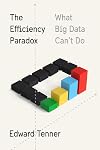
The Law of Diminishing Returns Strikes Back
The Efficiency Paradox can be seen in the example of Amazon.com. At first, the convenience of ordering online was a huge productivity boon for consumers. But as Amazon pursued its expansion to make every part of life more productive, free shipping has turned consumers into impulse buyers. Instead of piling up orders to save on shipping and packaging, we order nearly daily, resulting in a huge overhang of cardboard boxes and sealed air pouches we show more cannot recycle profitably – or at all. Similarly, thanks to the internet, travel has become so complicated that middlemen – travel agents – have made an impressive comeback from extinction. The Internet of Things requires a whole new layer of security measures just so your fridge can order more milk. “Progress toward greater efficiency is wasteful,” says Edward Tenner.
Efficiency builds in rigidity. You cannot stray from the straight and narrow. Serendipity is banished from the premises. The closest serendipity comes is finding out someone you know is in the same restaurant. It doesn’t help meeting new people at the next table, also staring down at their phones. Tenner has filled the book with endless examples from endless industries, from education to health to high tech. It’s easy to find examples. We live with them all day.
There are two problems with the book. First, it is almost entirely top line. Tenner skims a phone book’s worth of examples. And though his choices are interesting, many of them are debatable and less than thoroughly examined. The second problem is that this applies to pretty much everything ever touched by Man. The “old skills” have been disappearing for centuries. Life continues to become far too complicated for us to master all the manual skills we’ve dropped. Life is not really any easier. We’ve simply traded off skills for convenience. All our ”labor-saving” devices have translated into chronic, eternal stress. Studies continually show people are much happier and relaxed without fitbit and facebook.
And the point Tenner never makes is why all this is happening at all. The answer is capitalism. It is an unstoppable race to squeeze efficiency out of every aspect of life. Capitalism means more and more gadgets, services and automation. It means robot doctors, faceless meetings and the shortest distance between two points, even if the road is gravel. Because there’s a buck to be made.
Tenner concludes with the hope that analog will be able to coexist with digital, because both have much to offer.
It’s not that simple.
David Wineberg show less
The Efficiency Paradox can be seen in the example of Amazon.com. At first, the convenience of ordering online was a huge productivity boon for consumers. But as Amazon pursued its expansion to make every part of life more productive, free shipping has turned consumers into impulse buyers. Instead of piling up orders to save on shipping and packaging, we order nearly daily, resulting in a huge overhang of cardboard boxes and sealed air pouches we show more cannot recycle profitably – or at all. Similarly, thanks to the internet, travel has become so complicated that middlemen – travel agents – have made an impressive comeback from extinction. The Internet of Things requires a whole new layer of security measures just so your fridge can order more milk. “Progress toward greater efficiency is wasteful,” says Edward Tenner.
Efficiency builds in rigidity. You cannot stray from the straight and narrow. Serendipity is banished from the premises. The closest serendipity comes is finding out someone you know is in the same restaurant. It doesn’t help meeting new people at the next table, also staring down at their phones. Tenner has filled the book with endless examples from endless industries, from education to health to high tech. It’s easy to find examples. We live with them all day.
There are two problems with the book. First, it is almost entirely top line. Tenner skims a phone book’s worth of examples. And though his choices are interesting, many of them are debatable and less than thoroughly examined. The second problem is that this applies to pretty much everything ever touched by Man. The “old skills” have been disappearing for centuries. Life continues to become far too complicated for us to master all the manual skills we’ve dropped. Life is not really any easier. We’ve simply traded off skills for convenience. All our ”labor-saving” devices have translated into chronic, eternal stress. Studies continually show people are much happier and relaxed without fitbit and facebook.
And the point Tenner never makes is why all this is happening at all. The answer is capitalism. It is an unstoppable race to squeeze efficiency out of every aspect of life. Capitalism means more and more gadgets, services and automation. It means robot doctors, faceless meetings and the shortest distance between two points, even if the road is gravel. Because there’s a buck to be made.
Tenner concludes with the hope that analog will be able to coexist with digital, because both have much to offer.
It’s not that simple.
David Wineberg show less
Quite interesting, but the conclusions are too rooted in the current state of technology. For instance, self driving cars are rejected as a viable alternative to human drivers because of a deficiency in a particular implementation that led to a fatal crash, even though the problem was almost immediately corrected and it turned out that user error was the real cause. There is no possibility in the author’s mind that the systems will continue to improve over the coming years and decades and show more ultimately do a much better job of driving than callable humans, because somehow machines are just not as good. And even if they were, the thought of giving up the control is anathema, he frets that in a self-driving car he won’t be able to get lost and meet people by stopping to ask for directions, or decide on a whim to head down a side road, or make an unscheduled stop at a roadside attraction. The loss of these “inefficiencies” is not worth the saving 30,000+ lives lost every year in car accidents caused by human error. show less
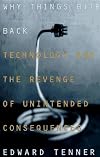
A fascinating read! Although a bit dated in a few places, the issues raised in this book are timeless. The thesis: people solve problems with technology, but any attempt to control pretty much anything leads to unintended consequences, simply because everything in this world is part of a complex system, and no-one can possibly predict the effects that can arise in such complexity. Detailed and well-researched, educated without being scholarly, this book presents an insightful look at what show more the author calls "revenge effects" in several areas: medicine, pest introduction/control, computers, and sport. By limiting to these four themes, the author leaves room for a more nuanced analysis than a broad book would permit, with just enough detail yet with four themes the opportunity to see commonalities across very different issues. The book invites a healthy skepticism for the impact of technology (shared by this trained scientist) without encouraging a Luddite existence. All sorts of unintended consequences are considered, including not only "bugs" and technological problems, but social and economic issues as well. The book makes a strong case that an intense focus on the most effective or efficient solution can often lead to far more chaos than the original diverse state of a system, whether it be ecological, social, economic, civic, or even recreational.
The book is incredibly well-written. The language flows smoothly, and the author uses examples which will engage readers with a wide variety of backgrounds. The author includes references as well as a recommended reading section for those who would like to further pursue the theme. I would recommend this work even for those who do not typically read nonfiction, as the "story" is something anyone can relate to. show less
The book is incredibly well-written. The language flows smoothly, and the author uses examples which will engage readers with a wide variety of backgrounds. The author includes references as well as a recommended reading section for those who would like to further pursue the theme. I would recommend this work even for those who do not typically read nonfiction, as the "story" is something anyone can relate to. show less
Why Things Bite Back: Technology and the Revenge of Unintended Consequences (Vintage) by Edward Tenner
Edward Tenner takes an in-depth look at the technology that first set out to make our lives easier, more convenient, and faster: technologies that include chemistry, invention, ingenuity and just plain luck. The advances science and medicine don't come without fault and failure. It's these drawbacks that Tenner describes as "revenges." Seat belts that save adults but kill children, for example. The unexpected thrill to Tener's book is that it isn't dry and didactic. There is actual humor show more hidden in the irony. show less
Awards

You May Also Like


Statistics
- Works
- 7
- Members
- 1,145
- Popularity
- #22,428
- Rating
- 3.4
- Reviews
- 9
- ISBNs
- 20
- Languages
- 3