
Tracy Kidder (1945–2026)
Author of Mountains Beyond Mountains: The Quest of Dr. Paul Farmer, a Man Who Would Cure the World
About the Author
Tracy Kidder was educated at the University of Iowa and Harvard University. He served in the US Army in Vietnam. Kidder has garnered numerous literary awards including the Pulitzer Prize in General Non-Fiction and the National Book Award for General Nonfiction both in 1982. He has also been honored show more with the Robert F. Kennedy Book Award, 1990 and the Christopher Award, 1990. His publications include numerous nonfiction articles and short fiction for The Atlantic and other periodicals. Non-Fiction books include The Road to Yuba City, Doubleday, 1974; The Soul of a New Machine, Atlantic Monthly-Little Brown, 1981 for which he won a Pulitzer and a National Book Award; House, Houghton Mifflin, 1985; Old Friends, Houghton Mifflin, 1993; Home Town, Random House, 1999; Mountains Beyond Mountains, Random House, 2003; My Detachment, Random House, 2005; Strength in What Remains, Random House, 2009. (Bowker Author Biography) show less
Image credit: By Bill O'Donnell - Own work, CC BY-SA 3.0, https://commons.wikimedia.org/w/index.php?curid=28890986
Works by Tracy Kidder
Mountains Beyond Mountains: The Quest of Dr. Paul Farmer, a Man Who Would Cure the World (2003) 5,415 copies, 151 reviews
Rough Sleepers: Dr. Jim O'Connell's urgent mission to bring healing to homeless people (2023) 356 copies, 18 reviews
Swan 1 copy
Associated Works
For the Love of Books: 115 Celebrated Writers on the Books They Love Most (1999) — Contributor — 480 copies, 4 reviews
The Book That Changed My Life: 71 Remarkable Writers Celebrate the Books That Matter Most to Them (2006) — Contributor — 411 copies, 18 reviews
The Art of Fact: A Historical Anthology of Literary Journalism (1997) — Contributor — 226 copies, 1 review
American Soldier: Stories of Special Forces from Iraq to Afghanistan (Adrenaline) (2002) — Contributor — 22 copies
Tin House 17 (Fall 2003): Give — Contributor — 8 copies
Tagged
Common Knowledge
- Legal name
- Kidder, John Tracy
- Birthdate
- 1945-11-12
- Date of death
- 2026-03-24
- Gender
- male
- Education
- Phillips Academy, Andover, Massachusetts, USA
Harvard University
University of Iowa - Occupations
- soldier
journalist
non-fiction writer - Organizations
- United States Army
The Atlantic Monthly - Cause of death
- lung cancer
- Nationality
- USA
- Birthplace
- New York, New York, USA
- Places of residence
- Massachusetts, USA
Maine, USA
Williamsburg, Massachusetts, USA - Place of death
- Boston, Massachusetts, USA
- Associated Place (for map)
- Massachusetts, USA
Members
Reviews
Rough Sleepers: Dr. Jim O'Connell's urgent mission to bring healing to homeless people by Tracy Kidder
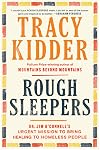
It's difficult to read "Rough Sleepers" without thinking of another Tracy Kidder book, "Mountain Beyond Mountains," his chronicle of Partners in Health, Dr. Paul Farmer's impossibly high-performing health care clinic in rural Haiti. I loved "Mountains Beyond Mountains," but when I mentioned Farmer to the one person I know who works in public health, she rolled her eyes. It's not hard to see why: Dr. Farmer was admirable, but we can't all be Dr. Farmer. You couldn't base a health care system show more on people like him, and you probably shouldn't try. So we hear a lot about gentrification, about what it's like to grow up with few to no resources, about how humans sometimes fall through the cracks of the already shaky systems we have set up to support the most vulnerable.
I half-suspect that Kidder heard this criticism — or something like it — before writing "Rough Sleepers". Dr. Jim O'Connell is described as a special individual, but he's not a saint. In fact, when he left Harvard Med, he figured he'd have a quiet, prosperous career doctoring somewhere or other He took a one-year assignment to attend to patients living hard on the streets of Boston for a year and then, having stumbled into his vocation, found himself unable to leave. While the author spends a lot of time informing us about the mechanics of homelessness: how to get a shelter bed, and where to sleep if you don't; how to get medical attention; how stay safe, and how many homeless people are addicted to drugs or alcohol. But he also keeps an eye on the larger causes of how people came to be homeless and why this social problem persists. While Kidder's strength as a writer may always be introducing us to remarkable people, this is a slightly more structurally focused book than "Mountains Beyond Mountains" was, and it's better for it.
This isn't to say that we don't meet a lot of interesting characters in "Rough Sleepers", from Barbara McInnis, a wonderfully dedicated nun who later had a homeless shelter named after her, to Tony, a mercurial, charismatic, and talented man living on the streets whose genuine gifts have been obscured by years of drug abuse and a very troubled upbringing. And there are, of course, a lot like him. At the end of the book, we see Dr. Jim contemplating retirement and thinking about how the Boston Health Care for the Homeless Street Team might get on without him. He also takes the author — and the reader — on a tour of a sort of photo gallery of patients he once helped on the city streets. In one sense, he and Kidder share the same mission: to preserve the memory of individuals that were nearly forgotten in life and would otherwise almost certainly be forgotten in death. For this reason — and for many others — "Rough Sleepers" feels like an important, almost necessary book. This one is less obviously inspiring than "Mountains Beyond Mountains," perhaps, but I'm glad that Kidder took the time to write it. show less
I half-suspect that Kidder heard this criticism — or something like it — before writing "Rough Sleepers". Dr. Jim O'Connell is described as a special individual, but he's not a saint. In fact, when he left Harvard Med, he figured he'd have a quiet, prosperous career doctoring somewhere or other He took a one-year assignment to attend to patients living hard on the streets of Boston for a year and then, having stumbled into his vocation, found himself unable to leave. While the author spends a lot of time informing us about the mechanics of homelessness: how to get a shelter bed, and where to sleep if you don't; how to get medical attention; how stay safe, and how many homeless people are addicted to drugs or alcohol. But he also keeps an eye on the larger causes of how people came to be homeless and why this social problem persists. While Kidder's strength as a writer may always be introducing us to remarkable people, this is a slightly more structurally focused book than "Mountains Beyond Mountains" was, and it's better for it.
This isn't to say that we don't meet a lot of interesting characters in "Rough Sleepers", from Barbara McInnis, a wonderfully dedicated nun who later had a homeless shelter named after her, to Tony, a mercurial, charismatic, and talented man living on the streets whose genuine gifts have been obscured by years of drug abuse and a very troubled upbringing. And there are, of course, a lot like him. At the end of the book, we see Dr. Jim contemplating retirement and thinking about how the Boston Health Care for the Homeless Street Team might get on without him. He also takes the author — and the reader — on a tour of a sort of photo gallery of patients he once helped on the city streets. In one sense, he and Kidder share the same mission: to preserve the memory of individuals that were nearly forgotten in life and would otherwise almost certainly be forgotten in death. For this reason — and for many others — "Rough Sleepers" feels like an important, almost necessary book. This one is less obviously inspiring than "Mountains Beyond Mountains," perhaps, but I'm glad that Kidder took the time to write it. show less
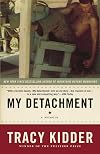
This marks the last of Tracy Kidder’s books I’ve read. I’ve now read them all, beginning with his masterpiece “Soul of a New Machine.” I once wrote in a review of one of Kidder’s books that I would buy a grocery list written by Tracy Kidder. I think his reporting is superb and his writing is even better. I chose this book for last because I felt it was maybe too close to Kidder to be something I would enjoy as much as his other books. I think he writes best when he writes about show more others. I also spent two years in the army during the Viet Nam war compliments of the draft, so I wasn’t sure I was interested in reading a story about being in the army. Luckily, I stayed stateside during my entire tour, so I didn’t have anything close to the worries Kidder had in a war zone even considering he continued to say in this book that he was far from actual combat. The things he mentioned about the proximity of his detachment to the actual war were close enough for me to say he was in combat. He seemed embarrassed to mention that he had been awarded the Bronze Star. What bothered him the most was the fact that the brass made the enlisted soldiers stand at attention in the hot sun while it was pinned on his chest. Throughout this book Kidder seemed uncomfortable with his role as an officer among mostly enlisted men. When I was in the army, I was the assistant to a first lieutenant, a man only a year older than I was, but I never got the impression that the fact that I had to salute him made him uncomfortable. We just both recognized that in that world he was my superior notwithstanding the fact that I wrote all of his correspondence because I was a much better writer than he was. He was a business major at Texas A&M; I was and English/journalism major at Indiana. So we got along fine. I’m sad that this is the last Tracy Kidder book to read. I don’t know if he has anything in the works. I certainly hope so. show less
Mountains Beyond Mountains: The Quest of Dr. Paul Farmer, a Man Who Would Cure the World by Tracy Kidder
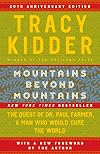
If you haven't already read a dozen reviews, this is Tracy Kidder's look at the life work of Paul Farmer, a doctor who has dedicated every aspect of his life to bringing sound medical treatment to the poorest areas of the world, leading a fight against the tuberculosis pandemic, and trying to change the ways the "haves" of the medical world interact with the "have nots".
I find my reaction to the book is one of ambivalence or, more accurately, I find that I enjoyed the book unquestionably but show more my reaction to the contents is ambivalent.
Looking at this story simply from a perspective of "Is this worth reading?" my answer is a definite "Yes!" Kidder's writing flows along smoothly, never getting bogged down in medical details, bringing a very clear picture of this man and his work. The first-person perspective he uses draws you right into the story, giving it immediacy and intimacy. I'm sure that there are accusations that Kidder seems to have fallen under the spell of Dr. Farmer and doesn't provide a balanced picture. However, I don't think that's fair. There is no intent to deceive or slant and Kidder does raise the counter-arguments; the reader who is not, himself, under Farmer's spell will see them and can follow them as he chooses.
Looking at this story from the perspective of the word I've heard applied most often..."inspirational"...I find that I'm less in accordance. As someone else implied, Dr. Farmer is so extreme that I almost have to read this book as a type of fiction, populated with a superhero whose exploits I admire but have no thoughts of attempting myself. The sign in his facility seems to show that even his own staff has that reaction: "If Paul is the model, we're f*****."
I cannot help but compare this to another book I read this year, Greg Mortenson's Three Cups of Tea. While Mountains Beyond Mountains is unquestionably better written, easier to read and more entertaining, the other retained a sense of human proportion that inspired me to think about what I, personally, might do. Mountains Beyond Mountains, lacking that scale, did not personally inspire, rather it moved me to compassion and awareness.
Part of the Olympian remoteness I feel about Dr. Farmer is that he inhabits a land of moral absolutes, whereas I cannot so easily walk away from the real world. To take a stance that the rich of the world have an absolute moral obligation to do whatever they can to help the poor is a moral high ground...and to do everything you can to bring that about is admirable and wonderful. However, to conduct your actions as if you have already succeeded lets you occupy that moral high ground at a cost to those you want to help. We can thrill to the heroics that spent more resources than the organization had to rush a boy from Haiti to Boston for an operation that might cure his advanced cancer. However, we can also acknowledge that the child's chances were not good and that the $20,000 spent to save, ultimately, zero lives would have bought 16 or so others from the same plateau the drugs needed to save them from dying of multi-drug-resistant tuberculosis. We can all think on Shaw's dictum about unreasonable men and progress, but we cannot forget that progress is not always benign to those caught up in it.
This is a book I think everyone should read—well-written, entertaining and thought-provoking. If it inspires you to a similar life, even in part, then it's wonderful. If it only moves you to compassion and helping out, then perhaps Farmer would say, "Well, I'll take that." show less
I find my reaction to the book is one of ambivalence or, more accurately, I find that I enjoyed the book unquestionably but show more my reaction to the contents is ambivalent.
Looking at this story simply from a perspective of "Is this worth reading?" my answer is a definite "Yes!" Kidder's writing flows along smoothly, never getting bogged down in medical details, bringing a very clear picture of this man and his work. The first-person perspective he uses draws you right into the story, giving it immediacy and intimacy. I'm sure that there are accusations that Kidder seems to have fallen under the spell of Dr. Farmer and doesn't provide a balanced picture. However, I don't think that's fair. There is no intent to deceive or slant and Kidder does raise the counter-arguments; the reader who is not, himself, under Farmer's spell will see them and can follow them as he chooses.
Looking at this story from the perspective of the word I've heard applied most often..."inspirational"...I find that I'm less in accordance. As someone else implied, Dr. Farmer is so extreme that I almost have to read this book as a type of fiction, populated with a superhero whose exploits I admire but have no thoughts of attempting myself. The sign in his facility seems to show that even his own staff has that reaction: "If Paul is the model, we're f*****."
I cannot help but compare this to another book I read this year, Greg Mortenson's Three Cups of Tea. While Mountains Beyond Mountains is unquestionably better written, easier to read and more entertaining, the other retained a sense of human proportion that inspired me to think about what I, personally, might do. Mountains Beyond Mountains, lacking that scale, did not personally inspire, rather it moved me to compassion and awareness.
Part of the Olympian remoteness I feel about Dr. Farmer is that he inhabits a land of moral absolutes, whereas I cannot so easily walk away from the real world. To take a stance that the rich of the world have an absolute moral obligation to do whatever they can to help the poor is a moral high ground...and to do everything you can to bring that about is admirable and wonderful. However, to conduct your actions as if you have already succeeded lets you occupy that moral high ground at a cost to those you want to help. We can thrill to the heroics that spent more resources than the organization had to rush a boy from Haiti to Boston for an operation that might cure his advanced cancer. However, we can also acknowledge that the child's chances were not good and that the $20,000 spent to save, ultimately, zero lives would have bought 16 or so others from the same plateau the drugs needed to save them from dying of multi-drug-resistant tuberculosis. We can all think on Shaw's dictum about unreasonable men and progress, but we cannot forget that progress is not always benign to those caught up in it.
This is a book I think everyone should read—well-written, entertaining and thought-provoking. If it inspires you to a similar life, even in part, then it's wonderful. If it only moves you to compassion and helping out, then perhaps Farmer would say, "Well, I'll take that." show less
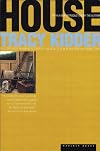
As someone who has built [is still building] a house and who is married to a carpenter, I found the book a little too flashback-triggering to be fully enjoyable. I actually started having heart palpitations during one of the homeowner/builder fights over the contract. BUT, that aside, this is truly brilliant in a classic creative nonfiction way. Kidder takes a subject that seems completely mundane and imbues is with history, drama, and human intrigue.
Lists
Read These Too (1)
to get (1)
All Iowa Reads (1)
Tour of Africa (1)
To Read (1)
Wisdom (1)
Really awesome (1)
Awards


You May Also Like


Associated Authors
Statistics
- Works
- 14
- Also by
- 10
- Members
- 14,892
- Popularity
- #1,542
- Rating
- 4.0
- Reviews
- 437
- ISBNs
- 166
- Languages
- 10
- Favorited
- 33


